Cosmetic packaging · Made for your brand
Empty Cosmetic Bottle Storage: Recheck Before Filling
Store empty cosmetic bottles with traceable lots, protected openings and supplier-specific conditions, then recheck identity, exposure and fit before filling.
Containers only — no compounding or filling.
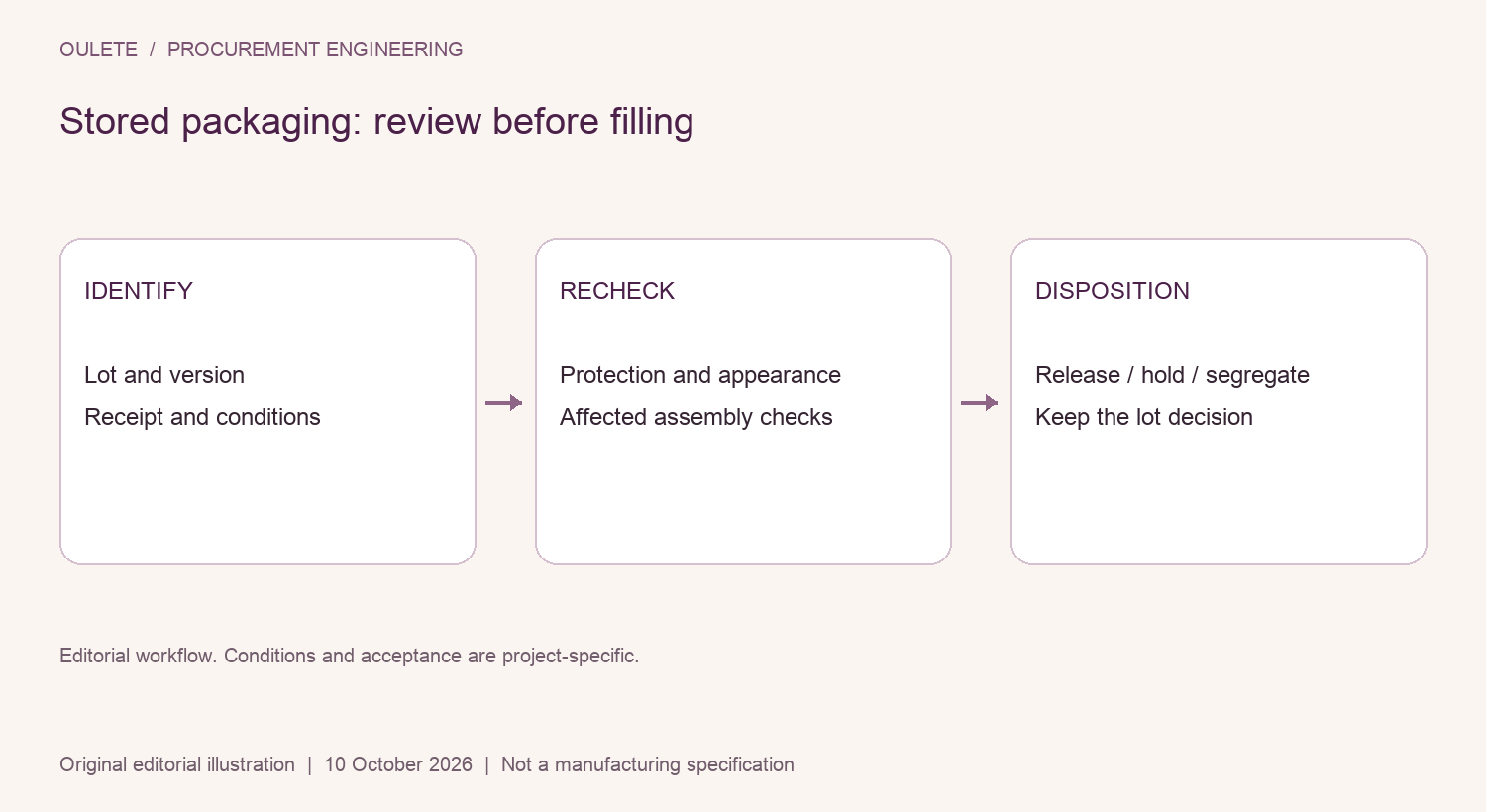
Stored packaging: review before filling showing identify, recheck, disposition
On this page · 13 sections
- Tie empty cosmetic bottle storage to the exact assembly
- Protect opened cartons and preserve the original lot identity
- Proposed handling record for partly used cartons
- Investigate exposure instead of inventing a shelf life
- Recheck the stored lot against the filling configuration
- Release stock with a decision the filler can trace
- FAQ: empty packaging storage and release
- Do empty cosmetic bottles have a universal shelf life?
- Can an unopened carton go straight to the filler?
- Can I put returned sales samples back into stock?
- Does FIFO mean I must use the oldest lot?
- Should dusty bottles be washed before use?
- What should accompany stored stock sent to a filler?
Empty cosmetic bottle storage requires protected openings, traceable component lots and supplier-specific conditions, followed by a documented recheck before stock reaches the filling line.
Consider an illustrative buying situation: the launch is delayed, unopened cartons remain on the pallet, and other cartons have supplied sales samples. Before issuing stock to the filler, the distributor must establish which cartons stayed protected and which have a different handling history. A receiving pass or unchanged model name does not answer that question. This guide focuses on that history and the decision to issue stock for use. The export packing specification remains the separate reference for shipment preparation.
Tie empty cosmetic bottle storage to the exact assembly
A storage specification should identify the parts and supplied condition to which its instructions apply. A bottle body, a decorated cap and an assembled pump can require different handling. “Store the packaging properly” gives a warehouse no basis for recognising a changed condition, deciding which stock to hold or asking the correct supplier for advice.
Start with the component references already used in the order. Identify the body, closure, liner or sealing element, dispenser, decoration revision and protective packaging. The component material list connects those references to the actual assembly. Do not reduce the whole pack to the bottle resin while overlooking the parts that will also reach the filler.
A recheck date is a planned point for reviewing whether stored material remains acceptable under its agreed conditions. An expiry date is a stated limit after which material cannot be used under the applicable specification. These are different controls. Ask the supplier and responsible quality team which one applies; a catalogue's material name cannot determine either date.
Drug Plastics' PET storage information sheet connects storage time and exposure with container dimensions and properties. It recommends protected storage and stock rotation for PET bottles. That is a useful material-specific example. Its advice and numerical limits are not automatically the approved conditions for PETG, PP, glass, decorated parts or an Oulete pump assembly.
Request a storage instruction tied to the selected part revision and supplied state. Ask for environmental limits, permitted pallet loading and a recheck or expiry rule, if applicable. If the supplier requires monitoring, clarify where readings are taken and what happens when records are missing. Warehouse conditions and supplier-approved conditions need to be compared explicitly.
Separate an empty-pack storage interval from filled-product shelf life. A cosmetic formula's stability programme assesses a different system, including contents, contact materials and the intended finished presentation. An empty bottle that has been stored within its instructions still needs the appropriate formula and assembly approvals before use. Storage acceptance alone does not establish product compatibility.
| Storage instruction field | What the written specification should identify |
|---|---|
| Supply identity | Exact body, closure, dispenser and decoration references |
| Protected state | Original bag, liner, tray or carton arrangement and opening controls |
| Environment | Applicable conditions, prohibited exposure and any required monitoring |
| Loading | Approved pallet arrangement, support and stacking restrictions |
| Review point | Date or event that triggers recheck, and who makes the decision |
| Exception route | Contact and evidence needed when conditions or identity are uncertain |
Missing instructions need an identified owner and a written handling decision before allocation. A completed request form records the agreed controls; it does not prove the condition of the lot.
Protect opened cartons and preserve the original lot identity
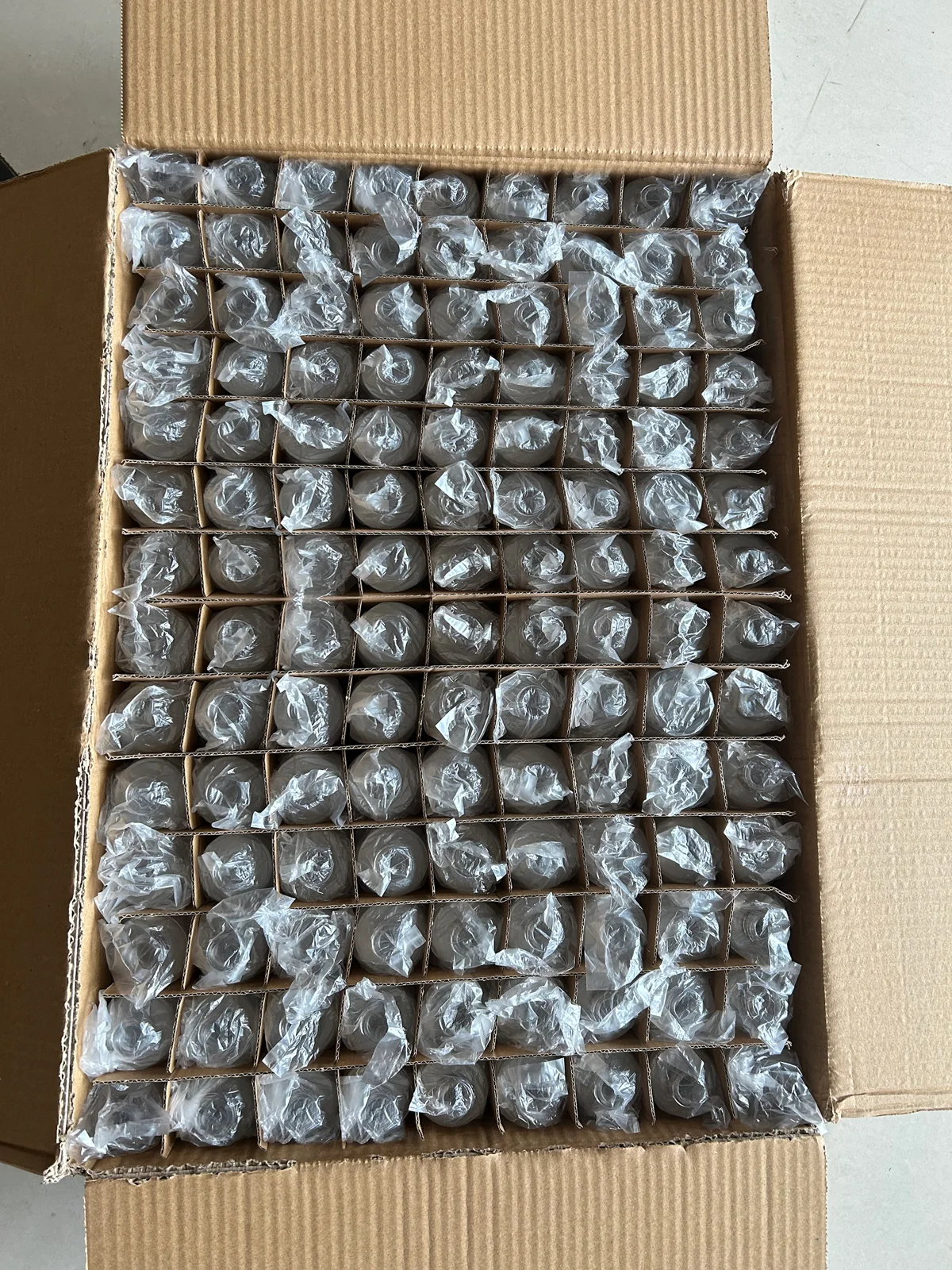
Oulete packing photograph. It illustrates component separation, not the condition or storage history of a reviewed lot.
An opened carton needs an identified protection and return-to-stock process. Closing the cardboard flaps does not necessarily restore the original internal bag, liner or tray condition. Record which protective layer was opened, what material was removed and how the remainder was protected. Keep the remaining stock attached to its supplier lot.
FDA's cosmetics self-inspection guidance discusses preventing mix-ups and contamination of primary packaging materials. It also addresses closed containers, off-floor storage and identification of material identity, lot and control status. Those are useful controls for this handoff; the guidance does not establish Oulete certification or a universal numerical storage specification.
Use a controlled sequence when taking samples. First, identify the lot and the carton selected. Then open and handle the material under the site's approved procedure. Finally, record the quantity removed, restore the agreed protection and identify the remainder. A sample dispatch should not leave an anonymous partly filled box that the next operator mistakes for unopened stock.
When splitting a lot, record the parent lot and the daughter carton or bag references. The stock system should reconcile quantities received, removed for samples, transferred, held and issued. A distributor SKU identifies the saleable product; the supplier lot identifies the particular supply. Keep both visible without creating a replacement manufacturing date.
Proposed handling record for partly used cartons
| Event | Information to record | Decision needed |
|---|---|---|
| Carton opened for sampling | Supplier lot, carton reference, date and quantity removed | How will the remainder be protected? |
| Internal bag or liner disturbed | Which layer opened and handling condition | Is the approved protection restored? |
| Material transferred to another container | Source lot, destination reference and transferred quantity | Does the new container meet the agreed handling procedure? |
| Sample or loose component returned | Identity, handling history and intended disposition | May it return to stock, or must it remain separately controlled? |
Returned sales samples, closures trial-fitted elsewhere and pieces handled for photography should remain separately identified until disposition. Record whether each sample contacted another product, was assembled, lost its protection or has unknown handling. The quantity can be recorded in inventory while remaining unavailable to the next filling order.
Photographs can document an observed packing condition. Label them with the lot, location and date so the reviewer can connect the image to the stored material, rather than treating a general packaging photograph as proof of its storage history.
Investigate exposure instead of inventing a shelf life
A storage exception needs an exposure record before a release decision. “It was warm” or “the box got wet” is not enough to assess the affected stock. Identify the location, time interval, protective state and the units involved. Where a monitored value exists, preserve the record; where it does not, state what is unknown.
A deviation is a recorded departure from an agreed requirement or condition. A storage deviation can concern environment, loading, protection or traceability. It is not automatically a product failure, and it is not automatically acceptable. The responsible quality team and supplier need enough evidence to decide what inspection, testing or disposition is appropriate.
Do not solve an unknown history by assigning a generic number of years. INCOPLAS publishes a supplier-specific utilisation period for its empty containers alongside handling and stacking instructions. The important point is that the instruction belongs to that supplier's scope. Its period cannot establish an Oulete expiry rule or an extension for another container design.
Consider the cause and the potentially affected function together. Heat exposure can raise dimensional questions for a plastic body; a damaged protective layer can raise cleanliness questions; compression can raise geometry and packing questions. These are review paths, not conclusions that a particular failure occurred. Select the checks from the actual construction, exposure and intended use.
| Observed exception | Evidence to collect | Review path to agree |
|---|---|---|
| Warm location or sunlight exposure | Duration, location, monitoring and affected pallets | Supplier review of applicable dimensional and material concerns |
| Wet or damaged carton | External damage, internal protective state and exposed quantity | Protection, contamination and handling assessment |
| Compressed or unstable pallet | Load arrangement, damaged layers and visible component change | Packing, geometry and matched-assembly checks |
| Unidentified stock | Remaining labels, movement records and possible lot links | Resolve identity before selecting a use or disposition |
| Unusual odour or visible residue | Location, nearby materials and affected protection | Hold and quality assessment; avoid unapproved treatment |
For an illustrative example, suppose the lower cartons on a pallet are crushed while the upper layers remain intact. The first task is to identify the affected quantity and packing condition, not to declare the entire lot usable from one undamaged sample. The quality plan should define how the inspection represents the suspected exposure and how the affected units remain controlled.
Do not rinse, disinfect or heat-treat stock simply to make a visible problem disappear. Such treatment can introduce new material, residue, drying and process questions. Any remedial handling must be approved for the actual components and intended use. A packaging supplier's empty-product instructions are not permission to improvise a sterilisation process in the warehouse.
Correcting a pallet or replacing a carton is a handling action, separate from accepting its contents. Give the affected bags or cartons a visible hold or release identity and carry that decision into the stock system. Both the picker and the filler need to see the status of the actual units being transferred.
Recheck the stored lot against the filling configuration
A pre-use recheck should compare the stored lot with the configuration that the filler will actually run. Confirm identity and storage history before evaluating appearance or fit. The incoming inspection guide covers receipt observations; this later check must also consider opened packing, recorded exceptions and any intervening specification change.
Compare the current order's component references with the stock record. A new pump, cap or artwork revision can change what an older bottle lot is intended to join. Ask whether the stored components remain part of the approved assembly, rather than assuming that the distributor's product name has not changed. Record any mismatch before the materials reach the line.
Review the points that matter to the selected assembly. For a bottle and dispenser, these can include the body condition, opening, closure engagement, protective state and the matched components identified in the approval. Use the agreed drawings and inspection procedure. A body-only visual review cannot establish fit with a different dispenser introduced after the stock was received.
Do not prescribe a universal sample quantity or measurement tolerance for the recheck. The responsible quality plan should consider the lot, suspected exposure, component function and available evidence. A limited observation can answer a limited question. Make that scope clear in the record instead of turning one apparently good assembly into an approval of all units and all functions.
Keep dry assembly checks separate from filled evaluation. A cap seating on an empty body does not demonstrate formula compatibility or the performance of the finished product after storage and use. The compatibility testing plan remains the reference for that work with the formula team and actual commercial package.
Decoration needs its own comparison where relevant. Identify the approved artwork and appearance reference, then observe the stored units under the agreed review conditions. A scuff on a visible surface and an unreadable required information block have different implications. Record the location and effect, so the decision is attached to the actual defect rather than a general “appearance acceptable” tick.
Release stock with a decision the filler can trace
A storage release record should connect the reviewed stock to the filling order, its quantity and its current control status. It should identify who made the decision and what evidence they used. The warehouse's available balance is an inventory figure; the released quantity is the amount authorised for the stated use.
FIFO, or first in, first out, is a stock-rotation method that selects older receipts before newer ones. It helps manage residence time but does not override a hold, expiry rule or incompatible revision. Select the oldest eligible stock for the order. Where an exception changes the sequence, preserve the reason and the affected references.
| Proposed issue-to-filler record | Entry needed before dispatch |
|---|---|
| Intended order | Brand or filler reference and current packaging specification |
| Stock identification | Body and component references, supplier lots and selected cartons |
| Stored condition | Protected state, opened-carton history and relevant exposure record |
| Recheck scope | Inspection or test references, observations and stated limitations |
| Decision | Released quantity, held quantity, reason and decision owner |
| Next transfer | Filler destination, dispatch reference and information accompanying the stock |
A partial release needs separate carton or bag references for accepted and held material. Record the quantity authorised for this order, keep rejected or unresolved units unavailable, and reconcile the remaining balance. The same supplier lot may contain more than one disposition; a lot-level “pass” label would hide that difference.
| Stock position | Record before issue |
|---|---|
| Unopened and eligible | Carton references, quantity and applicable release |
| Opened and reviewed | Remainder quantity, restored protection and decision |
| Held after exposure | Affected references, hold reason and decision owner |
| Removed for samples | Destination and quantity, with any returns separately recorded |
| Issued to filler | Dispatch quantity, destination and accepted configuration |
This is a proposed reconciliation record, not a completed inspection. An acceptable sample does not determine the status of unidentified cartons outside its review scope.
Before reordering, compare the retained stock references with the current supply. The reorder change-control guide explains the wider revision problem. Keep old and new lots identifiable even when they share a catalogue code, so a later concern can be investigated without guessing which components were issued.
For Oulete enquiries through the distributor support page, send the selected component references, expected storage interval, protective arrangement and filler requirements. Ask for the applicable storage instructions and exception contact. Oulete's MOQ is 2,000 units for plastic packaging and 5,000 for glass; order quantity does not determine how long a particular component may be held.
FAQ: empty packaging storage and release
Do empty cosmetic bottles have a universal shelf life?
Empty cosmetic bottles do not have a universal approved storage life established by their material name. Obtain the selected supplier's instructions and applicable review or expiry controls. Consider the whole supplied configuration, including decoration, closures and dispensers.
Can an unopened carton go straight to the filler?
An unopened carton still needs its lot identity, storage history and approval status checked against the current filling order. Intact packing is one useful condition, not proof that no exposure or specification change occurred.
Can I put returned sales samples back into stock?
Returned samples need a documented disposition based on identity and handling history. Keep them separately controlled until that decision is made. Appearance alone cannot establish that their condition matches protected warehouse stock.
Does FIFO mean I must use the oldest lot?
FIFO selects the oldest eligible stock, subject to the applicable approval, hold and expiry controls. It does not authorise use of unidentified, unsuitable or unreleased material merely because that material arrived first.
Should dusty bottles be washed before use?
Dusty bottles need assessment under the approved handling procedure. Do not assume washing, disinfection or heat treatment is suitable for the selected body, coating and components. The responsible teams must approve any corrective treatment and subsequent acceptance.
What should accompany stored stock sent to a filler?
Stored stock should travel with component and lot references, the applicable specification, relevant storage or exception information and the release decision. Identify the authorised quantity and any conditions so the receiving filler can connect the delivery to its intended run.
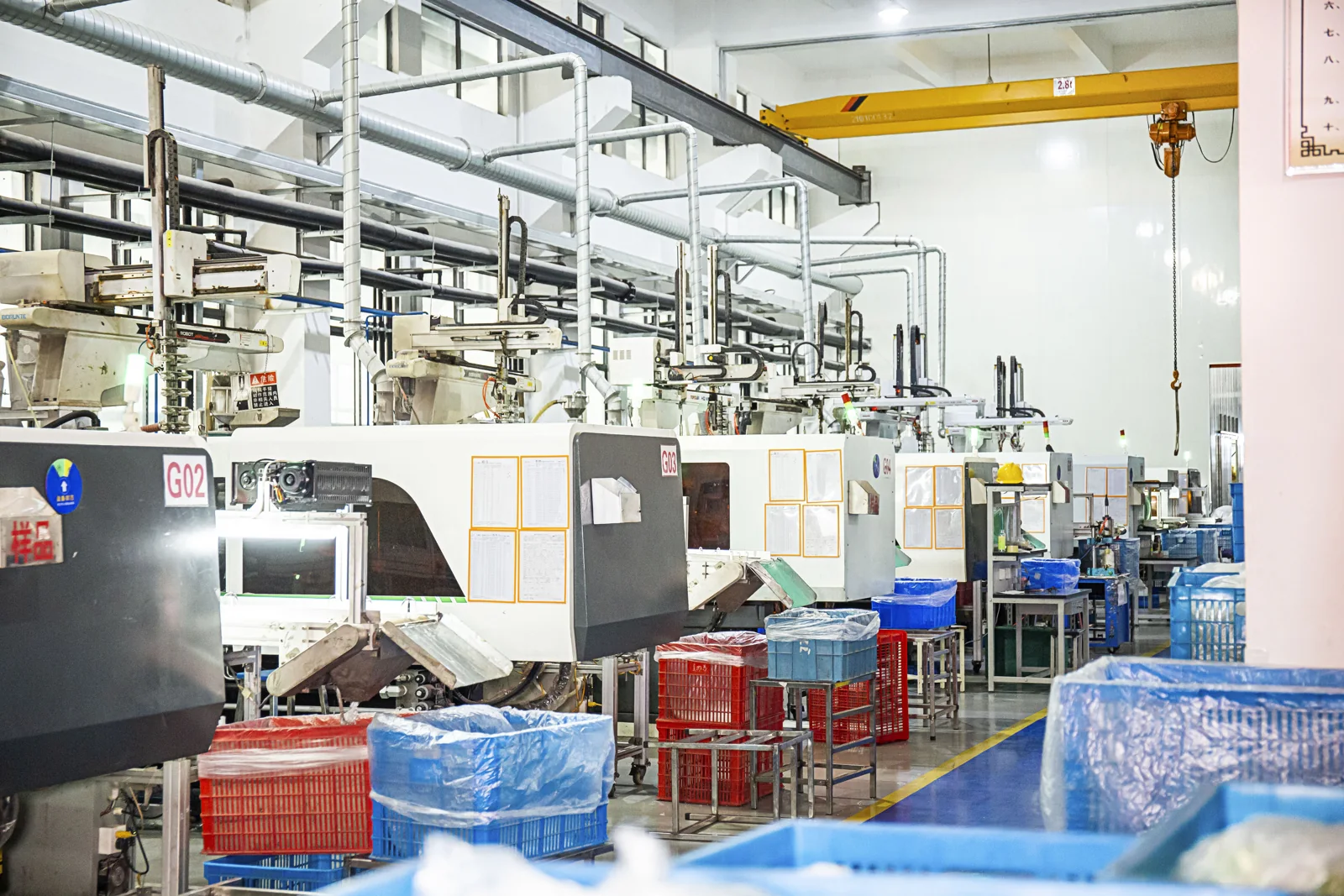
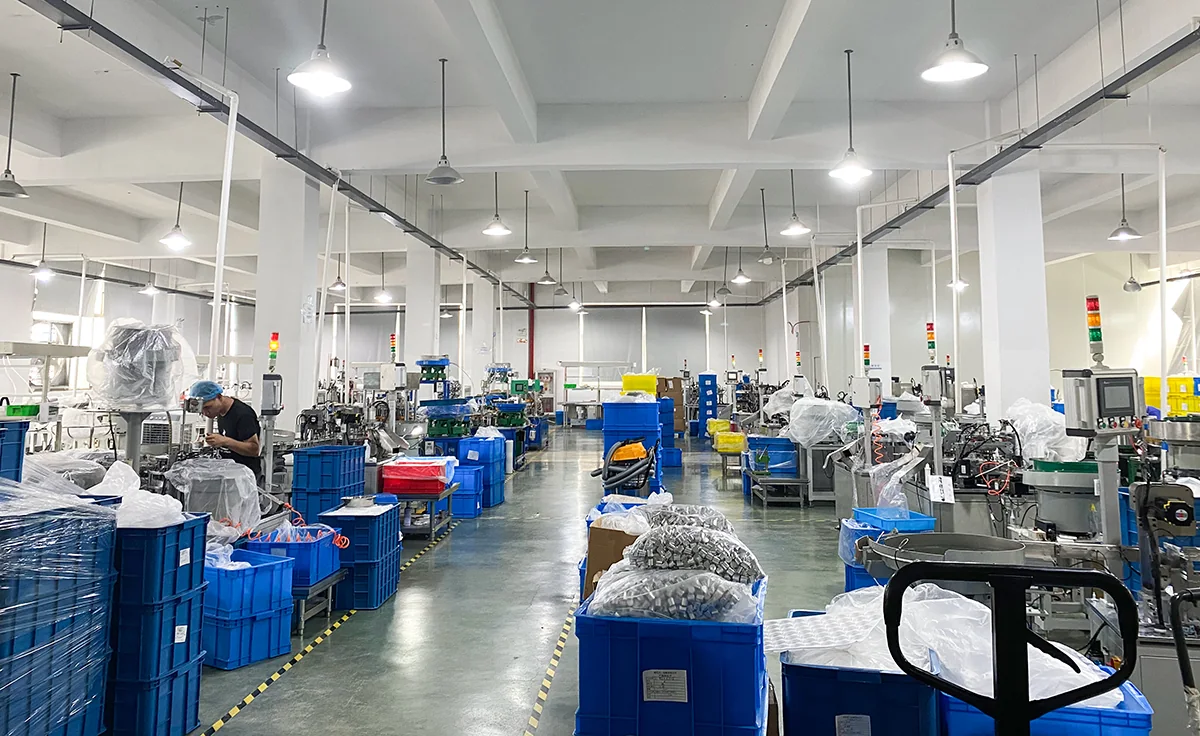
Photographed at Oulete
From the sample room to packed containers
See the facility and visible operations behind a packaging enquiry. For your selected assembly, ask which steps apply and request the corresponding sample and inspection records.