Cosmetic packaging · Made for your brand
Empty Cosmetic Bottle Export Packing: Buyer Checklist
Empty cosmetic bottle export packing should define the shipped components, protection, carton contents and receiving instructions, with traceable counts and evidence for the agreed arrangement. Consider a hypothetical shipment. A buyer…
Containers only — no compounding or filling.

Operator's hands positioning a packaging component at an assembly fixture
On this page · 12 sections
- Define what is shipped before choosing the packing arrangement
- Protect the finished surfaces, openings and fragile parts
- Reconcile components, cartons and the packing list
- Agree the route and evidence before making a transit claim
- Prepare the receiving handoff before dispatch
- FAQ
- Does the container MOQ tell me how many bottles fit in a carton?
- Is assembled or separate-component packing always better?
- Can a parcel-packing guide qualify a bulk export pallet?
- How should separate bottle, pump and cap cartons be counted?
- Does a fragile label prove the shipment is adequately protected?
- What should I do when components are missing on arrival?
Empty cosmetic bottle export packing should define the shipped components, protection, carton contents and receiving instructions, with traceable counts and evidence for the agreed arrangement.
Consider a hypothetical shipment. A buyer orders a complete cosmetic pack, but the shipment arrives as separate cartons of bodies, pumps and caps. The packing list says “bottles,” the warehouse counts closed cartons, and the filler needs to know which parts form each approved assembly. Protective packing and usable identification must be planned together. Neither an attractive product sample nor a carton photograph settles both questions.
Write the packing specification around the actual delivered state. Identify what is inside each package, how the finished surfaces and openings are protected, and how receiving staff connect the contents to the order. The freight proposal can then use an identified packing arrangement, while the filler receives parts it can locate, reconcile and prepare for its own process.
Define what is shipped before choosing the packing arrangement
A packing specification describes the physical shipment of the selected packaging configuration. Start with the component list and supplied state: complete assembled packs, preassembled subcomponents or separate parts. Identify whether the buyer or another supplier provides any component. The receiving record should describe the actual cargo rather than the complete pack shown in a catalogue image.
Bodies and dispensers shipped separately need explicit commercial and physical scope. Ask which components are included, which arrive fitted and which remain loose. Describe the applicable caps, liners, inserts or other parts by their proposed references. The receiving team should not have to infer a missing sealing component from the appearance of a dispenser carton.
Oulete’s confirmed container MOQ baseline is 2,000 pieces for plastic and 5,000 for glass. Those values are ordering inputs, not carton quantities or pallet capacities. Request component quantities and proposed packing counts for the actual offer. The complete-pack quotation comparison helps keep the quoted unit and included parts visible before logistics planning starts.
| Packing-scope field | Information to agree | Receiving question it resolves |
|---|---|---|
| Order configuration | Body, capacity, component list and decorated version | Which approved proposal is being delivered? |
| Supplied state | Fitted, preassembled or separate parts | Which assembly tasks remain? |
| Quantity basis | Bodies, individual components or complete packs | What does each stated quantity count? |
| Package contents | Component and version by carton or inner package | Where can the relevant parts be found? |
| Protection | Proposed inner protection and outer packing | What arrangement should receiving expect? |
| Identification | Order, component and relevant lot references | How can a received item be linked to its records? |
For a mixed order, keep the packing rows separated by configuration. A shared carton may contain different bodies or decorated versions, but its contents need a usable map. Identify how staff distinguish the inner packages without unwrapping every item. “Assorted bottles” is inadequate when the filler needs a specific artwork, colour and matched dispenser for each production job.
Agree how partial packages are identified. A final carton with a different count should be recorded as it is packed, not assigned the standard full-carton quantity. Keep substitutions, missing parts and any planned balance shipment visible. The purchase order can describe the accepted commercial position while the packing list continues to describe the goods actually dispatched.
Protect the finished surfaces, openings and fragile parts
Protective packing should address the actual materials, decorated surfaces and shipped assembly. Glass bodies, decorated plastic bodies and loose dispenser components can create different handling questions. Ask the supplier to explain the proposed arrangement and show representative packed parts. A carton selected only for a bare-body dimension can leave the finished cap, collar or protective insert unresolved.
Separate the protection questions. One concerns movement and contact between neighbouring parts. Another concerns the exposed container openings or component surfaces the filler needs to receive in an agreed condition. Another concerns damage to fragile bodies or projecting parts. The responsible supplier and filler should agree the relevant protection and handling expectations without assuming that a sealed outer carton establishes every condition.
FedEx’s breakables packing guidance emphasises suitable boxes, cushioning and restricting product movement. That is useful parcel guidance, not qualification of a bulk cosmetic-bottle export arrangement. Use the actual shipment route and cargo when selecting protection; do not copy a parcel-packing example into an unrelated pallet specification without the appropriate review.
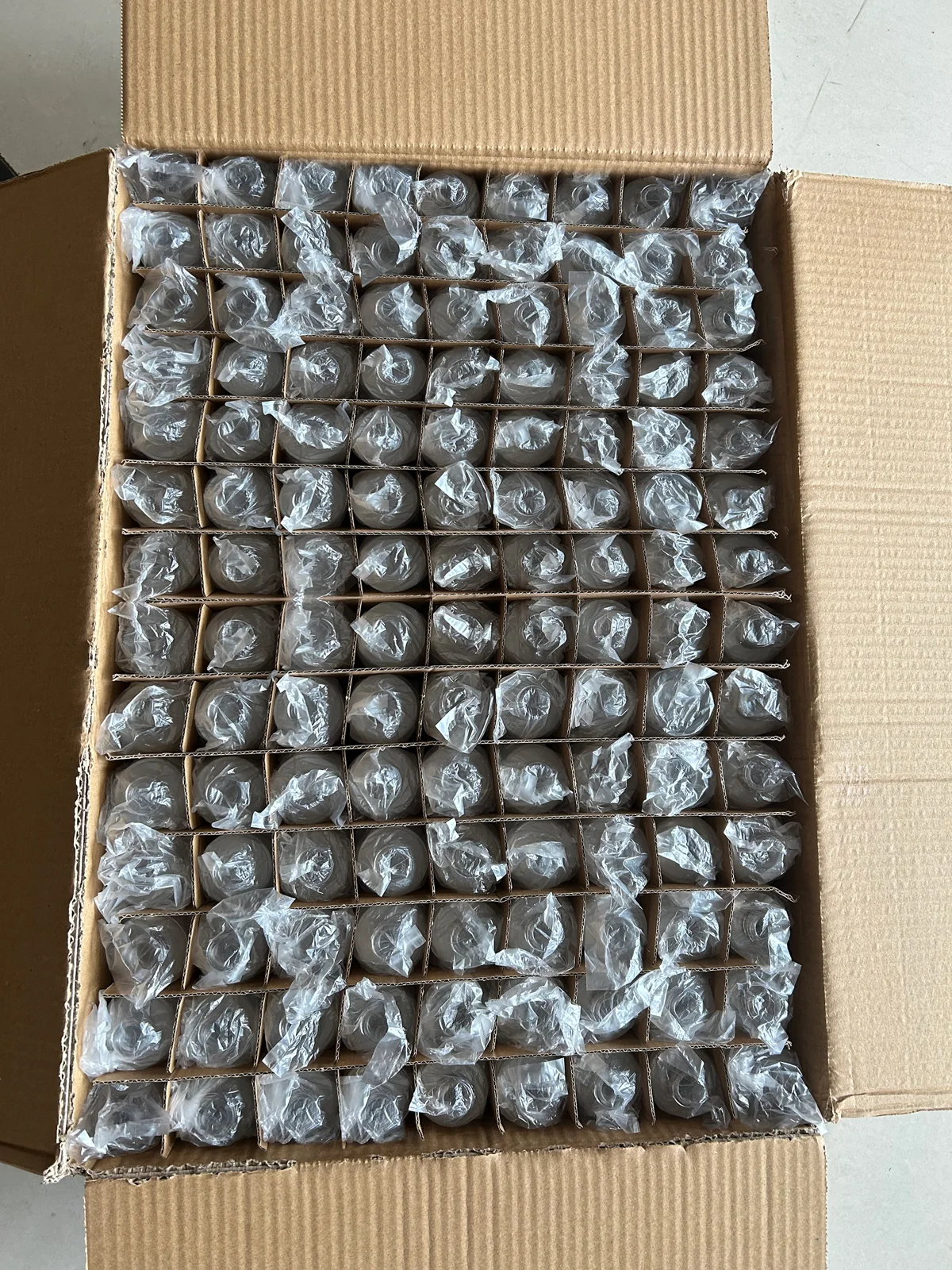
Oulete-supplied packing photograph. It illustrates visible separation inside a carton; carton counts, protection materials and transport performance remain specific to the shipment proposal.
| Protection area | Question for the packing proposal | Evidence to request |
|---|---|---|
| Decorated surfaces | Which surfaces can touch during packing and handling? | Inner arrangement and representative packed parts |
| Glass or fragile bodies | How are neighbouring items and carton surfaces separated? | Proposed protection and applicable assessment scope |
| Pumps and closures | Which projecting or fitted parts need protection? | Supplied-state information and component packing view |
| Open containers | What condition does the filler require on receipt? | Agreed protection, handling and receiving instructions |
| Mixed variants | How are parts separated and identified? | Inner-package labels and carton-content map |
Ask the filler about its receiving and unpacking process before deciding the final arrangement. A protective material that is convenient for an export warehouse may create a different handling task at the filling site. The filler should identify its requirements, and the supplier should confirm what it proposes to provide. The contract-manufacturer handoff page helps organise those responsibilities.
Packing photographs should identify the configuration they show. Retain views of the inner arrangement and outer package, with the relevant packing reference. A photograph of another capacity or undecorated body can help discuss an idea, but it should not become evidence of the exact approved arrangement. Ask for the actual proposed finished configuration where the protection decision depends on it.
Reconcile components, cartons and the packing list
A packing list records the contents of the packages actually shipped. The US International Trade Administration packing-list guidance describes package contents, weights and measurements as core information used in shipping and cargo checks. Use the applicable transaction requirements with the buyer and forwarder; the guidance is not a complete legal-document checklist for every destination.
Record quantities in their stated units. Cartons of bodies, cartons of pumps and cartons of caps are separate component counts until the records establish the required assembly quantities. A complete-pack total must follow the agreed component list. If a necessary part is short or unidentified, the number of usable complete assemblies can differ from the number of bodies received.
| Packing-list level | Data to record | Common ambiguity to prevent |
|---|---|---|
| Shipment | Order, destination and applicable shipping references | One generic description for several configurations |
| Carton or other package | Package identifier and actual contents | Every carton assumed to contain the same parts |
| Inner package | Component, version and stated count where applicable | Mixed colours or artwork versions without a map |
| Weight | Defined net or gross basis and measurement unit | Body weight presented as complete packed weight |
| Dimensions | Identified package and stated measurement unit | Bottle dimensions used as outer carton dimensions |
| Quantity | Item count, counting unit and relevant total | Carton count confused with complete-pack count |
GS1’s Global Data Model attribute guide distinguishes product, case and pallet information in its trade-item hierarchy. That distinction is useful when structuring a packing record. The buyer’s chosen identification system and transaction determine the applicable fields; this article does not require every supplier carton to adopt a particular barcode system.
Reconcile the packing list against the purchase configuration before dispatch. Match the selected body, components, colour and artwork versions, then verify the stated contents of the packages. Where separate suppliers send related parts, identify their shipments and the receiving responsibility. An invoice line for a complete pack does not make two unrelated component deliveries physically complete at the filler.
Keep the shipping marks and receiving references consistent with the agreed package identities. Ask the buyer and forwarder which marks and labels the transaction requires, and obtain the final approved information from the responsible parties. Avoid inventing origin, classification or destination-specific statements merely to make a sample label look finished. An attractive carton template is not a substitute for verified shipment data.
Agree the route and evidence before making a transit claim
A transport assessment needs an identified packed configuration and a shipment context. Empty containers sent as courier samples and empty containers sent as a consolidated bulk order can have different arrangements. Ask the responsible parties what handling, storage and transport conditions the assessment should represent. A sample parcel result should not silently qualify a different production shipment.
The SGS packaging-performance description includes transit alongside other packaging assessment areas. That source supports treating transport as its own evaluation task. The services and protocols described there belong to SGS. Request the relevant assessment proposal and report from the responsible provider; this article does not establish that an Oulete packing arrangement has passed a transit protocol.
Ask the assessor or logistics specialist to identify the proposed method and its applicability. The packing record should name the actual parts, carton arrangement and supplied state used for the assessment. Record any differences from the planned shipment. If the production carton, internal protection or pallet arrangement changes, have the responsible parties decide whether the earlier result still applies.
A handling label does not demonstrate packaging performance. It communicates an instruction within the shipping process. Physical protection, correct assembly state and the applicable assessment answer separate questions. Likewise, the absence of visible external carton damage does not establish that every inner component remains acceptable. Receiving staff need an agreed procedure for checking the delivered condition and recording exceptions.
Define the observations that matter to the cargo. They may concern broken bodies, contacted decoration, displaced fitted parts or the condition of protected openings. These are examples of inspection questions, not universal defect limits. Connect the agreed descriptions to the proposed finished parts and evidence, with a named reviewer who can decide the acceptable outcome for the order.
If an exception is discovered after receipt, preserve the relevant package and component identifiers and contextual photographs. Separate the observed condition from an assumed cause. The incoming-inspection guide provides a record structure for describing defects, counts and follow-up. The shipment evidence can then support a reasoned investigation without immediately assigning responsibility from an isolated image.
Prepare the receiving handoff before dispatch
A receiving handoff connects the dispatch record to the filler or distributor’s actual intake process. Send the final packing reference, component-content map and agreed handling instructions to the responsible receiving contact. Identify separate deliveries and any outstanding balance. Staff should be able to locate the correct body, dispenser and decorated version before parts are allocated to a production job.
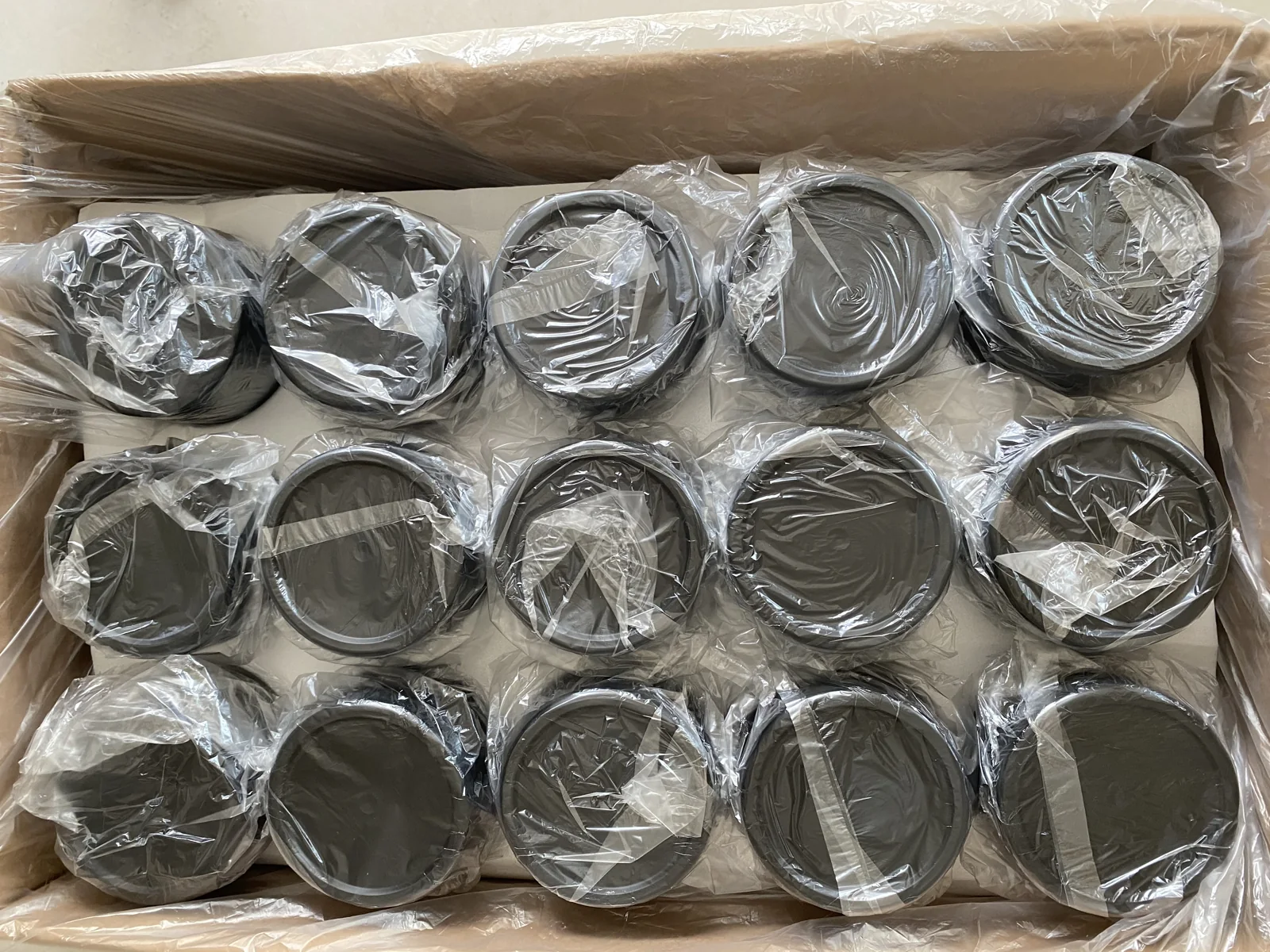
Oulete-supplied assembly photograph. The receiving handoff should identify which components arrive fitted and which steps remain with the filler; the image does not establish a particular shipment’s supplied state.
Agree how the warehouse records receipt and exceptions. Distinguish packages received, contents reconciled and configuration accepted. These are different states. A signed delivery receipt or a closed-carton count cannot by itself establish that the matched components, appearance and other agreed attributes are complete and acceptable. The receiving plan should state which decisions remain with the responsible reviewers.
For a glass dropper enquiry, identify the chosen body and matched applicator proposal before requesting the packing arrangement. The 30 ml dropper selection page separates plastic catalogue references from a glass sourcing brief. Keep a glass shipment’s specifications and protection tied to its actual proposed parts rather than borrowing carton information from a similar-looking plastic model.
Request the itemised packing and freight inputs with the quotation: proposed protection, package contents, measured outer dimensions, stated weight basis and applicable charges. Keep a preliminary logistics estimate labelled as preliminary until the arrangement is confirmed. If a different delivered state is proposed to reduce packing volume, revisit the filler’s assembly responsibility before treating that change as an equivalent commercial offer.
Send the Oulete sample brief with the selected configuration, component counts, destination and receiving requirements. Ask for the packing proposal and the evidence needed to approve it. The useful outcome is a defined shipment that purchasing can compare, the forwarder can describe and the receiving team can reconcile against the actual order.
FAQ
Does the container MOQ tell me how many bottles fit in a carton?
The container MOQ does not define the carton quantity. Packing count depends on the selected body, supplied assembly and protective arrangement. Request the actual contents and measured outer package information for the proposal. Keep plastic and glass ordering baselines separate from the package counts used by the forwarder and receiving team.
Is assembled or separate-component packing always better?
Neither delivered state is automatically better for every project. Compare protection, component identification, packing volume and the assembly tasks left to the receiver. Ask the filler or distributor to confirm its handling requirements, then obtain an itemised supplier proposal. Record the chosen state so the quotation, packing list and receiving plan describe the same cargo.
Can a parcel-packing guide qualify a bulk export pallet?
A parcel-packing guide does not automatically qualify a bulk export pallet. The actual cargo, protection and route need review by the responsible parties. Use guidance within its applicable context and identify the proposed packed configuration. Any transport claim should refer to the relevant assessment rather than an unrelated courier sample or generic packing photograph.
How should separate bottle, pump and cap cartons be counted?
Separate cartons should be counted by their actual identified components and units, then reconciled against the required complete assembly. Record package contents, variants and any partial carton. Body quantity alone does not establish usable complete-pack quantity when a necessary component is missing, short or unresolved. Keep the discrepancy visible in the receiving record.
Does a fragile label prove the shipment is adequately protected?
A fragile label communicates a handling instruction and does not prove that the physical packing is adequate. Review the actual parts, protection, supplied state and relevant transport assessment separately. Receiving staff should document the delivered condition using the agreed package references and defect descriptions rather than relying on the external label as performance evidence.
What should I do when components are missing on arrival?
Missing components should be recorded against the order, packing list, package identities and actual counted contents. Preserve the relevant labels and contextual photographs, and identify any related delivery still outstanding. Notify the responsible supplier and receiving contact with the discrepancy record. Keep the observed shortage separate from an assumed cause while the shipment is reconciled.
Photographed at Oulete
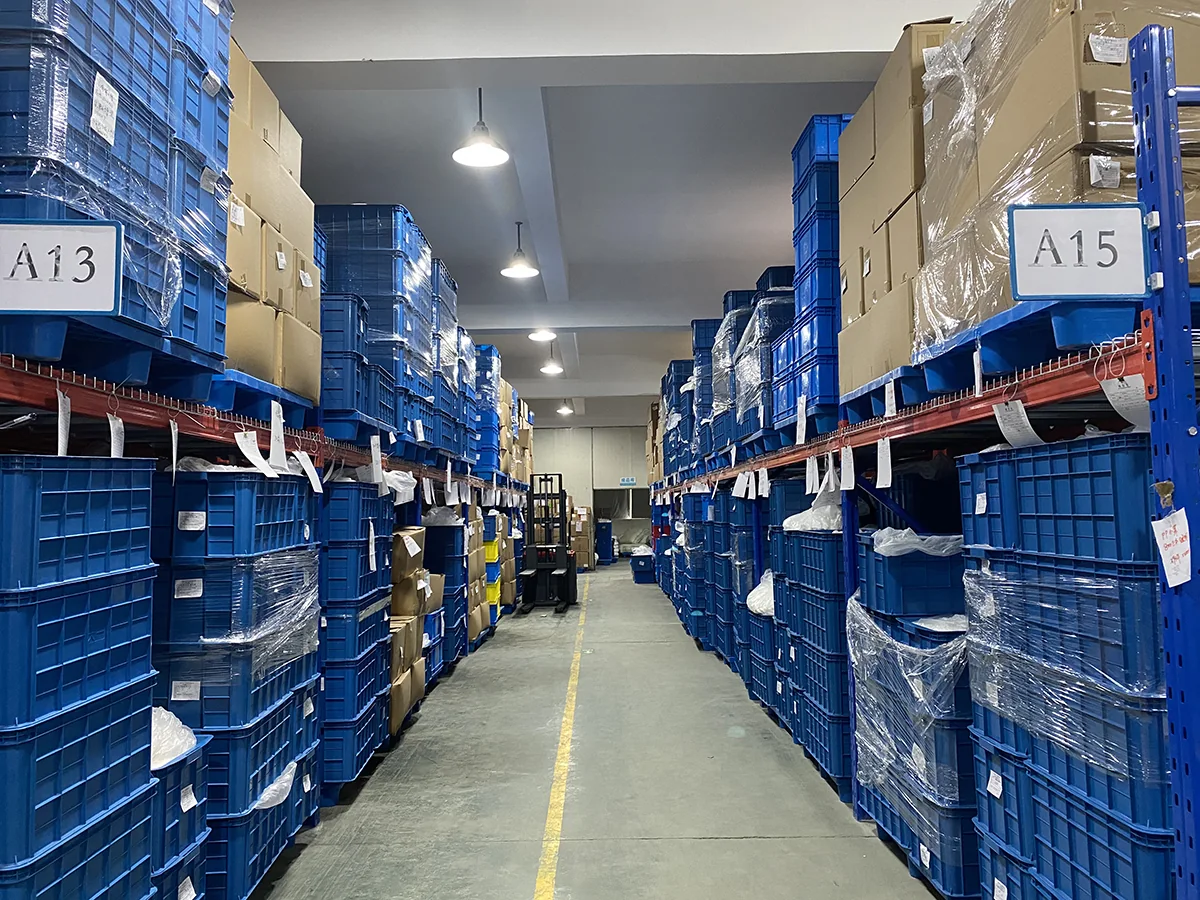
Packing and warehouse photographs
See the facility and visible operations behind a packaging enquiry. For your selected assembly, ask which steps apply and request the corresponding sample and inspection records.