Choose 30 ml dropper bottles by the body and matched applicator together, then request a sample proposal for your actual serum or oil.
Oulete’s supplied catalogue provides five plastic bottle references for a 30 ml brief. Compare their listed proportions and capacities, select the body codes you want to review, and ask for the closure, bulb, pipette and applicable sealing or wiping parts. A complete-pack enquiry makes the component scope clear before the quote is compared.
Plastic-container enquiries use a 2,000-piece MOQ; glass-container enquiries use a 5,000-piece MOQ. The plastic TY references below are separate from a glass sourcing proposal. For either route, the selected body and matched assembly need to be identified in the offer.
Compare the five plastic body references
| 30 ml dropper bottle body reference | Listed neck diameter | Listed body height / diameter | Listed brim-full capacity |
|---|---|---|---|
| TY030-30ML | 20 mm | 55.9 / 35 mm | 33 ml |
| TY031-30ML | 18 / 20 mm | 75 / 30.5 mm | 33 ml |
| TY032-30ML | 18 / 20 mm | 64.5 / 33 mm | 33 ml |
| TY035-30ML | 20 mm | 62.5 / 35 mm | 35 ml |
| TY038-30ML | 20 mm | Request a clarified drawing | 37 ml |
Source: Oulete’s supplied Product Catalog 2, printed pages 07, 09, 11 and 15. The listed neck figures are diameter references, not complete thread-finish designations. Body dimensions do not describe an independently proposed complete dropper assembly. The printed TY038 height fields need clarification and are left out of the dimensional comparison.
For a shorter body direction, TY030-30ML lists 55.9 mm body height and 35 mm diameter. For a taller, narrower direction, TY031-30ML lists 75 mm and 30.5 mm respectively. These are two catalogue proportions for the same nominal 30 ml brief. Compare the proposed assembled presentation before selecting the final bottle and applicator.
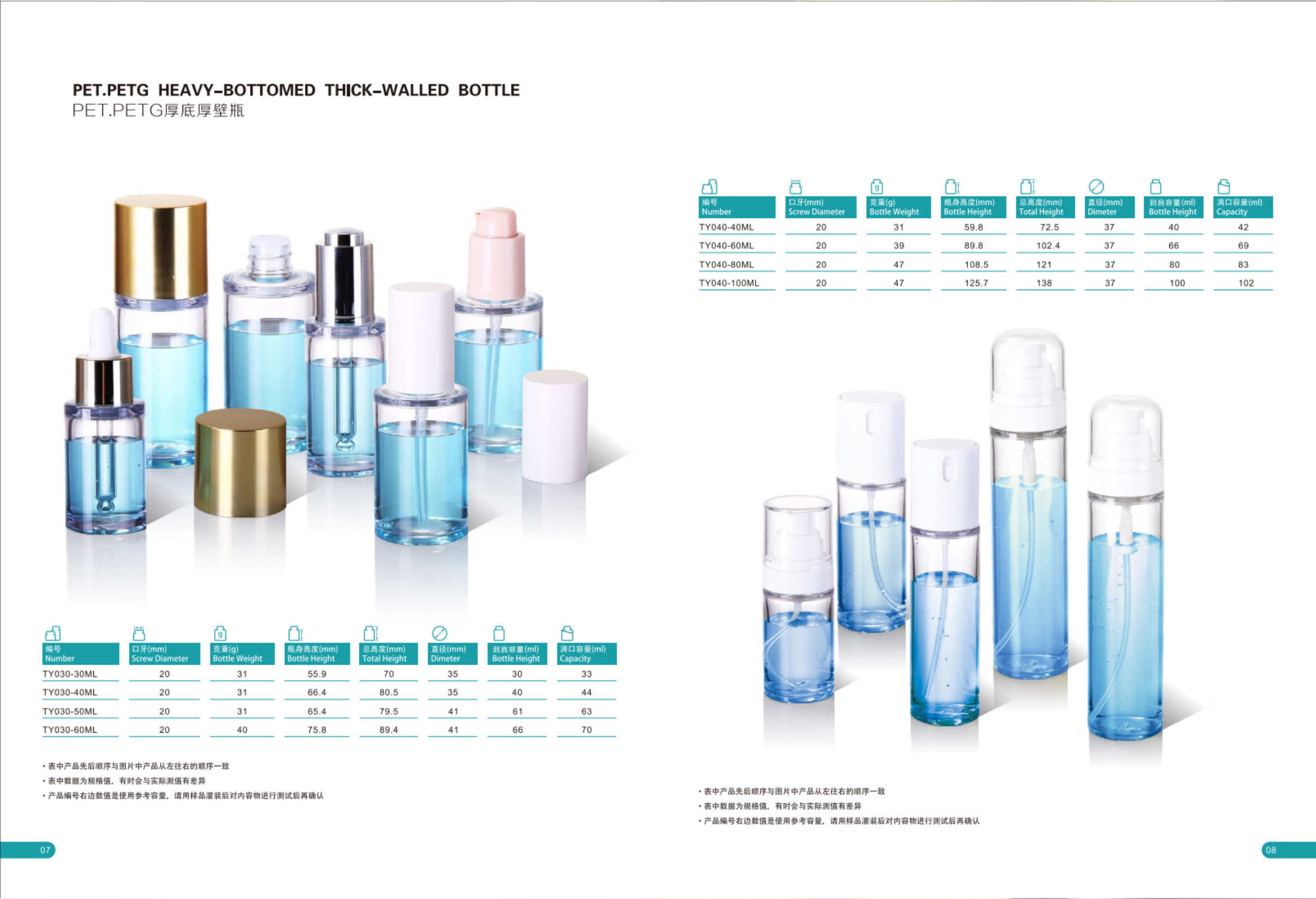
Original Oulete-supplied catalogue spread. The TY030 table is on printed page 07. The illustrated component combinations are selection references; request the exact body and matched dropper for your project.
The 18 / 20 mm notation on TY031 and TY032 needs clarification for the selected body version. Ask for the relevant drawing and its proposed closure. Do not interpret the two numbers as a promise that an applicator can be swapped between versions without a fit review.
Choose the plastic or glass route before requesting an assembly
The verified TY rows are plastic catalogue references. They help the buyer shortlist a body, but do not describe a glass option or qualify a particular formula. Identify the actual proposed resin and contact parts in the material proposal. The complete assembly, rather than the body category alone, is what the responsible product team needs to evaluate.
For a glass brief, state the intended fill, shape direction, appearance, applicator and destination. Ask Oulete to identify a glass body code and matched component proposal. Keep that proposal separate from the plastic table above. A glass-container enquiry can use the confirmed 5,000-piece MOQ without inventing a model specification or declaring an unspecified dropper compatible.
| Sourcing route | Useful starting reference | Proposal needed before approval |
|---|---|---|
| Plastic | Selected TY code and catalogue proportion | Current body drawing, material proposal and matched applicator |
| Glass | Buyer’s 30 ml glass brief and shape direction | Identified glass body, component list and assembly documents |
| Either route | Intended contents and user action | Contact-material review and actual-filled-pack evaluation scope |
If the enquiry needs a comparison between material routes, ask for complete-pack offers with the same decoration and delivery scope. Use the confirmed MOQ of 2,000 for plastic and 5,000 for glass, and compare included components, setup charges and packing. The supplier quotation comparison helps keep the quoted unit and included parts visible.
Keep target fill separate from brim-full capacity
Nominal 30 ml and brim-full capacity describe different selection information. The product brief names the intended fill. The catalogue’s brim-full figure describes the listed capacity to the brim, before the buyer has qualified the installed assembly and filling process. Confirm the actual usable fill and headspace with the proposed components and responsible filler.
TY030-30ML, TY031-30ML and TY032-30ML list 33 ml brim-full, while TY035-30ML lists 35 ml and TY038-30ML lists 37 ml. These values help compare catalogue rows. They do not set filling-machine parameters or establish the available headspace after a proposed pipette and closure are installed.
Ask which configuration is represented by any capacity or assembled-height figure in the supplier’s document. A catalogue value for an illustrated combination should not be reused as the specification of a different applicator. The nominal and brim-full capacity guide explains the questions to take into the filled-pack review.
Match the closure, bulb and pipette to the selected body
A dropper assembly includes the closure, bulb and pipette, together with any sealing or wiping parts specified for the proposed configuration. Ask for part references, proposed materials and drawings. State whether the applicator is supplied assembled and which party fits it after filling, so the quotation and filler’s handoff describe the same complete pack.
The pipette needs fitted geometry, rather than a length guessed from the outside bottle height. Request the installed extension and the relevant internal bottle dimensions from the supplier. The pipette and wiper selection guide sets out how to review the proposed tube and insert with the actual formula and application.
| Assembly area | Information to request | Decision it supports |
|---|---|---|
| Bottle and closure | Matched references, interface drawings and proposed seal | Identifies the physical pairing to sample |
| Pipette | Part code, fitted geometry and proposed material | Defines the inserted component for fit and draw review |
| Bulb and contact parts | Proposed materials and contact status | Defines the assembly for formula evaluation |
| Applicable liner or insert | Part reference and fitted position | Identifies the proposed sealing or wiping arrangement |
| Supplied state | Fitted or separate components and responsibility | Prepares the filler’s assembly handoff |
Put the dispensing target in the brief
Describe how the consumer is expected to use the applicator. If the brief includes a dispensing target, have the responsible team define the measurement and evaluate it with the actual contents. Drop count from an unrelated demonstration does not establish a dose for the proposed product. Keep sample identity, formula reference and observations together.
Approve the decorated pack and quote the complete scope
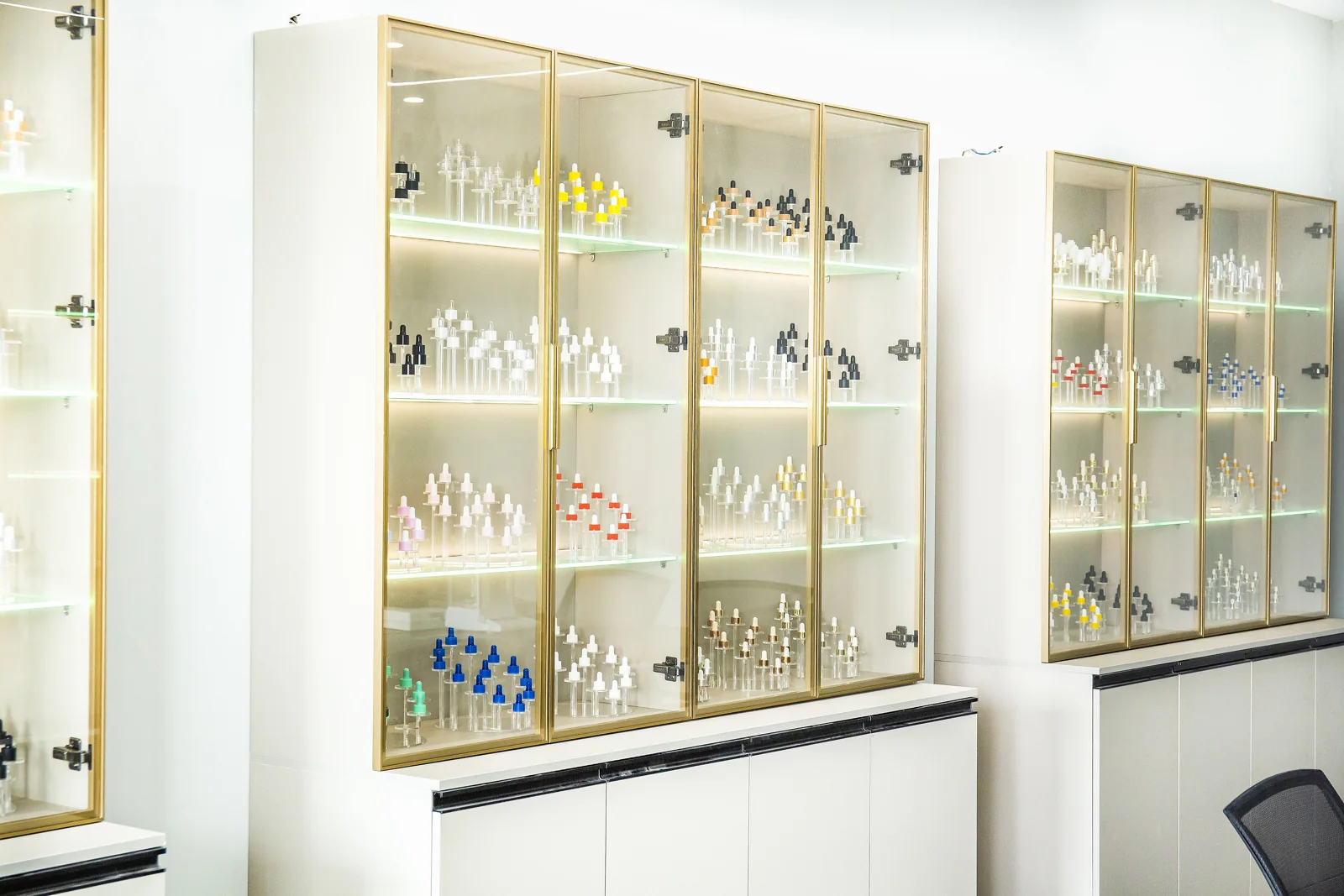
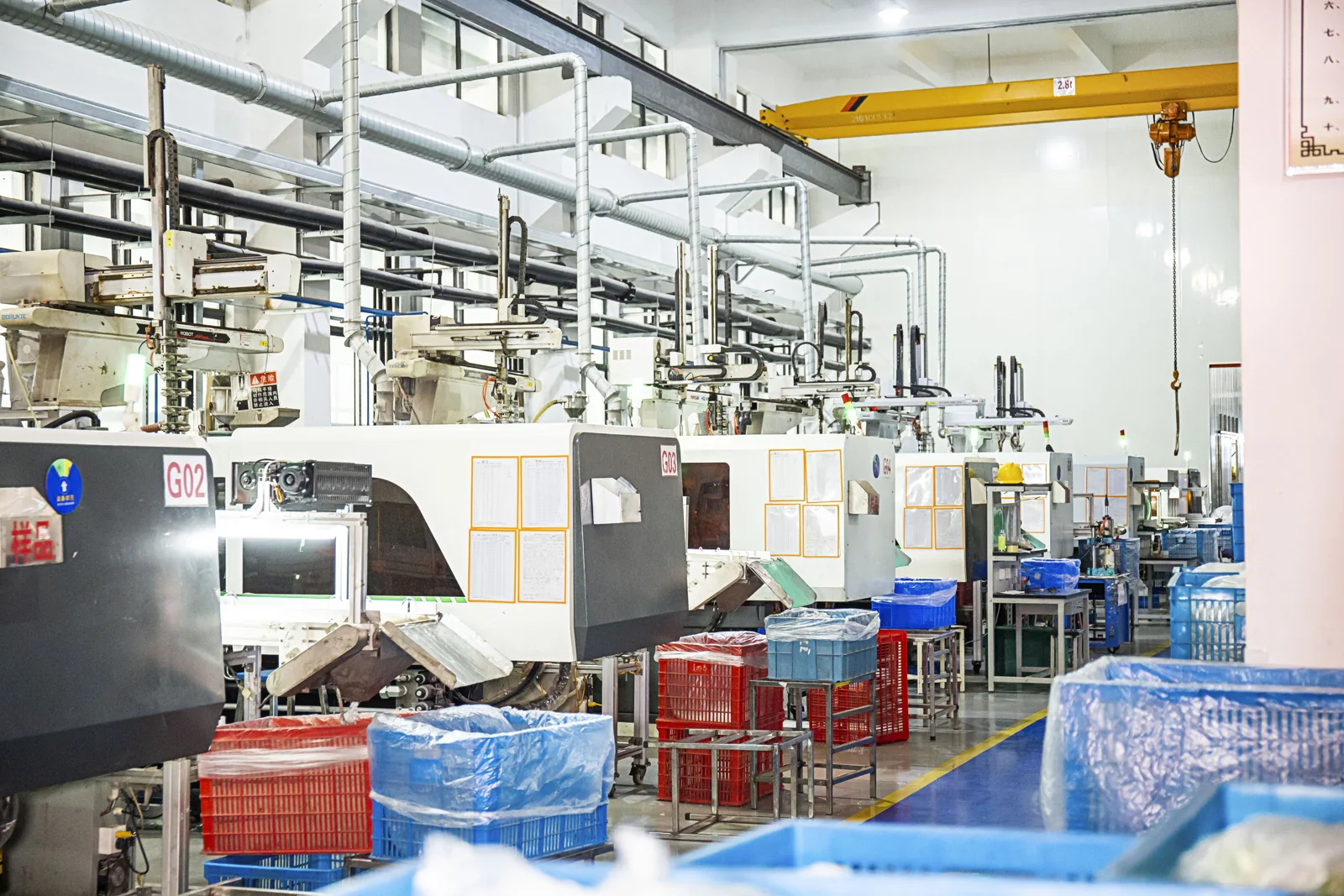
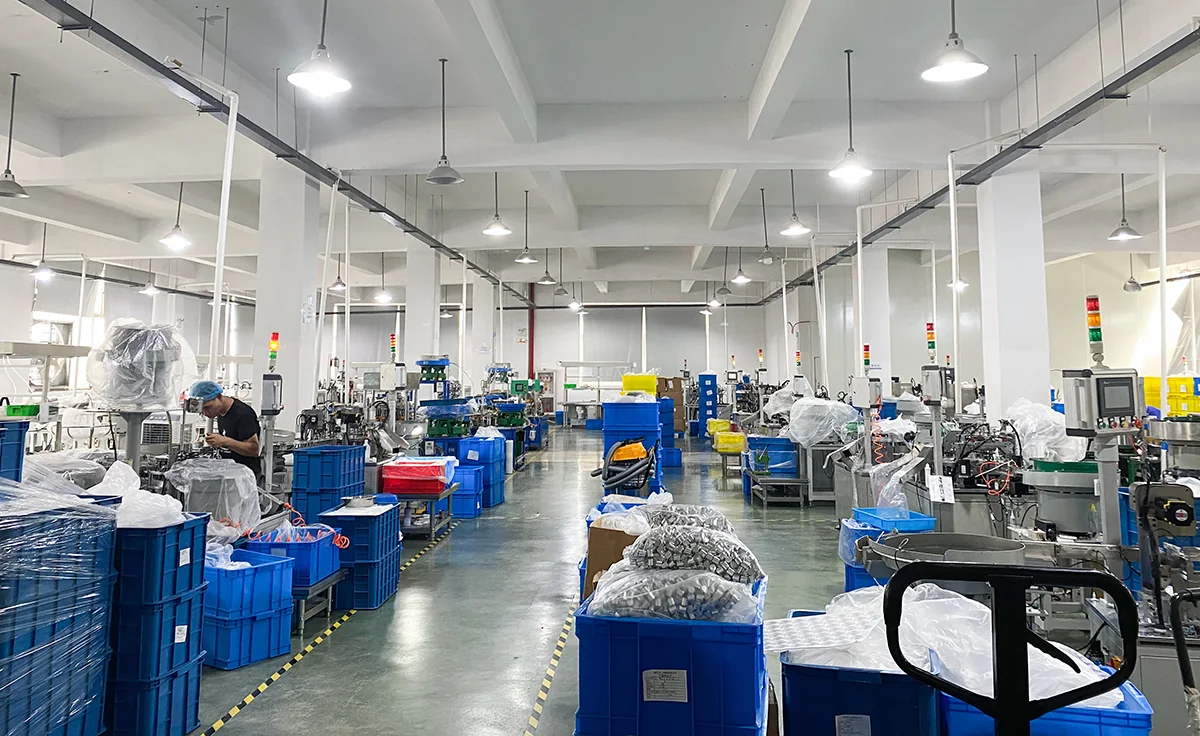
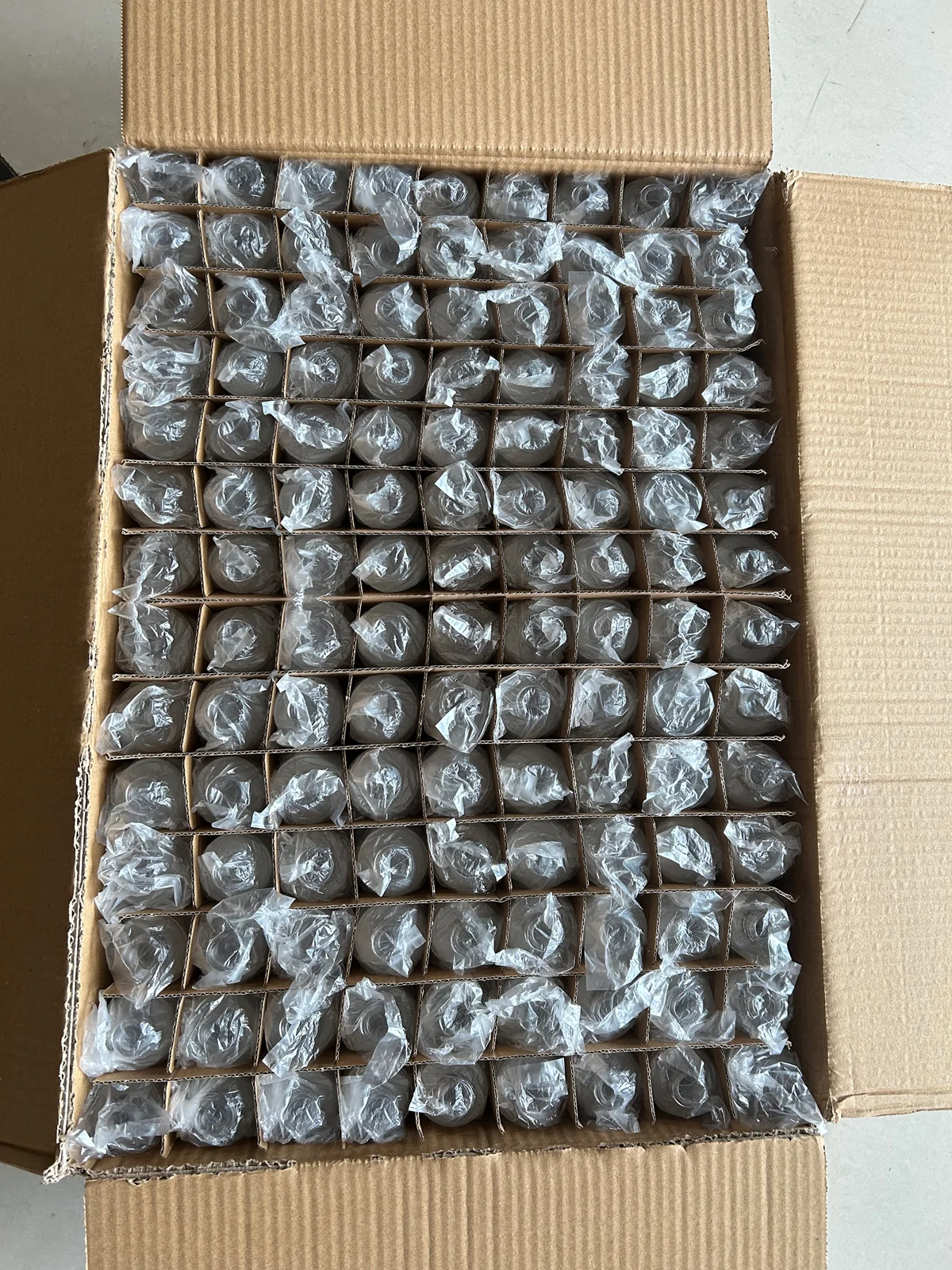
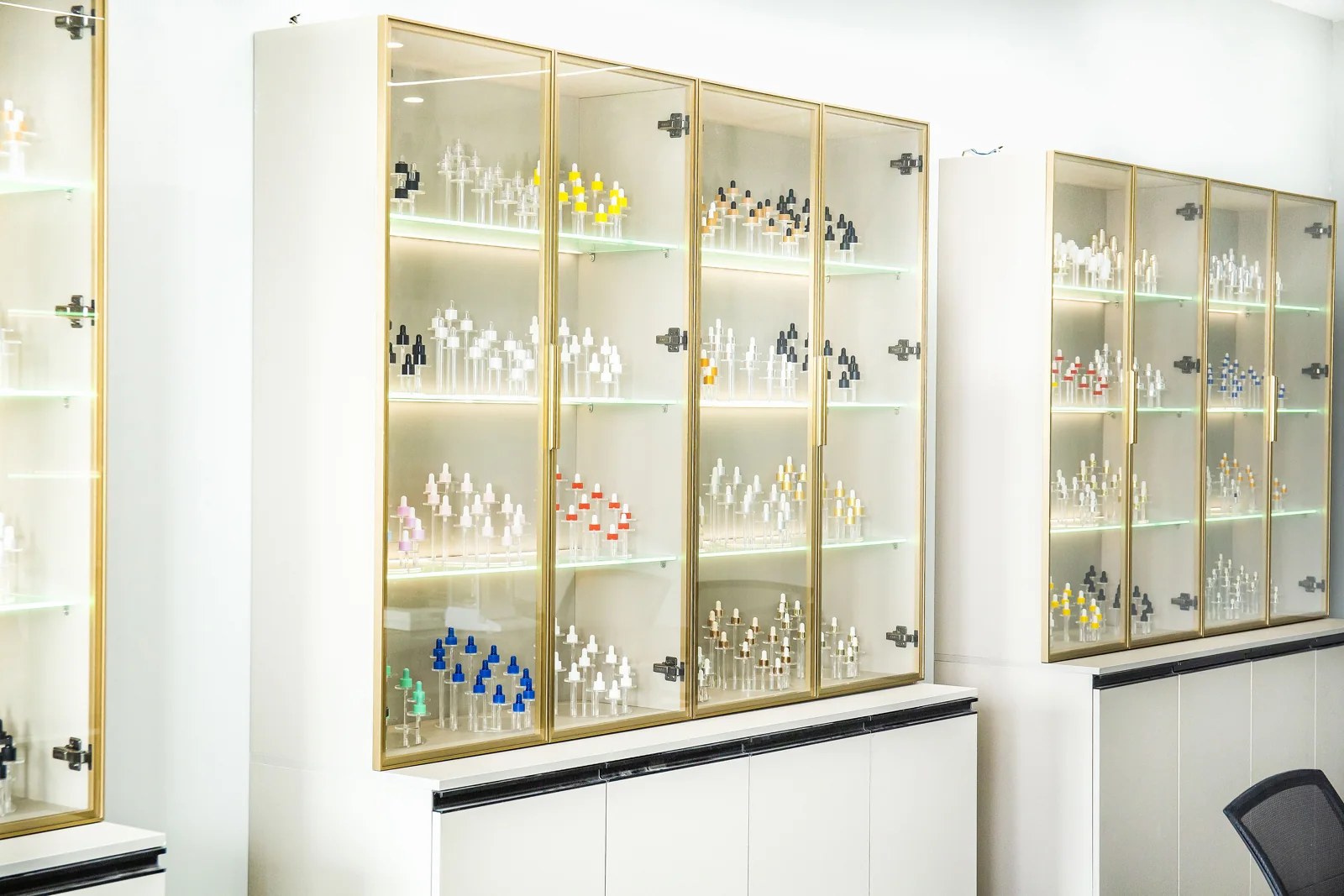
Oulete-supplied showroom and assembly photographs retained from this product page. Identify the selected body and applicator in the actual sample proposal.
Send final-size artwork and identify the parts to decorate. Ask for the proposed usable area, orientation and process on the selected substrate. Review the body alongside the proposed closure and bulb so the appearance decision reflects the assembled presentation. The decoration options provide routes to discuss for the actual parts.
Appearance, filled-pack function and packing need distinct decisions. Identify the configuration used for each sample and retain the agreed physical references. If the product requires handling, formula-contact or transport checks, the responsible teams should agree those methods and criteria. A decorated sample alone does not establish the complete approval scope.
| Complete-pack enquiry field | Information for Oulete |
|---|---|
| Container route | Plastic TY shortlist or an identified glass sourcing brief |
| Fill and contents | Intended fill, formula description or controlled reference |
| Applicator | Required user action and supplier-proposed component scope |
| Appearance | Colour direction, process, artwork and decorated parts |
| Quantities | Pieces by body, component configuration, colour and artwork |
| Packing and delivery | Required protection, destination and requested milestone |
| Approval | Sample purposes and responsible brand or filler reviewers |
Request an itemised offer that names the complete assembly and the quoted unit. Separate sample charges, setup costs, sourced components and any tooling work from the unit price. The confirmed packaging MOQs are 2,000 pieces for plastic and 5,000 for glass; identify the supplied components, finish and quantity by version in the quotation.
Use the Oulete sample brief to send the selected body or glass brief, intended formula and outstanding drawing questions. Request the matched component proposal and the sample scope needed for appearance, fitted geometry, draw behaviour and packing. This gives purchasing a defined pack to compare and the product team an identifiable assembly to evaluate.
30 ml dropper bottle questions
Are the five TY references glass bottles?
The five listed TY rows are plastic catalogue references. A glass enquiry needs a separately identified body and matched applicator proposal. Keep its specifications and sample references separate from the plastic comparison, even when both projects use a nominal 30 ml brief.
Does a 20 mm neck diameter mean a 20/410 finish?
A 20 mm diameter reference does not establish a complete thread-finish designation. Ask for the selected body drawing and the proposed closure drawing before approving the interface. The TY catalogue notation should be preserved rather than expanded into an unlisted standard code.
Can I fill the bottle to its listed brim-full capacity?
The filling specification needs review with the intended contents, installed components and actual process. The catalogue’s brim-full capacity is a selection reference. The responsible team should confirm usable fill and headspace for the proposed complete assembly instead of using the catalogue figure as a filling instruction.
What should I send for a 30 ml serum bottle quotation?
Send the selected body or glass sourcing brief, intended contents, applicator requirements, artwork, quantities and destination. Identify buyer-supplied parts and the requested sample decisions. Ask for the exact complete-pack configuration, included components and commercial conditions in the offer.
Product and process references

Related project tools and guides
TY030-30ML · TY031-30ML · TY032-30ML · TY035-30ML · TY038-30ML · Return to the full selection guide · prepare the inputs for a sample request ·