Cosmetic packaging · Made for your brand
Cosmetic Bottle Capacity: Nominal vs Brimful and Fill
Nominal capacity names the bottle size; brimful capacity measures the empty cavity, while approved fill capacity depends on the assembled pack. A 30 ml serum bottle can have more than 30 ml of empty internal volume and still need a careful…
Containers only — no compounding or filling.
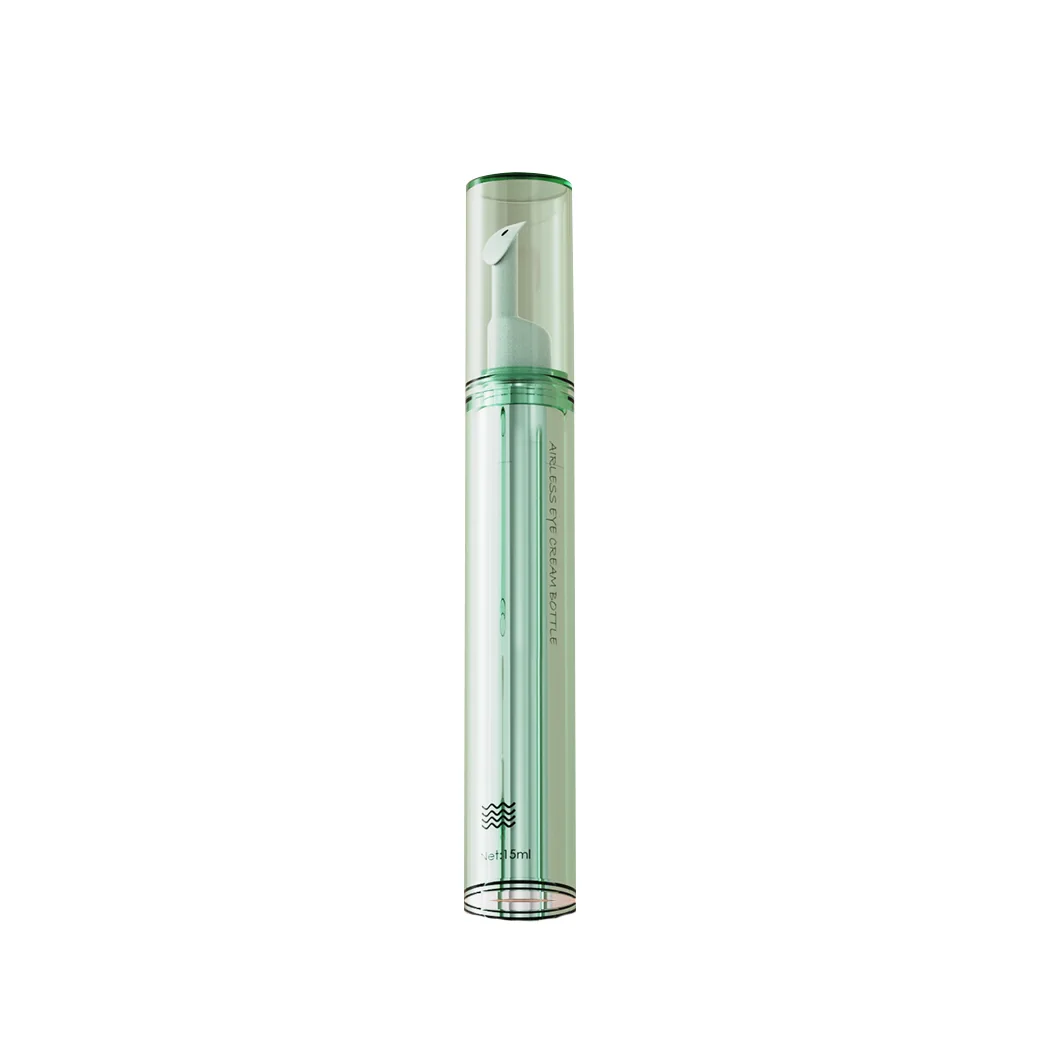
Translucent green cosmetic bottle
On this page · 15 sections
- Separate catalogue size, empty volume and approved fill
- Nominal vs brimful capacity: Oulete catalogue references
- Account for what enters the bottle after filling
- Hypothetical example: the apparent reserve changes
- Give the filler a usable quantity and filling route
- Request one drawing set for fill, appearance and carton fit
- Blank capacity and assembled-pack approval worksheet
- Approve the complete fill decision before the order
- FAQ
- Does a 30 ml bottle hold exactly 30 ml to the brim?
- Can I use brimful capacity minus fill volume as headspace?
- Does a listed 20 mm neck mean 20/400?
- Is a fill weight in grams the same as capacity in millilitres?
- Can bottle height alone confirm carton clearance?
- Can the same fill calculation be used for every airless bottle?
Nominal capacity names the bottle size; brimful capacity measures the empty cavity, while approved fill capacity depends on the assembled pack.
A 30 ml serum bottle can have more than 30 ml of empty internal volume and still need a careful filling trial. The difference is relevant to nominal vs brimful capacity, but it is not automatically spare room for a dropper or pump. Component intrusion, the formula, the filling process and the agreed dimensional limits all affect the finished package.
For a buyer, the useful question is precise: can this exact bottle and closure hold the intended commercial fill, close correctly, dispense properly and fit the distribution pack? A catalogue capacity begins that discussion. It does not finish it.
Separate catalogue size, empty volume and approved fill
Nominal capacity is a size designation used to identify a bottle family and its intended application. Brimful capacity is the volume of the empty bottle cavity filled to a defined upper reference. Working fill is the quantity approved for the actual formula and assembled package. These figures belong in different fields of a purchase specification.
According to Stocksmetic's Ego product page, the named glass bottle has a nominal capacity of 30 ml and a brim capacity of 36.5 ml. That product-specific distinction helps a purchaser ask for the missing fill information. It does not establish the recommended fill or capacity tolerance for another bottle.
Headspace is the unfilled space remaining within the closed package under defined conditions. It can change when a pipette, dip tube, liner or other component enters the cavity. Specify whether a reported volume describes a bare bottle, a partially assembled container or the final closed package before comparing suppliers.
The same catalogue size can appear on bottles with different body proportions. A narrower, taller bottle may require a different applicator reach and carton cavity from a wider bottle. Neither shape can be approved simply because both descriptions say 30 ml. Geometry and capacity answer related but separate procurement questions.
Nominal vs brimful capacity: Oulete catalogue references
The following figures come from Oulete's supplied PET/PETG bottle catalogue. They are nominal references for selecting candidate bodies, not current controlled drawings, tolerances or approval of a particular dropper assembly. The stated neck diameter also does not identify the complete thread finish.
| Catalogue body | Named size | Listed brimful capacity | Listed neck diameter | Listed bottle height | Listed body diameter |
|---|---|---|---|---|---|
| TY030-30ML | 30 ml | 33 ml | 20 mm | 55.9 mm | 35 mm |
| TY031-30ML | 30 ml | 33 ml | 18/20 mm | 75 mm | 30.5 mm |
| TY032-30ML | 30 ml | 33 ml | 18/20 mm | 64.5 mm | 33 mm |
| TY035-30ML | 30 ml | 35 ml | 20 mm | 62.5 mm | 35 mm |
| TY038-30ML | 30 ml | 37 ml | 20 mm | Request clarified drawing | Request clarified drawing |
Oulete's TY030, TY031 and TY032 references share a listed 33 ml brimful capacity while their listed body dimensions differ. That is useful selection evidence: a capacity match does not establish a geometry match. TY038 dimensions require clarification because the supplied catalogue layout is inconsistent; no assembled height should be inferred from that row.
Use the 30 ml dropper bottle selection page to identify the body under discussion, then request the proposed closure and applicator references. PET/PETG catalogue bodies must not be described as glass. A material substitution needs its own specifications and trial, even when the commercial fill stays unchanged.
Account for what enters the bottle after filling
Installed components can reduce the space available to the formula in a closed bottle. For a conventional dropper package, the relevant intrusion is the portion of the assembly inside the cavity at the approved seated position. A catalogue pipette length alone does not establish that intrusion or its effect on the liquid level.
Ask the component supplier to identify the sealing position and the complete installed geometry. A bulb, collar, pipette and wiper may interact differently from another set on the same bottle. The neck finish guide explains why a nominal neck diameter cannot replace the bottle and closure drawings.
For preliminary comparison, remaining space can be expressed as bare-bottle cavity volume minus actual fill volume minus the effective volume occupied by installed components. This is a simplified volume balance. It does not establish a permitted fill setting, and it assumes compatible reference conditions and a conventional fixed cavity.
Hypothetical example: the apparent reserve changes
Assume an illustrative bottle cavity measures 33 ml under an agreed method, the actual liquid fill occupies 30 ml under the same reference conditions, and the installed parts occupy an effective 1 ml within that cavity. The simplified remaining volume is 33 minus 30 minus 1, or 2 ml.
The 1 ml component figure in this example is invented for calculation only. It is not an Oulete pipette specification or measurement. The example shows why calling the bare-bottle difference of 3 ml "approved headspace" would be premature. The complete assembly changes the answer, and the result still needs a physical check.
Now consider dimensional variation and filling variation. The minimum permitted cavity and the maximum permitted fill, rather than their average values, may be the demanding combination for closure seating. Add component variation to that review. The engineering team should define which limit combinations are relevant and how production samples represent them.
Do not treat all internal parts as solid cylinders. A hollow tube's effective contribution depends on its construction and the fluid communication of its interior. A supplier drawing or an agreed assembled measurement is more useful than guessing displacement from outside diameter alone. Record the method used so later revisions remain comparable.
The visible liquid level is another output to approve separately. Equal volumes can produce different fill heights in bottles with different shoulders and cross-sections. A buyer may find a package looks unexpectedly empty even when its contents are correct. Agree the physical appearance using filled samples instead of an image with an unexplained liquid level.
Give the filler a usable quantity and filling route
Fill mass and fill volume are different quantities linked by the formula's density under stated conditions. A setting in grams cannot be compared directly with a bottle capacity in millilitres. Supply the formula information and measurement basis needed for the filler to make that comparison, without assuming the formula behaves like water.
If the formula changes density with temperature or contains trapped air, the relationship between a mass setting and an apparent fill level can change. Ask how bulk conditioning, deaeration where relevant, and the filling temperature are controlled. A foamy surface is not a reliable reference for approving the final closed-package volume.
Capture the actual filled mass, the measurement temperature where relevant and the formula batch. Keep the instrument identity and the calculation basis with the trial record. An unexplained fill percentage offers less control than these direct inputs because neither the cavity reference nor the formula quantity is visible in the percentage.
A filling nozzle also needs a physical access check. The limiting opening may be an internal bore, taper or inserted feature rather than the nominal thread size. Request the minimum opening and its drawing limits, then review nozzle diameter, insertion depth, alignment and the sequence of component installation with the filler.
According to ASTM's public description of D2911/D2911M, the specification addresses plastic bottle finish dimensions, bottle capacity and body dimensions within its scope. That reference supports a structured dimensional discussion. It does not supply the controlled drawing, tolerance or filling clearance for the Oulete body you select.
Airless packaging needs a system-specific review. According to Aptar's Macro page, Macro uses a bottom-fill architecture. This is a useful example of why "airless" does not describe one universal filling route. Request the selected system's instructions rather than applying a dropper-bottle headspace calculation to a moving-piston package.
For the Oulete 30 ml airless bottle range, confirm the exact model, supplied assembly state and intended filling method before setting a trial. Capacity references alone do not establish piston positioning, pump installation or priming instructions. Those inputs must come from the proposed system's documentation.
Oulete-supplied footage: Clear cosmetic bottles with gold-finish pumps on a rotating display
Oulete-supplied turntable footage of bottles with gold-finish pumps. It shows the appearance of the pack, not measured output, fill capacity or formula compatibility.
Request one drawing set for fill, appearance and carton fit
A controlled assembled drawing connects the bottle body to the closure, actuator and overcap used in production. Bottle-only height excludes features that can affect carton clearance and equipment handling. Ask which configuration each dimension describes, including whether a pump is locked, unlocked, capped or supplied loose.
An assembly envelope is the space occupied by the complete pack in its defined state. It can include protruding actuators or shoulders that do not appear in a simple maximum body diameter. A square carton opening or fitted divider needs review against that envelope, not just the cylindrical bottle body's catalogue dimensions.
Decoration requires its own usable panel. A stated body height does not tell the printer where a shoulder curve, mould feature, coating boundary or assembly clearance limits artwork. Request the print or label area and the approval reference. Keep that area tied to the same drawing revision as the selected bottle.
Blank capacity and assembled-pack approval worksheet
| Field to complete | Record or attachment | Responsible party |
|---|---|---|
| Bottle and complete component references | Body, collar or pump, applicator, seal, wiper and overcap IDs | Packaging suppliers |
| Capacity definitions | Nominal, brimful and proposed working fill, with units | Supplier and filler |
| Bare-bottle capacity basis | Method, reference condition, limits and drawing revision | Bottle supplier |
| Formula identity and target quantity | Controlled formula code, batch and mass or volume basis | Brand and filler |
| Installed geometry | Seated position, intrusion and relevant drawing limits | Component supplier |
| Filling route | Supplied state, nozzle clearance, temperature and assembly sequence | Filler and supplier |
| Physical outputs | Closed-pack liquid level, seating, dispensing and leakage observations | Trial owner |
| Distribution dimensions | Complete envelope, closure state, divider and carton references | Brand and packer |
| Decision | Approved scope, open items, signatories and revision date | Agreed approval owners |
This worksheet is an original planning template, not a completed test report. Its purpose is to expose missing interfaces before purchase. Assign a named owner to each open field and distinguish a provisional catalogue value from an approved production value. A blank capacity-tolerance field should remain an open engineering question.
Photograph the filled pack beside its sample ID, using the agreed assembled state. Include the closure seating and the visible liquid level when those features matter. Keep an unaltered version of the record. A marketing photograph can show design intent, but it should not become the sole evidence for fill approval.
Approve the complete fill decision before the order
Capacity approval should define a bottle, component set, formula and process together. Record which observations support the proposed fill and which remain open. A bottle may be suitable for further sampling while its carton fit or decorated appearance still needs review. Keep those decisions separate so an early approval is not read as a complete release.
When evaluating alternatives, compare the same evidence fields rather than asking which bottle has the largest listed brimful volume. More empty volume may change appearance, geometry and applicator selection; it does not automatically improve the finished product. The better candidate meets the agreed quantity and functional requirements with a documented assembly and filling route.
For a complete-pack quotation, send Oulete the chosen body code, target commercial fill, formula handling information, closure requirements and drawing requests through the sample brief. Plastic container enquiries start from the confirmed 2,000-unit MOQ; components, colours and decoration need their own quotation conditions. Ask for a matched sample proposal, not a bottle-only price.
Keep the approved sample and its specification together, following the sample approval record. Any later change to the closure, applicator, body drawing or formula should trigger a review of the affected capacity and filling evidence. The original approval belongs to the documented configuration.
FAQ
Does a 30 ml bottle hold exactly 30 ml to the brim?
A 30 ml designation does not establish the brimful capacity of a particular bottle. Request both values and their definitions from the supplier. The Oulete catalogue references above include different brimful values under the same named size; the final working fill depends on the selected complete assembly and its approved conditions.
Can I use brimful capacity minus fill volume as headspace?
Bare-bottle capacity minus fill volume is only a preliminary remaining-volume calculation. Installed components can occupy part of that space, and measurement conditions must be comparable. Confirm the closed-pack geometry and physical filled samples before adopting a headspace value or a production filling setting.
Does a listed 20 mm neck mean 20/400?
A listed 20 mm neck diameter does not prove a 20/400 or 20/410 finish. The complete finish includes additional geometry relevant to engagement and sealing. Obtain the bottle and closure drawings, identify their revisions and review the proposed assembly instead of matching components by a diameter label.
Is a fill weight in grams the same as capacity in millilitres?
Fill weight in grams is not interchangeable with capacity in millilitres. Their relationship depends on the formula's density under stated conditions. The filler should record the actual quantity, formula batch and relevant temperature, then confirm the visible fill level and closure seating on the complete pack.
Can bottle height alone confirm carton clearance?
Bottle height alone cannot confirm complete-pack carton clearance. A dropper, pump, actuator or overcap changes the assembled envelope. Request the relevant locked or unlocked configuration, dimensional limits and carton layout, then check production-representative assemblies against the intended cavity, dividers and top clearance.
Can the same fill calculation be used for every airless bottle?
Airless systems require their own capacity definition and filling instructions. Their architecture, supplied assembly state and moving components may differ from a conventional fixed-cavity bottle. Ask for the selected model's documented filling route and trial requirements before using its catalogue capacity to set the filler.
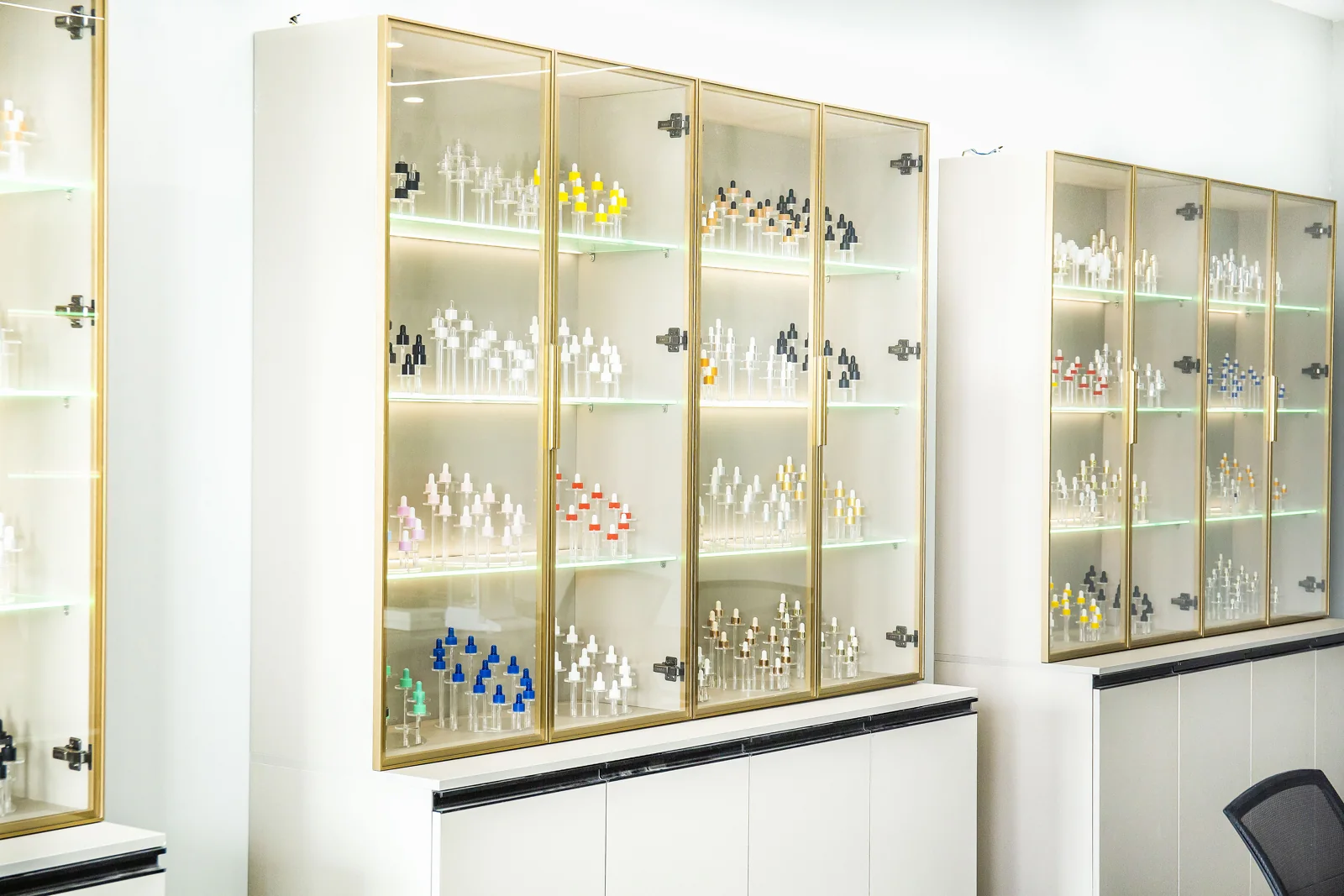
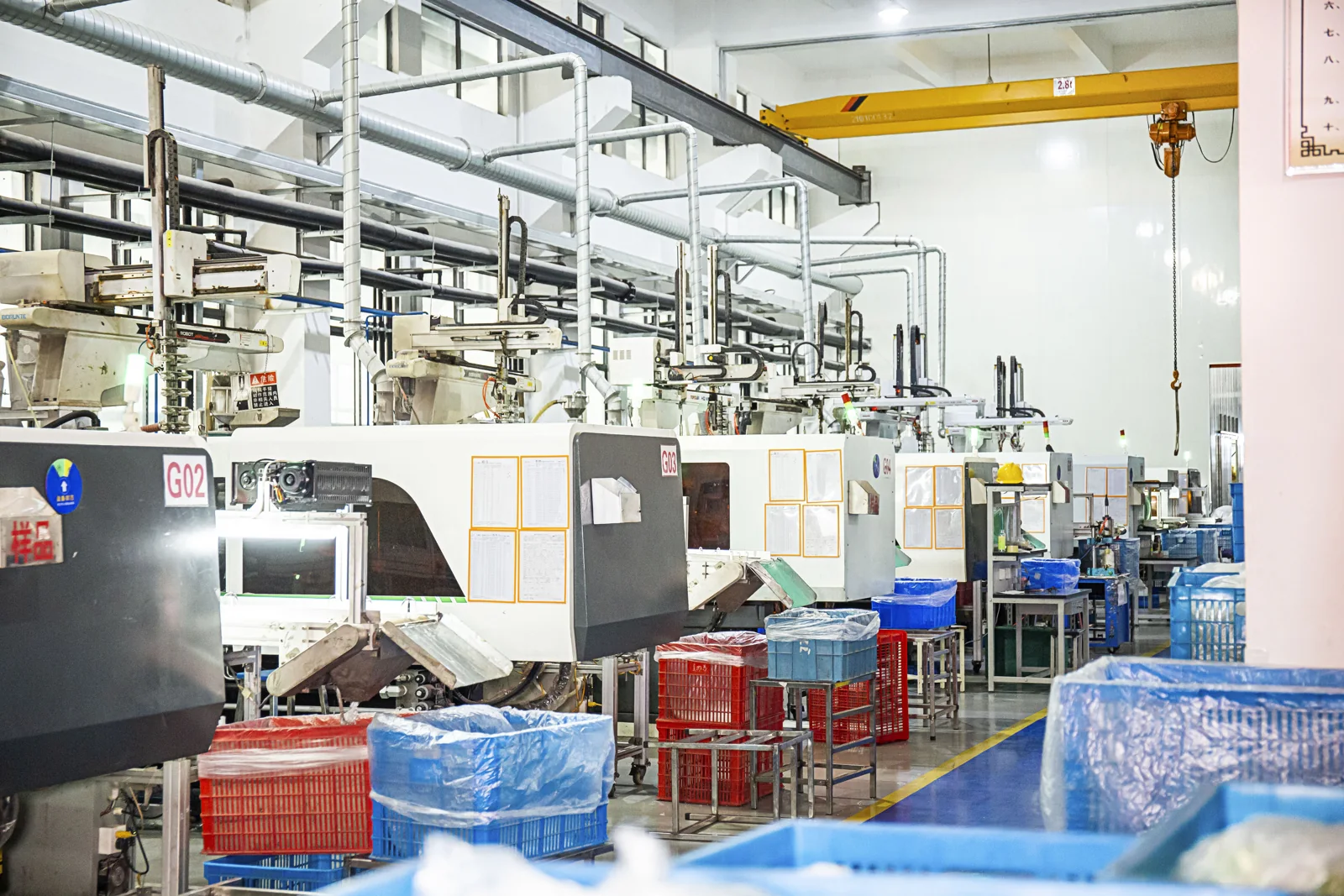
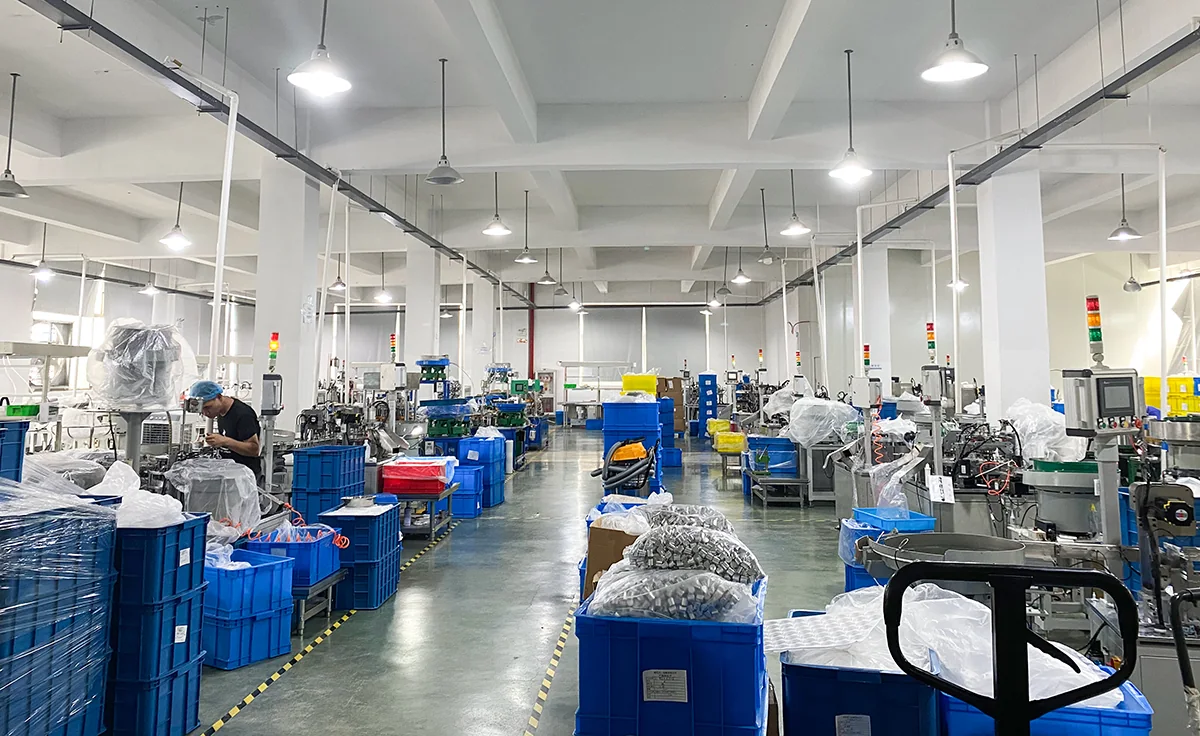
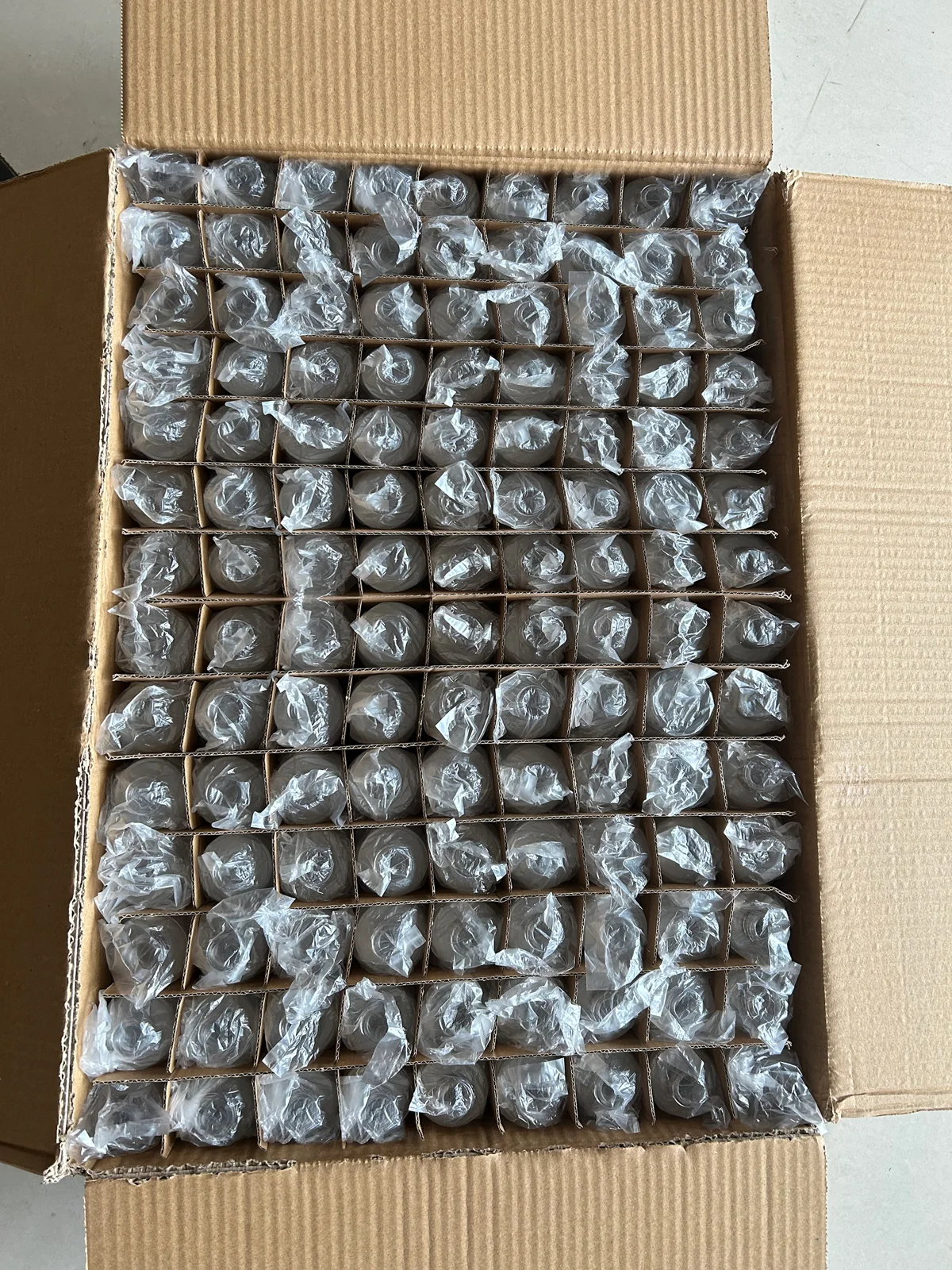
Photographed at Oulete
From the sample room to packed containers
See the facility and visible operations behind a packaging enquiry. For your selected assembly, ask which steps apply and request the corresponding sample and inspection records.