Cosmetic packaging · Made for your brand
Cosmetic Packaging Incoming Inspection: Defect Records
A shipment can contain the correct number of cartons and still fail to provide the complete packs ordered. Pumps may belong to another revision, caps may be missing, or damage may be concentrated in one pallet. A receiving check must…
Containers only — no compounding or filling.
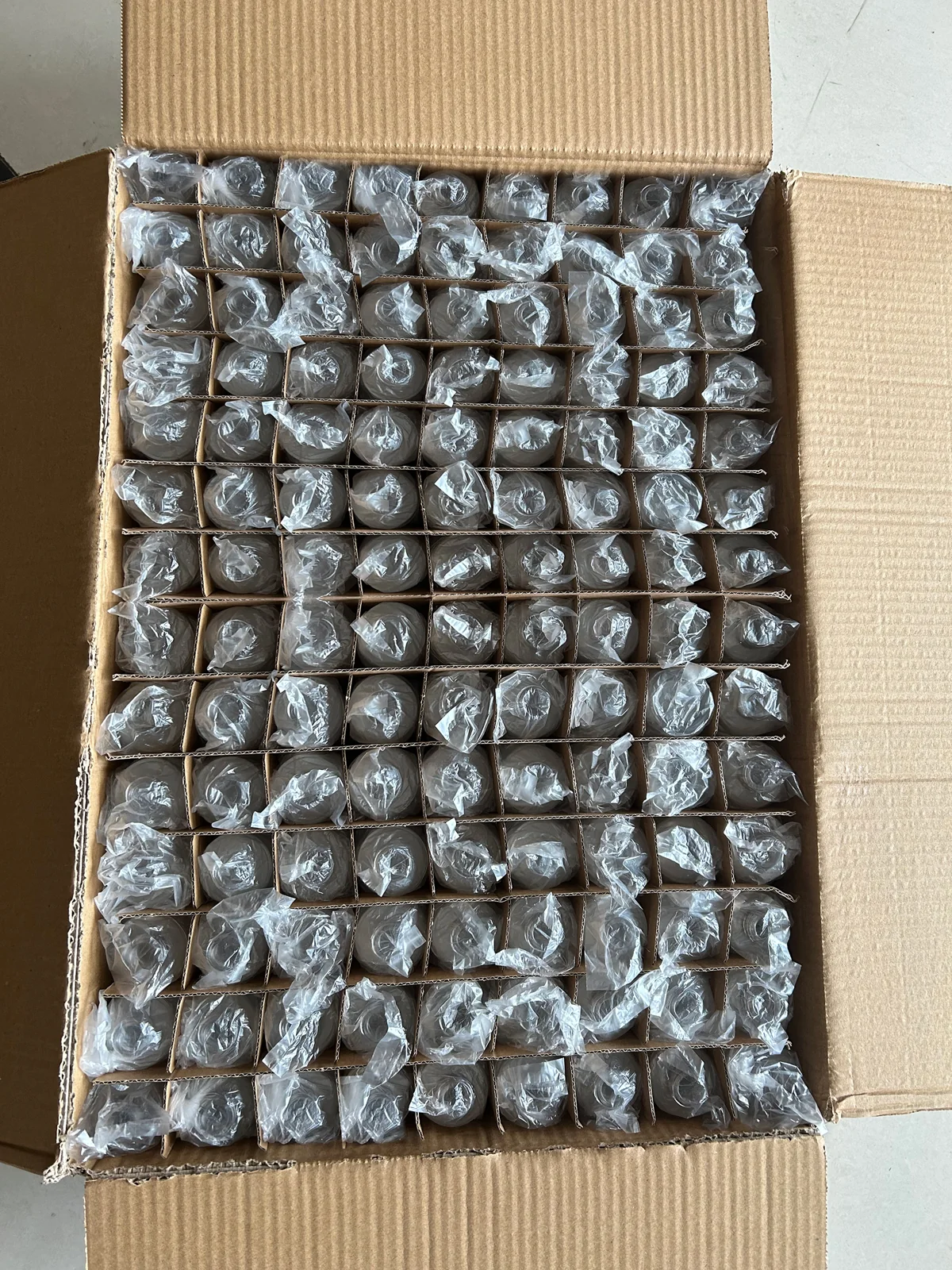
Cosmetic containers separated by protective packaging inside a carton
On this page · 13 sections
- Define the receiving lot before opening the cartons
- Replace vague defects with observable descriptions
- Agree sampling without turning AQL into a guarantee
- Hold discrepancies with their evidence intact
- Blank incoming discrepancy and disposition record
- Reconcile complete packs before releasing to filling
- FAQ
- What should incoming inspection check for cosmetic bottles?
- Does AQL state the maximum defect percentage in a shipment?
- Can catalogue dimensions be used as incoming tolerances?
- How should missing pumps or mismatched caps be recorded?
- Does pre-shipment inspection replace incoming inspection?
- Can a buyer release nonconforming packaging by concession?
A shipment can contain the correct number of cartons and still fail to provide the complete packs ordered. Pumps may belong to another revision, caps may be missing, or damage may be concentrated in one pallet. A receiving check must establish what arrived and its condition before the filler loses that identity in production stock.
Cosmetic packaging incoming inspection verifies ordered component identity, condition and traceability against agreed specifications, with defined sampling, defect language and documented lot disposition.
The receiving decision is narrower than proving the lifetime performance of a finished cosmetic. It determines whether identified packaging materials may enter stock or filling under the agreed release conditions. Brands, distributors, fillers and suppliers should establish that decision before shipment, including who can release, hold or concede a discrepancy.
Define the receiving lot before opening the cartons
An inspection lot is the identified group of items to which an inspection decision applies. Define it using relevant supplier batches, part numbers, revisions and shipment records. A delivery can contain several inspection lots; its arrival on one truck does not prove that every bottle, pump or cap came from the same production population.
Start with the purchase order and released bill of materials. A bill of materials is the component list defining the ordered assembly. It should distinguish the bottle, pump, actuator, collar, cap or dropper as applicable. Record whether parts are supplied assembled or separately. Otherwise, an inspector cannot distinguish missing components from an intentionally separate delivery.
Match supplier labels to the packing list before transferring stock into internal bins. Capture pallet and carton identities, supplier part and lot codes, quantities and seal condition. If the receiving site assigns a new material code or receipt lot, preserve the link to the supplier's original identity. Traceability should survive an internal relabelling operation.
According to FDA's cosmetic GMP inspection checklist, material containers should carry identity, lot identification and control status, and primary packaging should be protected against mix-ups and contamination. These are useful receiving-control principles. Citing the checklist does not establish Oulete certification or replace the buyer's applicable quality requirements.
Inspect transport condition before opening packages that may erase evidence. Photograph crushed or wet cartons, disturbed seals and damaged pallet protection. Identify the location and affected packaging units. Keep the record factual: a dented carton is an observation, while an assertion that the carrier caused component damage is a conclusion requiring further evidence.
Quantity reconciliation and defect sampling are separate activities. Reconcile dispatched and received quantities using a documented method. Verify the basis and limitations of any weight-based count. A successful visual sample does not establish every component quantity.
Use the distributor solution to specify separate or assembled kits. Request exact supplied state and component identities before ordering, giving receiving teams a concrete reconciliation reference.
Replace vague defects with observable descriptions
A defect catalogue is an agreed set of descriptions, examples and acceptance rules for the ordered packaging. It should connect an observation to location, method and severity. Bad bottle and poor printing are not sufficient descriptions. Different inspectors need to be able to recognise the same issue and know which release rule applies.
Separate identity defects from appearance and functional observations. A cap in the wrong material or revision is an identity issue even if it looks acceptable. A scratch is an appearance observation whose significance depends on its agreed location and limit. A damaged sealing surface may have a different consequence from a mark outside the functional area.
Use reference photographs with a scale and enough context to identify the surface. For subjective appearance decisions, agree physical examples or boundary samples that distinguish accepted variation from rejection. Define lighting, viewing position and handling conditions. A magnified image is useful for investigation but should not quietly become the routine inspection method if the acceptance agreement specifies another view.
| Cosmetic packaging incoming inspection category | Observation to describe | Reference or method to agree | Release question |
|---|---|---|---|
| Identity and supplied state | Wrong part, revision, colour, material or absent component | PO, component list, labels and released specification | Is the ordered assembly actually present? |
| Bottle geometry | Finish damage, distorted body or unstable base | Controlled drawing and defined measurement method | Does the part meet agreed functional dimensions? |
| Glass condition, if glass is ordered | Crack, chip, sharp edge, inclusion or damaged finish | Agreed glass defect examples and evaluation method | Which severity and containment rule applies? |
| Surface appearance | Scratch, scuff, mark or uneven visible finish | Approved master and location-specific limits | Is this accepted appearance variation? |
| Decoration | Missing text, mispositioned print, incomplete foil or changed colour | Approved artwork and decorated reference | Does the observation breach the agreed criterion? |
| Cleanliness and packaging protection | Visible foreign matter, wet packing or damaged divider | Receiving procedure and agreed packing condition | Is protection or safe handling compromised? |
| Mating components | Incorrect pump, cap or dropper; damaged sealing feature | Exact matching component identities and agreed checks | Must the affected stock be held? |
Critical, major and minor are severity categories, not complete defect definitions. The brand and responsible quality teams should classify each agreed observation by its actual consequence. Safety-related damage requires prompt containment and escalation; ordinary cosmetic variation still needs explicit limits. Do not import another buyer's severity list without reviewing the ordered pack and use.
Catalogue dimensions help select a product but are not automatically receiving tolerances. For example, the neck-finish guide explains why a nominal neck diameter does not establish a complete finish designation. Incoming inspection needs the released bottle and mating-component specifications, with measurement locations and methods that can answer the relevant fit question.
Functional checks also need a defined scope. Checking that a cap can be assembled is not equivalent to a filled-pack leak test. A quick pump identity or actuation check does not establish output with the actual formula. State which receiving checks are required, and keep compatibility or filled-performance qualification records separate from routine incoming observations.
Agree sampling without turning AQL into a guarantee
Acceptance sampling is a method of deciding the disposition of a lot using observations from a selected sample. According to NIST's acceptance-sampling explanation, the sample supports a lot decision. It does not examine every item, so acceptance cannot demonstrate that all uninspected packaging components are conforming.
An Acceptance Quality Limit, or AQL, is an index used in specified acceptance-sampling schemes. It is not a promise that an individual shipment contains no more than a particular percentage of defects. NIST's discussion of sampling plans describes probabilities of acceptance and both producer and consumer risks, which explains this distinction.
The ISO 2859-1:2026 official summary identifies the current AQL-indexed standard for lot-by-lot attribute inspection. If the parties select it, record the edition and obtain the applicable procedure. A public summary is not enough to derive sample sizes, acceptance numbers, rejection numbers or switching decisions for a particular order.
A sampling agreement must identify the lot, sampling unit, selection method, applicable scheme and responsible inspector. State whether the unit is an individual component or a complete pack. Confirm how samples are selected across the lot and how different component batches are handled. Conveniently taking parts from one accessible carton should not be described as a verified random selection.
Define how observations are counted. A single bottle could have several defects, while some schemes classify the bottle as one nonconforming unit. Counting defects and counting defective units answer different questions. The inspection form should state the agreed approach so an inspector does not change the denominator or double-count a result during a dispute.
Different checks can require different arrangements. A destructive test may consume specimens that cannot return to saleable stock. A dimensional check may need a suitable gauge and competent operator. Record who supplies equipment, how the method is controlled and what happens when a valid measurement cannot be obtained. Missing evidence is not a passing result.
Do not invent a default AQL or sample count for cosmetic bottles. Selection depends on the agreed scheme, defect severity, lot context and buyer requirements. The responsible quality teams must make that decision and record the applicable acceptance rules. A sales quotation can identify the required inspection scope without pretending to provide a universal statistical quality policy.
Oulete-supplied footage: Gloved operators visually checking cosmetic containers
Oulete-supplied footage of operators visually checking containers. The footage shows the operation, while defect definitions, sampling and release decisions remain in the agreed inspection record.
Hold discrepancies with their evidence intact
Quarantine is a controlled status that prevents disputed stock from being used until its disposition is authorised. Apply both physical identification and inventory controls appropriate to the receiving site. Mark the affected scope clearly. A verbal instruction to avoid the damaged cartons is weak containment if another shift can still issue them to filling.
Create a discrepancy case that links observations to the receipt, PO and supplier identities. Preserve representative affected parts and appropriate unaffected references. Record which cartons were opened, inspected or counted and where retained specimens came from. If sorting begins, keep the original evidence separate so the supplier can still investigate the condition as received.
A case should distinguish confirmed findings from estimates. An inspector may confirm missing pumps in an opened carton while the remainder is not yet reconciled. Report the confirmed scope and the proposed next action. Do not extrapolate a total shortage or defect percentage across the whole shipment without a method that supports that conclusion.
Blank incoming discrepancy and disposition record
This worksheet is an original receiving template. Its blanks must be completed against the order and the site's quality procedure; they are not preset Oulete inspection limits.
| Record field | Entry to complete |
|---|---|
| Case ID, receipt date, PO and shipment reference | ____ |
| Component, part number, revision and ordered supplied state | ____ |
| Supplier lots and internal receipt lots | ____ |
| Pallet/carton identities; unopened and opened condition | ____ |
| Quantity declared, method used and quantity confirmed | ____ |
| Inspection lot, sample unit, scheme and selection record | ____ |
| Specification, defect reference and evaluation conditions | ____ |
| Observations, counts and individual evidence locations | ____ |
| Held stock, physical location and inventory status | ____ |
| Supplier review, additional examination or sorting scope | ____ |
| Disposition, responsible approver and corrected quantities | ____ |
| Traceable release, replacement, return or other agreed remedy | ____ |
A concession is a documented authorisation to use identified nonconforming items within a defined scope. It should identify the deviation, affected stock, conditions and approving authority. A concession is not a general change to the specification. Preserve the original finding and approval rather than rewriting the inspection result as conforming after the commercial discussion.
Supplier remedies depend on the contract and agreed facts. Replacement components, a shortage shipment, credit, sorting or return may be considered, but an article cannot establish entitlement or responsibility for freight. Connect the agreed remedy to the case and confirm its completion. A promise to replace stock is distinct from a traceable receipt of the replacement.
Oulete's quality enquiry route can be used to establish inspection and evidence requirements for the ordered pack. Send the specification and draft defect record before shipment. Discuss the claim window, review responsibilities and disposition process while the purchase is being defined, so a later discrepancy has a usable reporting route.
Reconcile complete packs before releasing to filling
Complete-pack availability is limited by the usable quantities of the required matching components. This is an inventory calculation, not a sampling result. A receiving site must also identify any held quantities, incompatible revisions or separately ordered parts before stating how many complete packs are available for a production run.
Consider this explicitly hypothetical reconciliation: the order calls for 2,000 bottles, 2,000 pumps and 2,000 caps. Verified receipt counts show 2,000 bottles, 1,920 matching pumps and 2,000 caps, with no other holds. The maximum available complete packs is 1,920, and the pump shortage is 80. These figures are an illustration, not an Oulete shipment record.
That finding should remain separate from quality observations. If some received pumps are held for an identity discrepancy, the usable count may be lower, but it cannot be recalculated until the held scope is known. Conversely, accepting a visual inspection does not create the missing 80 pumps. Procurement needs both the quantity reconciliation and the quality disposition.
Release should identify exactly what stock is authorised for use. Record the parts and lots covered, any remaining holds and the person approving the decision. If sorted material is released, retain its connection to the original lot and document the sorting scope. The filler should not have to infer release from the disappearance of a quarantine label.
Receiving approval also does not erase the need for a suitable line trial. Supply the accepted material identities and relevant drawings to the filling team, then follow the agreed trial scope. The contract-manufacturer solution supports this interface; it should connect the ordered pack to the filler's actual equipment rather than substitute generic compatibility assurances.
Before ordering Oulete packaging, send the complete component list, supplied state, critical drawing references and proposed receiving record through the sample-brief route. Request agreement on identity, inspection responsibilities and exception handling. A usable specification lets the supplier quote the pack and lets the filler decide what can enter production.
FAQ
What should incoming inspection check for cosmetic bottles?
Cosmetic bottle incoming inspection should check identity, condition and traceability against the agreed order and specifications. Include component revisions, quantities, transport protection, defined visual or dimensional observations and lot status. The required sampling and acceptance rules must be agreed with the responsible quality teams before routine release.
Does AQL state the maximum defect percentage in a shipment?
AQL does not guarantee the maximum defect percentage in an individual shipment. It indexes a specified sampling scheme used to make acceptance decisions with statistical risks. Record the applicable procedure and decision rules, and do not confuse acceptance of a sample with inspection of every item in the lot.
Can catalogue dimensions be used as incoming tolerances?
Catalogue dimensions should not be treated as incoming tolerances unless the parties explicitly approve them for that purpose. Receiving inspection needs the released specification, measurement locations and agreed method. A nominal neck diameter alone does not establish the complete neck finish or prove that a particular cap or pump matches it.
How should missing pumps or mismatched caps be recorded?
Missing pumps or mismatched caps should be recorded in a receiving case linked to the order, component identities and shipment evidence. Preserve carton labels, counts, photographs and disputed parts. Separate confirmed quantities from estimates, hold the affected stock and document the supplier review and agreed correction.
Does pre-shipment inspection replace incoming inspection?
Pre-shipment inspection does not automatically replace incoming inspection. Receiving still needs to establish identity, quantity, transport condition and the applicable release status. The parties may agree how earlier evidence affects the receiving scope, but that agreement should be explicit and linked to the same lots and ordered configuration.
Can a buyer release nonconforming packaging by concession?
A buyer's authorised quality function may approve a documented concession where its procedures and requirements permit it. Identify the deviation, affected stock and allowed use, and preserve the original finding. A concession should not silently change the general specification or release other lots that were not assessed.
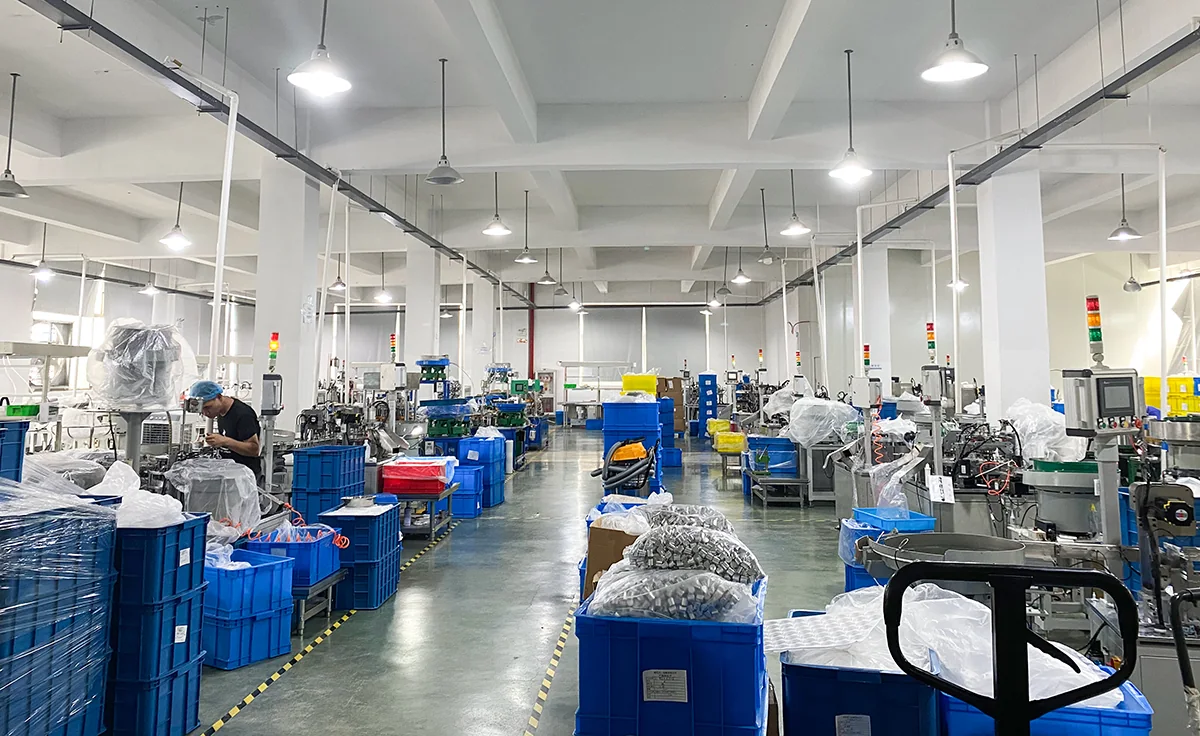
Photographed at Oulete
Assembly workstations in the factory
See the facility and visible operations behind a packaging enquiry. For your selected assembly, ask which steps apply and request the corresponding sample and inspection records.