Cosmetic packaging · Made for your brand
Cosmetic Packaging Compatibility Testing: Trial Plan
Cosmetic packaging compatibility testing evaluates the actual formula and complete pack together, using controlled samples, justified exposure conditions, relevant measurements and agreed acceptance criteria. A bottle can meet its drawing…
Containers only — no compounding or filling.
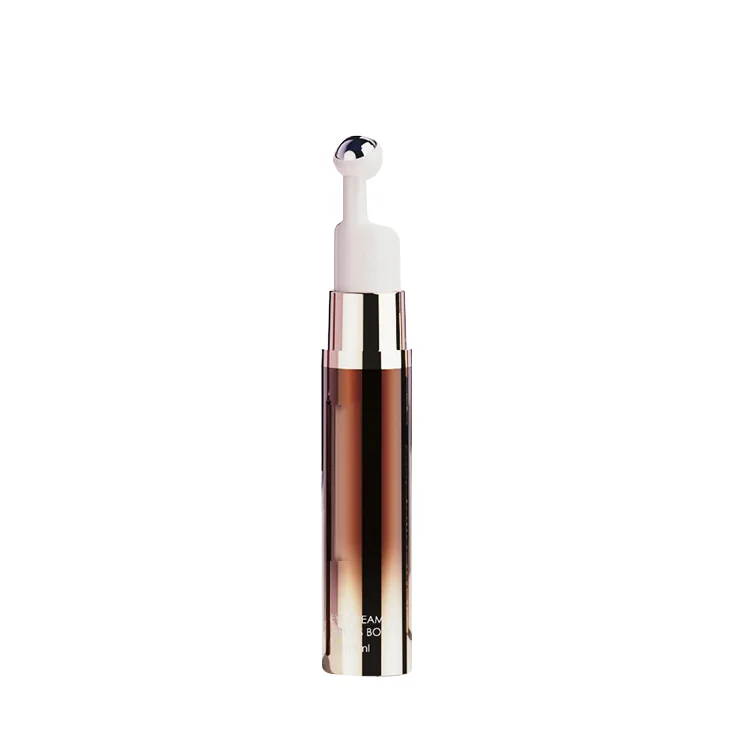
Brown cosmetic bottle with pump and cap
On this page · 15 sections
- Define the formula and complete pack as one test system
- Set conditions around the decision the trial must support
- Compatibility testing decision matrix
- Make confidentiality work without losing traceability
- Hypothetical scenario: a confidential serum trial
- Build a sample record that can survive a handover
- Blank complete-pack compatibility worksheet
- Keep the approval narrower than the evidence
- FAQ
- What does cosmetic packaging compatibility testing evaluate?
- Can an empty-bottle inspection replace a filled-formula trial?
- Is there one standard temperature and duration for every formula?
- Can the brand keep the formula confidential?
- Does testing the bottle material approve the pump and decoration?
- Who should approve the trial results?
Cosmetic packaging compatibility testing evaluates the actual formula and complete pack together, using controlled samples, justified exposure conditions, relevant measurements and agreed acceptance criteria.
A bottle can meet its drawing and a formula can remain stable in a laboratory container, yet the commercial assembly still needs evaluation. The pump, gasket, liner, pipette, wiper and decoration introduce different contact materials and interfaces. Approval must refer to the combination the brand intends to sell, not simply the bottle material named on a quotation.
The buyer's task is to arrange a useful trial before committing to production. A written plan identifies what is being tested, what evidence will be collected, who interprets it and which decision it can support. The finished report should answer a purchasing question, rather than merely state that samples were stored in a chamber.
Define the formula and complete pack as one test system
Compatibility is the ability of a specified formula and packaging system to remain suitable together under their agreed conditions of use. It includes changes to the pack caused by the formula and changes to the formula associated with the pack. Functional observations are part of that review when the package must dispense the product.
A bill of materials, or BOM, is a controlled component list identifying the parts in the proposed assembly. For compatibility planning, extend the list beyond the visible bottle and cap. Ask which materials contact the formula, its vapour or a foreseeable splash during filling and use, and identify their supplier references.
According to Aptar's laboratory testing page, its laboratories distinguish dimensional analysis, functionality testing and compatibility testing. Its compatibility description addresses pump materials exposed to customer bulk and performance over time. This supports separating different trial questions; it does not establish that an Oulete configuration has already passed such testing.
Material names are an initial screen, not a completed assessment. A statement such as PETG bottle, PP collar or rubber bulb leaves the specific grade and other assembly materials unresolved. Ask the responsible supplier to document the relevant contact parts and explain what information can be provided for the proposed component references.
Treat decoration as a defined process with its own exposure. An external print may contact a splash of serum; a coating may cover a stressed feature; a decorative part may sit near an opening. The relevant question is where contact and handling occur in this package, rather than whether the artwork looked correct on a dry sample.
Use the 30 ml dropper bottle range or the 30 ml airless bottle range to identify candidate bodies and systems. Then request the matched component list. A body catalogue does not establish the complete contact-material record or formula-specific performance of the final assembled package.
Set conditions around the decision the trial must support
A compatibility protocol is a written plan linking sample identity, exposure conditions, observations and decision criteria. Its conditions should reflect the product, intended package, storage, distribution and consumer use. Selecting a chamber temperature before defining those inputs can produce a test result that is difficult to interpret or apply.
According to ISO's public description of ISO/TR 18811, cosmetic stability guidance does not prescribe one set of conditions or criteria for every product. The manufacturer must select and justify the protocol. A standard reference is therefore useful context, not permission to copy one duration or accelerated condition into every purchase order.
Real-time observation studies behaviour over elapsed time under defined conditions. Accelerated observation uses justified conditions intended to reveal selected risks sooner. The relationship between the two needs technical justification. A visible pass under one accelerated exposure does not by itself calculate the commercial shelf life of a different formula-package combination.
The brand's formulation team should identify the changes that matter to the finished product. The packaging supplier should identify relevant component interfaces and handling limits. The filler should describe the proposed filling and assembly process. Bring these inputs into one plan so the test does not silently exclude a variable that production will introduce.
Compatibility testing decision matrix
| Decision area | What the plan identifies | Evidence to collect | Who interprets the result |
|---|---|---|---|
| Formula behaviour | Controlled formula code, batch and approved attributes | Relevant appearance, odour and measured formula changes | Brand or designated formulation laboratory |
| Contact materials | Component references, material information and exposure | Swelling, cracking, distortion, corrosion or other relevant change | Component supplier with trial owner |
| Seal integrity | Filled assembly, sealing interface and installation settings | Leak location, weight observations and sample history | Supplier and filler |
| Dispensing | Formula condition, preparation and actuation method | Priming, delivery, actuation and residual-product observations | Supplier, filler and brand |
| Decoration | Exact substrate, colour and decoration process | Defined splash, handling or appearance observations | Decoration supplier and brand |
| Distribution | Intended outer pack and exposure route | Relevant transport observations on the filled commercial assembly | Brand, packer and selected laboratory |
This matrix separates responsibility without making the tests independent of one another. A seal can change after formula exposure, and a dispenser can behave differently as the product changes. Link the relevant results through sample identity and elapsed exposure, rather than presenting an isolated pump test as the complete compatibility decision.
Where a standard method is selected, record its identifier and edition, applicable package scope and agreed execution details. A public summary is not an operating procedure. The testing organisation should use the complete applicable method and identify deviations. The purchase specification should also state which acceptance requirements are project-specific.
Make confidentiality work without losing traceability
A coded formula sample can preserve commercial confidentiality while retaining a controlled test identity. The code must remain linked to the actual formulation revision and batch in the brand's records. Agree who can access that link and how a change will be communicated before asking the supplier to interpret a trial result.
The testing organisation still needs enough information to handle the sample appropriately and design a relevant study. Agree necessary safety and handling information, foreseeable contact conditions, filling temperature where relevant and other risk-driving characteristics. Do not treat a confidentiality agreement as a replacement for safe handling or a scientifically usable test brief.
An alcohol-containing formula, for example, raises questions about the complete composition and every exposed part, rather than the bottle wall alone. The amount and identity of relevant ingredients, the dispensing system and the decorated surfaces may affect the trial design. The formulation owner should decide what must be disclosed under controlled access.
According to the European Commission's cosmetic safety-report guidance, packaging interactions, barrier behaviour and migration can be relevant to finished-product assessment. The guidance also discusses physical stability in inert containers and the intended market packaging. A comparator can help distinguish formula behaviour from packaging-associated effects; it is not a complete safety approval.
The brand's designated experts should decide whether analytical investigation is needed for the specific materials, formula and market. Visual inspection alone cannot resolve every possible material interaction. Conversely, a laboratory term such as migration should not be inserted as a mandatory identical test for every pack without explaining the risk and decision it addresses.
Hypothetical scenario: a confidential serum trial
Assume a brand sends a serum under code FS-A with a controlled batch identity. A distributor proposes a bottle, a collar, a bulb and a pipette. The original trial list omits the wiper and the proposed printed finish. This is an illustrative planning situation, not an Oulete customer case or completed test.
Before filling, the parties add the wiper reference and identify which samples carry the production-intent print. The brand retains the formula-code link. The filler records the actual preparation and assembly settings. The plan identifies relevant component exposure, formula observations and dispensing checks, with a separate responsibility for interpreting each type of result.
If FS-A is later reformulated, its earlier test history remains valid evidence about the original coded system, not automatic approval of the revision. The same principle applies if the distributor changes the bulb source or removes the wiper. Describe the changed variable and decide what evidence must be repeated or added.
External reference — QACS Lab: QACS Cosmetic Packaging Compatibility Testing Explained (Ensure Product Safety & Quality)
External laboratory overview published by QACS Lab. It introduces compatibility topics; the project's test scope and acceptance criteria must be agreed separately.
Build a sample record that can survive a handover
A sample record connects each observation to its physical package, formula batch and test history. Assign identifiers before exposure and use them on photographs, worksheets and retained samples. Record sample withdrawals or destructive work so a reader can distinguish results from the same unit from results from different units.
A baseline is the recorded condition before the defined exposure begins. It can include appearance, relevant measurements and functional observations. Without a baseline, a later colour difference or difficult actuation may be incorrectly attributed to storage even though it was present at filling. Select baseline measurements that answer the trial's stated questions.
Record the actual exposure, including any interruption or equipment deviation, rather than only the planned setting. An unexpected handling event can matter when interpreting a damaged sample. The report should preserve these facts and identify how they affect the conclusion. Retesting should be a documented decision, not a quiet replacement of an inconvenient result.
Blank complete-pack compatibility worksheet
| Record field | Information to enter before testing |
|---|---|
| Project and approval purpose | SKU, target markets, intended use and the decision requested |
| Pack identity | All component references, drawings, material information, colours and decoration revisions |
| Formula identity | Controlled code, revision, batch, handling information and reference owner |
| Sample preparation | Filler, date, actual fill basis, preparation, assembly settings and supplied state |
| Exposure matrix | Conditions, orientations, intervals, sample allocation and justification |
| Comparators | Appropriate reference container or other control, with its intended role |
| Observation methods | Instruments, procedures, photographs, functional checks and raw-data format |
| Acceptance criteria | Attribute or numerical limits, decision owners and permitted disposition |
| Exceptions and retest | Deviations, retained samples, change triggers and reporting arrangements |
This original worksheet deliberately leaves duration, quantity and acceptance limits blank. Those entries belong to the project protocol. The parties should agree how much material and how many packs the selected work requires, including controls and retained samples. A quote for samples should correspond to that allocation and the actual test configuration.
Observation notes should describe what changed and where. "Pump failed" is less useful than a record of loss of prime, changed delivery or leakage at an identified interface. Photographs should include the sample code and enough context to locate the feature. Preserve raw data alongside the interpreted report whenever measurements drive the decision.
Keep the approval narrower than the evidence
A compatibility conclusion applies to the documented formula-package combination and the tested conditions. Separate appearance approval, component qualification, functional suitability and the brand's finished-product assessment. One signature can acknowledge several decisions, but each decision should identify its evidence and unresolved items so suppliers and fillers understand the scope.
The supplier can interpret component behaviour; the formulation team can interpret product changes; the filler can interpret its process. Assign the final decision explicitly instead of allowing each party to assume another has approved the entire system. Agree who issues the report, who receives it and how confidential results are stored and shared.
Before a production order, compare the sample BOM with the quoted BOM. A change in seal material, pump engine, decoration or supplied assembly state can affect the tested system. Keep the approved sample record with the specification and purchase documents so subsequent orders can identify the approved configuration.
For a supplier discussion, send the controlled pack references, coded formula information, intended filling route and trial objectives through Oulete's sample brief. Ask which samples and technical documents can be supplied for that configuration. Testing arrangements, equipment, confidential handling and any outside laboratory work must be agreed for the project.
A filler can use the contract manufacturing packaging brief to identify the line and assembly interfaces before the trial. Obtaining a bottle sample is a purchasing step. A useful compatibility approval requires the complete configuration and the evidence that the brand, supplier and filler have agreed to review.
FAQ
What does cosmetic packaging compatibility testing evaluate?
Cosmetic packaging compatibility testing evaluates the actual formula and intended complete pack together under defined conditions. It can include relevant formula changes, contact-material behaviour, seal integrity and dispensing performance. The protocol identifies which measurements support the specific purchase and approval decision, rather than treating every test as interchangeable.
Can an empty-bottle inspection replace a filled-formula trial?
Empty-bottle inspection cannot replace a trial that evaluates formula-package interaction. It can establish useful dimensional and appearance information before filling. The finished package also introduces the formula, contact exposure, assembled seals and dispensing conditions, which need the appropriate evidence for the intended commercial configuration.
Is there one standard temperature and duration for every formula?
A single temperature and duration cannot establish compatibility for every cosmetic system. The responsible technical team should justify conditions, intervals and criteria using the actual product, package, intended use and exposure risks. An accelerated result needs a justified interpretation and does not automatically establish commercial shelf life.
Can the brand keep the formula confidential?
A brand can propose a coded formula trial with agreed confidentiality and controlled traceability. The testing organisation must still receive the information needed for safe handling and a relevant protocol. The brand should preserve the link between the code, formulation revision and batch, and notify changes affecting the trial.
Does testing the bottle material approve the pump and decoration?
Testing a bottle material alone does not approve the complete pump, closure or decoration. Identify every relevant component and exposure route in the proposed assembly. A liner, gasket, bulb, wiper, ink or coating may require its own consideration even when the bottle body remains unchanged.
Who should approve the trial results?
The parties should assign trial interpretation and final approval responsibilities before testing. The brand or its designated experts interpret formula and finished-product implications; suppliers interpret component findings; the filler reviews process evidence. The final record should state the approved configuration, conditions, open issues and triggers for further review.
Photographed at Oulete
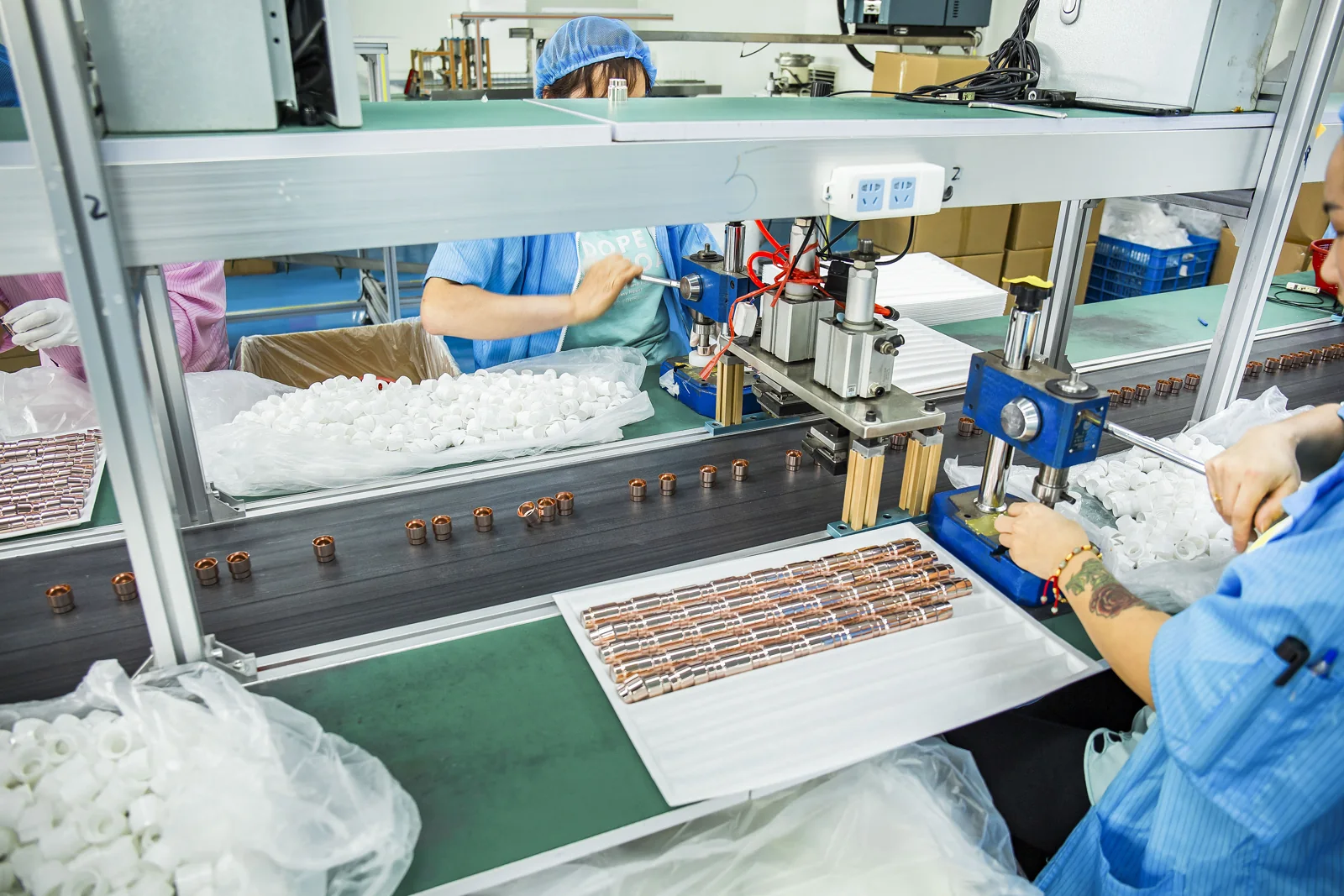
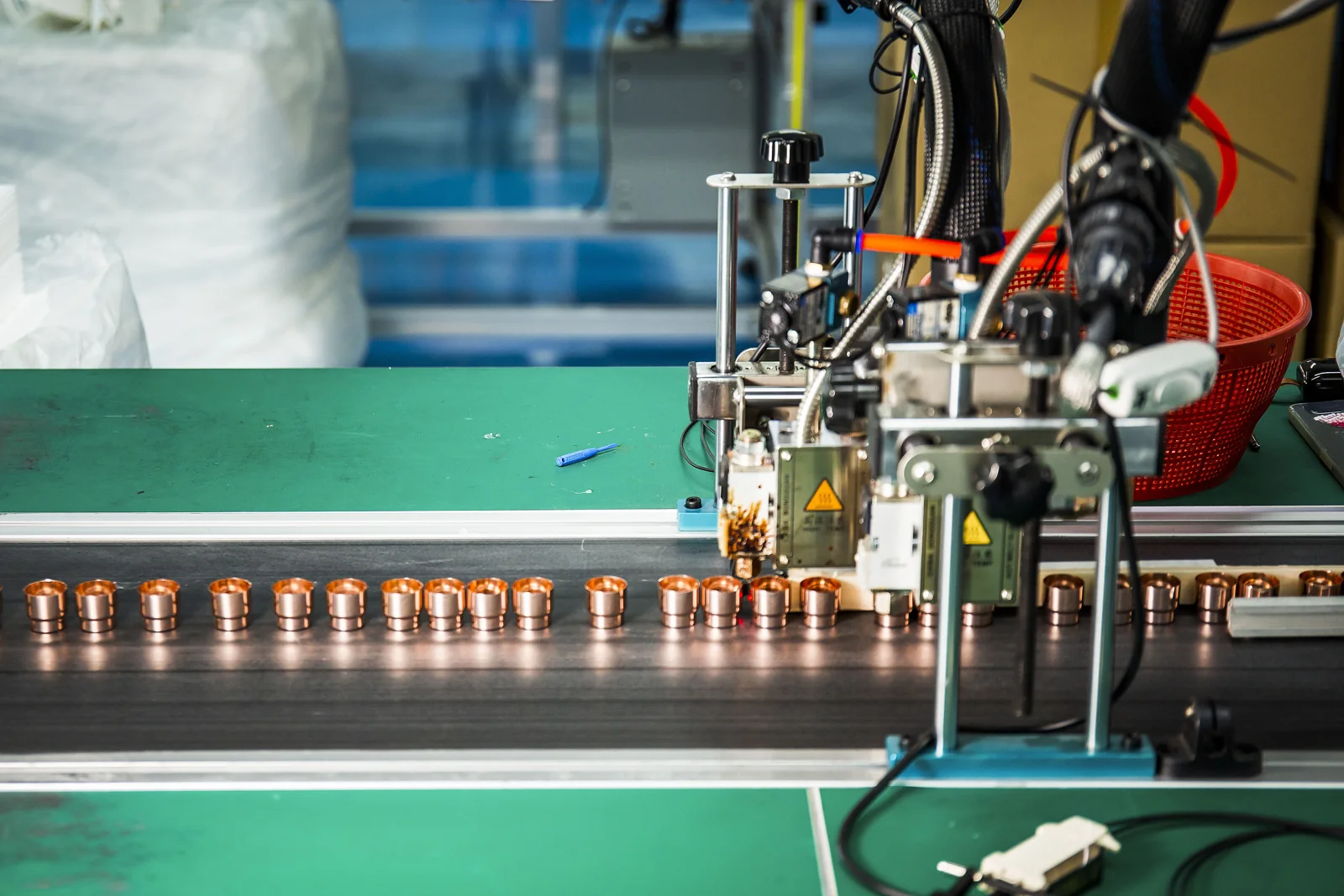
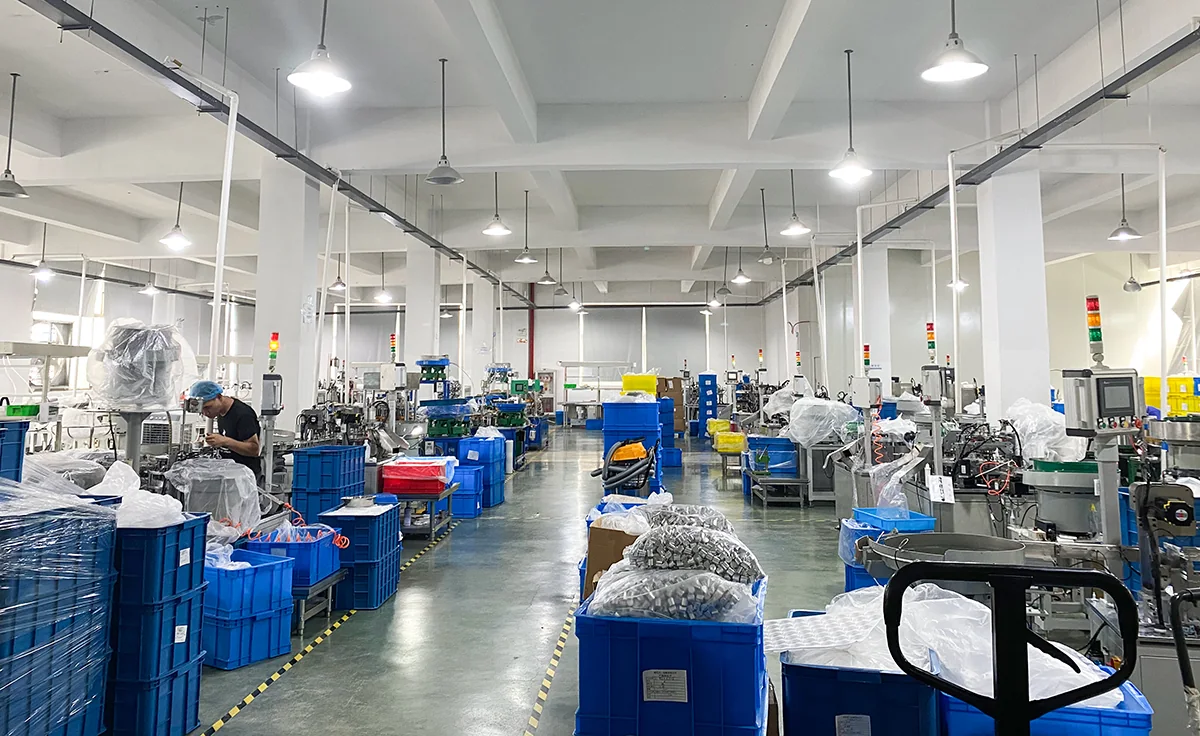
Assembly workstations in the factory
See the facility and visible operations behind a packaging enquiry. For your selected assembly, ask which steps apply and request the corresponding sample and inspection records.