Cosmetic packaging · Made for your brand
Cosmetic Packaging Material Lists: A Buyer’s Checklist
A cosmetic packaging component material list identifies each supplied part, its material reference, formula-contact role and evidence for the specific assembly under review. “Acrylic bottle” may describe the part a buyer sees, while a…
Containers only — no compounding or filling.

Operator's hands positioning a packaging component at an assembly fixture
On this page · 12 sections
- Start with the assembly, then describe each material
- Map the formula-contact path instead of judging the finish
- Distinguish resin identity, colour and surface treatment
- Match every document to the question it can answer
- Put the material record into the quotation and approval handoff
- FAQ
- Does an acrylic bottle description identify every component material?
- Does a metal-free pathway mean the whole pump contains no metal?
- Can a material declaration replace actual-formula testing?
- What if the supplier will not disclose a proprietary resin formulation?
- Can one material record cover a whole product family?
- What belongs in the material record for a repeat order?
A cosmetic packaging component material list identifies each supplied part, its material reference, formula-contact role and evidence for the specific assembly under review.
“Acrylic bottle” may describe the part a buyer sees, while a different inner container holds the formula. “Glass dropper bottle” identifies the body but leaves the bulb, closure, pipette and seals unresolved. These descriptions help a brand choose an appearance. Purchasing needs a more detailed record before it can define the complete pack in an order.
The useful document is a bill of materials, or BOM, with a material field for each identified component. Connect that record to the selected drawings, sample and quotation. The result should let the brand’s evaluator identify the contact assembly, the filler identify the parts it receives, and purchasing identify exactly what the supplier proposes to deliver.
Start with the assembly, then describe each material
A packaging BOM is a component record for a defined assembly, rather than a list of material families available from a supplier. It needs a configuration reference and a revision. Start with the body and dispenser proposed for the order, then identify the other parts that belong to that combination, including any buyer-supplied components.
An outer shell and an inner container can have different roles and materials. APC Packaging’s JW double-wall jar description identifies an acrylic outer jar and a PP inner bowl. That example belongs to APC’s product. It shows why a product’s visible material name cannot automatically describe every part in a layered construction.
Oulete’s supplied catalogue also requires careful reading. Product Catalog 2 presents PET/PETG bottle families, but a family description does not provide a supplier-confirmed resin grade for every selected body and applicator. Use the Oulete materials overview to shortlist a route, then request the component record for the actual proposal.
Give each row a part identity that can survive a revised quotation. A description such as “white pump” is inadequate when two similar pumps have different internal components. Ask for the supplier reference and drawing revision, together with the selected colour or decorated version. If a reference is provisional, make that status visible rather than treating it as approved.
| Component record field | What purchasing should request | Why it belongs in the record |
|---|---|---|
| Assembly identity | Body, capacity and complete-pack reference | Establishes which proposed pack the record describes |
| Part identity | Component description and supplier part reference | Distinguishes similar-looking alternatives |
| Material reference | Proposed material family and applicable grade information | Gives the evaluator an identifiable proposal |
| Formula-contact role | Direct, indirect, external or unresolved, as reviewed | Separates appearance parts from the contact assembly |
| Surface treatment | Relevant coating, printing, plating or other process | Identifies the finished part, not only the base substrate |
| Supply responsibility | Supplier, buyer or other named party | Keeps sourced and buyer-supplied parts in the same scope |
| Evidence and status | Document reference, sample identity and open questions | Shows what is known and what still needs review |
The BOM should describe the supplied state as well. A closure fitted to an empty container and a closure packed separately create different handoffs. Identify which parts are preassembled and which the filler installs. An otherwise detailed material list can still leave a procurement gap if nobody has recorded who supplies or fits the applicable seal.
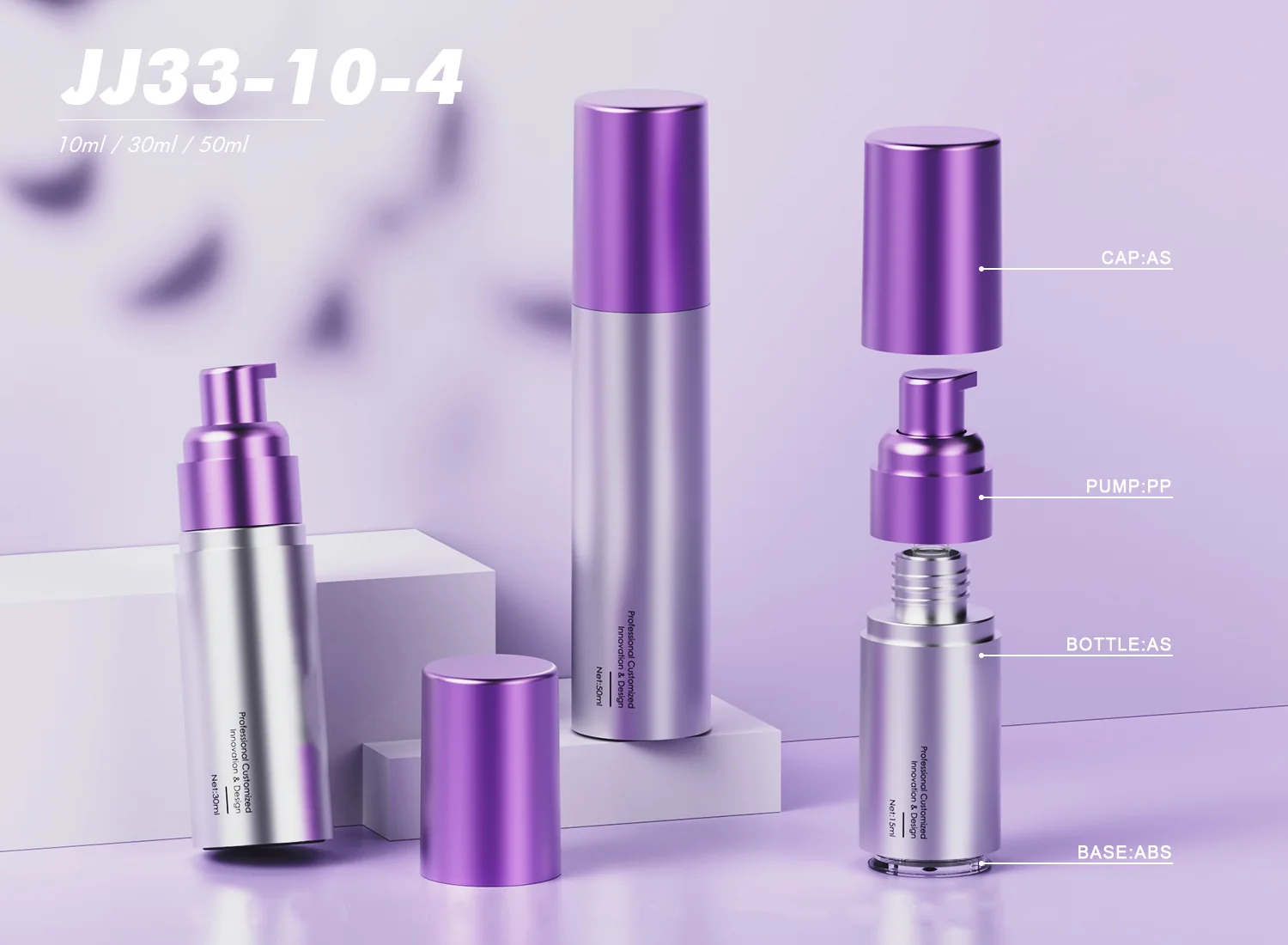
Oulete-supplied component photograph. Visible parts illustrate assembly scope; the image does not identify their resin grades or establish formula compatibility.
Map the formula-contact path instead of judging the finish
The formula-contact path is the set of surfaces the contents encounter in the proposed pack and dispensing operation. Ask the component supplier to identify that path using the actual assembly information. Include the inner container, applicable valves and seals, dispensing passage and other parts relevant to the chosen system. A photograph cannot reveal every internal surface.
A metal finish does not necessarily mean metal lies in the dispensing pathway. Aptar’s GSA Luxe product page describes a metal finish alongside a metal-free pathway and a spring outside the dosage chamber. Those details apply to that Aptar pump. They support asking separately about external appearance and the internal arrangement of an Oulete proposal.
The reverse inference is also unsafe. A pump that looks plastic does not, from appearance alone, establish an all-plastic contact assembly or the location of any spring. Ask for a supplier-confirmed component description and contact-path information. Keep an unresolved internal component on the open-question list instead of removing it because it is absent from the product photograph.
For a dropper, review the bulb, closure, pipette and applicable sealing or wiping parts with the selected bottle. The role of each component depends on the actual design and use. Request its material and fitted geometry together. The dropper and pipette selection guide addresses the assembly questions that a bottle-body description leaves open.
| Assembly area | Contact question to resolve | Evidence to connect |
|---|---|---|
| Inner container | Which surface holds the formula? | Identified part and material proposal |
| Pump internals | Which named parts lie in the proposed contact path? | Supplier description, drawing or applicable assembly information |
| Seals and valves | Which materials are proposed for their actual positions? | Component references and contact review |
| Dropper assembly | What are the bulb, pipette and relevant sealing parts? | Matched applicator record and intended-use evaluation |
| Coated or decorated surfaces | Which surfaces can encounter the contents in intended handling? | Part-specific finish and exposure question |
Give the evaluator the intended contents or an agreed controlled formula reference. Where the brand keeps its detailed formula confidential, agree what information the supplier needs to propose the assembly and who performs the evaluation. Do not substitute a generic material compatibility statement for a decision on the actual contact configuration and intended contents.
Distinguish resin identity, colour and surface treatment
A material family, a resin grade and a surface treatment describe different aspects of a finished packaging component. The family provides a starting description. Grade information identifies the proposed material more precisely. Pigment, coating or printing adds another part of the proposal. Keep those references separate so a colour change does not silently conceal a material or finish change.
For a plastic body, ask which grade or other controlled material reference the supplier can provide and which document identifies it. Where a proprietary formulation is involved, agree an appropriate traceable reference rather than demanding that an informal email expose a confidential composition. The important procurement outcome is that the approved material can be identified again on a repeat order.
A clear catalogue image does not establish clarity limits, colour consistency or chemical behaviour for a selected grade. Likewise, a frosted appearance does not reveal how the surface was produced. The material register should point to the proposed substrate and finish, with the representative sample used for appearance review. Keep the colour approval record attached to the relevant part.
If recycled content is proposed, ask which component the statement covers and what evidence supports it. A percentage attached to the body should not be transferred to the pump and cap without their own records. Keep component composition, weights where required for the claim, and the intended claim scope available to the responsible reviewer. This article does not establish a recycled-content value for an Oulete assembly.
An offer described as mono-material also needs a defined scope. Ask about the parts, inserts, seals and finishes included in that description. The material register can reveal the questions, but it does not itself establish local recyclability or validate a marketing statement. Have the responsible team review the actual claim against the proposed construction and destination requirements.
The same discipline helps compare glass and plastic proposals. A glass body still needs a component list for its applicator, closure and finishes. A plastic body may require several separately identified parts. Compare the complete assemblies and intended evaluation tasks rather than assuming that either body material resolves the rest of the packaging specification.
Match every document to the question it can answer
A material document is useful when its identity and scope match the component being reviewed. Record the issuing party, applicable material or part reference, document revision and relevant dates. A file supplied for another grade, site or component can be authentic while failing to answer the question about the selected pack. Request the connection explicitly.
| Evidence type | Useful review purpose | Decision it does not automatically establish |
|---|---|---|
| Supplier material declaration | Identify the proposed component composition within its stated scope | Compatibility with every cosmetic formula |
| Material technical information | Review the supplier’s description of an identified grade | Performance of a finished decorated assembly |
| Component drawing | Identify geometry, interfaces and the controlled part reference | Chemical compatibility or a completed formula trial |
| Representative sample | Review named physical and appearance attributes | Unobserved internal materials or all production conditions |
| Filled-pack evaluation record | Review observations for the identified contents and assembly | Results for a substituted part or different formula |
Aptar’s laboratory-testing description separates dimensional, functionality and compatibility work. That distinction helps define a review brief: material identity, fitted geometry and actual-formula behaviour answer different questions. The services described on Aptar’s page belong to Aptar. They are not evidence that an Oulete configuration has completed those evaluations.
Avoid a file collection with no component index. Put document references beside the relevant BOM row, then identify the reviewer and current decision. A purchasing colleague should be able to find the evidence for the selected seal without searching through unrelated certificates and catalogue PDFs. Missing evidence should remain visible as an open request with a responsible party.
Use the compatibility planning guide when turning the material record into an evaluation brief. Agree the contents, sample identity, conditions, observations and acceptance decisions with the responsible team. Do not import test durations or pass limits from an unrelated material data sheet merely to fill an empty field.
Put the material record into the quotation and approval handoff
A quotation should identify the same complete assembly as the material record and approved sample proposal. Ask the supplier to reference the body and components, supplied state, colour and decoration versions. If the buyer sources a pump independently, include that part and its responsibility in the complete-pack scope so the contact review does not stop at the bottle supplier’s boundary.
For an Oulete enquiry, send the selected body code and capacity, application, component requirements and outstanding material questions. Oulete’s confirmed container MOQ baseline is 2,000 pieces for plastic and 5,000 for glass. Ask for the actual minimums and commercial conditions for the proposed components and decorated versions; a container minimum does not define every line in the offer.
Oulete-supplied assembly photograph. Request the component references and supplied state for the configuration in your quotation; the photograph is not a material approval record.
Before sample approval, record which BOM revision the sample represents and any provisional parts. An appearance review can proceed for named attributes while a contact-material question remains open. Keep those decisions distinct. The buyer should know which information is still needed before the responsible team can accept the proposed complete assembly for its intended use.
Preserve the accepted material references with the order. When a later proposal changes a resin, seal, pump component or finish, compare it against that record and ask which decisions need review. The reorder change-control guide explains how to record the substitution rather than relying on an unchanged marketing model name.
Use the Oulete sample brief to send the assembly shortlist and material register. Identify the contents evaluator, filler and unresolved component rows. A useful supplier response names the proposed parts and evidence, then explains what remains to be sampled or agreed. That gives purchasing a configuration it can compare and the technical reviewers a defined assembly to evaluate.
FAQ
Does an acrylic bottle description identify every component material?
An acrylic description does not identify every material in a complete cosmetic pack. An outer shell, inner container, dispenser and seals can need separate references. Ask for a component-level material record tied to the selected assembly and sample. Keep any unknown grade or internal part visible until the supplier and responsible evaluator resolve it.
Does a metal-free pathway mean the whole pump contains no metal?
A metal-free pathway statement describes its specified contact scope; it does not automatically describe every external or internal pump part. Request the supplier’s definition and the proposed construction. Separate the appearance finish, spring position and formula-contact surfaces. Apply any statement only to the identified model and configuration for which the supplier provides evidence.
Can a material declaration replace actual-formula testing?
A material declaration identifies information within its stated scope and does not replace an actual-formula evaluation. The responsible team needs the proposed contact assembly, intended contents and agreed assessment plan. Keep the declaration connected to those component references, then record the observations and decision for the evaluated configuration rather than treating a generic document as qualification.
What if the supplier will not disclose a proprietary resin formulation?
The project teams can agree an appropriate controlled material reference and evidence scope without assuming full proprietary disclosure. Identify the selected part, supplier reference and responsible evaluator. Ask what information is available for the intended review and record any limitation. An undocumented placeholder should not become an accepted grade merely because a composition is confidential.
Can one material record cover a whole product family?
A family-level record can cover identified shared parts only where the supplier confirms that relationship. Each selected body, capacity and assembly still needs a clear link to its applicable components. Record differences in material, colour, seals or dispenser versions by SKU. A common family name alone does not establish identical construction across the range.
What belongs in the material record for a repeat order?
A repeat-order material record should retain the accepted assembly, component references, material and finish identifiers, document revisions and applicable sample decisions. Compare the new proposal against that baseline. Ask the responsible teams to review any substitution before updating the record, so the previous approval is not silently attached to a different contact assembly.
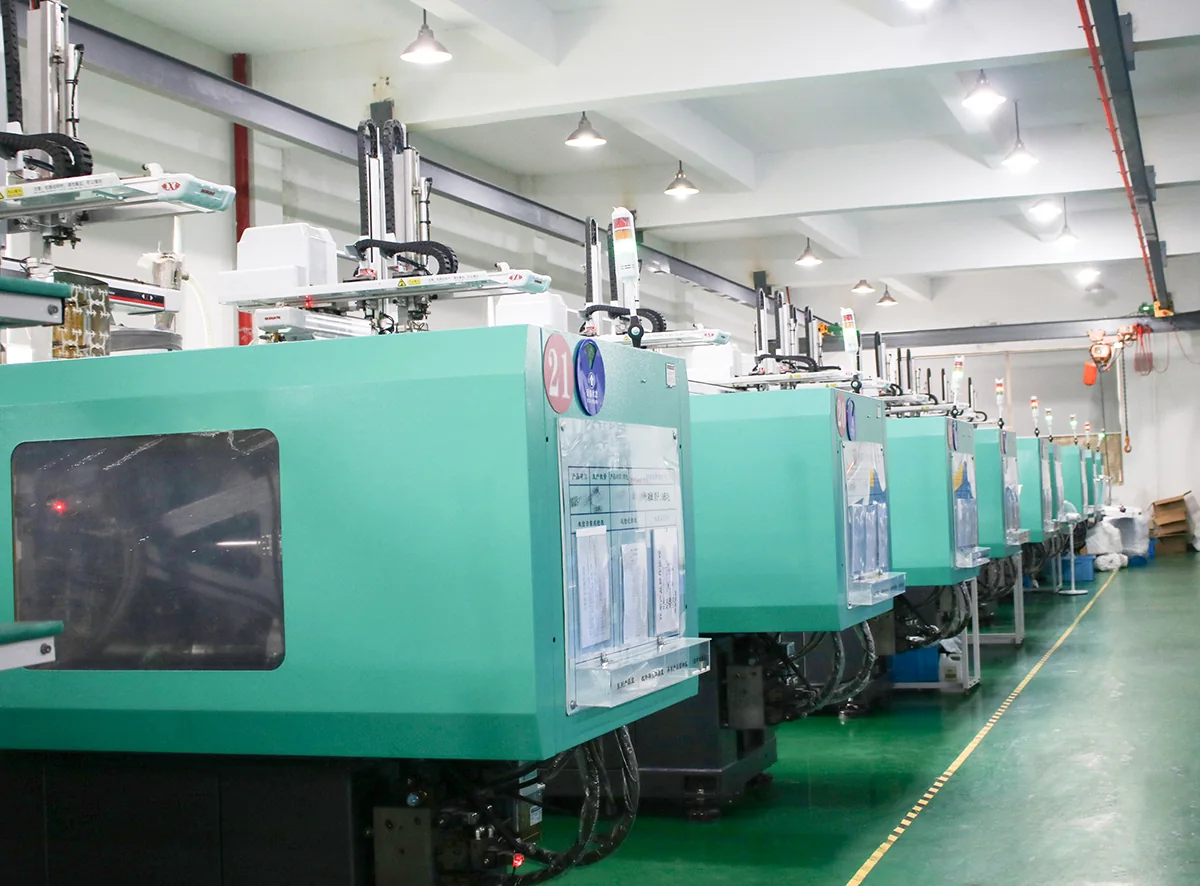
Photographed at Oulete
Inside the molding workshop
See the facility and visible operations behind a packaging enquiry. For your selected assembly, ask which steps apply and request the corresponding sample and inspection records.