Cosmetic packaging · Made for your brand
Roll-On and Mist Spray: Developing a Dual-Ended Travel Pack
Assess dual-ended roll-on and mist spray packaging: one formula versus one reservoir, feed paths, dispensing trials, filling access and travel closure approval.
Containers only — no compounding or filling.
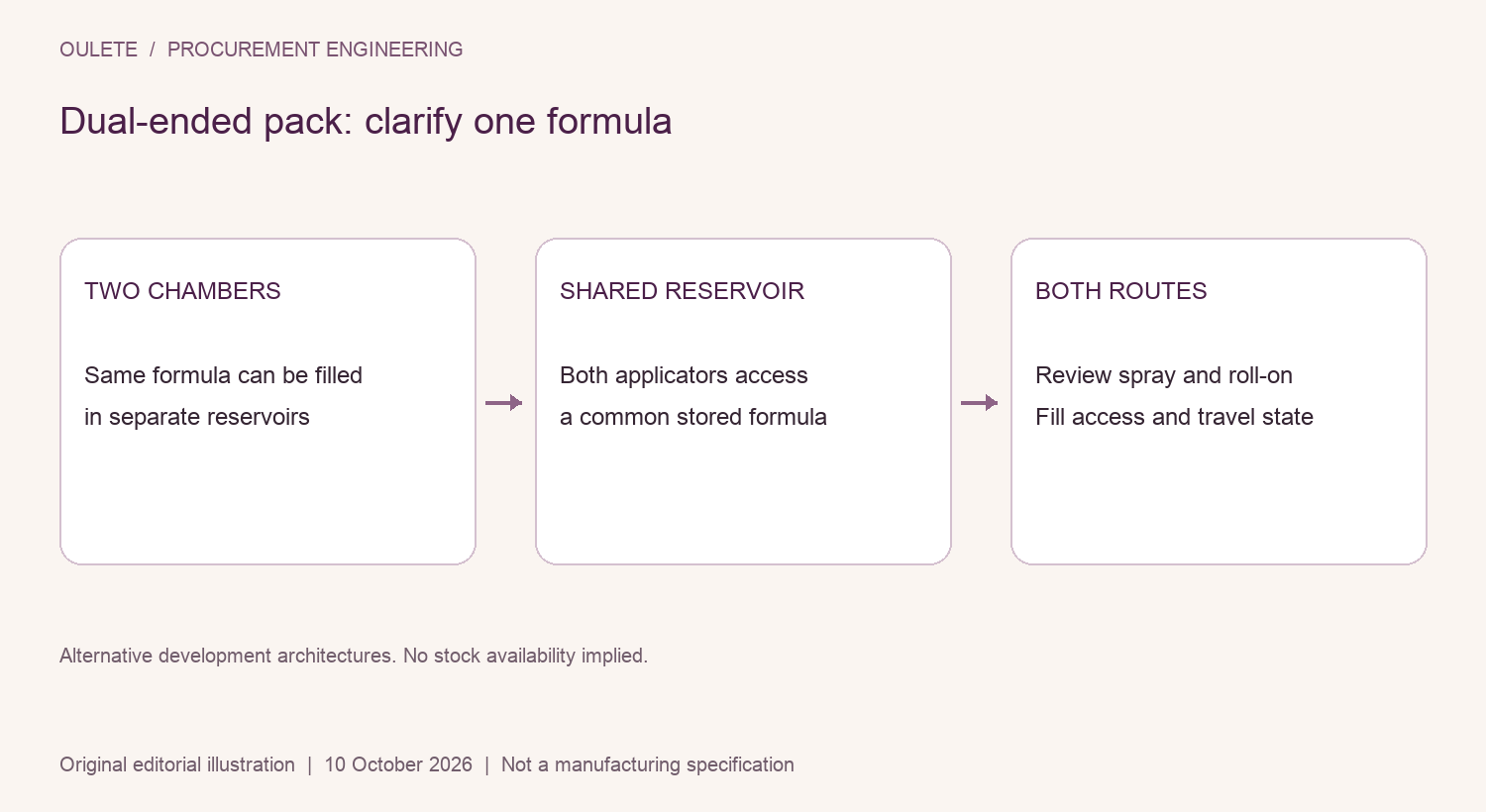
Dual-ended pack: clarify one formula showing two chambers, shared reservoir, both routes
On this page · 13 sections
- One formula does not determine the reservoir architecture
- Dual-ended roll-on and mist spray packaging: architecture comparison
- Match the same formula to two different applicators
- Map feed, air return and contact paths before assembly
- Prototype the filling route and the travel sequence
- Put the architecture decision ahead of the MOQ quote
- FAQ: dual-ended roll-on and mist spray packaging
- Does one formula require one shared reservoir?
- Can the same formulation work as a roll-on and a mist?
- Does a standard dual-ended bottle meet this brief?
- Should the two ends deliver equal quantities?
- Can this pack be described as leak-proof for travel?
- What should be settled before requesting an MOQ?
Dual-ended roll-on and mist spray packaging needs separate confirmation of reservoir architecture, formula performance, both dispensing paths, filling access and the complete travel closure.
The idea is one compact pack with roll-on application and a mist. Before a supplier proposes an assembly, clarify “one formula”: the same formulation in two isolated chambers, or both applicators drawing from one shared reservoir?
Oulete treats this roll-on/mist combination as a development enquiry; no complete stock model or formula trial is verified. Use the OEM/ODM development page for a component-led feasibility discussion. Plastic MOQ is 2,000 and glass MOQ is 5,000 units; those baselines do not confirm a new dual-ended tool or assembly.
One formula does not determine the reservoir architecture
One formula identifies the contents, while one reservoir identifies the storage architecture. Two separate chambers can contain the same formulation. A shared reservoir supplies both applicators from the same stored product. A buyer asking for one formula has not necessarily selected either structure, so the supplier should resolve that distinction before discussing tooling.
In a two-chamber proposal, each end can have its own formula container and dispensing assembly. The outer connection holds the two units together, but the fluid paths remain separate. This route can be screened against existing component systems, although fitting two systems into the required travel silhouette remains a development task and does not guarantee an available stock pack.
A shared-reservoir proposal removes the internal separation of the contents. It also connects the engineering questions at both ends. The review must explain how formula reaches the selected applicator, how pressure is managed as contents leave, and what keeps the other end closed during that operation. A simple sketch with two openings does not answer those questions.
Dual-ended roll-on and mist spray packaging: architecture comparison
| Proposed architecture | What stays separate or shared | Decisions to resolve before prototyping |
|---|---|---|
| Two isolated chambers containing the same formula | Separate contents and feed paths; common exterior connection | Capacity per end, filling and closure access, joining method, remaining product at each end |
| One reservoir serving both applicators | Shared contents; two dispensing and sealing paths | Feed orientation, pressure management, isolation of the inactive end, filling access and combined use |
| Two independent packs offered as a development fallback | Separate containers and user handling | Whether the brand accepts a travel set while evaluating the combined format |
The separate-pack fallback changes a fixed dual-ended requirement. It can separate formula/applicator evaluation from the additional joining problem, but the buyer must accept that change explicitly.
HCP describes double-ended mascara packs with brush choices. That is a different applicator category, not evidence of roll-on/mist functionality or a shared reservoir. Exterior resemblance cannot establish component interchangeability or formula performance.
Record whether isolated chambers are acceptable and whether the shared reservoir is mandatory. Keep a shared-reservoir proposal at feasibility stage if the supplier cannot draw both feed paths and explain the inactive outlet. Do not solve that missing answer by attaching a standard pump to a second opening.
Match the same formula to two different applicators
A formula that works through a roll-on applicator is not automatically suitable for a fine mist sprayer. The roller delivers product through its ball-and-seat arrangement during contact application. A pump sprayer must draw the formula through its mechanism and generate the intended spray. Evaluate those behaviours separately using the same controlled formulation reference.
Rheology describes how a material flows and deforms under specified conditions. A single viscosity number without a method, temperature and relevant flow conditions can leave the dispensing discussion incomplete. Ask the formulator for the information the proposed components need, including behaviour after storage and any preparation required before use.
| Formula handoff | Why the component team needs it |
|---|---|
| Formula code, revision and sample state | Keeps roller and sprayer trials on the same contents |
| Measurement method, temperature and flow behaviour | Allows the supplier to interpret a viscosity reading |
| Oils, alcohol, solids or separated phases identified by the formula owner | Flags questions about the selected fluid path and spray insert |
| Intended skin, hair or body application and preparation | Defines the application result and safety review owner |
| Changed formulation after a failed trial | Requires both applicators to be reviewed again |
Do not use a universal viscosity cutoff to select a mist pump. Silgan's Mark VII Max is specifically positioned for high-viscosity and difficult formulations, including oils. The useful point is that sprayer platforms differ. This supplier description does not establish that any sprayer handles any oil, or that an Oulete dual-ended configuration has equivalent performance.
Aptar's discussion of next-generation fragrance formulas likewise describes adapting pump and insert combinations to formula characteristics. The lesson for this project is to select the formula and dispensing system together. Aptar's own development work and customer outcomes are not Oulete evidence and should not be transferred into a supplier claim.
The formula owner must assess the intended cosmetic application as well as dispensing. “Compatible with both” cannot be approved from a visible spray alone. If achieving mist requires a formula change, rerun the roller evaluation with that revised formula rather than retaining the earlier roll-on approval.
For the roller, define the contact surface, desired wetting and observable application result. Check whether the ball turns and delivers the intended film with the proposed formula, rather than judging it with water alone. For the sprayer, define the desired pattern, actuation experience and output assessment. Do not assume the roller and sprayer must deliver the same mass per use.
| Applicator review | Record from the actual trial | Decision owner |
|---|---|---|
| Roll-on end | Formula reference, roller assembly reference, orientation, wetting, turning and post-use observations | Brand and formula team with the component supplier |
| Mist end | Formula reference, pump and insert references, preparation, priming, spray appearance and output observations | Brand and formula team with the dispensing supplier |
| Combined use | Sequence between ends, storage between uses, residual contents and changes at either outlet | Brand, filler and packaging development team |
Agree conditions and acceptance criteria before testing the actual parts. Where output is measured, the grams versus millilitres guide keeps mass, density and calculated volume distinct. This proposed record establishes neither a universal dose nor a completed Oulete spray test.
Map feed, air return and contact paths before assembly
A shared-reservoir design must identify the fluid and pressure relationships at both ends of the pack. Draw the proposed feed path to the mist pump, the path to the roller, and the sealing boundaries. Then examine the geometry in every orientation required for filling, storage and use.
A feed path is the route by which the stored contents reach an applicator. For a proposed dip-tube pump, turning the pack can change whether its pickup remains in the contents. The supplier must show the actual arrangement instead of assuming a conventional upright pump will operate identically when the roll-on end becomes the working end.
Air return is an arrangement that admits replacement air to a vented reservoir as product leaves. Other pressure-management approaches may use different constructions. Identify which system is proposed and where its boundaries are. For a shared reservoir, ask whether using one end changes the pressure conditions experienced by the other end, and how the inactive outlet remains controlled.
Map the two sealing paths with the same level of detail. The roller ball, seat and closure have their own interfaces; the sprayer has its attachment, sealing elements and outlet. Define the role of each overcap. An overcap may protect against contact or unintended actuation without serving as the principal formula seal. The exact construction determines its role.
The contact-material register should identify the body, roller, seat, pump fluid path, sealing elements and any other part with relevant formula exposure. A “plastic bottle” or “metal-free pump” description is insufficient for the whole dual-ended assembly. Use the component material list guide to record the complete proposed configuration rather than only its exterior material.
A roller is a contact applicator. The formula team should therefore assess the intended contact use and subsequent storage. In a shared reservoir, assess the proposed isolation mechanism instead of promising that the second outlet protects the contents. Product preservation and safety remain decisions for the brand and its formula team.
For two isolated chambers, document that isolation and test each chamber's proposed system. For a shared reservoir, the review must also cover the interactions created by alternating ends. The compatibility testing plan provides a framework for assigning actual materials, formula references and conditions to that review; an empty assembly sample cannot complete it.
Label the reservoir boundary, feed arrangement, pressure-management approach and filling point on the concept drawing. Any unresolved path is an engineering question for the prototype, rather than a completed design.
Prototype the filling route and the travel sequence
The filler needs a documented route to fill and close the proposed assembly without damaging an applicator or sealing interface. Determine which opening is available during filling, which components are fitted beforehand, and which are fitted afterwards. A complete empty mock-up can conceal an assembly sequence that the intended filling operation cannot use.
For two chambers, specify whether they are filled and closed separately before joining. Review how the filled units are handled and how the final connection is checked. If the same bulk formula fills both chambers, record its identity for each operation. Using one formulation does not remove the need to verify the filled quantity and closure state of each side.
For a shared reservoir, show formula entry, displaced-air escape and installation of the roller and mist assemblies. Ask the filler to review access and support points before the exterior is approved. A decorative sleeve should support process loads only if that function has been designed and assessed.
“Travel-friendly” needs a defined use and transport brief. A compact shape, a cap and a nominal capacity do not establish leak resistance or cabin compliance. Specify how the pack will be carried, its relevant storage orientations, and the closures supplied at both ends. Air-travel rules, if relevant to the offer, need a separate check for the destination and carrier.
Test the sequence that makes this product different: open the roller, use it, close it, turn the pack, use the spray, and store it again. The actual agreed sequence may differ, but it must cover alternating ends. Record how the inactive end behaves during each operation and whether the user can distinguish the two ends without accidental actuation.
| Proposed prototype checkpoint | Question the review should answer |
|---|---|
| Before fill | Are the formula entry point, venting and assembly access defined? |
| After closing | Are both sealing paths seated and both protective closures correctly fitted? |
| After roller use | Does the intended application occur, and what happens at the inactive spray end? |
| After spray use | Does the mist meet the agreed brief, and what happens at the inactive roller end? |
| After storage and handling | Are closure position, dispensing and visible leakage acceptable under the agreed conditions? |
The filled-pack leak-testing guide can support the written plan, but no generic pressure, duration, drop height or cycle count is specified here. Those conditions must be chosen for the actual formula, assembly and distribution use. The table is an approval framework, not a completed qualification report.
Use sample labels that say what can be approved. An appearance model resolves size and end identification; a functional sample investigates feed and application; the representative filled assembly carries closure and handling review. A visual approval must not advance a feed-path question that its sample cannot answer.
Put the architecture decision ahead of the MOQ quote
A meaningful dual-ended quotation identifies the supplied reservoir, both applicators, both closures, connecting parts and assembly state. A quote for a roll-on bottle alone does not define a roll-on/mist package. The same applies to a mist pump price that excludes its matching body, seals or the combined exterior.
Ask the supplier to classify the proposed parts as existing, modified or newly developed. Existing roller and sprayer references can be a useful starting point, but their availability does not establish their mutual fit. For a new shared-reservoir body, identify which interfaces need drawings, prototype work and tooling confirmation before the commercial offer can be finalised.
Oulete's MOQ is 2,000 units for plastic packaging and 5,000 for glass packaging. Identify the material and proposed configuration in the enquiry. The quotation should list the roller, mist assembly, body, connecting parts, decoration and assembly, while any unresolved architecture or tooling work remains a separate development decision.
Review the division of capacity in a two-chamber route. The brand may consume more formula through one applicator than the other, leaving an uneven remainder. Ask the brand to define the intended use before selecting equal chamber capacities by appearance. This is a design consideration, not a claim about a known consumer usage ratio or an existing customer's behaviour.
The travel-size packaging page provides related format options if a proposed route proves unsuitable. A fallback should explain which requirement changes: a separate travel set, a different applicator or a revised reservoir arrangement. Preserve the buyer's priorities in the comparison so a simpler quotation is not presented as meeting an unchanged specification.
Submit the formula trial reference, application, total capacity, dimensions, concept and use sequence through Oulete's custom project brief. State whether one shared reservoir is essential. Request an architecture shortlist and named component questions first, then trial responsibilities and a scoped quote. A failed applicator or unresolved feed path is a design decision to reopen before production.
FAQ: dual-ended roll-on and mist spray packaging
Does one formula require one shared reservoir?
One formula can be used in two isolated chambers or in a shared reservoir. The formulation requirement and the storage architecture are separate decisions. Confirm which arrangement the brand accepts before the supplier proposes parts or quotes development.
Can the same formulation work as a roll-on and a mist?
The same formulation may be suitable for both applicators only after the actual roller and sprayer have been assessed for the intended use. Formula type alone does not establish spray quality, roller wetting, material compatibility or cosmetic-use suitability.
Does a standard dual-ended bottle meet this brief?
A standard dual-ended bottle meets the brief only if its documented configuration includes the required roll-on and mist functions and supports the intended formula and architecture. A mascara, dual-roll-on or brush-ended format is not evidence of that match.
Should the two ends deliver equal quantities?
Equal delivery quantities are not an automatic requirement for roll-on and mist application. The brand must define the intended experience at each end. Measure and approve each applicator against that brief, keeping mass and calculated volume distinct where relevant.
Can this pack be described as leak-proof for travel?
A travel leak-resistance claim needs evidence from the actual filled configuration under defined conditions. Both closures, both outlet paths, orientation and alternating use matter. Compact dimensions or protective overcaps alone do not establish that result.
What should be settled before requesting an MOQ?
A useful enquiry identifies the reservoir architecture, formula reference, both applicators, capacity, material and assembly scope. Oulete's MOQ is 2,000 units for plastic packaging and 5,000 for glass. The architecture needs a feasible component proposal before quotation.
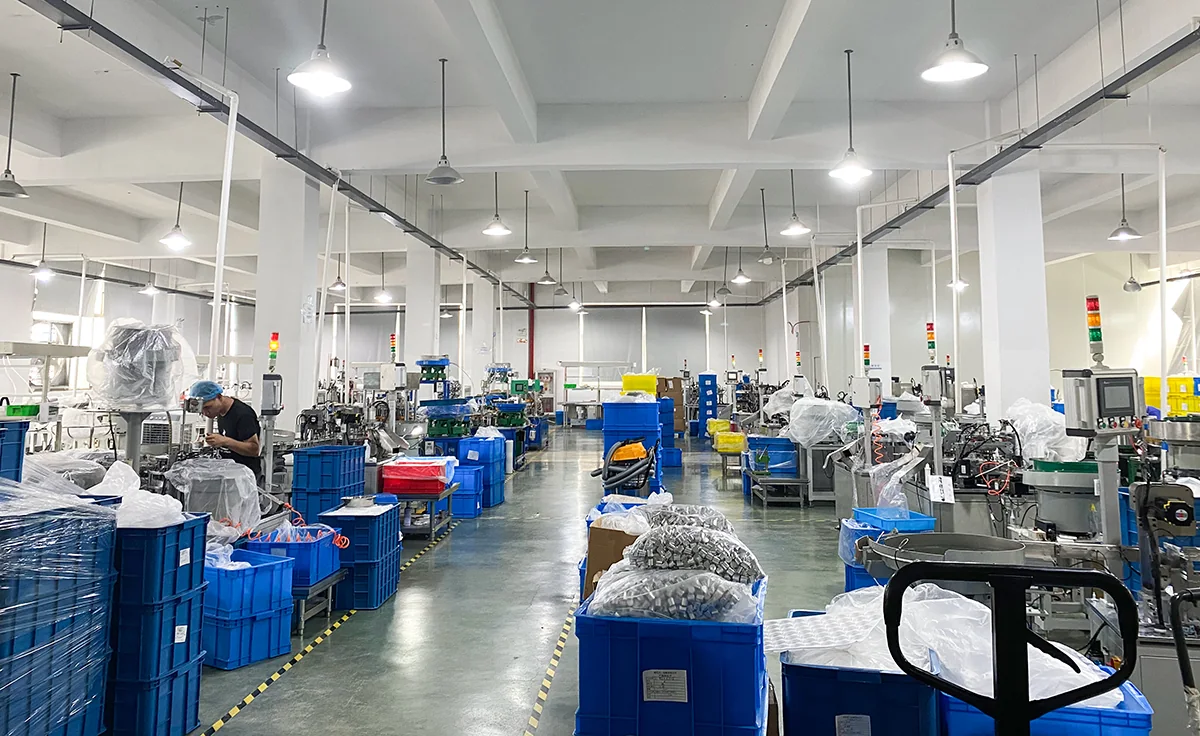
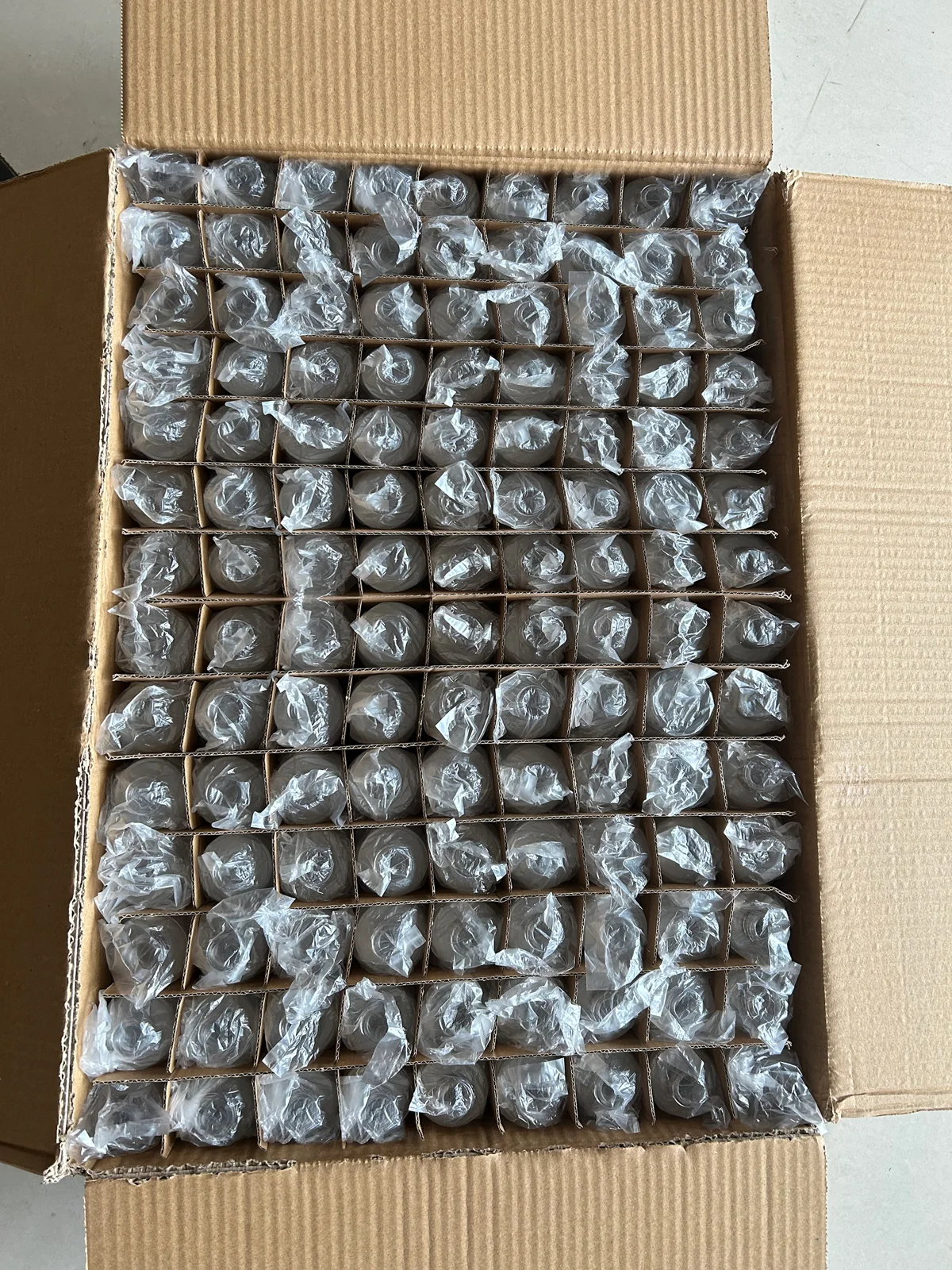
Photographed at Oulete
From the sample room to packed containers
See the facility and visible operations behind a packaging enquiry. For your selected assembly, ask which steps apply and request the corresponding sample and inspection records.