Cosmetic packaging · Made for your brand
Filled Cosmetic Packaging Leak Testing: A Buyer Guide
Cosmetic packaging leak testing evaluates the actual filled assembly under defined conditions, separating static sealing, dispensing behaviour and distribution performance before assigning a release decision. A bottle arrives dry, the…
Containers only — no compounding or filling.
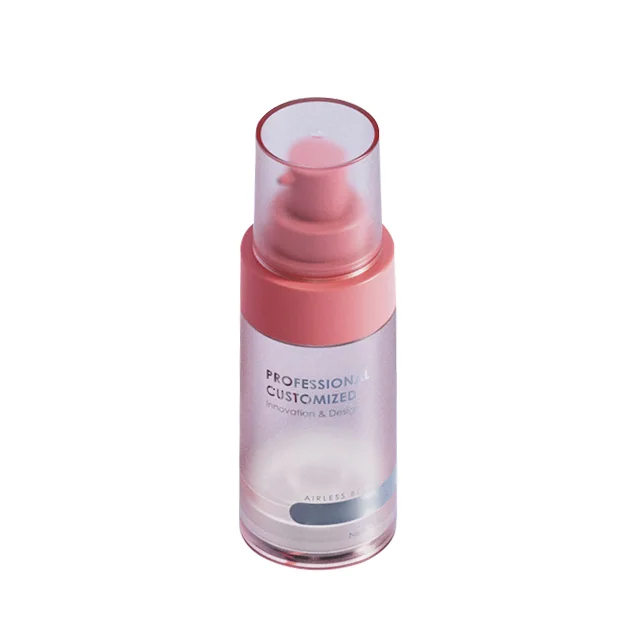
Clear cosmetic bottle with a pink pump
On this page · 15 sections
- Separate the leak location from the test category
- Cosmetic packaging leak testing: scope comparison
- Freeze the assembly and filling inputs before exposure
- Write the method and acceptance criteria together
- Blank filled-pack leakage protocol worksheet
- Test the shipping configuration that will actually travel
- Hypothetical investigation: dry storage, wet carton
- Preserve complaint evidence and close the release decision
- FAQ
- Can an empty bottle leak test approve a filled cosmetic pack?
- Does passing an inverted storage check prove shipping suitability?
- What torque should the filler use on the pump closure?
- Is visible liquid around a collar always a new leak?
- Can every pack use the same vacuum condition and duration?
- What evidence should a distributor retain after a leak complaint?
Cosmetic packaging leak testing evaluates the actual filled assembly under defined conditions, separating static sealing, dispensing behaviour and distribution performance before assigning a release decision.
A bottle arrives dry, the filler assembles it, and a distributor later reports liquid around the pump collar. That sequence does not identify the cause. The investigation needs the actual package, formula, assembly settings and exposure history. A bottle-only test or an unexplained "leakproof" claim cannot answer those questions on its own.
The practical objective is to define where leakage occurs, when it becomes observable and which conditions the proposed pack must withstand. Build the test around that objective before selecting equipment. The resulting evidence should support a specific release or corrective-action decision, with enough detail for the supplier and filler to reproduce the relevant conditions.
Separate the leak location from the test category
A leak location identifies the interface or feature from which liquid emerges, while a test category describes the conditions used to examine it. A wetted collar, actuator outlet, bottle wall and carton liner can represent different observations. Trace the liquid path before interpreting the observation as a bottle defect or pump defect.
Surface contamination is liquid left on the package during filling, wiping or previous actuation. It can resemble a new leak if the starting condition is not recorded. Document how the sample was prepared and photographed. Use an agreed approach to distinguish residue present before exposure from liquid appearing during the test.
A static sealing check examines the assembled package while it is held in a defined state. A functional check observes the pack during or after the specified dispensing sequence. A distribution assessment examines the filled pack and its protective packaging through selected transport exposures. These categories can reveal different weaknesses and require separate acceptance statements.
Cosmetic packaging leak testing: scope comparison
| Test scope | Package state to define | Question the result can address | What it does not establish alone |
|---|---|---|---|
| Static seal | Filled, assembled, locked or capped as specified | Does liquid escape under the defined storage exposure? | Dispensing performance throughout use |
| Actuation and use | Prepared and operated by an agreed sequence | Does leakage occur at relevant interfaces during use? | Resistance to the distribution route |
| Closure interface | Defined bottle, closure, seal and installation | Does the specified engagement and seal remain suitable? | Compatibility with a changed formula or component |
| Transport exposure | Filled saleable pack inside the defined outer pack | Does the tested shipping configuration retain integrity? | Every other carton, route or package size |
| Complaint investigation | Identified affected and comparison samples | Which observed conditions help narrow the failure? | Root cause without supporting evidence |
Do not combine a passed static check and an untested transport claim in one approval sentence. Specify which state and exposure passed. A package intended for consumer use may need observations after opening and actuation, while the distribution pack may be locked and capped. Both matter, but they answer different questions.
According to ASTM's public summary of D5094/D5094M, the method concerns gross liquid leakage from specified rigid or semi-rigid container systems with threaded or lug-style closures. It includes distribution-related exposures and orientations. Determine whether that scope fits the actual assembly; do not apply it automatically to every snap-on pump or airless architecture.
Freeze the assembly and filling inputs before exposure
A leak-test sample is an identified filled assembly with a recorded preparation history. Its identity includes the body, closure or pump, sealing parts, formula batch and assembly references. If these are missing, a result may describe the physical sample in the laboratory without establishing which production configuration it represents.
The sealing interface is the contact arrangement intended to contain the liquid at a joint. It may depend on a liner, gasket, land, plug or other design feature. A closure that appears seated can still need verification of the correct part and installation. Use the neck finish guide to frame the drawing request.
For a threaded system, application torque describes the turning moment used to install the closure. Removal torque describes the turning moment required to undo it under stated conditions. These are related measurements, not interchangeable values. Record the application process and subsequent conditioning before interpreting a removal result.
According to ASTM's public D3198 scope, the method concerns applying a specified torque to a threaded or lug-style closure and measuring the torque required to remove it. That description does not provide the correct installation value for your bottle and pump. The component suppliers and filler need to agree that value and its verification.
Ask how the production capper or assembly equipment relates to the documented interface setting. A machine display does not automatically establish the condition of every closure. The filler should define the relevant measurement method, equipment verification and line checks. For a non-threaded system, request the appropriate seating or engagement instructions instead of a torque value.
Fill quantity and available space also belong in the record. A changed fill, formula temperature or installed part can alter the closed assembly's conditions. State the actual mass or volume basis and the formula identity. A nominal bottle size does not establish approved headspace or the relevant production filling limits.
Formula exposure can affect materials and sealing behaviour over time. Keep compatibility evidence linked to the leak trial, particularly when a component or formula changes. Leakage observations help identify a symptom; they do not by themselves establish whether chemical interaction, geometry, assembly or an external load caused that symptom.
The contract filler packaging brief can be used to collect the supplied state and proposed filling sequence. Include whether the pump arrives fitted or loose, the locking position and any transport protection. The trial should use the documented configuration that production is expected to supply.
Write the method and acceptance criteria together
A test protocol defines how samples will be prepared, exposed, observed and judged. Write the acceptance criteria before the trial starts, along with the decision owner. A result such as "no visible leakage" is meaningful only when the observation method, package state, exposure and inspected sample identities are documented.
Conditioning is the controlled preparation or exposure of a sample before a subsequent measurement or assessment. Record its actual duration, environment and orientation where relevant. Choose these conditions from the intended product and route requirements. This guide does not prescribe a universal vacuum level, chamber temperature, dwell time or sample quantity.
If weight change is an observation, define what is weighed and how the starting and ending measurements are made. A closed-pack mass change can have several explanations; liquid observed externally is a different type of evidence. Identify controls and complementary observations needed to interpret the measurement rather than treating every change as confirmed seal leakage.
An instrumented method needs a suitable package and detection principle. Ask the selected laboratory how the method works for the pack construction and formula, what signal it detects and how it distinguishes acceptable samples from known failures. A more technical instrument name does not automatically provide a more relevant acceptance decision.
Blank filled-pack leakage protocol worksheet
| Protocol field | Entry to agree before testing |
|---|---|
| Purpose and scope | Storage, consumer use, interface investigation or named distribution configuration |
| Sample identity | Body, pump or closure, seal, component lots, drawings and individual sample IDs |
| Formula and preparation | Formula code and batch, fill basis, filling conditions and assembly settings |
| Package state | Locked, unlocked, primed, unprimed, capped and protective features as applicable |
| Exposure | Conditioning, orientation, environment, duration and selected test method |
| Observations | Location photographs, appearance, function and relevant measurements |
| Controls | Comparison or challenge samples and the question each is intended to answer |
| Acceptance | Attribute or numerical criteria, sample disposition and responsible approver |
| Exceptions | Actual deviations, retained evidence, retest rules and report references |
This original worksheet is a planning tool, not evidence that any model has passed. The laboratory or trial owner should set sample allocation for the selected work, including observations that consume or alter samples. The report must show inspected quantities and observed failures, while keeping the agreed acceptance rule separate from the observed result.
Retest rules should distinguish an invalid execution from a valid failure. A documented equipment fault may justify repeating an affected exposure. A valid failing sample needs investigation and disposition even if later samples pass. Preserve the original result so the approval record reflects the complete evidence rather than the most convenient run.
External reference — Oxipack Leak Detection: The Oxipack Bottle Leak Tester | For testing bottles
External equipment demonstration published by Oxipack Leak Detection. It is not an Oulete test record or evidence that the shown method qualifies the proposed cosmetic pack.
Test the shipping configuration that will actually travel
A shipping configuration combines the filled primary pack with its protection, arrangement and outer packaging. Carton design, dividers, locking features and closures can affect the exposure experienced by each unit. A transport result belongs to that defined configuration; changing it can require a review of the evidence.
According to Aptar's Eden page, its stated ISTA-6 qualification is limited to the 50 ml size, and test outcomes may depend on container shape, size and sample formula. This product-specific boundary illustrates how a credible claim should be read. It is not a test result for an Oulete airless package.
Ask the supplier or testing organisation to identify the protocol, package version and supporting report for any distribution claim. Then compare those details with the order. A familiar testing logo or the word e-commerce does not show whether the selected formula, closure, carton and supplied protection are within the claimed scope.
The intended route should inform the testing brief. Warehousing and individual-parcel handling can impose different combinations of orientation and mechanical exposure. Describe the planned distribution system to the selected laboratory and ask for the relevant assessment. Do not convert a generic vacuum check into a claim that every shipping route has been validated.
Review the actual airless bottle candidates as complete shipping assemblies. An overcap can have a retention function, and a locked actuator can differ from an unlocked one. Identify these states in the carton record and specify how packs should arrive at the filler and leave for distribution.
Hypothetical investigation: dry storage, wet carton
Assume an illustrative shipment shows serum on carton dividers while retained filled samples have remained dry in upright storage. This is not a factory case or a test outcome. The observations establish a difference in exposure, but they do not identify the bottle supplier as the cause or exonerate the pump assembly.
The distributor records affected positions, leak locations, component lots and handling history. The filler supplies fill and assembly records. The supplier reviews the referenced components and sealing arrangement. A proposed comparison can examine the relevant shipping configuration and package state while preserving other inputs, subject to the agreed protocol and sample allocation.
If liquid is traced to an actuator outlet after an unintended unlocking event, investigate that event and the protective configuration. If liquid emerges at the collar while the actuator remains locked, investigate the sealing interface and assembly history. These are working hypotheses, not diagnoses; each needs supporting observations and an agreed follow-up test.
Preserve complaint evidence and close the release decision
A complaint record should separate observed facts, proposed explanations and confirmed findings. Collect the customer SKU, formula and fill batch, component lot references, first observed timing, inspected quantities and relevant photographs. Preserve affected and unaffected comparison samples with their histories instead of sending only a cleaned empty bottle to the supplier.
Photograph the unopened package and outer protection before disassembly where possible. Record whether a sample was wiped, actuated, relocked or transferred before investigation. These actions can change the evidence. A distributor's handover should make the sample history visible so the filler and supplier know which conditions they can still examine.
Link a corrective change to the evidence it is intended to address. A new gasket, different installation setting or revised carton may affect other requirements and need a defined review. Avoid approving the entire revised package solely because the original visible leak is absent in one follow-up observation.
Oulete's quality discussion page can help frame the documents and responsibilities needed for the proposed pack. Request model-specific interface instructions and the available evidence for the chosen component set. Keep unperformed tests as open items in the release record rather than translating a general quality statement into a product qualification.
Send the component references, formula code, filled-pack preparation and required storage or shipping scope through the sample brief. Ask for a complete-pack sample and document proposal that the supplier and filler can both review. A useful enquiry specifies the decision and evidence required before ordering components for production.
FAQ
Can an empty bottle leak test approve a filled cosmetic pack?
An empty-bottle check cannot by itself approve the actual filled cosmetic assembly. Filling introduces the formula, assembly conditions and installed components. Approval should identify the complete pack, preparation, exposure and acceptance criteria relevant to storage, dispensing or distribution, while preserving the distinction between those test scopes.
Does passing an inverted storage check prove shipping suitability?
Passing an inverted storage check supports only its documented package state and exposure. Transport can introduce mechanical loads, changed orientations and interactions with outer packaging. Evaluate the intended shipping configuration using an agreed assessment instead of treating one static orientation as proof of the entire distribution route.
What torque should the filler use on the pump closure?
The filler should use the installation setting agreed for the exact bottle, closure and seal. A general method for measuring torque does not supply that value. Obtain the relevant component drawings and application instructions, define verification and conditioning, and record how the proposed production process meets the agreed interface requirements.
Is visible liquid around a collar always a new leak?
Visible liquid around a collar is an observation that requires sample history and location evidence. It may represent new leakage, residue from filling or material transferred during handling or actuation. Record the starting condition and subsequent exposure before assigning the observation to a package failure or supplier.
Can every pack use the same vacuum condition and duration?
Leak-testing conditions must be selected for the method, pack construction and intended decision. The testing organisation should justify the chosen exposure, sample allocation and acceptance criteria. A universal vacuum setting or dwell time cannot replace that review, especially when comparing different closure types or dispensing architectures.
What evidence should a distributor retain after a leak complaint?
A distributor should retain identified affected and comparison samples, photographs, inspected quantities and the package's handling history. Connect these to component lots, formula and filling records where available. Keep observations separate from suspected causes, and document the agreed investigation, corrective action and release scope before replacing or reordering the pack.
Photographed at Oulete
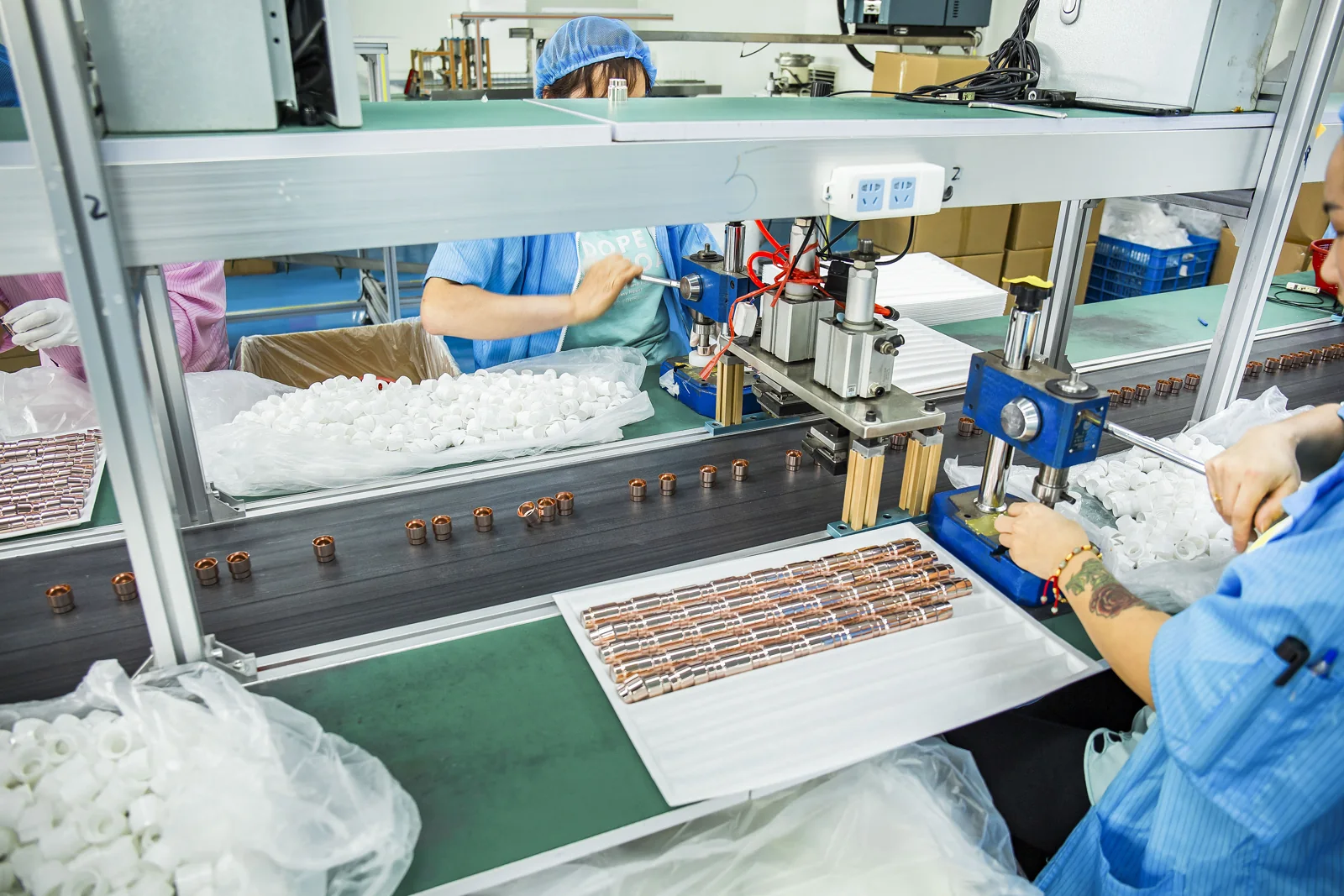
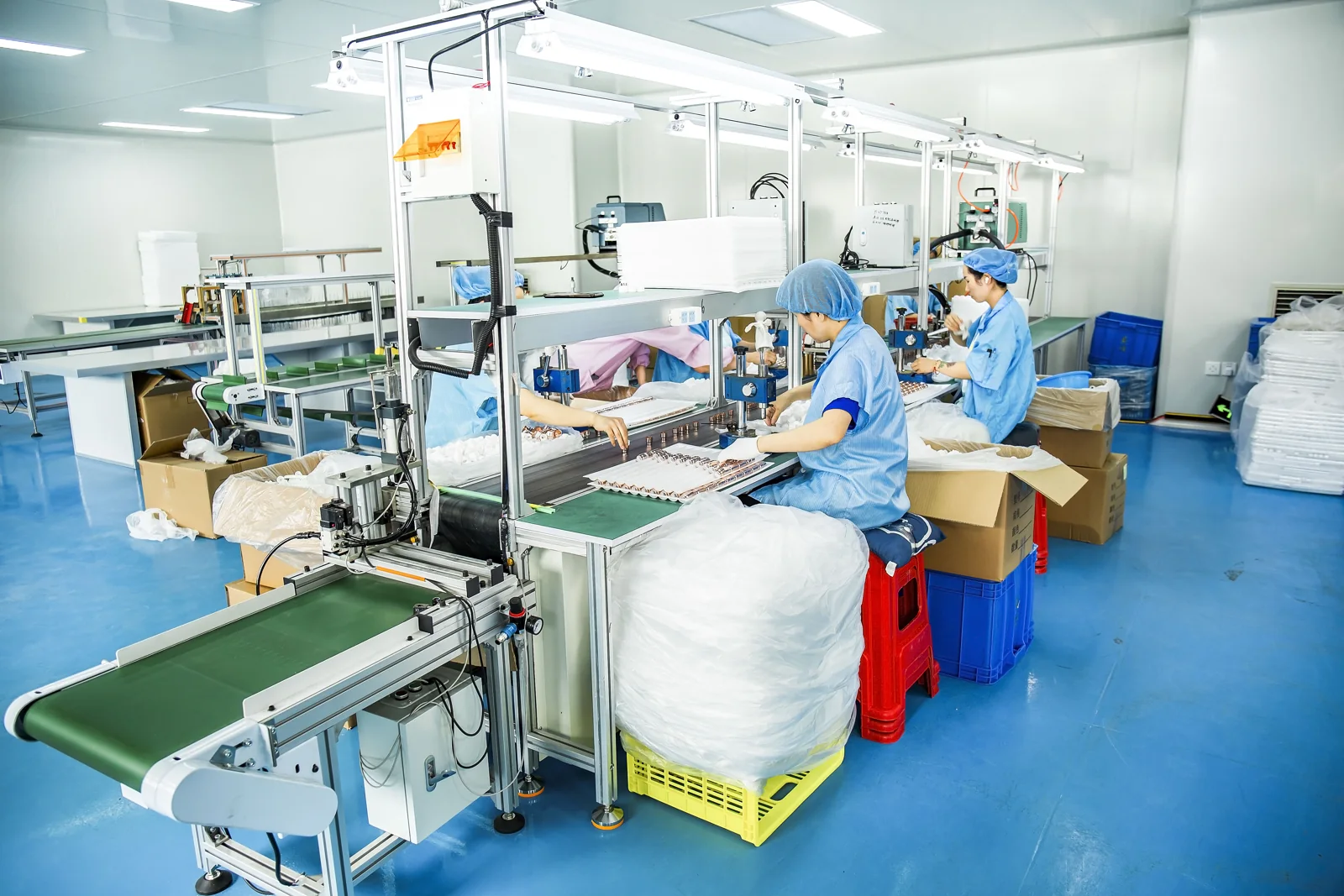
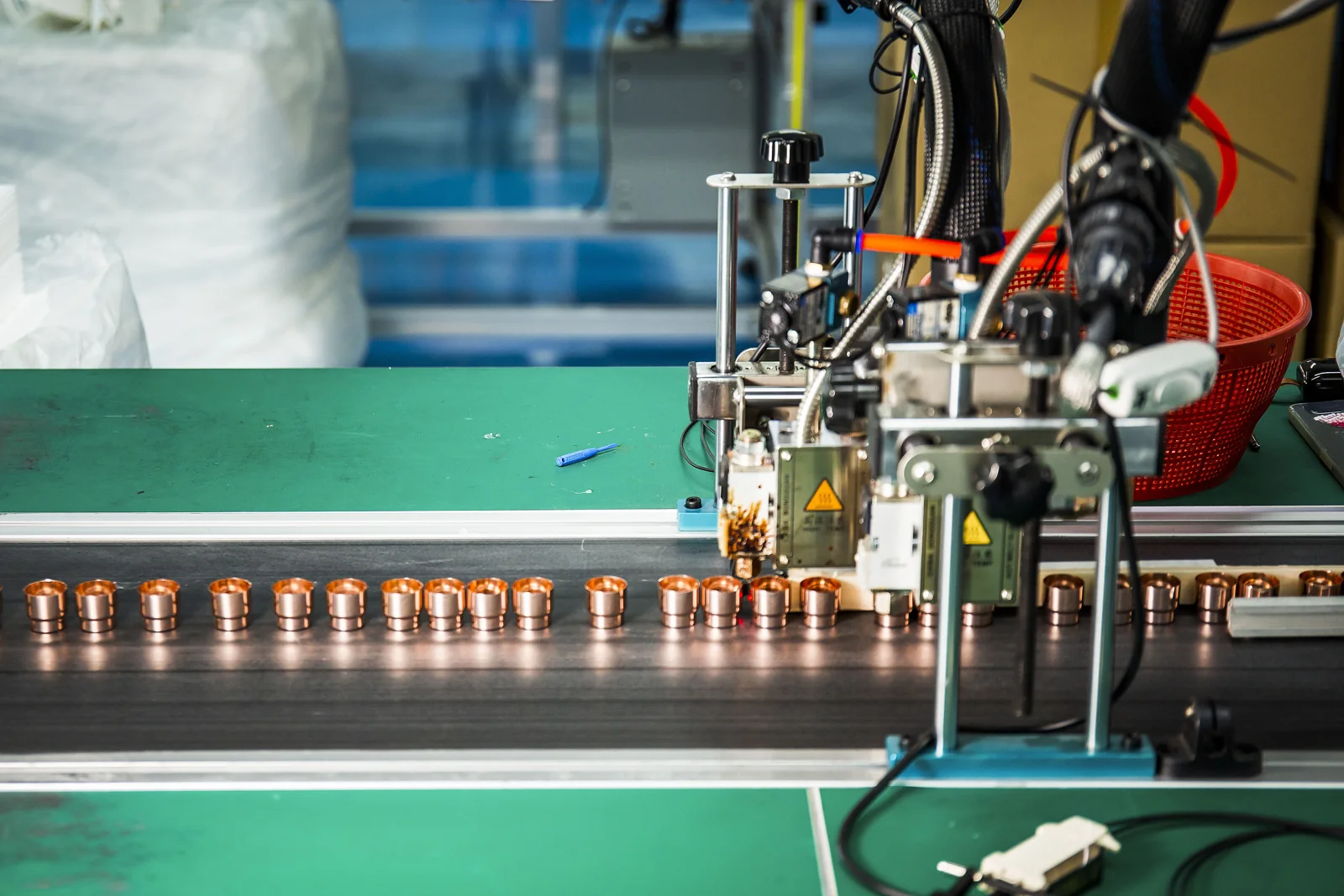
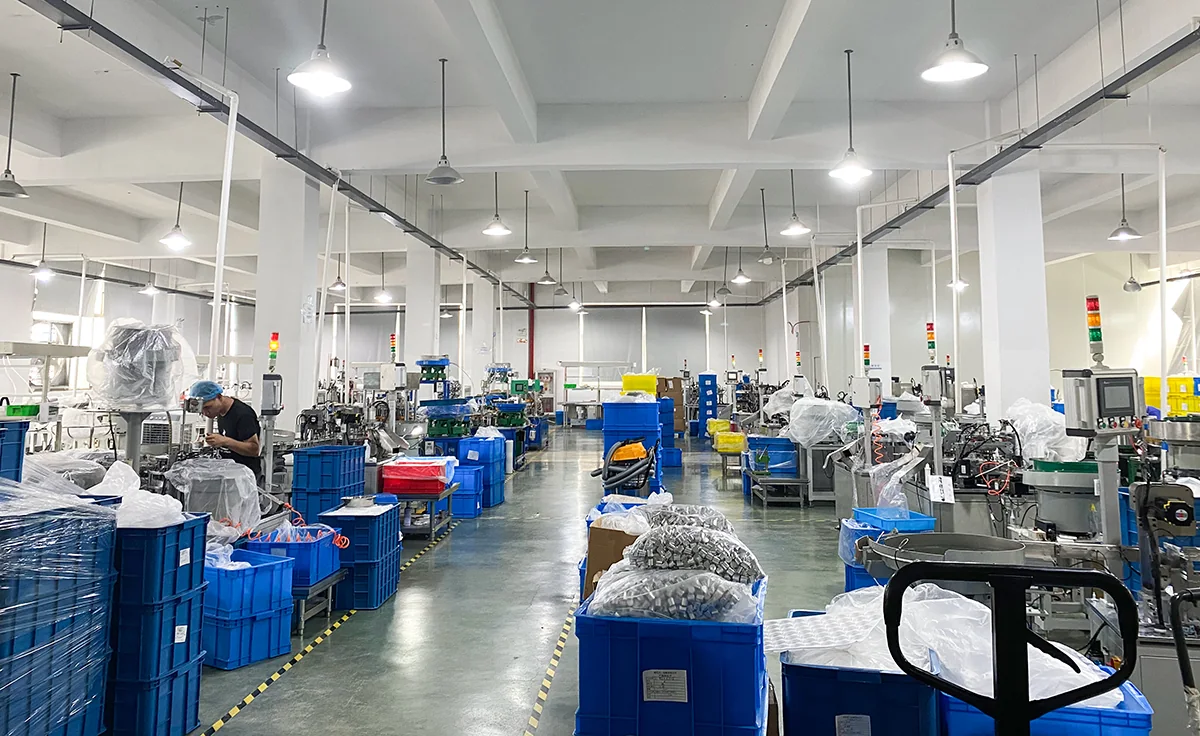
Assembly workstations in the factory
See the facility and visible operations behind a packaging enquiry. For your selected assembly, ask which steps apply and request the corresponding sample and inspection records.