Cosmetic packaging · Made for your brand
Pump Output: Converting Grams to Millilitres per Stroke
Pump output in millilitres per stroke equals delivered mass divided by the actual formula density, with matching temperature, assembly and actuation conditions. A quotation marked “0.20 g” cannot be compared directly with a requirement…
Containers only — no compounding or filling.

Clear cosmetic bottle with purple pump assembly and cap
On this page · 16 sections
- Specify what the pump output number represents
- Pump output: quotation entries and comparison requirements
- Convert grams with density from the actual formula
- Hypothetical density comparison, not supplier test data
- Agree the complete-pack trial before measuring
- Blank pump-output protocol worksheet
- Read the raw results before accepting the average
- Hypothetical individual-stroke calculation
- Connect the dose decision to sourcing and approval
- FAQ
- Are grams and millilitres the same for pump output?
- Is one cc the same as one millilitre?
- Can a water test approve output for our serum?
- Should we measure individual strokes or collect several together?
- What output tolerance should we request?
- Does consistent output mean the bottle empties well?
Pump output in millilitres per stroke equals delivered mass divided by the actual formula density, with matching temperature, assembly and actuation conditions.
A quotation marked “0.20 g” cannot be compared directly with a requirement marked “0.20 ml.” They describe different quantities. Even a correct conversion leaves another question: did the supplier measure the intended formula in the selected complete pack, or quote a nominal pump option tested under different conditions?
Packaging buyers, formulators and contract fillers need a specification they can reproduce. Start with the quantity the product team requires, name the actual liquid and define a full actuation. Retain raw results as well as the calculated mean. That makes it possible to compare pump offers without turning catalog dosage, a water trial or an arithmetic example into finished-product evidence.
Specify what the pump output number represents
Pump output is the quantity delivered during the actuation defined in the test method. Mass output is reported in grams per stroke; volume output is reported in millilitres per stroke. A bare decimal does not identify the quantity, the test liquid, the operating conditions or whether the value is nominal, measured or required.
APC's pump and sprayer output explanation identifies microlitres, millilitres and cubic centimetres as supplier output units. A cubic centimetre, commonly written cc, is equivalent to a millilitre. Confirm the unit used on the selected specification instead of assigning one to a number copied from a quotation.
Pump output: quotation entries and comparison requirements
| Quotation or report entry | What it tells the buyer | Information required before comparison |
|---|---|---|
| g/stroke | Mass delivered per specified actuation | Formula identity, density and test conditions |
| ml/stroke or cc/stroke | Volume delivered per specified actuation | Measurement or calculation method, fluid and conditions |
| Nominal dosage option | A supplier's listed component configuration | Exact pump variant and performance with the intended pack |
| Measured average | Mean output for the tested data set | Raw results, unit identities and handling of failed strokes |
| Acceptance range | Agreed decision limits for a stated method | Quantity, protocol, sample scope and responsible approval |
| Number without a unit | Incomplete output information | Quantity and unit before technical evaluation |
The requirement should distinguish an intended dose from an available pump option. A product team may define the amount needed for the user application, while a supplier offers several nominal mechanisms. Selecting the nearest option starts a sample evaluation. It does not prove that the customer's formula will deliver the required amount consistently.
A full stroke is the actuation sequence specified for the trial, including the movement and release of the actuator. Partial presses and incomplete return can describe different usage conditions. Keep a controlled full-stroke measurement separate from any additional consumer-use evaluation, so an irregular gesture does not silently change the basis of comparison.
Priming is the initial operating sequence that establishes product delivery. State how priming strokes are identified and recorded before calculating normal output. An average that mixes priming, established dispensing and near-empty failed strokes answers a different question from a stable-output measurement. Neither record should replace the other without explanation.
Convert grams with density from the actual formula
Density is mass divided by volume, so volume can be calculated by dividing mass by density. The NIST SI Guide defines this relationship. When stroke mass is expressed in grams and liquid density in grams per millilitre, the calculated result is millilitres per stroke.
Calculated output (ml/stroke) = measured output (g/stroke) / formula density (g/ml).
Required mass output (g/stroke) = required volume output (ml/stroke) × formula density (g/ml).
Density and viscosity describe different properties. Density supplies the mass-to-volume relationship; viscosity describes resistance to flow under defined measurement conditions. A viscosity value cannot substitute for density in the calculation. Likewise, a density measurement does not establish that the formula will prime, dispense or remain compatible with the selected pump.
Use density tied to the same formula identity and stated measurement temperature as the output evaluation. Ask the responsible laboratory or formulation team for its method and record. A density taken from another product, an undocumented online table or an assumed water value creates a calculated volume that does not characterize the tested serum.
Hypothetical density comparison, not supplier test data
| Assumed delivered mass | Hypothetical liquid density | Calculated volume |
|---|---|---|
| 0.20 g/stroke | 0.80 g/ml | 0.25 ml/stroke |
| 0.20 g/stroke | 1.00 g/ml | 0.20 ml/stroke |
These deliberately chosen numbers show the arithmetic only. They are not Oulete measurements, pump specifications or measured properties of any formula. Identical mass outputs produce different calculated volumes when density changes. Conversely, equal volume targets can require different delivered masses, which matters when the trial measures output on a balance.
The conversion should preserve the temperature and unit record rather than hide them in a spreadsheet note. If the density was measured under a different condition, ask whether it can be used for the intended comparison. Leave calculated volume pending when the necessary input is missing; a mass result can still be reported accurately on its own.
Keep rounding separate from measurement. Retain original mass readings and the recorded density, then state how calculated results are displayed. Extra decimal places in a division do not improve the measuring equipment or density method. The report should avoid suggesting a level of precision that the underlying data cannot support.
Agree the complete-pack trial before measuring
A reproducible output measurement requires an identified pack, test liquid and operating method. Record the bottle, pump, actuator, closure and relevant component references, including revisions. Include formula code and batch, fill state, temperature, orientation, stroke technique, pauses and the treatment of priming before collecting output data.
Aptar's laboratory testing page lists functionality, compatibility and dimensional checks, alongside rheology and density characterization. The separate activities show why liquid properties and dispensing evaluation belong in the same qualification plan. They do not establish an equivalent Oulete laboratory service or a completed test on an Oulete sample.
Choose the measurement route with the responsible testing team. Collecting output directly can identify delivered liquid, but the record must account for spills and material remaining on the nozzle. Measuring package mass before and after actuation can be useful, but unrelated leakage or handling loss must not be misreported as a successful delivered dose.
Balance resolution is the smallest displayed mass increment of the selected instrument, while the measurement procedure determines how the reading is used. Record the instrument identity and applicable checking method. If individual doses are too small for the agreed measurement approach, the team may collect a stroke group; report that limitation explicitly.
A grouped measurement gives a mean for its identified strokes, rather than separate measurements for every stroke. It can conceal alternating low and high doses. Pair grouped collection with observations of the individual actuations, and label the output record by unit, sequence and group. A divided total must not be presented as raw individual-stroke data.
Blank pump-output protocol worksheet
| Protocol field | Entry to agree |
|---|---|
| Evaluation purpose | Screening, comparison, qualification or incoming verification |
| Complete assembly | Component references, drawing revisions, lots and supplied state |
| Test liquid | Formula identity, batch, preparation record and temperature |
| Density | Value, unit, measurement temperature, method and source |
| Fill states | Defined conditions representing intended stages of use |
| Priming | Method, observations, endpoint and treatment in calculations |
| Actuation | Stroke definition, orientation, technique and interval |
| Measurement | Collection method, equipment, raw reading units and stroke grouping |
| Acceptance | Required quantity, limits, conditions, sample scope and reviewer |
Set the sample count and sequence for the purpose of the trial. A preliminary screen and a release decision may need different evidence. This worksheet deliberately leaves duration, number of units, strokes and pass limits to the project protocol. Choosing values without agreement can produce a detailed report that answers the wrong question.
Evaluate relevant fill states and storage conditions rather than assuming a new, full bottle represents its entire use. The team should define what is meant by early, middle and near-empty operation, including how samples reach those states. Retain the method so later measurements compare equivalent conditions instead of labels with different meanings.
Oulete-supplied footage: Clear cosmetic bottles with gold-finish pumps on a rotating display
Oulete-supplied turntable footage of bottles with gold-finish pumps. It shows the appearance of the pack, not measured output, fill capacity or formula compatibility.
Read the raw results before accepting the average
An average describes the centre of a data set but does not show every delivered dose. Retain unsuccessful actuations, sample identity and measurement order. Report spread and the calculation method alongside the mean, so a supplier and filler can distinguish consistent output from a similar average produced by irregular dispensing.
Hypothetical individual-stroke calculation
The following values are an original arithmetic exercise. Assume a fictional protocol recorded these established-dispensing masses with a hypothetical density of 0.80 g/ml. The exercise does not set an acceptable tolerance, demonstrate instrument capability or describe any supplier's pump performance.
| Stroke | Hypothetical mass reading | Calculated volume at 0.80 g/ml |
|---|---|---|
| A | 0.18 g | 0.225 ml |
| B | 0.20 g | 0.250 ml |
| C | 0.22 g | 0.275 ml |
| Mean of the listed readings | 0.20 g | 0.250 ml |
The mean mass is the sum of the three readings divided by their count. Converting each result with the same density gives the displayed volume values. The range is 0.04 g or 0.050 ml. Whether that spread is acceptable cannot be decided from the arithmetic; it depends on the agreed output requirement and method.
If only the combined 0.60 g had been measured, dividing by three would still give a 0.20 g mean. The report could not claim the individual readings shown above, because they would not exist in that measurement route. Grouped totals and individual-stroke records can produce the same average while preserving different information.
Keep unit-to-unit variation distinct from stroke-to-stroke variation. Repeated measurements on one pack cannot reveal whether another pack behaves similarly. Label every sample and retain its sequence. Where the protocol includes storage or fill-state comparisons, preserve the connection between those conditions and the raw readings rather than combining everything into one overall mean.
When a stroke delivers no collected product, record the event and the observed actuator behaviour. Apply the protocol's stated rules for including or separating that event. Deleting it without explanation can hide a priming or functional issue. If the collection failed because of a spill, record that measurement error separately from a failed actuation.
Connect the dose decision to sourcing and approval
Dose qualification and product evacuation measure different aspects of dispensing. Dose concerns the quantity delivered during defined actuation; evacuation concerns product removed from an initial fill under a defined endpoint. A satisfactory dose does not prove low residual product, and an evacuation claim does not establish consistent output per stroke.
For an evacuation study, define initial net fill, the treatment of priming, usable collected output and the endpoint of normal operation. Preserve residual and loss records where relevant. A supplier percentage generated with another formula or method cannot stand in for the result of the actual filled pack being approved.
Prepare a complete-pack enquiry using the desired application amount, proposed actuation count and output unit. Select an identifiable 30 ml airless bottle option, then request the compatible pump reference and available dosage variants. Capacity alone does not determine pump output, and a listed bottle does not qualify its dispensing performance.
The contract-filler handoff should identify who supplies formula density, who runs the filled-pack trial and who approves the result. Include that scope in the complete quotation comparison, so a low-priced bottle-only offer is not compared with a pack that includes a specified pump and agreed evaluation.
Use the sample approval guide to attach the output report to the exact approved configuration. Appearance approval and functional approval cover different evidence. If the formula, pump or component revision changes, review which output conclusions need repeating rather than carrying forward the old average without examination.
For Oulete sampling, submit a defined dispensing brief with the proposed bottle, complete component requirement, actual formula code, required dose unit and available density record. Ask for a documented pump proposal and a trial scope. This gives the supplier a concrete selection problem while leaving test limits and release decisions with the responsible project team.
FAQ
Are grams and millilitres the same for pump output?
Grams measure delivered mass, while millilitres measure delivered volume. The numerical values are equal only for a liquid with a density of 1.00 g/ml under the stated conditions. Obtain actual formula density before converting a mass result into a volume specification.
Is one cc the same as one millilitre?
One cubic centimetre, or cc, is equivalent to one millilitre. The unit identity does not establish a pump's delivered amount or operating conditions. Confirm whether the listed figure is nominal dosage, a measured result or an acceptance requirement for the selected assembly.
Can a water test approve output for our serum?
A water test does not by itself approve output for a different serum. Formula density, rheology, component contact and dispensing behaviour need review with the intended complete pack. Keep the screening result identified by its liquid and method, then define the actual-formula evaluation.
Should we measure individual strokes or collect several together?
Individual measurements preserve stroke variation, while grouped collection provides a mean for the identified strokes. Select the method with the responsible testing team and measuring equipment. Report grouping explicitly and do not present values inferred from a total as raw individual readings.
What output tolerance should we request?
The acceptable output range must be agreed for the product application and test method. State the quantity, formula, assembly, conditions and sampling scope with the limits. A generic catalog range or tolerance from another supplier is not an order-specific acceptance criterion.
Does consistent output mean the bottle empties well?
Consistent output per stroke does not establish complete product evacuation. Evaluate usable collected product and remaining material under a defined end-of-use method. Keep dose and evacuation conclusions separate, with their actual formula, assembly and test conditions recorded.
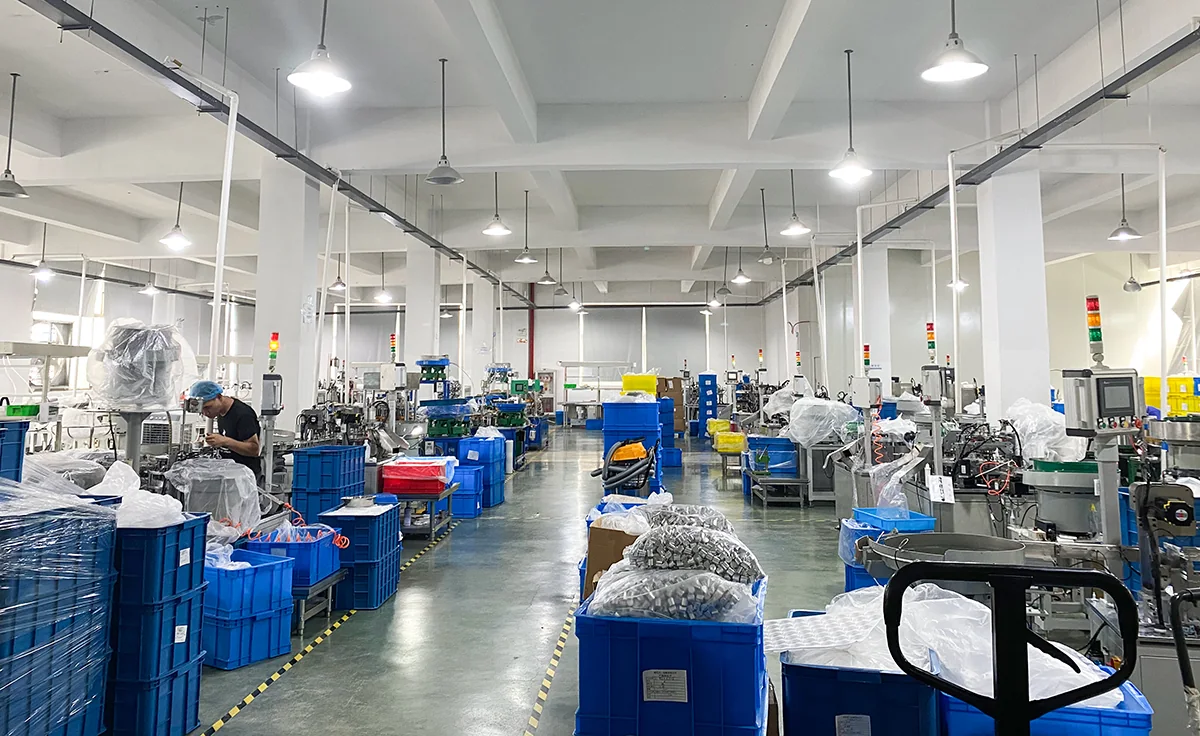
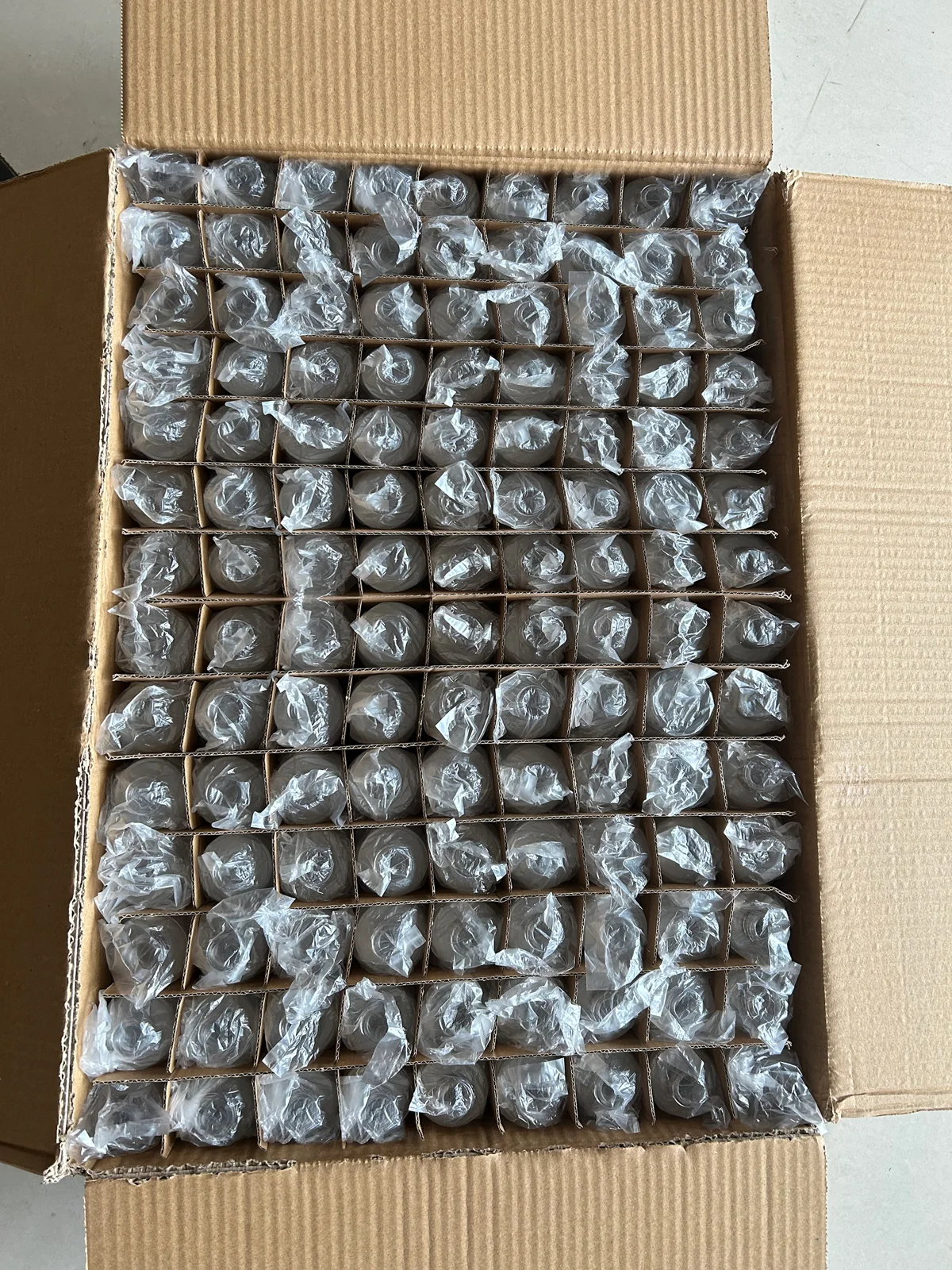
Photographed at Oulete
From the sample room to packed containers
See the facility and visible operations behind a packaging enquiry. For your selected assembly, ask which steps apply and request the corresponding sample and inspection records.