Cosmetic packaging · Made for your brand
Dropper Bulb Swelling: Material and Formula Approval
A buyer guide to swollen or distorted dropper bulbs: identify the proposed compound, record the actual formula exposure and carry the accepted assembly into the production order.
Containers only — no compounding or filling.
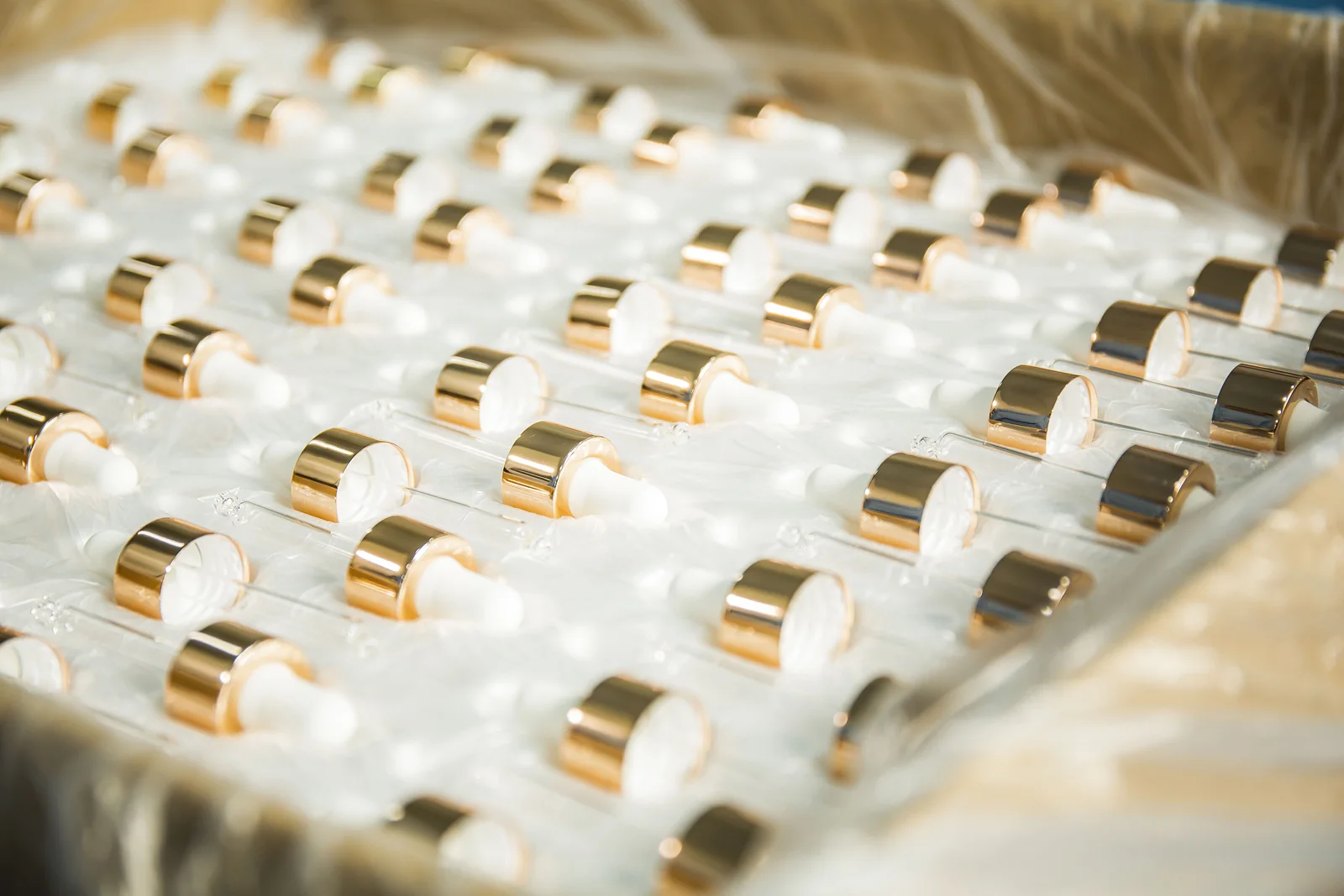
Gold-finish dropper collars, white tops and transparent pipettes arranged in protective trays
On this page · 12 sections
- Record what changed on the bulb
- Specify the bulb compound behind NR, NBR or TPE
- Read ingredient resistance at the published scope
- Match the exposure and the complete assembly
- Carry the approved bulb into the quotation and order
- Dropper bulb swelling FAQ
- Why can a dropper bulb swell in facial oil?
- Does a glass bottle prove bulb compatibility?
- Is nitrile always suitable for essential oils?
- Are all TPE dropper bulbs the same?
- Does an ingredient-resistance sheet approve my full serum?
- Which changes require the bulb to be reviewed again?
Assess dropper bulb swelling by identifying the exact compound, documenting formula exposure and checking the matched assembly before approving a replacement or production order.
Consider an illustrative enquiry: a facial-oil brand has retained bulbs that appear wider than unused samples, and one takes longer to regain its shape. Purchasing wants a replacement material. Before approving an “oil-resistant” bulb, the team needs to identify what was supplied, what exposure occurred and which parts were evaluated together.
Record what changed on the bulb
Dropper bulb swelling is an increase in the bulb's dimensions or volume after exposure. A sticky surface, harder squeeze or slow return is a separate observation until an assessment establishes the relationship. Record the symptoms individually; “the rubber failed” gives the supplier too little information to investigate or propose a meaningful replacement.
Start with the affected bulb and an identified unused reference. Record photographs, the sample and lot codes, the observed shape change and where it occurs. A wider body, distorted seating area and loose connection are different findings. Date the observations and record the storage or use history available for each sample.
Keep the physical observation separate from the suspected cause. Formula contact may be one part of the investigation, but appearance alone does not establish which ingredient or mechanism produced the change. The laboratory or responsible technical team should choose how to examine the samples and what additional evidence the question requires.
A glass bottle is one component of a dropper pack; selecting glass does not establish the suitability of its bulb. The bulb, pipette, collar and any sealing parts need identified specifications. Before ordering another bottle body, establish whether the current enquiry concerns the bulb compound, the assembled connection or both.
Specify the bulb compound behind NR, NBR or TPE
A material family describes a category rather than a finished bulb specification. Natural rubber, abbreviated NR, is a rubber material family. NBR, or nitrile butadiene rubber, is another elastomer family. TPE, or thermoplastic elastomer, is a broad category of flexible polymer materials. Each proposal still needs a traceable compound reference.
Dropper suppliers offer several of these families. Adelphi's dropper assemblies list TPE, nitrile and natural-rubber bulbs, alongside glass or plastic pipettes. That establishes available choices within Adelphi's range. It does not identify the compound in an Oulete sample or establish that a particular choice suits the buyer's formula.
A compound is the specific formulated material proposed for the moulded bulb. Ask the packaging supplier for its code, material supplier and document revision, plus relevant colouring or additive information available for review. Where information is confidential, agree a traceable reference and the supporting evidence the technical reviewer can actually assess.
Dropper bulb swelling: evidence needed for each material proposal
| Candidate family | What the cited supplier supports | Missing project fields | Next approval step |
|---|---|---|---|
| Natural rubber / NR | Adelphi lists natural-rubber bulbs in its assembly range. | Exact compound, supplier reference, finished-bulb lot and actual formula exposure. | Request the identified bulb proposal and a project trial plan. |
| Nitrile / NBR | Adelphi lists nitrile; Miron lists NBR bulb options. | Exact NBR compound, moulded component and formula-specific evidence. | Evaluate the proposed bulb with the matched bottle and pipette. |
| TPE | Adelphi and Miron list TPE bulbs; KRAIBURG publishes specialist cosmetic TPE materials. | Named grade, finished-bulb construction, relevant supplier documents and complete formula. | Check the documented grade's scope, then evaluate the actual assembly. |
The table compares evidence available for proposals, not formula compatibility results. Miron's pipette guidance recommends evaluating its pipette with the corresponding bottle before a full order, including bulb material and fit. Use that as a prompt to request a matched assembly; another supplier's product recommendation cannot approve your proposed compound.
Put the bulb on the component material list as its own identified part. A quotation reading only “glass bottle, rubber dropper” leaves the disputed material unresolved. It also makes a later replacement difficult to compare, because two visually similar bulbs may have different material references and supporting documents.
Read ingredient resistance at the published scope
An ingredient-resistance statement needs the named material and published conditions attached to it. KRAIBURG's March 2026 fact sheet marks CF7DJG-NTRL, in the VS/FC/CR series, resistant to isododecane under the stated conditions of 14 days at 40 °C. This is a raw-material supplier statement about that grade and ingredient.
The two neighbouring grade columns have dashes in the isododecane row. The sheet provides no positive resistance entry for them; the dashes establish neither a failed test nor whether testing occurred. Retain the source's scope instead of converting the symbols into a universal pass/fail chart.
The named-grade statement does not approve a finished bulb, complete serum, dispensing performance or shelf life, and it provides no Oulete approval. The sheet's raw-material conformity reference does not constitute FDA approval of a finished pack. Identify the subject before accepting its document as evidence for the purchasing decision.
KRAIBURG's cosmetic packaging page describes specially developed ingredient-resistant TPE materials. The practical question for a bulb supplier is therefore which exact material it proposes and what evidence applies to that proposal. A generic TPE label cannot transfer the properties of a specialist published grade to an unidentified component.
For the actual project, ask the responsible reviewer whether the source addresses the formula ingredients, exposure route and finished part being considered. An ingredient list helps frame the enquiry; the full formula remains a separate evaluation subject. Record a missing procedure or acceptance criterion as unresolved rather than creating a threshold from the marketing sheet.
Match the exposure and the complete assembly
A bulb trial needs an exposure description tied to the proposed pack and its intended use. Identify the formula code and batch, the production-representative bulb and the complete assembly. Record which samples are exposed to bulk formula, vapour in the space above the liquid, intermittent use contact or an agreed combination.
Do not assume that every bulb stays continuously immersed. Bottle position, fill level and the intended squeeze-and-release use may create different contact conditions. The brand and filler should describe the relevant handling and storage situations; the supplier and laboratory should identify how the proposed investigation represents them and which situations remain outside its scope.
Immersing a material sample can address a defined screening question, but it does not automatically model a closed dropper or repeated dispensing. If a supplier provides a material-screen result, keep its specimen and conditions identified. The assembled trial should address the bulb actually proposed, including its seating and retention within the selected collar and pipette.
For physical observations, agree what will be recorded before and after exposure. Dimensions or volume address swelling; surface condition, colour, odour and squeeze return address other changes. If mass is measured, the method must explain the sample state and treatment of retained liquid. Otherwise, unlike preparation may make the comparison difficult to interpret.
The responsible team should choose the measurement procedure, conditioning and acceptance criteria for the project. Record the method revision, sample identification and reference condition so another reviewer can understand the result. A universal number of days, temperature or permitted swelling percentage is not established by the supplier evidence used in this article.
Assembly performance needs its own findings. Record how the bulb returns after squeezing, whether the pipette draws and releases formula as intended, whether the bulb stays seated and whether the closed pack meets the agreed leak checks. A satisfactory physical observation does not automatically accept all of those functions, and a functional complaint does not identify its cause.
Use the complete-pack compatibility testing plan for the wider formula and packaging review. The filled-pack leak testing guide addresses a separate assembly question. Keep the bulb findings referenced within that larger review, so an accepted component screen cannot be mistaken for approval of the entire filled product.
Carry the approved bulb into the quotation and order
A bulb approval record needs to connect the evaluated sample to the proposed production configuration. Oulete's dropper bottle category is a starting point for an enquiry. The existing knowledge-base category information and photograph do not identify an approved NR, NBR or TPE compound, supplier lot or swelling result.
Oulete-supplied photograph of gold-finish collars, white tops and transparent pipettes in protective trays. The image does not establish bulb grade or formula compatibility.
Ask for a proposal that resolves the missing material fields, rather than inferring them from the photograph. The useful supplier response identifies the selected bottle and closure, the proposed bulb compound, the available documents and the sample configuration. Any unavailable grade evidence or unfinished formula trial should be explicitly marked pending.
Bulb-specific material-to-assembly approval record
This is a proposed buyer worksheet, not an Oulete test report or a published test standard. Complete it for each candidate bulb; keep competing proposals on separate records. Link the actual observation sheet and reviewer decision rather than replacing them with a general “compatible” note in the purchase order.
| Record field | Entry to complete before approval |
|---|---|
| Candidate bulb identity | Pending: part code, drawing revision and proposed material family. |
| Compound and supplier | Pending: exact grade or traceable compound reference, supplier and relevant colour/additive information. |
| Supporting documents | Pending: document title, revision, subject and limits. |
| Sample traceability | Pending: bulb and assembly lots; reference sample identity. |
| Formula identity | Pending: confidential formula code, revision and trial batch. |
| Matched assembly | Pending: bottle, collar, pipette and sealing-part codes; seating/retention drawing reference. |
| Exposure and conditions | Pending: bulk liquid, vapour or use-contact route; position, fill and agreed conditioning. |
| Observation method | Pending: method revision, preparation, baseline and acceptance criteria agreed by the responsible team. |
| Physical findings | Pending: dimensional change and separately recorded surface, colour, odour and squeeze-return observations. |
| Assembly findings | Pending: draw/release, retention and agreed closed-pack leak findings. |
| Decision and scope | Pending: accepted, rejected or pending; reviewer role, date and limitations. |
| Order and change reference | Pending: quotation/order revision, retained sample and changes that require review. |
Assign the decisions to the people who can support them. The packaging supplier identifies the proposed parts and material documents. The brand or filler identifies the formula and intended handling. The laboratory records the agreed evaluation. The buyer's responsible technical reviewer decides whether the evidence supports the requested use and which questions remain open.
For an Oulete enquiry, provide the confidential formula reference and composition information sufficient for review, desired bottle/pipette/closure format, target fill, storage and use conditions, market needs and order quantity. Oulete supplies packaging containers. Formula manufacture, filling and completed compatibility testing should not be assumed to be included in the packaging proposal.
Oulete's current MOQ baseline is 5,000 pieces for glass packaging and 2,000 for plastic packaging. A selected glass dropper enquiry follows the glass quotation boundary. Bulb or collar quantities, colours, decoration and component orders need their own quoted scope; the two baselines do not establish mixed-model or interchangeable-component minimums.
Carry the accepted compound and assembly references through sample approval, the quotation and the order. Use reorder change control when a compound, supplier, additive, colour, formula or relevant assembly feature changes. Review the affected evidence before treating the replacement as equivalent to the retained approved sample.
Dropper bulb swelling FAQ
Why can a dropper bulb swell in facial oil?
A swollen bulb in facial oil needs an assessment of the exact compound and exposure before its cause is assigned. Record the observed dimensional change, sample identity and actual formula conditions. “Facial oil” is a product category, so the label alone cannot identify the responsible ingredient or approve a substitute bulb.
Does a glass bottle prove bulb compatibility?
A glass bottle does not prove that its bulb is compatible with the formula. The bulb is a separately specified component with its own material and exposure. Review the identified bulb in the matched assembly, including its seating, draw-and-release behaviour and any agreed closed-pack checks needed for the intended use.
Is nitrile always suitable for essential oils?
Nitrile is a material-family description rather than approval for every essential-oil formula. A supplier must identify the proposed NBR compound and provide evidence relevant to the finished bulb and actual formulation. The buyer's reviewer should assess that proposal under the agreed exposure conditions before accepting it for production.
Are all TPE dropper bulbs the same?
TPE dropper bulbs cannot be assumed equivalent from the family name alone. Ask for the exact grade or traceable compound reference, relevant colouring information and the finished-bulb specification. Compare the documents and sample identity, then assess the proposed assembly; identical colour or squeeze feel does not establish identical material evidence.
Does an ingredient-resistance sheet approve my full serum?
An ingredient-resistance sheet does not approve a complete serum or finished dropper. Its result has a named material, ingredient and stated conditions. The responsible team still needs evidence addressing the actual formula, proposed component and assembly; a raw-material supplier statement cannot replace that project decision or establish shelf life.
Which changes require the bulb to be reviewed again?
Changes to the compound, material supplier, relevant additives or colour, formula or assembly need a documented review of the affected approval. The responsible reviewer should decide which existing evidence remains applicable and what new evaluation is required. Keep the replacement's identity linked to the quotation and order before authorising its use.
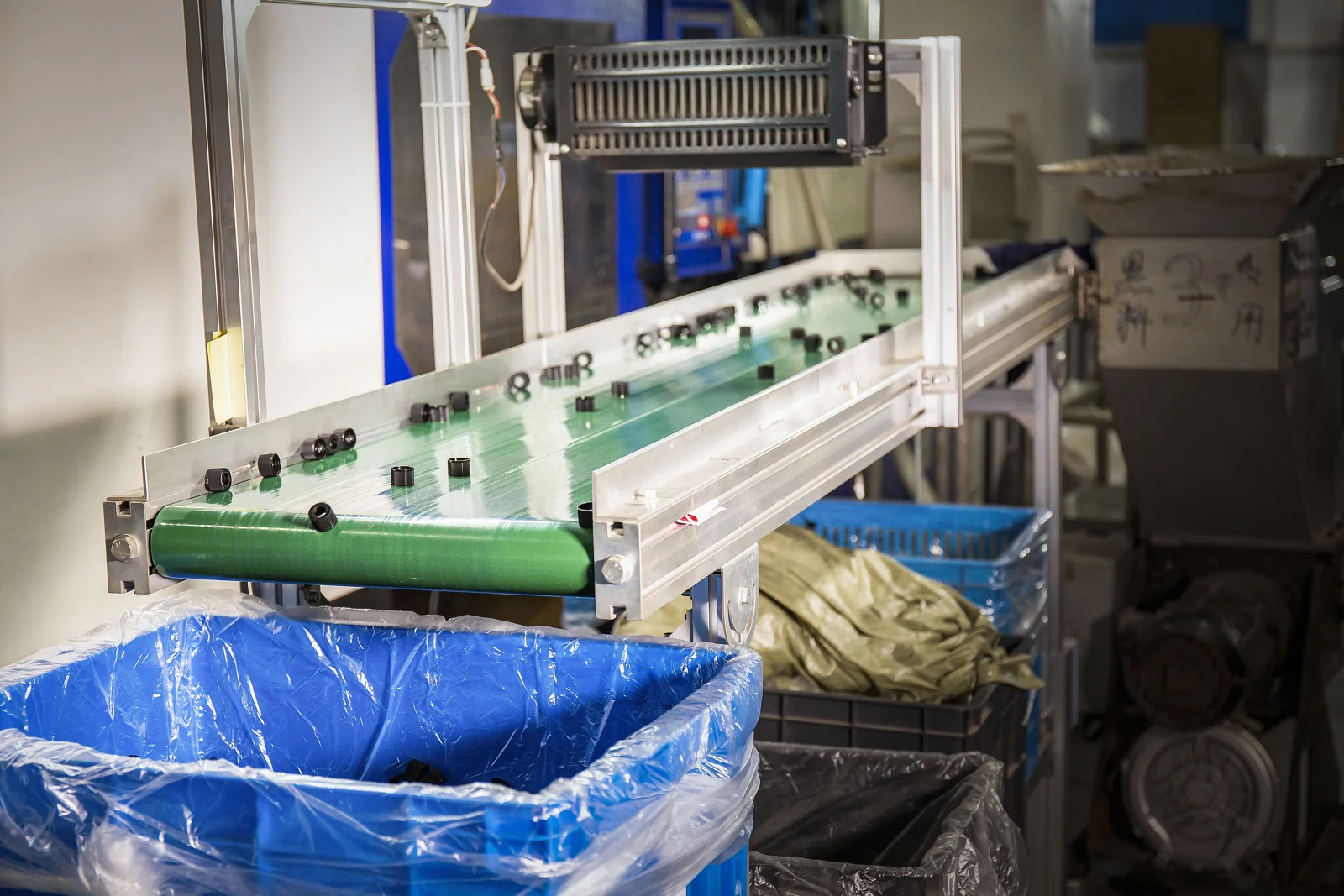
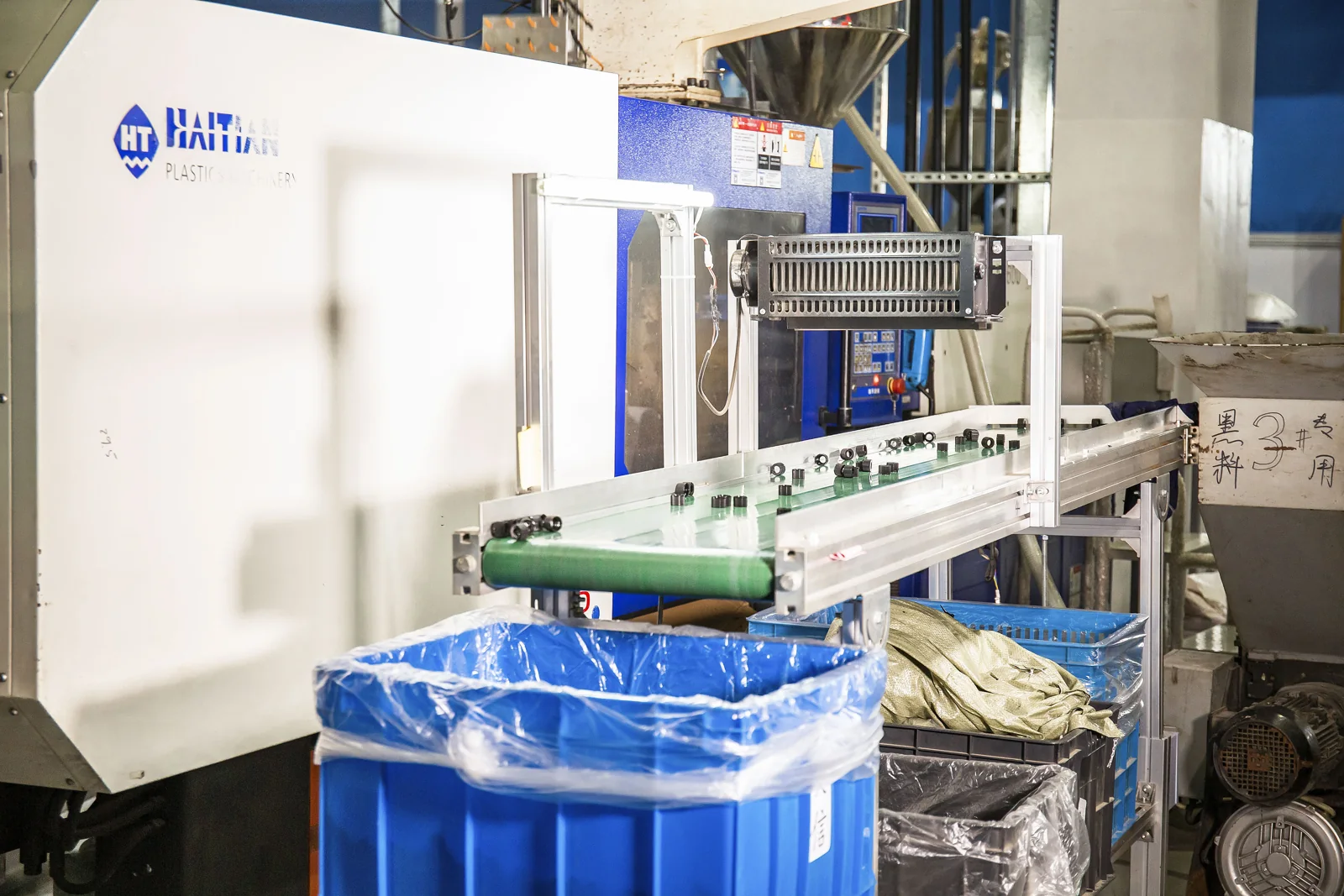
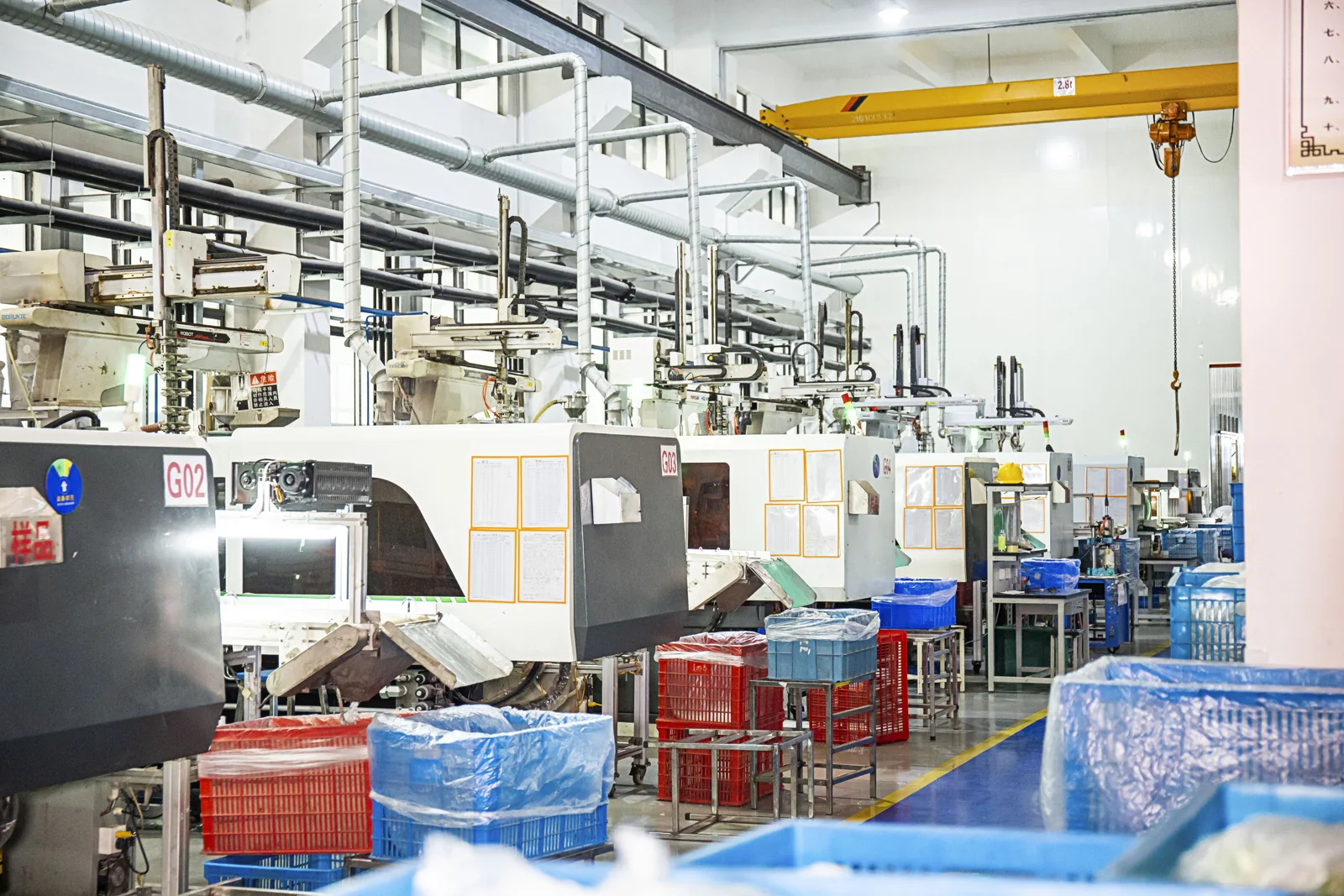
Photographed at Oulete
Inside the molding workshop
See the facility and visible operations behind a packaging enquiry. For your selected assembly, ask which steps apply and request the corresponding sample and inspection records.