Cosmetic packaging · Made for your brand
How Many Bottles and Pumps Should You Order for a Filling Run?
Plan bottle, pump and cap quantities from a filled-product target. Separate setup, run yield, spares and delivery terms with a worked skincare example.
Containers only — no compounding or filling.
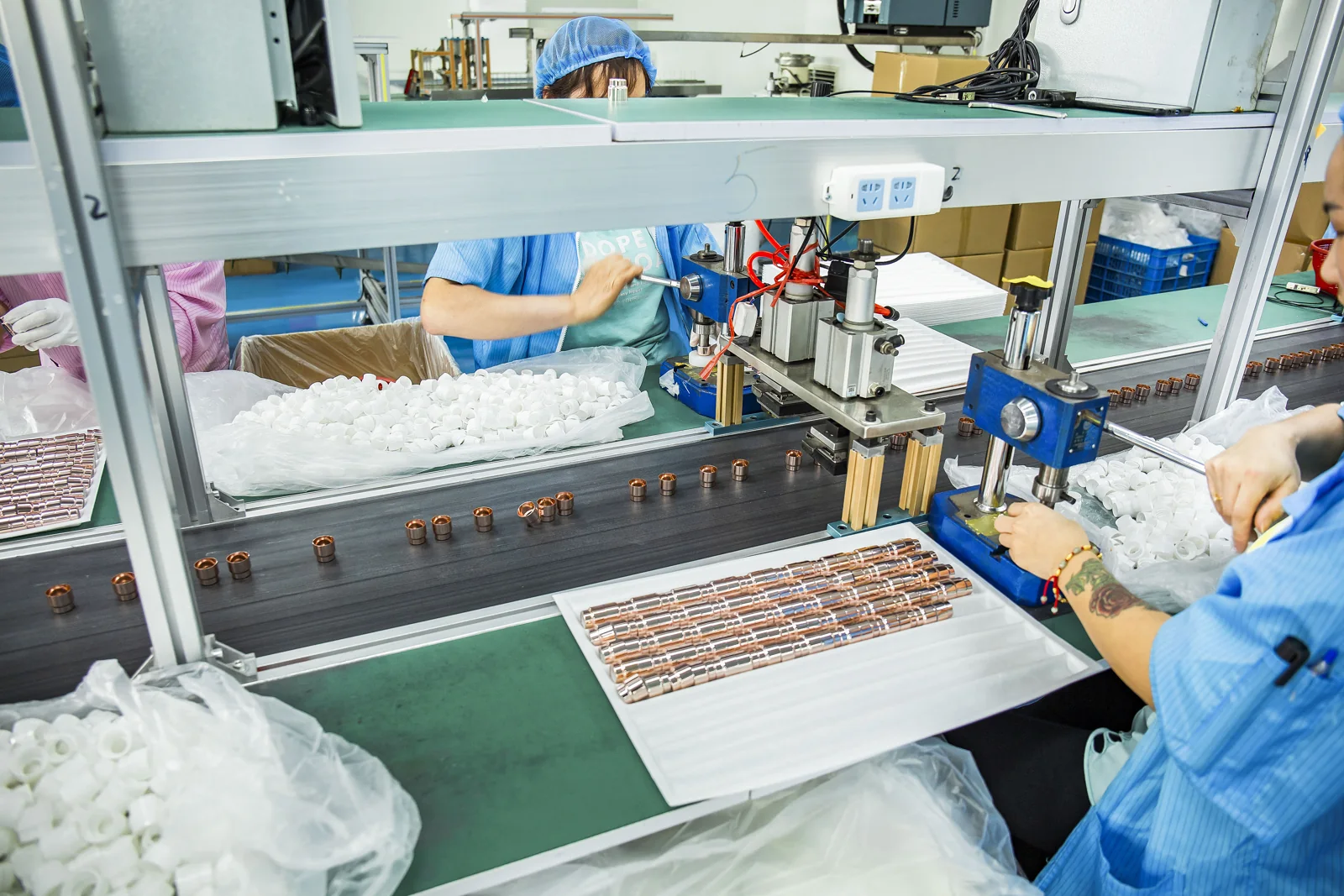
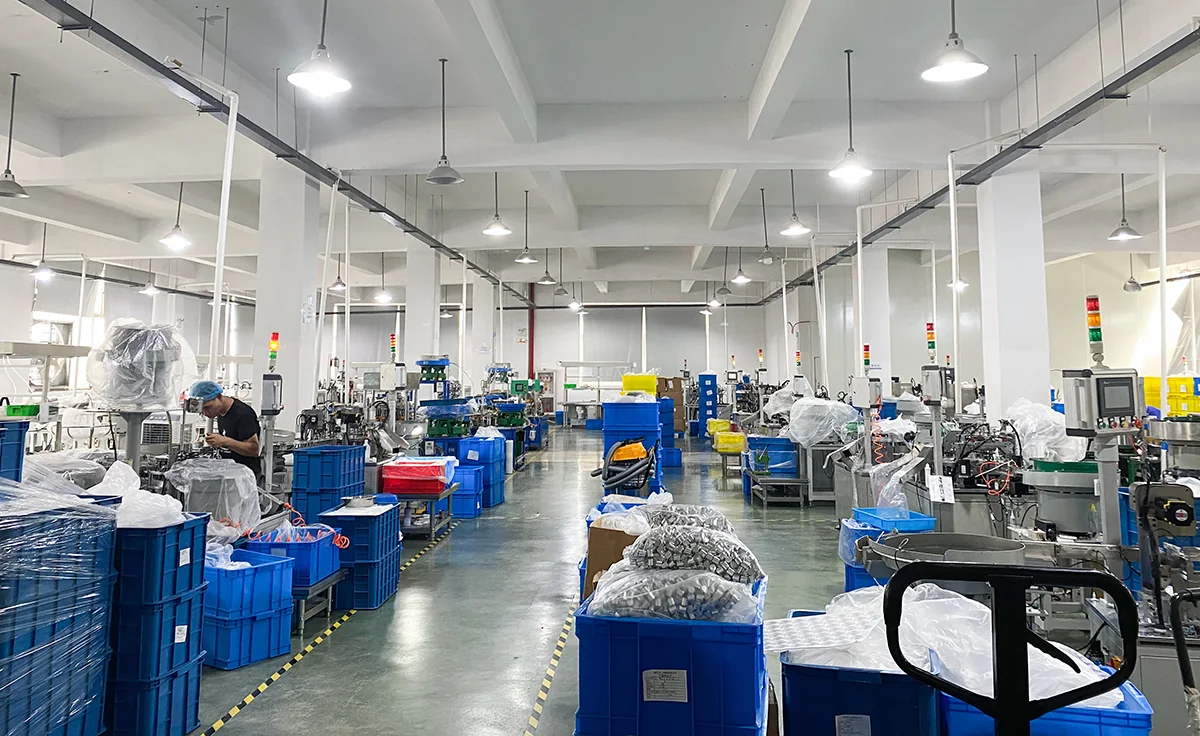
Oulete operators positioning packaging components at assembly fixtures
On this page · 8 sections
- First decide what “10,000 units” must deliver
- Keep three different quantity risks separate
- Work backward from good filled output
- Add component-only uses without counting them twice
- Read the delivery clause before turning requirements into an order
- Apply the lower bound and the order multiple separately
- Run a forward check before approving the purchase
- Send the filler and packaging supplier different, connected questions
A brand needs 10,000 finished lotions for its launch. Purchasing orders 10,000 bottles, 10,000 pumps and 10,000 caps. The quantities match, but the plan leaves no packaging for line setup, rejected filled packs or retained samples. If a supplier can also deliver fewer parts than the headline order quantity, the filling campaign can start short.
For a cosmetic filling run, calculate the accepted quantity of each required component from the finished-product target. Separate filling consumption from supplier delivery terms, then apply the actual order increments. There is no universal spare-parts percentage that resolves all three.
This guide works through one hypothetical lotion SKU. The numbers demonstrate the method; they are not an Oulete quotation, measured filling yield or recommended allowance for your line. Use the selected pack and the filler's own evidence to replace them.
First decide what “10,000 units” must deliver
Define the commercial output before discussing the empty packaging order. Ten thousand saleable units might exclude filled retains, stability samples, photography units or launch samples. Count those separately when they must use the same finished packaging. An empty spare pump belongs on a different line from a filled product retained by the quality team.
For the example, the brand needs:
- 10,000 saleable filled packs;
- 100 additional acceptable filled packs reserved for agreed non-saleable uses;
- one identified bottle, one complete pump and one overcap for each pack.
The good-filled target is therefore 10,100 packs. The pump in this example is purchased as a complete pump, including its specified dip tube. Do not add the pump's internal pieces as separate purchasing lines unless they are actually supplied separately. Conversely, a bottle-body price does not establish that a complete pump is included.
Keep the approved configuration beside the quantity schedule. Each row needs the exact part and version being purchased. Surplus pumps of another revision, colour or dip-tube length cannot automatically cover a shortage of the approved version.
Keep three different quantity risks separate
Supplier delivery variation concerns how many parts the supplier must deliver against an order. Establish whether the agreed lower limit describes physical pieces, conforming accepted components or complete sets, and where they are counted. A carton count does not settle all of those questions.
Setup consumption concerns parts used before the defined production run: for example, units consumed while setting up or checking the line. Ask the filler whether its reported yield already includes this consumption. Adding a separate setup allowance to an inclusive yield counts the same loss twice.
Production-run yield concerns the acceptable filled output from parts entering the defined run. A yield from another pack, formula or line is a planning assumption until the filler determines that it applies. Keep its denominator visible: good finished packs divided by complete sets issued to that run is different from a pump-only reject rate.
Do not substitute an AQL figure for any of these inputs. The incoming-inspection guide addresses lot acceptance and receipt discrepancies. Accepting a sample-based inspection does not promise a particular quantity of good filled product.
Work backward from good filled output
Assume, solely for this calculation, that the filler supplies a planning yield of 98% after setup and needs 100 complete sets for setup, excluded from that yield. The model treats every run set consumed as using a bottle, pump and cap.
The calculation is:
Production-run sets = round up (good-filled target ÷ run yield)
Complete sets to issue = production-run sets + separate setup sets
For the example:
- Good-filled target: 10,000 + 100 = 10,100.
- Production-run input: round up (10,100 ÷ 0.98) = 10,307 complete sets.
- Add the separately counted 100 setup sets: 10,407 complete sets.
Round up at the run-input step. Ordering a fraction of a pack is impossible, and rounding down would understate the input required by the model.
This whole-set assumption can overstate some component consumption. A bottle rejected before capping may leave an unused cap available. If the filler has reliable consumption counts for those stages, use them to refine the individual component plan. Do not infer recoverable caps from the headline filled-pack yield or assume damaged or contaminated parts can return to stock.
Add component-only uses without counting them twice
Now assume that 20 bottles and 60 pumps will be consumed in separate checks outside both setup and the production-run yield. The buyer also wants 100 approved pumps left unused as empty replacement stock. These are hypothetical agreed uses, not prescribed test sample sizes or an Oulete spares offer.
| Purchased component | For 10,407 complete sets | Separate checks | Unused component reserve | Accepted components required |
|---|---|---|---|---|
| Bottle | 10,407 | 20 | 0 | 10,427 |
| Complete pump | 10,407 | 60 | 100 | 10,567 |
| Overcap | 10,407 | 0 | 0 | 10,407 |
The 100 filled retains are already inside the good-filled target. The 100 unused pump reserves are not. Treating both as “samples” in one percentage obscures that difference.
The order now has three useful quantities: a good-filled output target, a complete-set input plan and accepted component requirements. None is automatically the nominal quantity that a supplier's quotation will use.
Read the delivery clause before turning requirements into an order
Quantity variation is a real purchasing issue, but its terms belong to the specific supplier and transaction. APS's published trade terms, clause 11.1, allow up to 10% over or under the ordered packaging quantity and adjust the invoice to the delivered quantity; the clause also notes potentially larger underruns below minimum order quantities. That is an APS condition, not a standard filling-loss allowance or an Oulete term.
Document roles matter too. APG's sales terms, clause 10, describe a ±10% actual-delivery variance. Its separate terms for suppliers address APG acting as the buyer and require delivery in the quantities specified, with no liability to pay for excess quantities. Reading one page without its role could produce the wrong purchasing assumption.
For your order, obtain a written quantity basis from the contracting parties. If a published clause concerns physical delivered pieces, do not quietly treat it as a promise that the same count will be conforming, released and available to the filler. Have the applicable terms and any changes resolved before relying on a lower bound.
Apply the lower bound and the order multiple separately
For illustration, suppose the proposed agreement permits 2% underdelivery of accepted pumps, permits no underrun of the accepted bottle or cap quantities, and uses order multiples of 200 bottles, 500 pumps and 250 caps. Those assumptions illustrate the calculation; the selected supplier and filler must agree the actual inputs. They are not derived from the suppliers' 10% clauses above.
For each component:
Nominal quantity before rounding = round up [accepted requirement ÷ (1 − permitted underrun)]
Then round that result up to the agreed order multiple. This example assumes multiples counted from zero; a quotation using “MOQ plus increments” needs a different rounding rule.
| Component | Accepted requirement | Assumed accepted-count underrun | Before order-multiple rounding | Assumed order multiple | Nominal quantity to quote |
|---|---|---|---|---|---|
| Bottle | 10,427 | 0% | 10,427 | 200 | 10,600 |
| Complete pump | 10,567 | 2% | 10,783 | 500 | 11,000 |
| Overcap | 10,407 | 0% | 10,407 | 250 | 10,500 |
For the pumps, 10,567 ÷ 0.98 is approximately 10,782.65, so the first integer is 10,783. Rounding to a 500-piece multiple gives 11,000. The modeled lower accepted delivery is then 11,000 × 0.98 = 10,780 pumps, exceeding the 10,567 requirement by 213.
This explains why ordering the same nominal count for every part can be the wrong decision. It does not establish that separate ordering, those multiples or unused spares are commercially available. Obtain them in the selected configuration's quotation. Also agree the maximum permitted excess and its cost: solving the lower-bound calculation does not cap the invoice or surplus stock.
Use the component quantity planner to change the target, setup consumption, run yield and component quantities. Keep the counting basis and model assumptions consistent when you compare results.
Run a forward check before approving the purchase
Test the rounded proposal against the same assumptions instead of trusting a single “order enough” number.
At the modeled delivery floor, the example has 10,600 bottles, 10,780 pumps and 10,500 caps. Deduct the separate checks and unused reserves first. This leaves 10,580 bottles, 10,620 pumps and 10,500 caps available for complete-set issue. The caps limit the run to 10,500 complete sets.
After consuming 100 setup sets, 10,400 sets enter production. At the assumed 98% yield, the model gives 10,192 acceptable filled packs. Reserving 100 leaves 10,092 saleable packs. The 92-pack margin comes from integer and order-multiple rounding. It is not a guarantee that an actual run will exceed the target.
Contrast that with ordering 10,000 of each component and permitting 2% accepted-pump underrun. Even before the extra checks and empty reserves, only 9,800 complete sets would be available at that floor. After 100 setup sets, 98% run yield and 100 filled retains, the same model produces 9,406 saleable packs. Matching purchase-order numbers did not meet the 10,000-pack commitment.
Recalculate when the specification, supplied state, line plan or delivery terms change. If a different pump requires another trial, the previous setup allowance and yield may no longer describe the project. If a supplier offers assembled packs instead of separate parts, align the purchasing rows with that supplied unit before reusing the calculation.
Send the filler and packaging supplier different, connected questions
Ask the filler to confirm the finished-output target, filled retains, setup consumption, applicable run-yield basis and any component-only checks. Ask whether losses are recorded as whole packs or by the process stage at which each component is consumed. Leave unknown values open rather than selecting an attractive percentage to complete the sheet.
Ask the packaging supplier to quote the exact component versions, supplied state and required accepted counts, with delivery-count rules and order increments beside each line. Identify whether the date means dispatch or availability at the filling site. A mathematical surplus arriving after the booked filling date cannot support that campaign.
Use the existing MOQ comparison for minimum-production and decoration commitments, and the packing guide for the actual shipment. Keep those decisions attached to this quantity plan instead of replacing them with its calculated totals.
For an Oulete enquiry, send the selected bottle and proposed dispenser references through the sample and project brief. Include both the saleable output needed and the itemised component quantities you want quoted. Ask which parts, assembly state and quantity conditions can actually be offered; the arithmetic does not approve a pack or create a supply commitment.
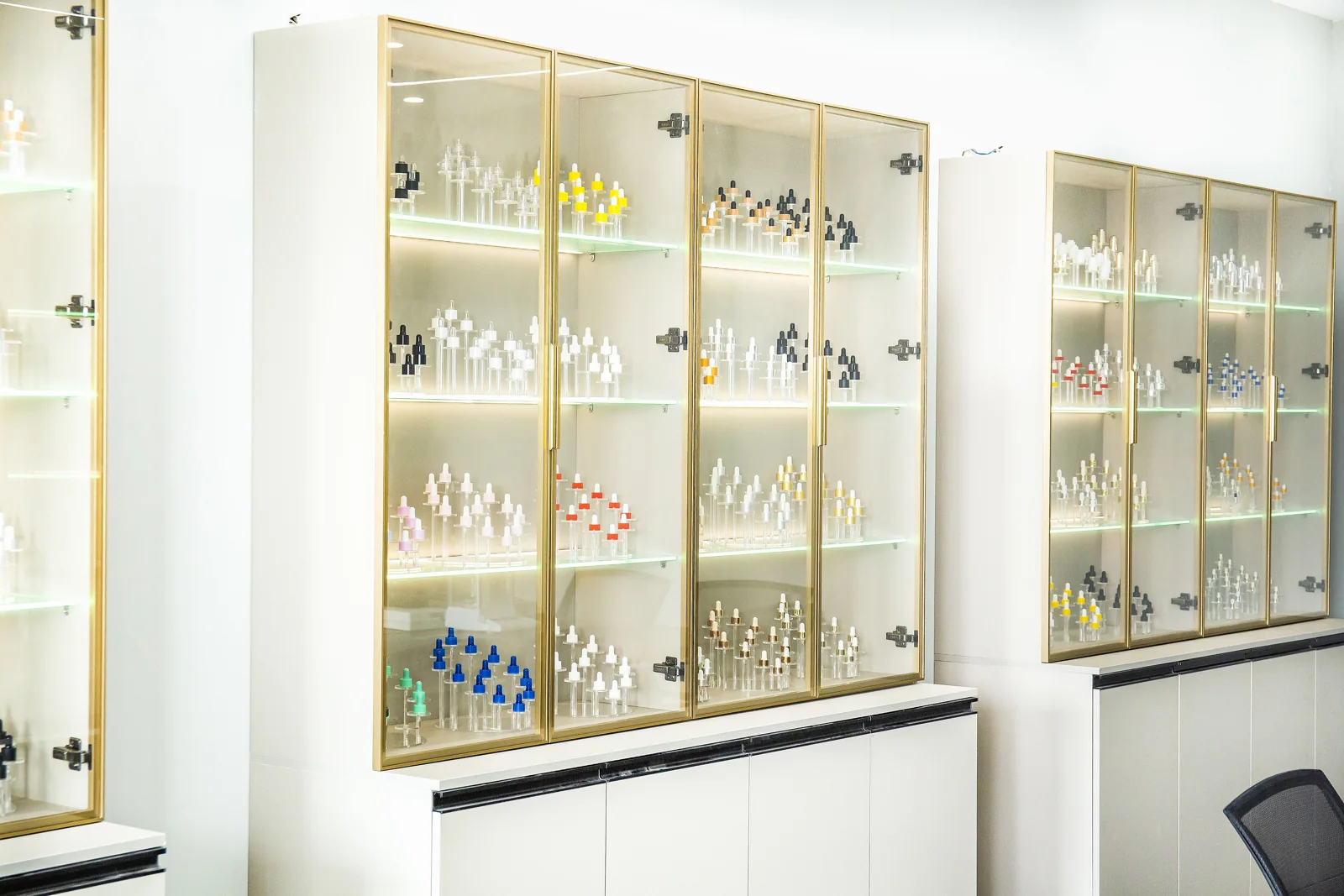
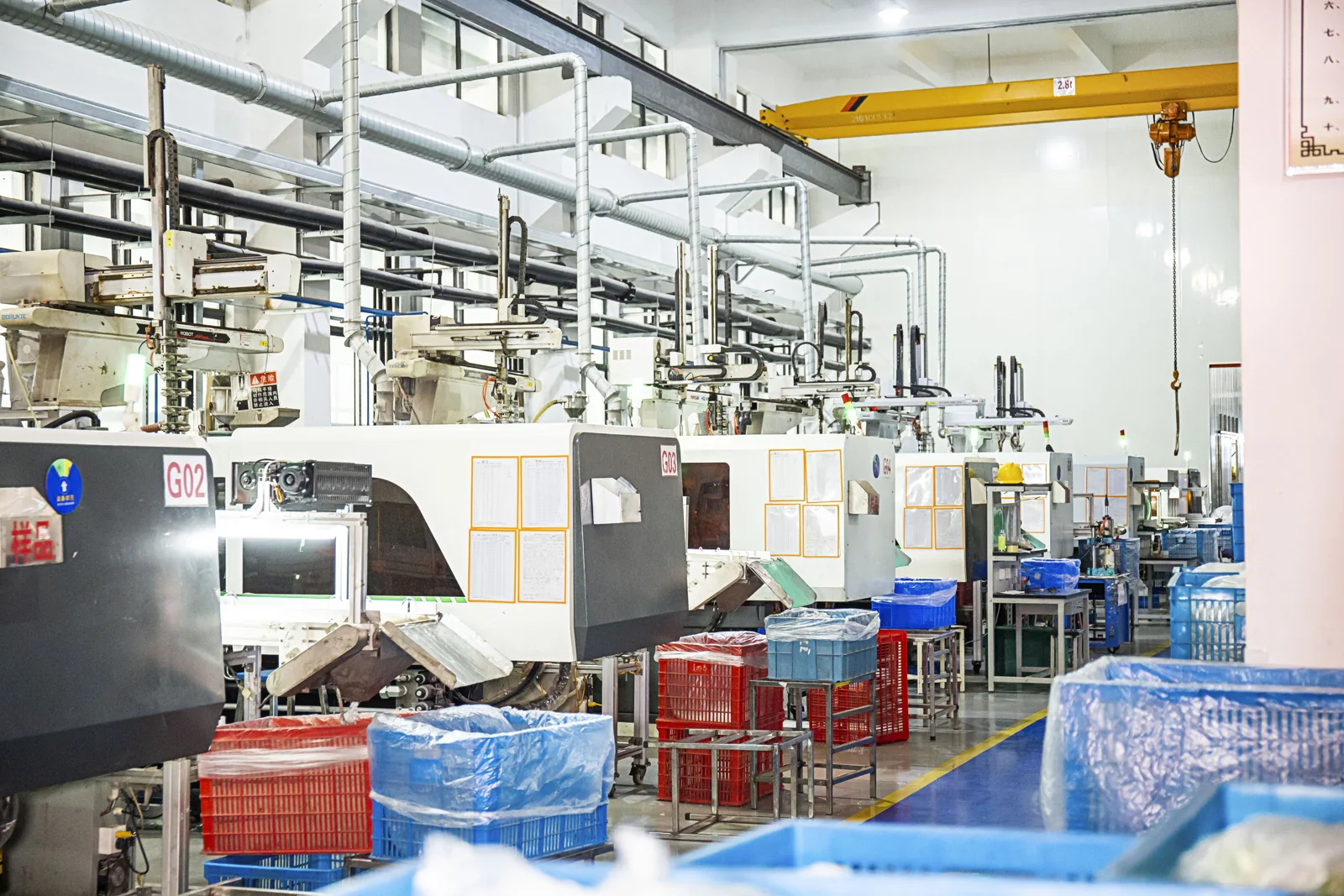
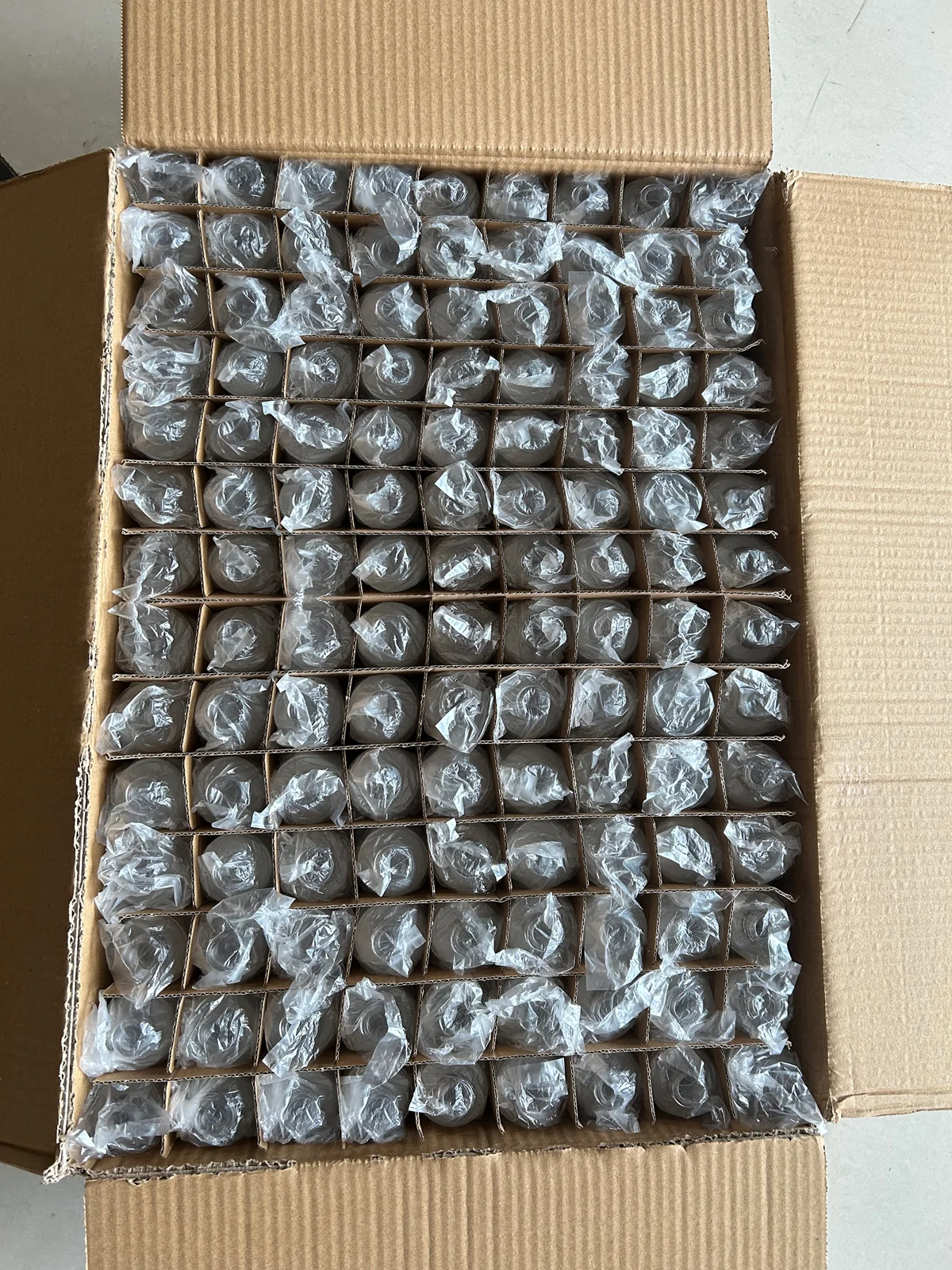
Photographed at Oulete
From the sample room to packed containers
See the facility and visible operations behind a packaging enquiry. For your selected assembly, ask which steps apply and request the corresponding sample and inspection records.