Cosmetic packaging · Made for your brand
Refillable Glass Jars: Magnetic Closure and Seal Design
Develop a matte glass cream jar with a removable refill: compare magnetic and threaded closures, sealing paths, stack geometry, tooling and complete-pack MOQs.
Containers only — no compounding or filling.
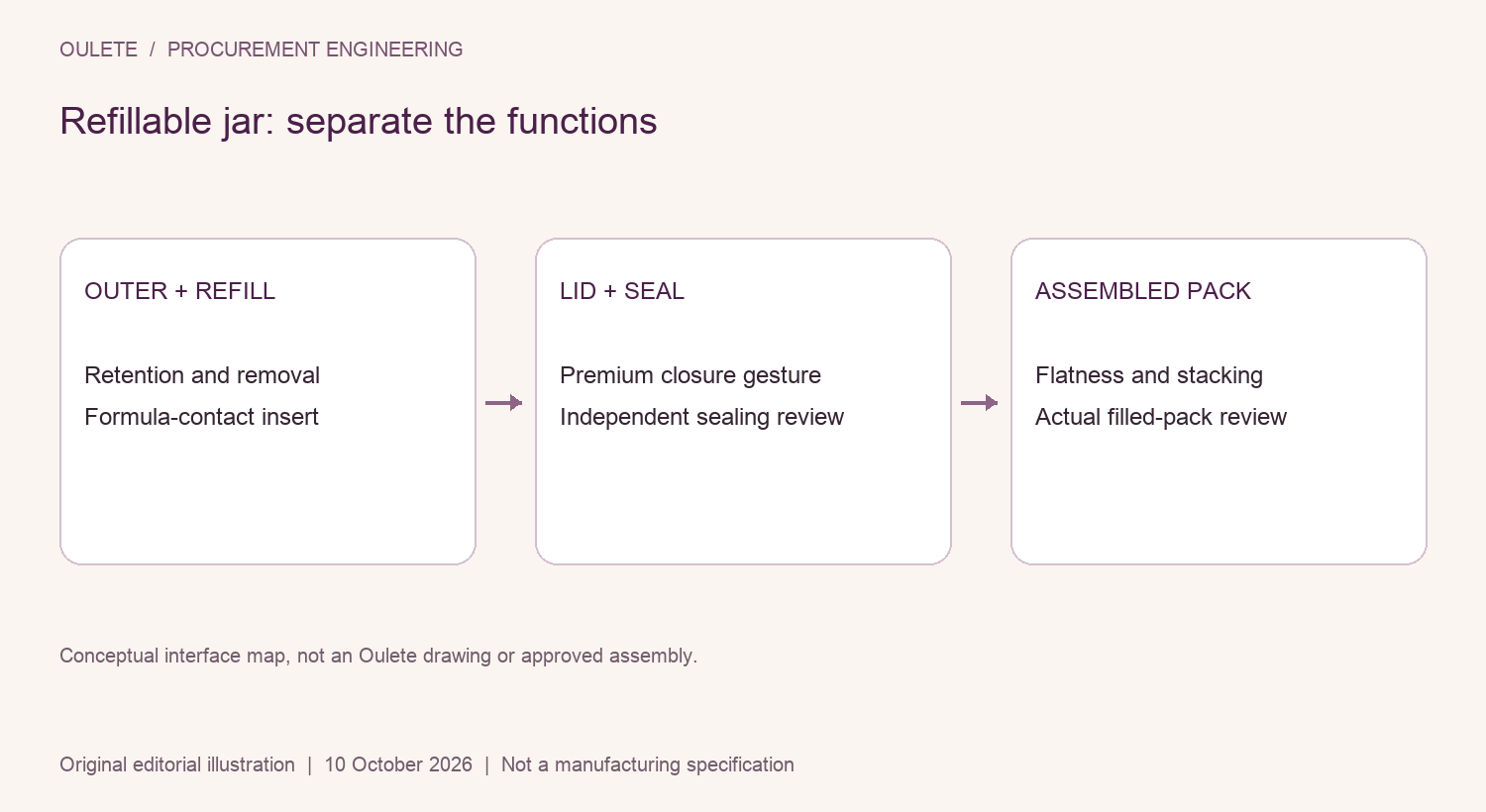
Refillable jar: separate the functions showing outer + refill, lid + seal, assembled pack
On this page · 13 sections
- Separate the refillable glass jar from its sealing system
- Compare magnetic, threaded and indexed closure routes
- Refillable glass cream jar magnetic closure: options to screen
- Make a flat jar stack without disturbing its closure
- Develop the refill as a separately supplied component
- Choose a tooling route and quote the complete assembly
- FAQ: refillable glass cream jar development
- Does a magnetic lid make a cream jar leak-proof?
- Can a glass cream jar have a plastic removable refill?
- Is a threaded closure compatible with a premium refill concept?
- Can a refillable jar be flat and stackable?
- What is Oulete's MOQ for this glass packaging enquiry?
- What should a brand provide before a feasibility meeting?
A refillable glass cream jar with a magnetic closure needs separate decisions on formula sealing, refill retention, lid feel, stacking and complete assembly cost.
A matte glass exterior, a removable cream refill and a satisfying magnetic lid can form a strong design brief. They do not yet define a working package. The useful question is which components deliver each function, and which interfaces must be resolved before a brand pays for tooling or approves a finished sample.
Oulete has an existing glass outer jar option with a removable refill and magnetic lid. Its exact model, sealing construction and stacking performance still need confirmation. Start through our refillable packaging page, then match the documented assembly and sample to the brief. Glass packaging MOQ is 5,000 units; custom parts require a scoped quotation.
Separate the refillable glass jar from its sealing system
A refillable jar is an assembly in which a retained outer pack accepts a replacement component containing the product. The glass exterior may provide the desired weight, shape and finish while an inner cup holds the cream. Identify the component that contacts the formula before choosing the lid mechanism or discussing compatibility.
An interface is the connection between two components that determines how they fit or function together. For this project, the important interfaces include glass to refill, refill to product closure, outer lid to glass, and stacked jar base to the lid below. Each can fail independently. A lid that sits neatly on the glass does not establish that it seals the refill.
Ask for a section drawing that follows the cream from its inner cup to the actual sealing surface. A sealing land is the surface against which a closure or sealing element seats. The proposal should show whether the lid acts on that surface, whether a separate inner closure is required, and how the assembly controls the position of the refill.
Keep the first-opening seal separate from the seal used after opening. A removable membrane or cover can protect a new refill during supply, but it may be discarded by the consumer. The pack still needs a defined closing arrangement for subsequent use. Conversely, an internal cover disc should not be described as tamper evidence unless its construction and supply format support that claim.
Supplier pages make these distinctions concrete. Compare the documented component or mechanism, rather than combining features from different products into a presumed complete assembly.
| Competitor reference | Documented feature to study | Boundary of the reference |
|---|---|---|
| HCP Echo | PP refill and cover disc; PETG exterior | A component breakdown, not a glass magnetic jar |
| Topfeel PJ81 | Listed glass exterior, PP inner component and ABS lid | Material breakdown; this page does not establish a magnetic seal |
| Verescence TWIRL | Glass reference 16489 24; PP cap and inner jar provided by Albéa | Glass and refill partner are identified; magnetic closure and stacking are not established |
| Quadpack Regula Refill | PP cup designed for thermosealing; hand-removal gap and click insertion | Refill handling reference; the exterior is PET |
Prepare a component material list for the proposed glass version. Include the refill, any inner closure, lid liner, magnets and their retaining parts, adhesives where proposed, and decorative layers. Record which parts have intended formula contact and which are external. Leave an unknown grade or contact relationship unresolved until the component supplier supplies the relevant information.
Verescence lists TWIRL at 50 ml, with an 80 ml brimful glass capacity and 41.6 mm height. Those values describe that supplier reference, not our jar. The difference between nominal contents and glass brimful capacity makes the component drawing essential: a removable inner cup changes the space available to the formula.
Compare magnetic, threaded and indexed closure routes
A magnetic closure describes how a lid is attracted or retained; it does not by itself describe how the cream compartment is sealed. A design may use magnetic retention alongside an engineered seal, or use a decorative magnetic outer lid over a separate product closure. These are different opening sequences and should be presented to the buyer separately.
For a lid intended to load a seal directly, the engineering review must establish seating position, alignment, closing load and retention of the magnetic parts. The drawing should show the stops and locating features that determine the final closed position. Choosing a magnet by how strongly it attracts a loose sample is not sufficient to specify those relationships.
Refillable glass cream jar magnetic closure: options to screen
| Proposed route | Consumer experience to review | Engineering questions before selection |
|---|---|---|
| Magnetic outer lid with a separate inner closure | Distinctive lift-off gesture, followed by access to the product closure | Is the additional opening step acceptable? Can users locate and refit the inner closure? |
| Magnetic retention with an engineered product seal | A single main closing gesture, if the assembly is validated | What controls seal loading, alignment and lid seating? How are magnetic parts retained? |
| Threaded lid acting on the specified sealing system | Familiar turning gesture with an identifiable seated position | Which component carries the thread? What closing conditions and refill position are required? |
| Indexed quarter-turn or another mechanical closure | A defined turn and stop, with orientation that can be reviewed | Are the locating features available in existing tooling? How is incomplete closure detected? |
These routes are concepts for evaluation, not a promise that a particular mechanism is available at a particular MOQ. Shortlist them against the brand's required gesture, closed dimensions, refill handling and unit-cost target. A premium opening system is valuable only if the consumer can close the pack correctly after ordinary use.
For magnetic parts, request a proposed retaining method rather than an isolated magnet specification. The review should consider whether the part can become loose, whether the protective construction is suitable for its environment, and whether assembly inspection can confirm correct placement. Any corrosion or retention performance must come from the actual proposed parts and evaluation, not an appearance sample.
Translate “premium feel” into observable sample decisions: logo alignment, one-handed lift, lateral movement and closing sound. Record them against the selected assembly. A preferred feel is a design target; a numerical opening-force requirement must be agreed for the intended users and mechanism.
If magnetic closure is a preference rather than a fixed requirement, compare a decorated threaded lid on the same visual brief. It may preserve the matte glass, low silhouette and removable refill while changing the gesture. A supplier should explain that tradeoff directly so the buyer can decide whether the magnetic experience justifies the extra components and development work.
Make a flat jar stack without disturbing its closure
A stackable jar needs a controlled contact between the upper jar's base and the lower jar's lid. A flat-looking cap is not enough to specify that contact. Determine where the stack is located, which surfaces carry the load, and whether placing or removing a jar can shift the closure below it.
Begin with the assembled envelope: closed height, maximum diameter, intended fill, and the surfaces available for gripping. A low profile may reduce vertical space for the refill wall, lid, sealing element and any magnetic structure. Review the section before promising a particular silhouette. Reducing height in a render can leave unresolved interference between functional parts.
Specify the stacking use case in the brief. A consumer placing two jars on a bathroom shelf is a different problem from an export carton containing multiple filled packs. Identify whether the units are empty or filled, the intended arrangement, and the handling conditions to be evaluated. Avoid a universal stack-height or load claim until the actual assembly has been assessed.
The locating feature could be a proposed recess, rim or controlled surface relationship. Its purpose is to position the upper jar without making the user press on a vulnerable edge or twist the lower lid. The team must evaluate the chosen geometry for placement, removal and misalignment. A deep locating feature may improve location while making removal or cleaning less convenient.
Glass, molded refill and lid dimensions contribute to the fit together. Ask the suppliers to identify the critical dimensions and their proposed production controls. Keep a visual mock-up separate from a dimensionally representative sample. Neither the nominal capacity nor a body diameter copied from a catalogue establishes the assembled stack fit or an acceptable production tolerance.
Matte finish also belongs in the review. Establish whether the proposed appearance comes from the glass treatment, a coating or another decoration route. Review the surfaces that touch when stacked, the lid contact area, fingerprints, residue and visible rubbing under agreed conditions. The decoration durability guide explains how to separate appearance approval from handling performance.
For stack approval, photograph the actual contact points and observe the lower closure when the upper jar is removed. Record rocking, sliding and finish contact against the agreed arrangement. Approval belongs to the tested assembly; an appearance render cannot clear this gate.
Develop the refill as a separately supplied component
A replacement refill has its own supply, filling and consumer-handling requirements. Define how the brand will deliver it: a filled and closed cup, an empty component filled by a contract manufacturer, or another specified format. That choice affects the closure, equipment access, presentation and information accompanying the refill.
Separate refill retention from refill removal. Retention keeps the cup in its intended position during opening, use and closing. Removal lets the user release the empty cup without breaking the retained glass or contaminating the replacement. A design can retain well yet be difficult to remove, or remove easily while allowing the cup to lift with the lid.
The consumer needs a grip or release feature accessible with the lid removed. Check finger clearance, the seated cup and the replacement path. If removal needs a tool, define the supplied tool and instructions. Evaluate refill removal before approving decorative walls that may conceal the only available gripping surface.
The filler needs access to the component that actually holds the cream. Confirm whether it is filled before insertion into the outer jar or after insertion, and which surfaces support it on the filling line. The proposed sequence should cover fill access, application of the product closure, insertion, and final outer-lid assembly. Assign the responsible supplier or filler to each operation.
Use a separate replacement-refill approval record. A refill fitting the first sample does not establish compatibility with every jar revision or a future size family.
| Refill handoff field | Required project decision |
|---|---|
| Matching references | Outer jar, refill, inner closure and drawing revisions |
| First-opening protection | Supplied seal or closure, removal method and filler responsibility |
| Replacement operation | Grip, release, insertion and seated-position check |
| Sold presentation | Filled or empty supply, identification and accompanying packaging |
| Later substitutions | Which interface change reopens matched-assembly approval |
Do not transfer cleaning instructions from a glass-only container to the complete assembly. A retained outer pack can include coatings, liners, adhesives and magnetic parts with different requirements. The brand should approve the consumer instructions against the selected construction and intended use. Dishwasher suitability, repeated-use life or a hygiene benefit requires evidence specific to that design.
Choose a tooling route and quote the complete assembly
The complete pack can combine existing components, modified components and newly tooled parts. Classify each part separately before describing the whole project as “stock” or “custom.” A standard glass body with a new refill, magnetic lid and locating base can still require substantial development beyond its exterior decoration.
Use the tooling guide to define the route, then ask which dimensions are fixed by existing tools. For an existing assembly, request its exact model references and the documented matching parts. For a modified route, name the changed interfaces. For a fully custom route, identify the drawing, prototype and tooling approvals needed before a production quote becomes firm.
| Quoted scope | Information the buyer needs |
|---|---|
| Glass exterior | Body reference, proposed finish, colour versions, supplied condition and quantity |
| Refill and product closure | Matched references, materials, supply format and separately ordered refill quantity |
| Outer lid and magnetic or mechanical parts | Construction, retaining method, assembly responsibility and inspection scope |
| Decoration | Artwork versions, decorated surfaces, physical approval reference and quantity per version |
| Development and tools | Existing versus new parts, prototype scope, ownership terms and approval milestones |
| Complete supply | Included parts, assembly state, packing specification and agreed responsibilities |
Oulete's MOQ is 2,000 units for plastic packaging and 5,000 units for glass packaging. Use 5,000 units for this glass-pack enquiry. The quotation should name the included refill, lid, decoration, assembly and any tooling work so the buyer can compare the supplied configuration and development cost.
Approval should progress from structure to functional assembly to final decorated supply. A visual prototype can settle the silhouette and gesture. A representative filled assembly is needed for the agreed sealing, handling and compatibility reviews. The sample approval guide provides the record that keeps these separate decisions attached to the final supplied configuration.
For an Oulete feasibility discussion, submit the concept, intended fill, closed dimensions, refill format, opening sequence and stacking use through the custom project brief. State which features can change. Request a component shortlist with drawing gaps, sample responsibilities and complete supply scope before committing to a route.
FAQ: refillable glass cream jar development
Does a magnetic lid make a cream jar leak-proof?
A magnetic lid does not independently establish leak resistance. The actual product sealing surface, closing arrangement and assembly must be defined and evaluated with the intended contents and conditions. Magnetic retention and formula sealing may use separate components.
Can a glass cream jar have a plastic removable refill?
A glass cream jar can be proposed with a removable plastic inner component, but the specific fit, material and closure require confirmation. The glass exterior does not establish the formula-contact material or the suitability of the complete assembly.
Is a threaded closure compatible with a premium refill concept?
A threaded closure is a valid route to screen against a premium refill brief. Its suitability depends on the requested gesture, appearance, dimensions and sealing arrangement. Compare representative assemblies rather than assigning premium quality to the mechanism name alone.
Can a refillable jar be flat and stackable?
A flat, stackable refillable jar needs a defined dimensional envelope and locating interface. The lid and base must be assessed together, including their contact surfaces and the effect of stacking on the lower closure. A flat exterior render is insufficient evidence.
What is Oulete's MOQ for this glass packaging enquiry?
Oulete's MOQ for glass packaging is 5,000 units; plastic packaging has a 2,000-unit MOQ. The quotation should identify the supplied parts, decoration, assembly and any tooling work. Those details define the offer alongside the confirmed order quantity.
What should a brand provide before a feasibility meeting?
A useful refill-jar brief includes the concept, intended fill, closed dimensions, refill supply format and required opening experience. State whether magnetism and stacking are essential or flexible. Provide the target quantities and commercial priorities so alternatives can be compared on the same scope.
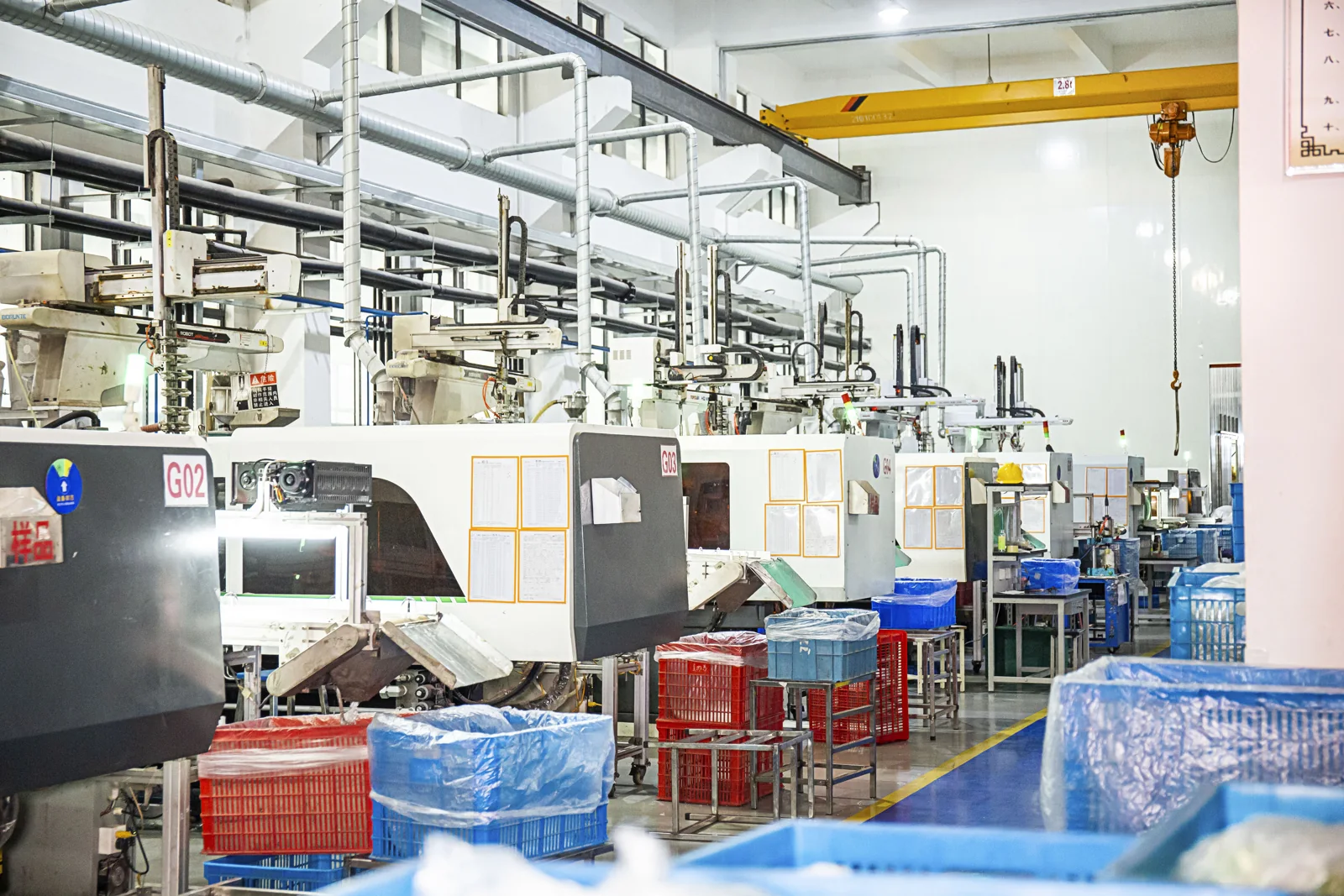
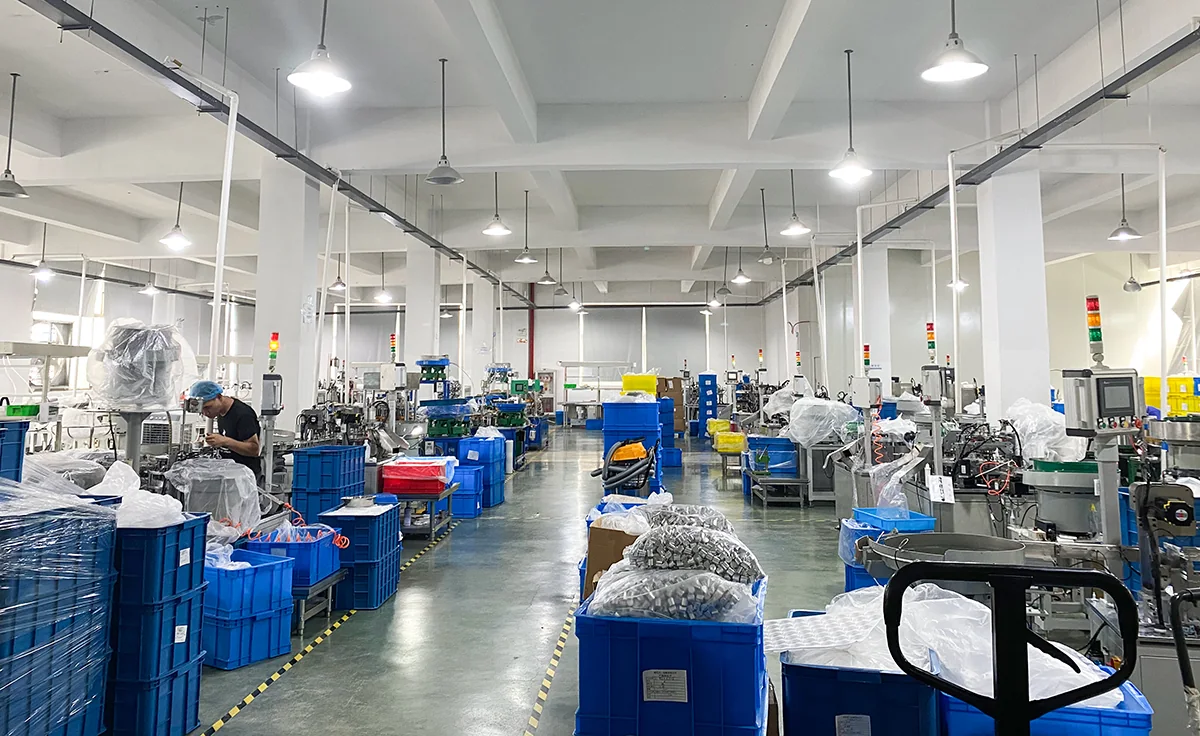
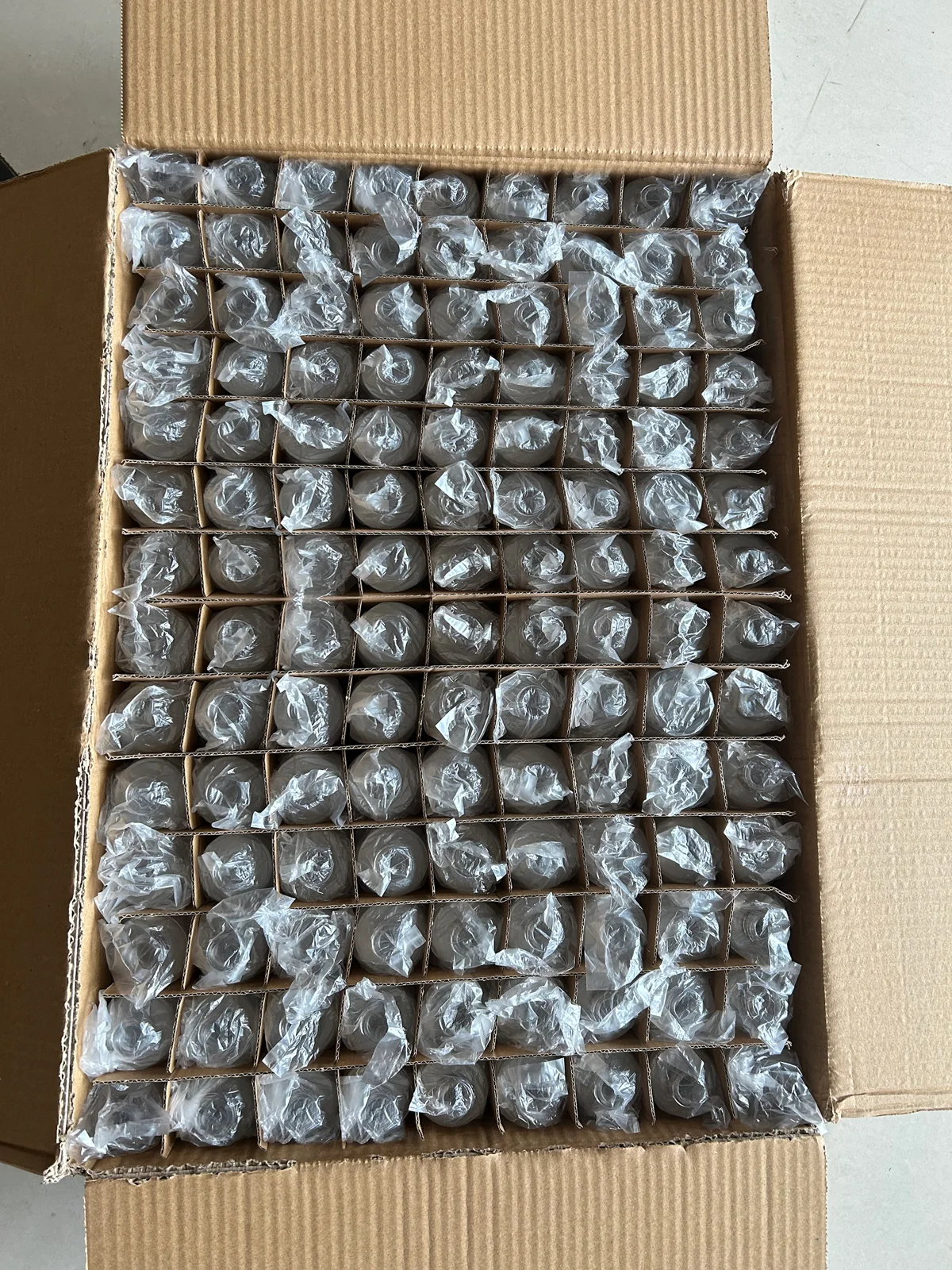
Photographed at Oulete
From the sample room to packed containers
See the facility and visible operations behind a packaging enquiry. For your selected assembly, ask which steps apply and request the corresponding sample and inspection records.