Cosmetic packaging · Made for your brand
Cosmetic Bottle Decoration Durability: Approval Guide
Cosmetic bottle decoration durability needs separate adhesion, rubbing and exposure decisions, using identified decorated samples, applicable methods and acceptance criteria agreed before production. A metallic logo can look correct at…
Containers only — no compounding or filling.
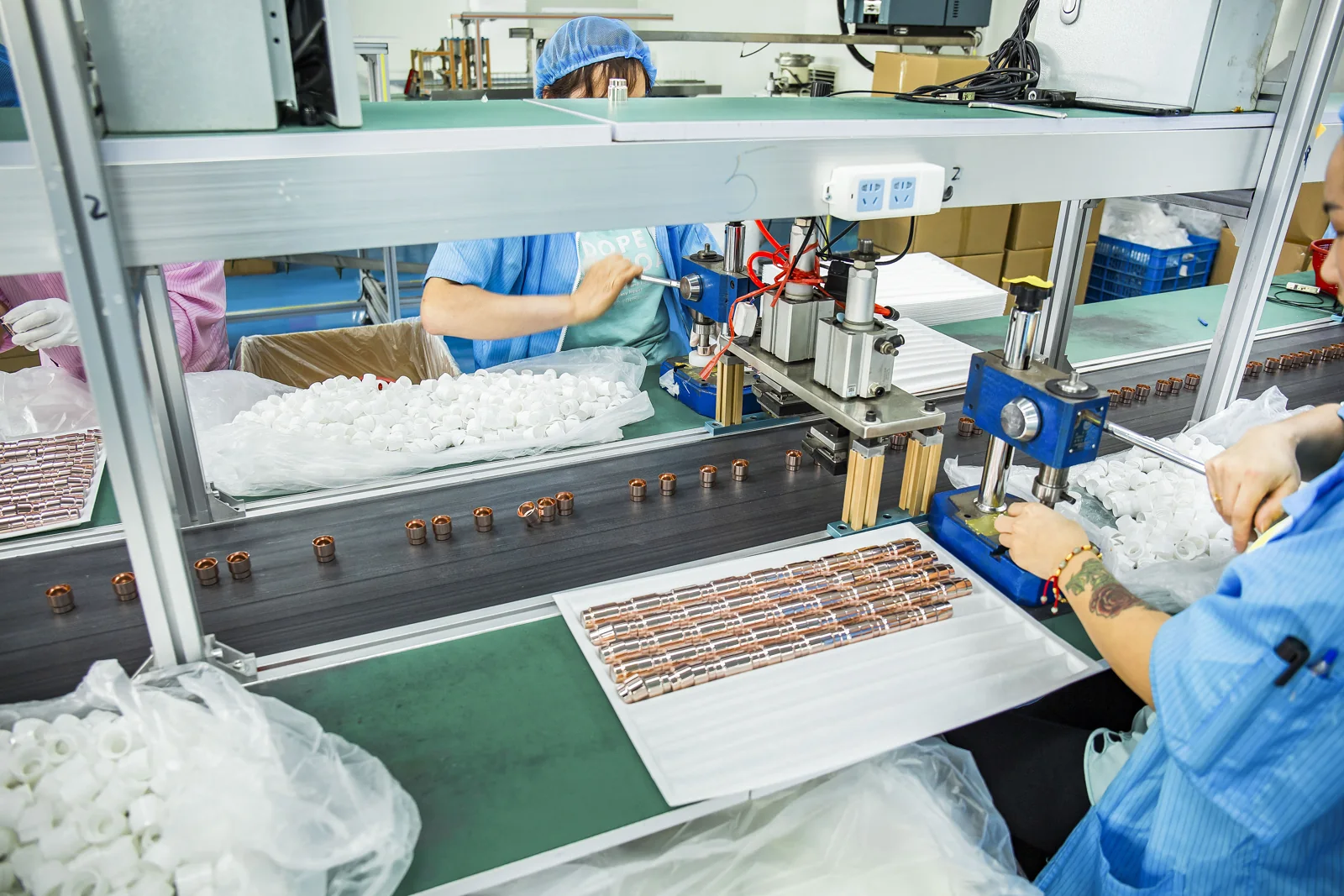
Operator's hands positioning a packaging component at an assembly fixture
On this page · 12 sections
- Separate appearance, adhesion, abrasion and exposure
- Choose a method that applies to the substrate and geometry
- Describe the rubbing and liquid-contact problem precisely
- Connect decorated-sample results to packing and assembly
- Write a decision record that can control production
- FAQ
- Does a colour-approved sample prove decoration durability?
- Can ASTM D3359 be applied automatically to a plastic bottle?
- Does a flat printed coupon establish abrasion performance on a curved bottle?
- What liquid should be used for a decoration exposure review?
- How should a scratch or rubbed logo be recorded?
- What happens when the coating or printing process changes?
Cosmetic bottle decoration durability needs separate adhesion, rubbing and exposure decisions, using identified decorated samples, applicable methods and acceptance criteria agreed before production.
A metallic logo can look correct at approval and still leave its handling performance unreviewed. A soft-touch bottle can match the brand’s colour reference while its response to the intended contents remains unknown. Appearance approval settles named visual attributes. Purchasing needs another set of questions when the finish must remain acceptable through filling, packing, transport and consumer use.
Start with the selected part, substrate and decoration process. Describe the surfaces that can rub together and the liquids they may encounter in intended use. Then ask the responsible supplier or laboratory to propose an appropriate assessment. “Scratch-proof” is not an actionable purchase specification when the sample, contact conditions and permitted change are undefined.
Separate appearance, adhesion, abrasion and exposure
Decoration durability is the ability of the identified finish to remain acceptable under the handling and exposure conditions agreed for the product. That requires a defined application and an observable decision. A bottle colour, a printing method name or a catalogue photograph does not, by itself, specify the conditions the decorated component has been assessed against.
Adhesion concerns attachment of the applied finish to its underlying surface. Abrasion concerns the effect of rubbing or wear on the decorated area. An exposure assessment considers an identified liquid or other relevant contact condition. These questions can interact, but a result for one is not automatically a result for the others. Record them as separate review tasks.
| Review task | Buyer’s question | Evidence to request |
|---|---|---|
| Appearance | Is the named colour, texture and artwork acceptable? | Representative physical sample and appearance reference |
| Adhesion | Does the proposed assessment show acceptable attachment? | Applicable method, identified sample and observations |
| Rubbing or abrasion | What happens under the agreed contact conditions? | Defined contact surface, method and before/after record |
| Intended exposure | What changes when the relevant surface encounters the specified material? | Controlled exposure brief and result for that finish |
| Packed handling | Does the protection prevent unacceptable contact damage? | Identified packed configuration and handling assessment |
Use the screen-printing and hot-stamping comparison when selecting a decoration route. Use this durability brief after the actual substrate, process and sample proposal are identified. A process comparison explains how to prepare a sample request; it cannot qualify the performance of an unspecified finish on a different bottle.
Ask the supplier which production steps the sample represents. A development sample may use a provisional substrate, ink, foil or coating. Identify those differences and the proposed finish sequence. Reviewers can then decide whether the sample is suitable for the intended assessment or whether a more representative decorated part is needed before the result can support production.
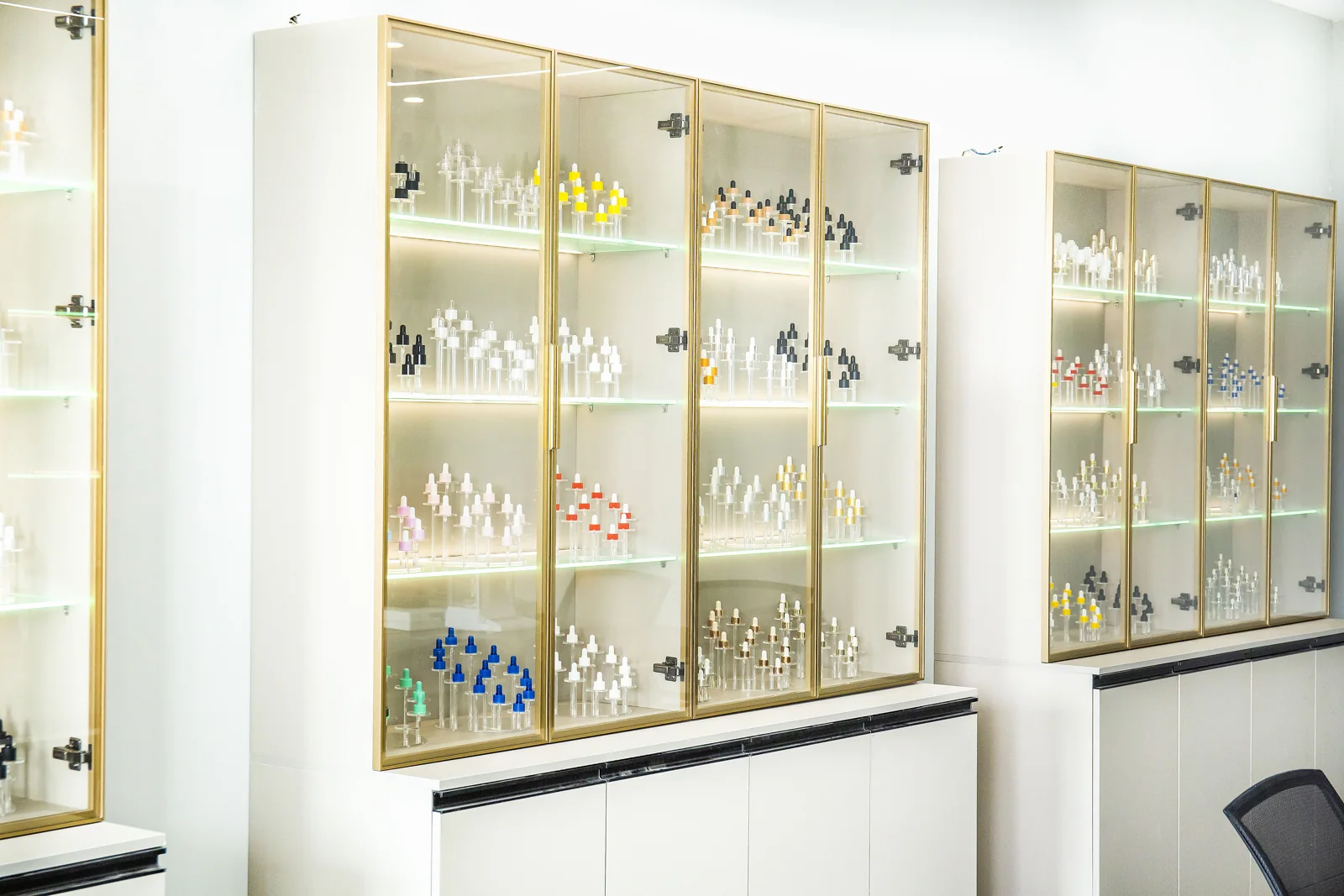
Oulete-supplied showroom photograph. Displayed finishes illustrate appearance options; the photograph does not show a completed adhesion, abrasion or exposure assessment.
Choose a method that applies to the substrate and geometry
A named test method has an applicability scope, and that scope matters before a result is used to approve a cosmetic bottle. Ask the assessor to identify the method, edition, specimen requirements and any agreed departures. The familiar name of a standard should not hide a mismatch between the published method and the actual decorated component.
ASTM’s public D3359 scope and significance describe tape-based assessment of coating adhesion to metallic substrates. The page notes limitations when the method is used on non-metallic substrates, including plastics. Ask the interested technical parties to establish applicability for the proposed material; do not describe a generic tape pull on a plastic bottle as universal proof of adhesion.
ASTM’s D5264 public scope addresses abrasion of printed materials, including applied graphics on flat substrates. A curved decorated bottle is a different specimen geometry. Ask how the actual part, contact surface and fixture will be assessed. A laboratory result on a flat coupon needs an explicit relationship to the finished component before it supports that component’s approval.
The buyer does not need to improvise a laboratory procedure. Give the assessor the proposed substrate, finish, part shape and relevant handling problem. Ask which method can answer that question and what limitation accompanies the result. A supplier-specific comparative exercise can be useful when it is described accurately, but it should not be relabelled as full compliance with an unrelated standard.
| Method-selection input | Information the assessor needs | Question to resolve |
|---|---|---|
| Substrate | Identified component and material proposal | Does the selected method address this material? |
| Finish | Proposed print, foil, coating or other process | What applied layer or system is being assessed? |
| Geometry | Actual part and relevant decorated region | Can the specimen and contact be represented appropriately? |
| Production relationship | Sample process and any provisional steps | What configuration can the result support? |
| Measurement | Observable change and assessment reference | How will reviewers compare the result? |
| Method status | Named procedure and recorded departures | What claim can be made about the completed assessment? |
Keep the method choice and acceptance criteria together. A named method may provide a procedure while the project still needs to define the acceptable outcome. Ask the responsible brand reviewer and assessor to agree that decision before testing. Do not invent a cycle count, force, rating or permissible loss solely because another supplier’s website presents a convenient number.
Describe the rubbing and liquid-contact problem precisely
A useful abrasion brief identifies the decorated area and the material that contacts it. Contact with another bottle, a protective divider and a conveyor guide are different situations. Describe the actual concern and the configuration involved. A vague instruction to “rub the logo” leaves reviewers unable to connect the result to the handling problem purchasing needs to resolve.
Map the relevant stages of the pack’s journey. The filler may handle a bare decorated body before fitting the dispenser. The supplier may pack a complete closed assembly. A consumer may grip the body while opening the closure. Ask the responsible parties which surfaces contact the decorated region during those stages and which conditions the assessment is intended to represent.
Liquid exposure needs an identified contact material and purpose. If the concern is product spilled during intended dispensing, use an agreed reference for the actual contents and affected surface. If the filler has a relevant handling or cleaning contact, have it identify that input. Do not substitute an arbitrary solvent and then infer performance with every cosmetic formula or every cleaning process.
The SGS packaging-performance page treats compatibility, functionality and transit as distinct packaging assessment areas. That separation helps organise this brief. The services belong to SGS, and their description is not an Oulete test result. Ask the responsible assessor to define the particular surface-exposure and handling work required for the proposed finish.
State how the observations will be reviewed. Possible observations include visible transfer, local loss of graphics, a change in surface appearance or legibility of the printed information. These are review categories, not automatic reject rules. The brand and assessor need to agree the relevant attributes, viewing conditions and acceptable outcome for the identified decorated part.
Retain an unassessed reference alongside the assessed sample where the plan calls for a comparison. Identify both samples, the artwork revision and the region being reviewed. Photographs should show the context and the affected area, with enough information to link them to the observation. A cropped image of a mark without a sample identity cannot explain which finish was actually evaluated.
Connect decorated-sample results to packing and assembly
The packing arrangement influences which finished surfaces can contact one another during handling. An acceptable decorated sample can still leave a risk unresolved if the proposed carton allows repeated contact at the printed area. Ask for the finished configuration, protective arrangement and the relevant handling assessment together. Surface approval and packing approval should refer to the same pack.
For a body with a collar, actuator and cap, review the decorated parts in their proposed assembled positions. Confirm whether their appearance relationship or contact points create an additional question. A finish accepted on an isolated body does not automatically settle rubbing between that body and a separately proposed accessory. Record the applicable part identities and interfaces before making the assembly decision.
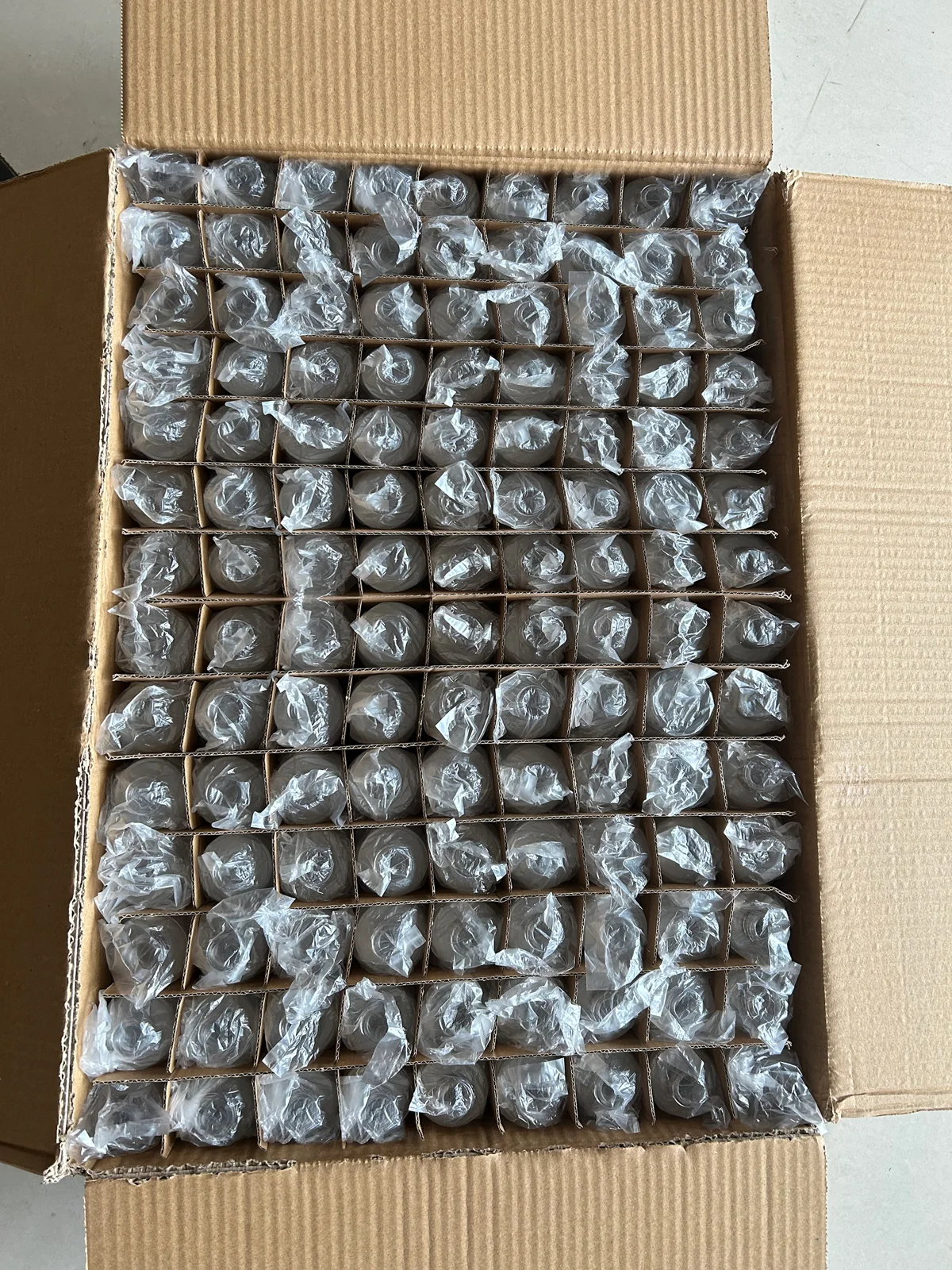
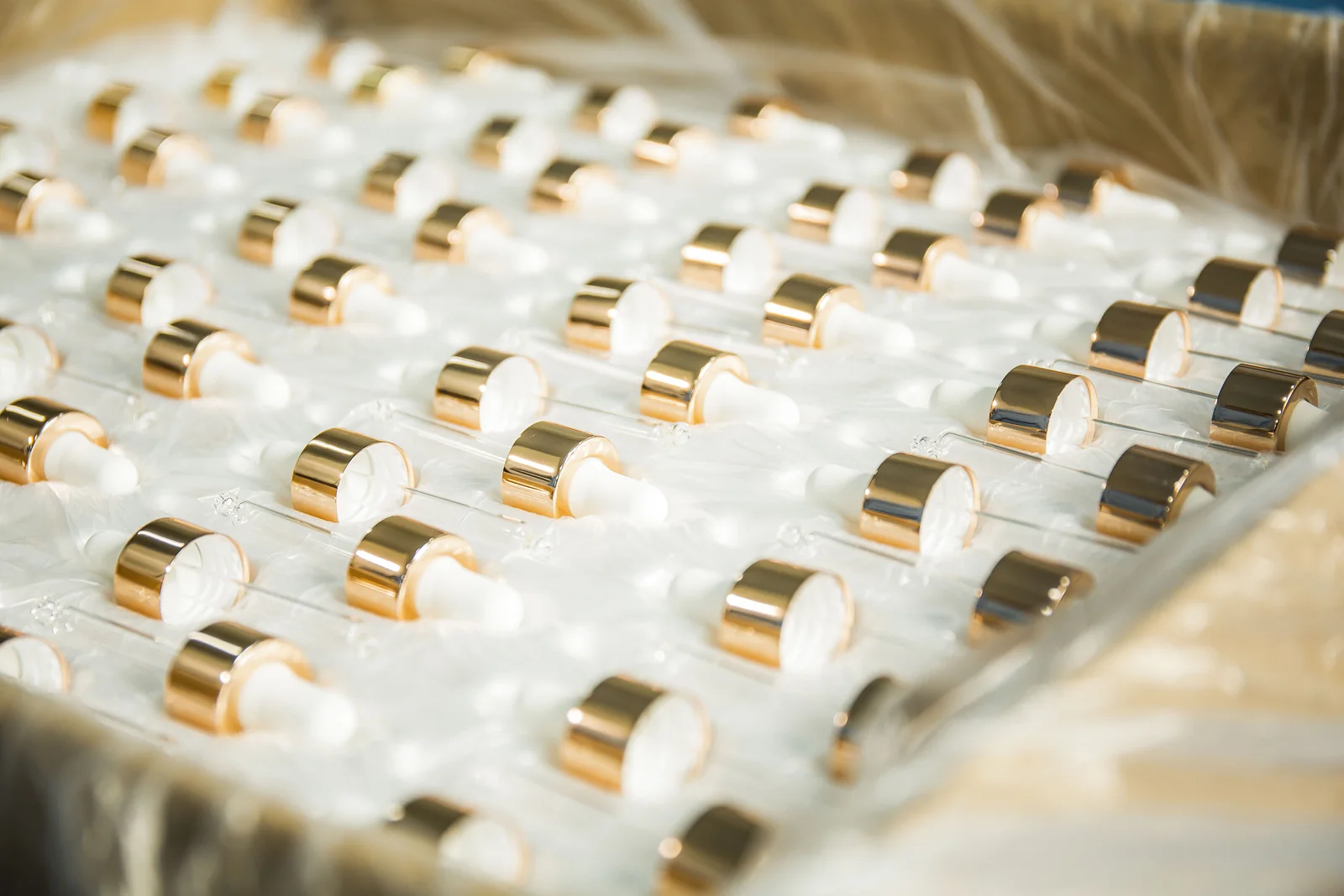
Oulete-supplied packing photograph. Agree protection for the selected finished parts; the image is not evidence of a transport test or a universal damage-free packing specification.
If the finish changes the proposed dimensions or appearance around an interface, ask for the relevant finished-part information. The component supplier and filler should decide which fitted or line checks apply. Do not rely on an undecorated sample to approve a question that depends on the final finish. Keep appearance, geometry and handling decisions traceable to the sample that actually represents them.
The incoming inspection record helps receiving teams describe visible damage consistently. Establish those defect descriptions before shipment and relate them to the agreed appearance reference. Incoming photographs can then distinguish the observed condition from the approved sample without pretending that the photographs alone identify the cause or responsibility.
Packed-part abrasion and filled-pack leakage are different review tasks. A scratched carton shipment does not establish a defective sealing interface, and a leak-test result does not establish decoration durability. Keep separate records for the questions being assessed, then connect any relevant findings through the same body, components, formula and packing references where appropriate.
Write a decision record that can control production
A decorated-pack approval record should identify what was assessed, how it was assessed and which attributes were accepted. Include the part, substrate, finish and artwork revisions, sample identity and responsible reviewer. A signature next to “quality approved” leaves too much uncertainty when the next order changes the coating or the supplier proposes a different production process.
| Approval-record field | What to document |
|---|---|
| Selected part | Model, capacity, component reference and applicable material |
| Finish configuration | Process, colour or appearance reference, artwork and relevant production relationship |
| Assessment question | Adhesion, abrasion, intended exposure or packing concern |
| Agreed method | Procedure, conditions, specimen arrangement and recorded limitations |
| Evidence | Sample identity, observations, images and assessor’s record |
| Acceptance decision | Named attributes, outcome, reviewer and unresolved matters |
| Order relationship | Quotation and configuration to which the decision applies |
Use the colour-matching guide for the appearance reference, then attach the separate durability decisions. A colour acceptance should not become an undocumented promise about rubbing or liquid resistance. Likewise, a functional assessment should not settle an appearance disagreement that the brand has not reviewed under its agreed viewing conditions.
For an Oulete request, identify the actual body, decorated parts, substrate proposal and intended use. Public decoration routes include screen printing, hot stamping, spray coating and electroplating; request the proposed process for each selected part through the decoration brief. No universal durability threshold or completed test is established by the process name.
The confirmed container MOQ baseline is 2,000 pieces for plastic and 5,000 for glass. Ask the project quotation to state the actual component and decoration conditions, sample scope and applicable charges. Keep the requested assessment separate from the unit price so purchasing can see whether the offer includes only an appearance sample or the additional work its approval brief requires.
Send the Oulete sample brief with the proposed finish and the handling or exposure question. Request a representative sample and an assessment proposal from the responsible parties. The useful response identifies the configuration, appropriate method and remaining decisions, giving the brand a specific finish to approve rather than an unspecified durability guarantee.
FAQ
Does a colour-approved sample prove decoration durability?
A colour-approved sample establishes only the visual attributes recorded in its appearance decision. Adhesion, rubbing, liquid exposure and packed handling need their own defined assessments. Identify the same part and finish across those records, then retain the observations and decision for each task. A visually acceptable sample does not prove unperformed performance checks.
Can ASTM D3359 be applied automatically to a plastic bottle?
ASTM D3359 should not be applied automatically as a universal plastic-bottle approval method. Its public scope addresses coated metallic substrates and notes limitations for non-metallic materials. Ask the responsible technical parties to review applicability, specimen arrangement and the intended claim. Record any agreed departure rather than presenting an improvised tape test as unrestricted standard compliance.
Does a flat printed coupon establish abrasion performance on a curved bottle?
A flat printed coupon does not automatically establish abrasion performance on a curved finished bottle. Identify how its substrate, process and assessment represent the proposed part. Ask the assessor to explain the applicable geometry and contact conditions. Use the result within that documented scope, with any remaining finished-component question clearly stated.
What liquid should be used for a decoration exposure review?
The liquid should match the identified exposure question agreed by the responsible project teams. For intended product contact, use the actual contents or an agreed controlled reference. For a relevant filler handling contact, have the filler specify it. Record the material, conditions and observations instead of treating an arbitrary solvent exercise as a universal compatibility result.
How should a scratch or rubbed logo be recorded?
A scratch or rubbed logo should be recorded against the identified sample, decorated region, finish and assessment conditions. Retain a contextual image and a close view where useful, together with the observation and responsible reviewer’s decision. The record should describe what was found without claiming that an image alone establishes the underlying cause.
What happens when the coating or printing process changes?
A changed coating or printing process needs review against the accepted finish configuration and its recorded assessment scope. Identify the proposed change, substrate and representative sample. Ask the responsible parties which appearance, adhesion, rubbing, exposure or packing decisions need repeating. Update the order reference after the decision so the earlier result is not silently applied to a different finish.
Photographed at Oulete
A closer look at packaging components
See the facility and visible operations behind a packaging enquiry. For your selected assembly, ask which steps apply and request the corresponding sample and inspection records.