Cosmetic packaging · Made for your brand
Screen Printing vs Hot Stamping for Cosmetic Bottles
A metallic logo does not automatically require hot stamping, and a white logo does not automatically mean a simple screen-printing job. The bottle beneath the artwork determines what the decorator must prove. A dark moulded component, a…
Containers only — no compounding or filling.
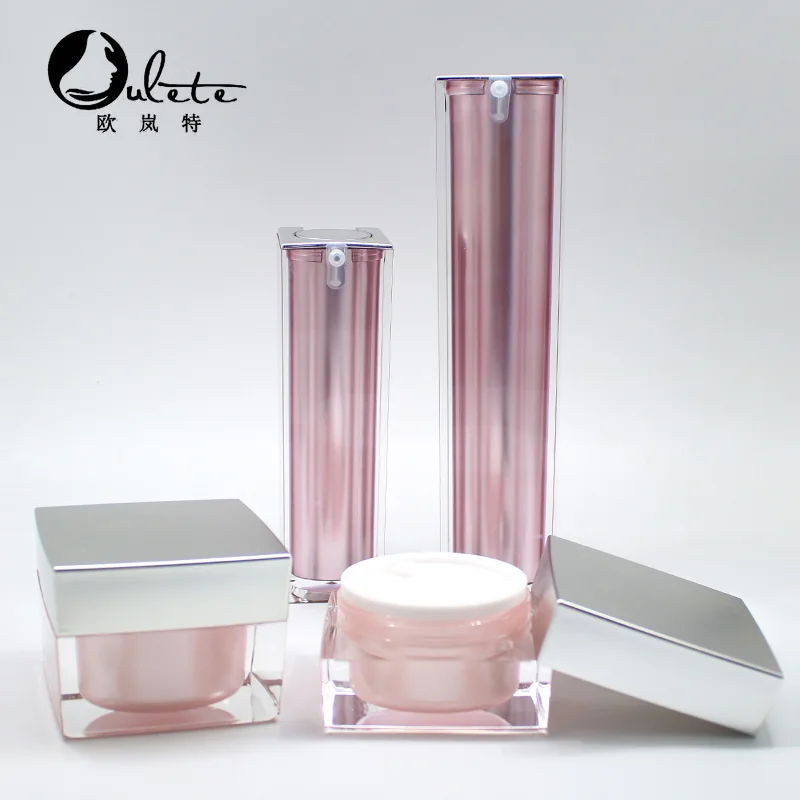
Oulete-branded pink cosmetic bottle and jar set
On this page · 13 sections
- Screen printing vs hot stamping: compare the finished effect
- The receiving surface is part of the specification
- Small text and wraparound artwork need a drawing
- Approve appearance and handling as separate evidence
- Blank decoration-route approval worksheet
- Compare the quotation by operation and approved quantity
- FAQ
- Is hot stamping always more durable than screen printing?
- Can screen printing create a metallic logo?
- What should I approve for white printing on a black bottle?
- Can my logo wrap around any bottle shape?
- Does an approved decorated sample cover formula compatibility?
- What should a decoration quotation separate?
A metallic logo does not automatically require hot stamping, and a white logo does not automatically mean a simple screen-printing job. The bottle beneath the artwork determines what the decorator must prove. A dark moulded component, a sprayed bottle and a metallised collar are different receiving surfaces, even when the brand calls them all black packaging.
Choose screen printing for ink-based graphics and hot stamping for transferred foil effects, then approve both against the actual bottle, artwork and handling conditions.
For a procurement team comparing screen printing vs hot stamping, the useful decision is not which process sounds more premium. It is which route delivers the required appearance, readable artwork and acceptable handling performance on the ordered component. Record that decision in the sample approval and quotation.
Screen printing vs hot stamping: compare the finished effect
Screen printing is an ink-transfer process that places a design through an open pattern in a mesh screen. Hot stamping is a film-transfer process that uses a heated die to apply a selected foil. According to Quadpack's decoration overview, these routes use different transfer mechanisms; its screen-printing description also separates individual colour passes.
An ink colour and a foil finish are different appearance specifications. Gold ink can be a legitimate alternative to gold foil, but the samples must establish whether it gives the reflection the designer wants. Compare the actual effect under agreed viewing conditions, rather than assuming that the word metallic describes an interchangeable result.
According to Marabu's effect-ink guidance, metallic printing inks vary in shade, gloss and pigment characteristics. This supports considering an ink option when evaluating metallic artwork. It does not establish that a particular ink will match a foil, or that either route will perform on an untested cosmetic bottle.
| Decision in screen printing vs hot stamping | Screen-printing question | Hot-stamping question | Evidence to request |
|---|---|---|---|
| Required appearance | Is the target a solid ink colour, opaque white or a specified metallic ink effect? | Is the target a particular foil colour and reflection? | Named ink or foil reference and decorated physical sample |
| Fine artwork | Can the selected ink deposit reproduce the text and reversed gaps? | Can the die and foil reproduce the text without bridging gaps? | Actual-size artwork and production-representative print |
| Multiple colours | How many screens and passes are required? | How many dies, foil colours and passes are required? | Itemised route and registration sample |
| Curved geometry | How is the image transferred across the printable surface? | How will the die contact the intended surface? | Decoration drawing and position approval |
| Surface preparation | What resin, coating or treatment receives the ink? | What surface or primer receives the foil? | Identified substrate and layer sequence |
| Use and handling | What will be checked for ink adhesion and scuffing? | What will be checked for foil adhesion and scuffing? | Agreed test method and recorded results |
A mixed route may be the clearest design answer. A brand could specify screen-printed product information with a foil logo, treating both operations as parts of one decoration build. Confirm the order of operations, how one layer interacts with another, and whether the sample represents the complete build. Approval of the logo alone leaves the combined surface unresolved.
Do not compare decorative processes by a universal cost or durability ranking. Artwork coverage, setup, passes, substrate preparation and packing change the commercial scope. A small foil emblem and a broad ink panel are different jobs. Compare alternatives using the same bottle quantity and a defined effect, with any intentionally different result made visible to the buyer.
The receiving surface is part of the specification
A decoration specification identifies the surface that receives the design, not just the bottle family. State the part number, material, moulded colour, coating, metallised layer and relevant treatment. A sample made on an undecorated stock component is not equivalent evidence for a proposed coated production component, even when their shapes are identical.
According to HCP's print-effects page, its printing applications include moulded, metallised and sprayed components, with multiple ink passes possible for designs on packs with an orientation feature. The useful lesson is the specificity of the surface and process description. These are HCP's stated capabilities, not proof of the route available for another factory's bottle.
Ask the decorator to identify the layer sequence from the component outward. A sprayed bottle might receive preparation, a base coating, printing and a protective finish. Another design might use a different sequence. Record the proposed sequence in plain language, including which supplier performs each operation, instead of approving a vague description such as premium printing.
Opacity is the ability of a printed layer to hide the surface beneath it. White artwork on a dark component should be reviewed for both readability and appearance. Require the supplier to explain the proposed ink system and pass sequence, then inspect the lettering, solid areas and reversed details on the actual dark surface.
If additional passes are proposed to achieve the target white, registration becomes part of the approval. Registration is the alignment of successive graphics or colour applications. Misalignment may appear as a fringe or doubled edge. Agree how alignment will be evaluated and what is acceptable on the ordered design, rather than borrowing an unsupported tolerance from an unrelated printing process.
The proposed resin or coating must remain linked to the approved decoration. Replacing a surface layer while keeping the same artwork can change the receiving surface. If the supplier proposes a substitute, ask which appearance and handling checks need repeating. A statement that the bottle dimensions are unchanged does not answer the decoration question.
Small text and wraparound artwork need a drawing
A decoration drawing defines the usable artwork area and its position on a specific component. Request printable height, width or wrap extent, orientation reference and excluded zones. The supplier should also identify seams, parting lines, shoulders or other features that affect the route. A catalogue photograph cannot establish the limits of a wraparound design.
Supply the final artwork at actual production size, with fonts handled as the decorator requires and each intended colour clearly identified. Confirm that the file revision on the quotation matches the file used for samples. Enlarging a screen preview makes small type look convincing; it does not demonstrate readability on a bottle held at normal viewing distance.
Treat minimum text size, line weight, spacing and reversed gaps as questions for the proposed process. There is no useful universal number covering all bottles, inks and dies. Request a sample containing the most demanding artwork features, including the smallest required text, so the approval tests the design's limits rather than its easiest area.
A curved bottle introduces position and contact questions. HCP identifies tampo printing as an option for curved surfaces on its print-effects page. That is a reason to ask whether screen printing, pad printing or another route best suits the actual geometry. It is not a reason to insist that one method can print every curved cosmetic container.
Pad printing is a transfer process that moves an image from a prepared plate to a component using a flexible pad. It may be relevant where the geometry makes another route difficult. If the supplier proposes it instead of screen printing, keep the required appearance and artwork as the approval target, and compare the resulting sample rather than the process label.
Clarify the reference that locates the front of the bottle. If an orientation feature exists, identify it on the drawing. If the component has no suitable locating feature, ask how the decorator controls the intended position and what variation is acceptable. Check logo alignment on the assembled pack, including an asymmetrical pump.
Oulete's 30 ml airless bottle selection can establish a starting product family; the ZK29 page narrows the discussion to a named model. Neither step should substitute for the decoration drawing and matching complete-pack sample. Confirm the final bottle, collar, actuator and cap appearance together when those parts form the retail presentation.
External reference — DEMASHA Printing Machinery Ltd: Screen printing +hot stamping on perfume bottles #screenprinting #hotstamping #bottle
External screen-printing and hot-stamping demonstration published by DEMASHA Printing Machinery. The video does not establish the process or equipment used for an Oulete order.
Oulete-supplied footage: Cosmetic tube decoration equipment operating at Oulete
Oulete-supplied footage of cosmetic tube decoration equipment. This is a tube-process reference; a bottle project requires its own substrate and geometry approval.
Approve appearance and handling as separate evidence
A decorated appearance sample establishes what the design looks like on a stated component. Handling checks establish how that particular decoration behaves under stated conditions. Keep both records. A visually acceptable sample does not, by itself, demonstrate resistance to contact with formula, wiping, transport packing or the guides on a filling line.
Marabu's effect-ink guidance calls for application-specific rub assessment and testing under the intended printing conditions. This is a useful boundary for procurement: a supplier's general description of strong adhesion is not a result for the ordered bottle. Ask for the method, tested sample identity, conditions, observations and acceptance criteria that support the proposed production release.
Prepare an exposure map rather than asking whether printing is scratchproof. Which surfaces touch carton dividers, adjacent bottles, belts or guides? Where could a spill contact the decoration? Which cleaning material is used by the filler? Distinguish expected use from unusually severe contact, and identify who approves the relevant conditions before testing begins.
When comparing two routes, change only the factor the comparison is intended to assess. If one sample uses a coated bottle and another uses bare resin, the result cannot isolate screen printing versus foil. Record surface, artwork, preparation and handling conditions for each sample so a purchasing decision does not rest on a misleading comparison.
Retain a clean appearance reference alongside any specimens used for handling checks. Mark test specimens with their identities without obscuring the area being judged. Photographs should show the location of any change, while the written record describes missing print, altered gloss, transfer, edge lifting or other observations. Keep interpretation separate from the observation itself.
Blank decoration-route approval worksheet
This worksheet is a procurement template, not a completed Oulete test report. Fill the fields with the decorator, brand and filler before approving a route.
| Approval field | Agreed entry | Evidence owner |
|---|---|---|
| Bottle and other decorated part numbers; drawing revisions | ____ | Buyer and supplier |
| Resin, moulded colour and receiving surface layers | ____ | Supplier |
| Artwork file, revision and actual-size approval | ____ | Brand |
| Ink system or foil reference; process sequence | ____ | Decorator |
| Printable zone and orientation reference | ____ | Supplier and brand |
| Passes; registration and appearance acceptance | ____ | Brand and decorator |
| Handling and formula-contact conditions to examine | ____ | Brand and filler |
| Test method, sample identity and pass/fail criteria | ____ | Responsible technical teams |
| Physical reference location and approval scope | ____ | Named approver |
| Changes requiring renewed approval | ____ | Buyer and supplier |
The sample approval guide covers the wider release of a complete pack. Use the decoration worksheet as its supporting record. This keeps the process decision specific without allowing a successful logo review to imply that pump function, formula compatibility or filling-line behaviour has also been approved.
Compare the quotation by operation and approved quantity
A decoration quotation is comparable only when the work and supplied state are defined. Identify tooling, setup, sampling, colour or foil passes, unit decoration charges and any protective packing. Ask whether charges apply to the same quantity and whether the quoted output is decorated bottles or complete assembled packs. Missing scope is not a zero charge.
For a hypothetical project, consider a dark cosmetic bottle with white product text and a reflective logo. Option A uses ink for both elements; Option B uses white ink plus a selected foil. The comparison must show the accepted difference in logo reflection, required operations and sample approval. It cannot honestly present the alternatives as identical packs with different prices.
Ask which items change if the artwork is revised after sampling. A new text arrangement might affect a screen, die, locating fixture or sample round. Record the approved artwork revision against the quotation and specify how later changes will be authorised. This connects a technical decision to a controllable commercial order.
Oulete's confirmed container MOQ baseline is 2,000 for plastic and 5,000 for glass; components, colours and decoration remain project-specific. Use the complete-quote comparison guide to distinguish the container minimum from the proposed decorated pack. Do not infer that every decoration route is available at the baseline container quantity.
Send Oulete the chosen component, actual-size artwork, desired ink or foil effect, order quantity and handling context through the decoration enquiry route. Request the proposed surface build, decoration drawing, itemised quote and sample scope together. Those deliverables turn a process preference into a complete-pack enquiry that a supplier can answer precisely.
FAQ
Is hot stamping always more durable than screen printing?
Hot stamping is not universally more durable than screen printing. Performance depends on the receiving surface, ink or foil system, preparation and handling exposure. Compare production-representative samples using an agreed method. A process name alone cannot establish which route will resist the filler or consumer conditions relevant to a particular cosmetic pack.
Can screen printing create a metallic logo?
Screen printing can create metallic effects using suitable inks. The appearance may differ from transferred foil, so approve a physical sample against the required reflection and shade. Confirm the ink system and substrate together. A designer's metallic colour label is not sufficient evidence that an ink route meets the intended finished effect.
What should I approve for white printing on a black bottle?
White printing on a black bottle requires approval of opacity, detail and position on the actual production surface. Identify the ink system, pass sequence and any registration criteria. Review small lettering and reversed gaps as well as solid areas, then keep the decorated component as the physical appearance reference.
Can my logo wrap around any bottle shape?
Wraparound artwork requires a confirmed decoration area and a suitable process for the bottle geometry. Ask for printable extent, orientation, excluded zones and any image compensation before approving artwork. Shoulders, seams or changes in curvature may affect the result. Approve the final design on the intended component rather than a flat mockup.
Does an approved decorated sample cover formula compatibility?
An approved decorated sample covers only the scope recorded in its approval. Appearance approval does not establish compatibility with a formula or resistance to wiping and filling-line contact. Define those checks separately, using identified decorated specimens and agreed conditions, then connect their results to the final release decision.
What should a decoration quotation separate?
A decoration quotation should separate setup, tooling, sampling, operation charges and the exact supplied pack. Identify colours or foil passes, protective packing and any revision charges. Confirm component and decoration minimums independently. This lets purchasing compare complete scopes instead of assuming that an omitted operation is included in a lower unit price.
Photographed at Oulete
A closer look at packaging components
See the facility and visible operations behind a packaging enquiry. For your selected assembly, ask which steps apply and request the corresponding sample and inspection records.