Select ZK29 airless bottles by the exact model code and capacity, then request the complete dispensing assembly for your formula and packaging brief.
Oulete’s supplied catalogue lists four ZK29-family codes in 15, 30 and 50 ml. Start with the code that matches your intended presentation, choose the size for each SKU, and send the selection for a matched-component proposal. The quotation should identify the body, dispenser, collar, cap and applicable sealing parts together.
The plastic-container MOQ is 2,000 pieces. Identify the quantity by code, capacity, colour and artwork in the enquiry. Use the ZK29 project enquiry to request the assembly, sample and commercial scope for your shortlist.
Four ZK29 codes, with 15, 30 and 50 ml options
| ZK29 airless bottle model | Listed nominal capacities | Supplied catalogue reference | Put this in the enquiry |
|---|---|---|---|
| ZK29 | 15 / 30 / 50 ml | Product Catalog 1, printed page 03 | Exact code and selected capacity |
| ZK29-1 | 15 / 30 / 50 ml | Product Catalog 1, printed page 03 | Exact code and selected capacity |
| ZK29-2 | 15 / 30 / 50 ml | Product Catalog 1, printed page 04 | Exact code and selected capacity |
| ZK29-3 | 15 / 30 / 50 ml | Product Catalog 1, printed page 04 | Exact code and selected capacity |
These are catalogue selection references. Request the current dimensions, proposed materials and complete assembly for the chosen code and capacity. The catalogue illustration helps communicate appearance; its colour does not declare a standard production colour, resin grade or surface treatment for your order.
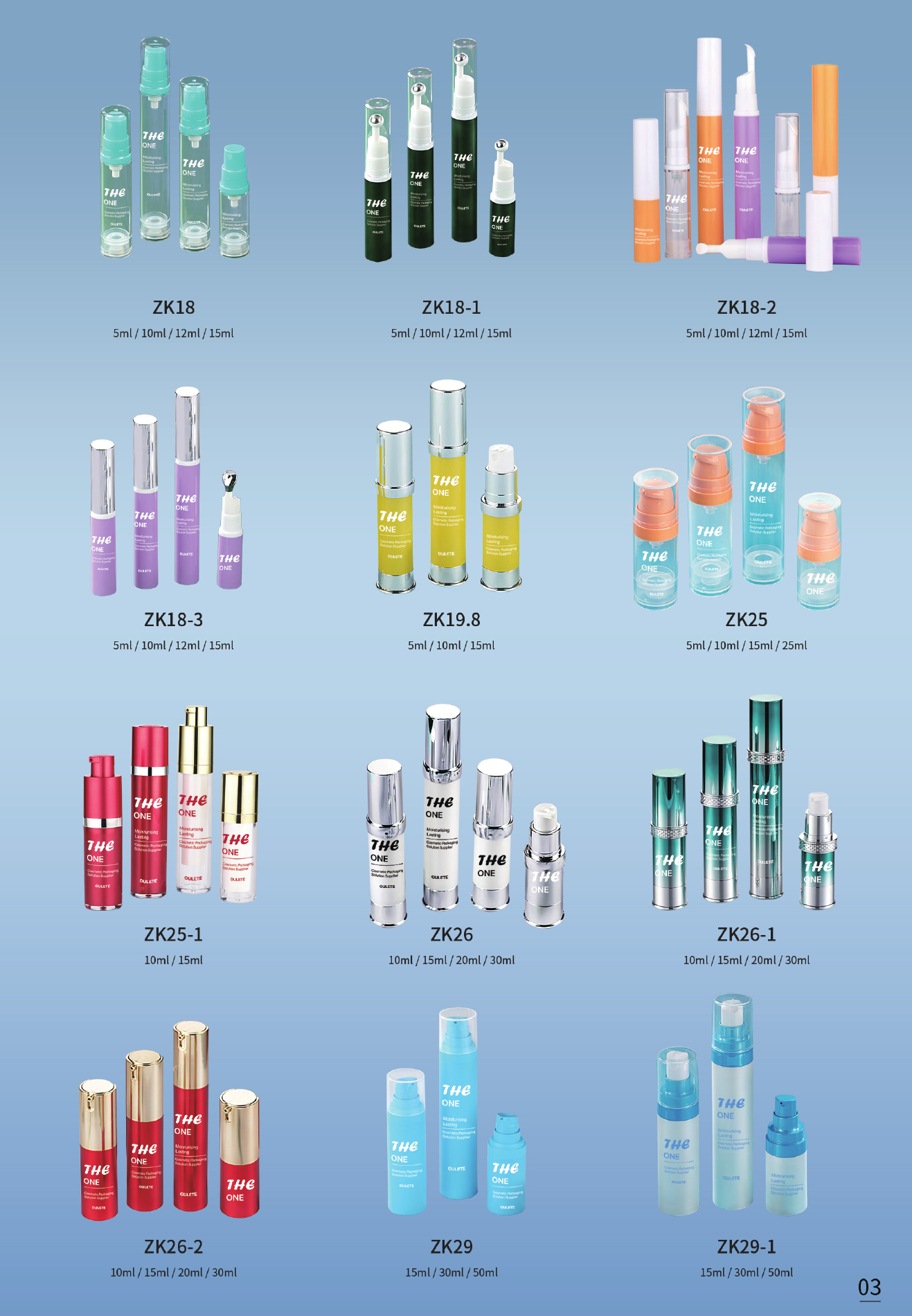
Original Oulete-supplied catalogue page. ZK29 and ZK29-1 appear on the lower row. The listed sizes are selection references; the project proposal identifies the production configuration.
For a range using more than one capacity, list each SKU separately. “ZK29 range” is useful for an initial conversation, but an enquiry needs the code and size for every item. The body, dispensing components, artwork and packing can then be linked to that SKU, rather than relying on one photograph to represent the whole collection.
Build a coordinated range with explicit component choices
A coordinated range starts with the visual relationship between the proposed packs. Review the body, collar, actuator and cap together. Identify the appearance direction for each part, and state whether the brand wants companion sizes to look similar or deliberately different. Ask for representative samples against those named choices before approving the presentation.
Shared capacities do not establish shared components. If the project would benefit from a common dispenser or cap, ask Oulete to identify the proposed common parts and the configurations they fit. Keep any confirmed commonality in the component list. The family name alone does not establish interchangeable pumps, identical output or the same assembly dimensions.
| Range-planning decision | Information for Oulete | Result to request |
|---|---|---|
| Model selection | Code and capacity for each SKU | An identified complete-pack proposal |
| Visual consistency | Body, collar, actuator and cap references | Samples showing the proposed assembled presentation |
| Component sharing | Parts the brand would like to share | A supplier-confirmed component list by configuration |
| Artwork variation | Version and decorated part for each SKU | Part-specific layout and decorated-sample scope |
| Quantity planning | Quantity by code, size, colour and artwork | Quoted quantity conditions and assembly scope |
For a 30 ml-focused project, the 30 ml airless selection page also provides other catalogue references. Use the family page to define the ZK29 variants and the capacity page to compare alternative bodies. Keep the final enquiry tied to the individual model rather than a broad category description.
Request the dispensing assembly for the actual formula
The dispenser proposal should identify the parts that determine the supplied assembly, attachment and formula contact. Ask for the current component references and drawing information, including the body interface and assembled envelope. Identify whether parts arrive fitted or loose, and agree which party performs the remaining steps after filling.
Provide the intended formula description or a controlled formula reference through the agreed project process. State the expected user action and any required dispensing target for the responsible team to evaluate. Catalogue capacity describes the selected size; it does not establish pump output, the number of applications or performance with a particular serum or cream.
The product team and filler should agree the trial scope with the component supplier. Identify the actual configuration used for the trial and retain its results. Where pump-output information is needed, the mass and volume per stroke guide explains how to keep the measurement unit and formula identity clear.
Before selecting cartons or filling fixtures, request the dimensions of the complete proposed assembly. A catalogue body view leaves the cap and actuator envelope unresolved. Give the filler its relevant interface information and ask the carton supplier to consider the finished configuration with its proposed protection. These are different reviews of the same identified pack.
Set colour and decoration by part
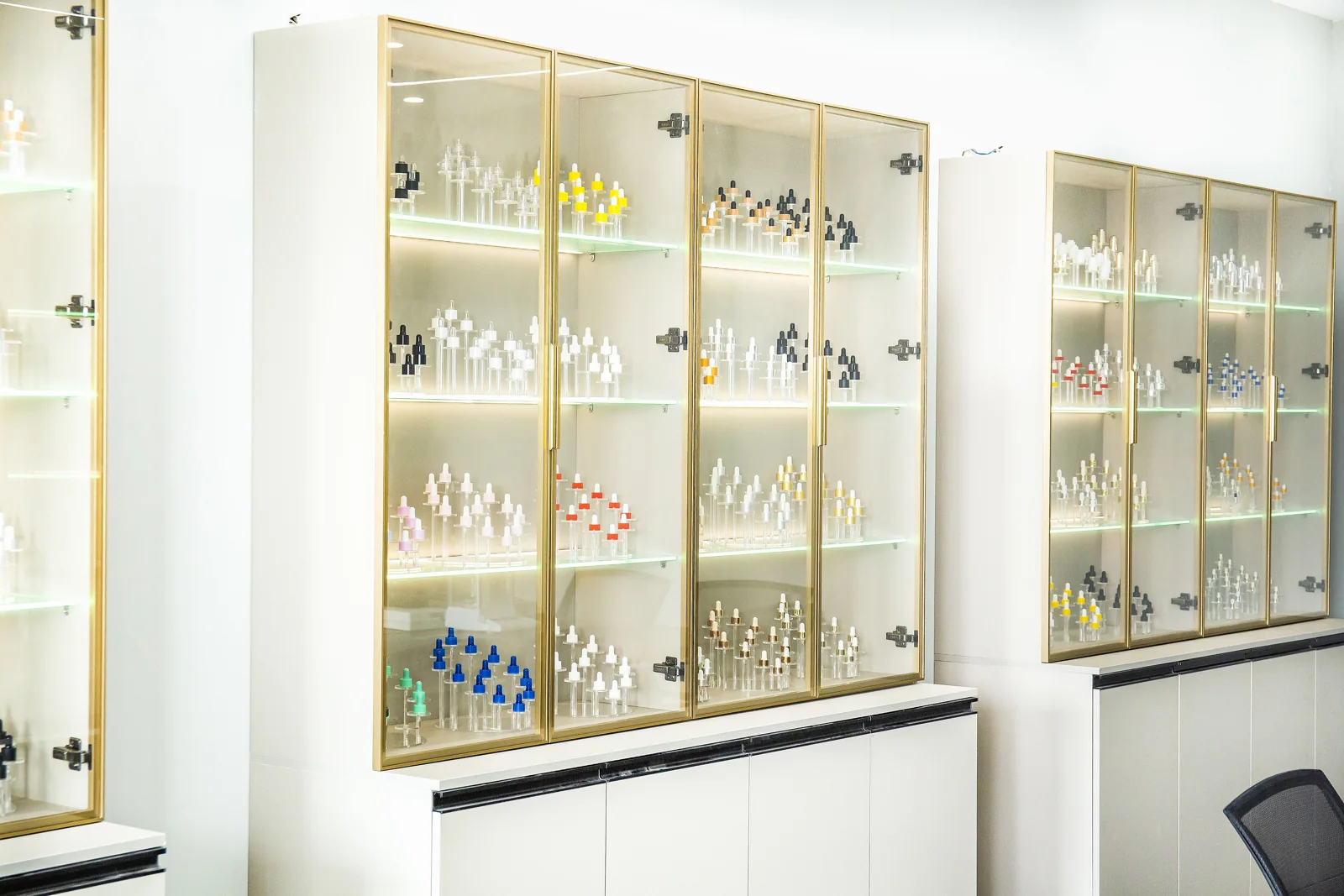
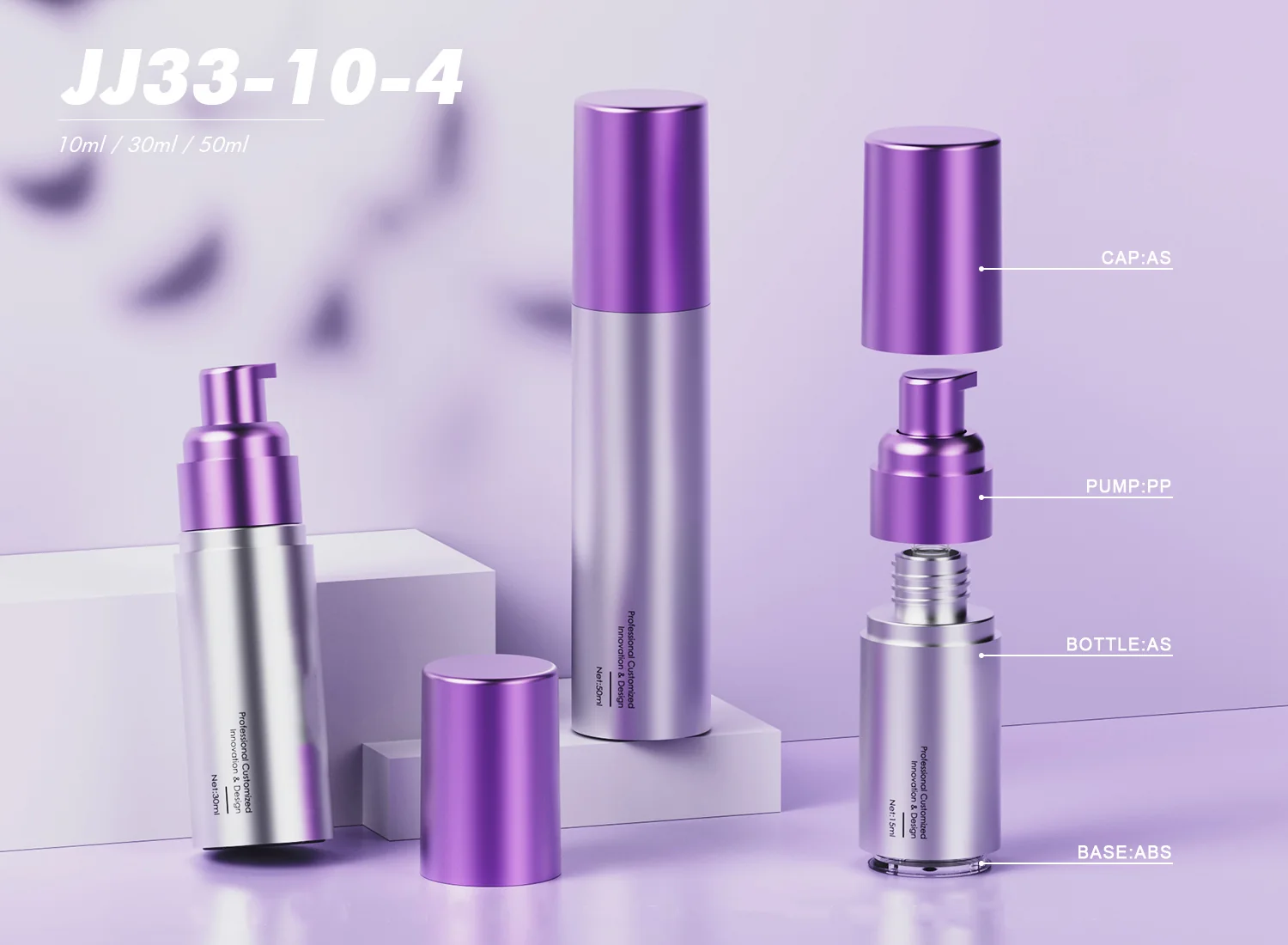
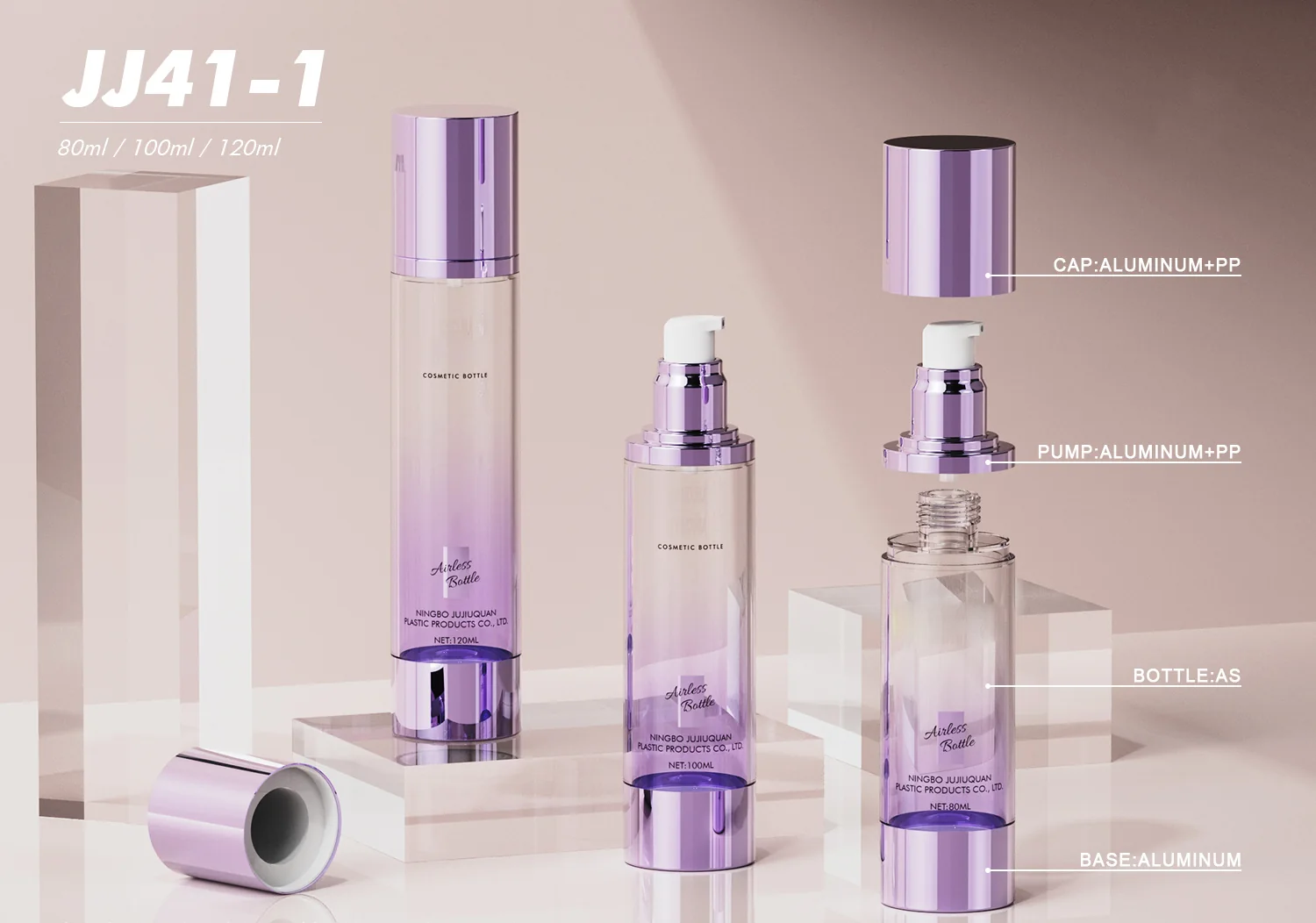
Oulete-supplied category photographs retained from this product page. Request samples identified by the selected ZK29 code and capacity to review the actual proposed parts, materials and finish.
Oulete’s public decoration routes include screen printing, hot stamping, spray coating and electroplating. Ask which process is proposed for each selected component and substrate. Send the artwork, colour direction and intended surfaces together so the sample request describes an actual pack, rather than a finish name applied to an unspecified family.
Use final-size artwork and ask for the usable decoration area on the proposed body. Where appearance depends on the outlet or collar orientation, identify that relationship in the layout. The decoration brief can be used to request a process proposal and a representative sample for the selected ZK29 configuration.
Review the assembled presentation against the physical reference agreed by the brand and supplier. Name the approved parts, colour references and artwork revisions. If the project requires a particular handling or contents-contact evaluation for the finish, put that requirement into the sample brief and agree its assessment separately from a visual colour decision.
Send a complete ZK29 sample and quotation request
Use one enquiry line for each selected configuration. Include the model code, capacity, intended contents, required dispenser proposal, artwork, quantity and destination. State whether the buyer or filler supplies any part. Oulete can then frame its offer around the requested assembly and identify the information needed before a representative sample can be approved.
| Enquiry field | What to send |
|---|---|
| Body selection | ZK29-family code and chosen capacity for each SKU |
| Dispensing brief | Intended user action, required target and formula reference |
| Component scope | Parts Oulete should propose and any buyer-supplied parts |
| Appearance | Part-specific colour, finish and artwork version |
| Quantity | Pieces by code, capacity, colour and decorated version |
| Delivery | Destination, requested milestone and packing requirements |
| Approval task | Appearance, matched-assembly, filled-pack or line questions to resolve |
Oulete’s confirmed MOQ is 2,000 pieces for plastic packaging. Identify the supplied components, decoration and quantity by version in the quotation. Separate sample charges, setup costs and any tooling proposal from the quoted unit price. The complete-pack comparison sheet helps compare offers on the same scope.
Ask for the sample configuration and the conditions needed before production is released. Record the body and component versions, appearance references and outstanding evaluation decisions. Use the sample brief to send the shortlist and request the proposed assembly, documents and commercial terms for that configuration.
ZK29 buyer questions
Which capacities are listed for ZK29?
The supplied catalogue lists 15, 30 and 50 ml for ZK29, ZK29-1, ZK29-2 and ZK29-3. Select the exact code with the capacity for each SKU, then request the current drawings and matched dispensing proposal for those choices.
Can the same pump be used across the ZK29 range?
Component sharing needs confirmation for the selected configurations. Ask for the proposed pump and other component references by code and capacity. A shared family name or nominal capacity does not establish interchangeable parts or identical dispensing performance.
Can I use the catalogue colour as the production specification?
A catalogue image can communicate the appearance direction. Production needs the part-specific material, colour and process proposal, artwork and approved representative sample. Identify the physical reference and viewing conditions relevant to the brand’s appearance decision.
What is the MOQ for ZK29 airless bottles?
Oulete’s confirmed plastic-container MOQ is 2,000 pieces. Request the specific conditions for the chosen code, capacity, components, colour and decoration in the project quotation, including any quantity splits or buyer-supplied parts.
Photos and video
Put the specification to work
Search the catalog rows. Use the selected model and complete assembly in your brief.
Related project tools and guides
Discuss ZK29 Airless Bottles customization · MOQ and production stages · Batch inspection and acceptance ·