Cosmetic packaging · Made for your brand
PCR Cosmetic Packaging Claims: Evidence Before Artwork
PCR cosmetic packaging claims need a defined component, supported recycled-content percentage and traceable evidence before the wording reaches artwork, quotations or distributor listings. “Thirty percent PCR” can describe a bottle body…
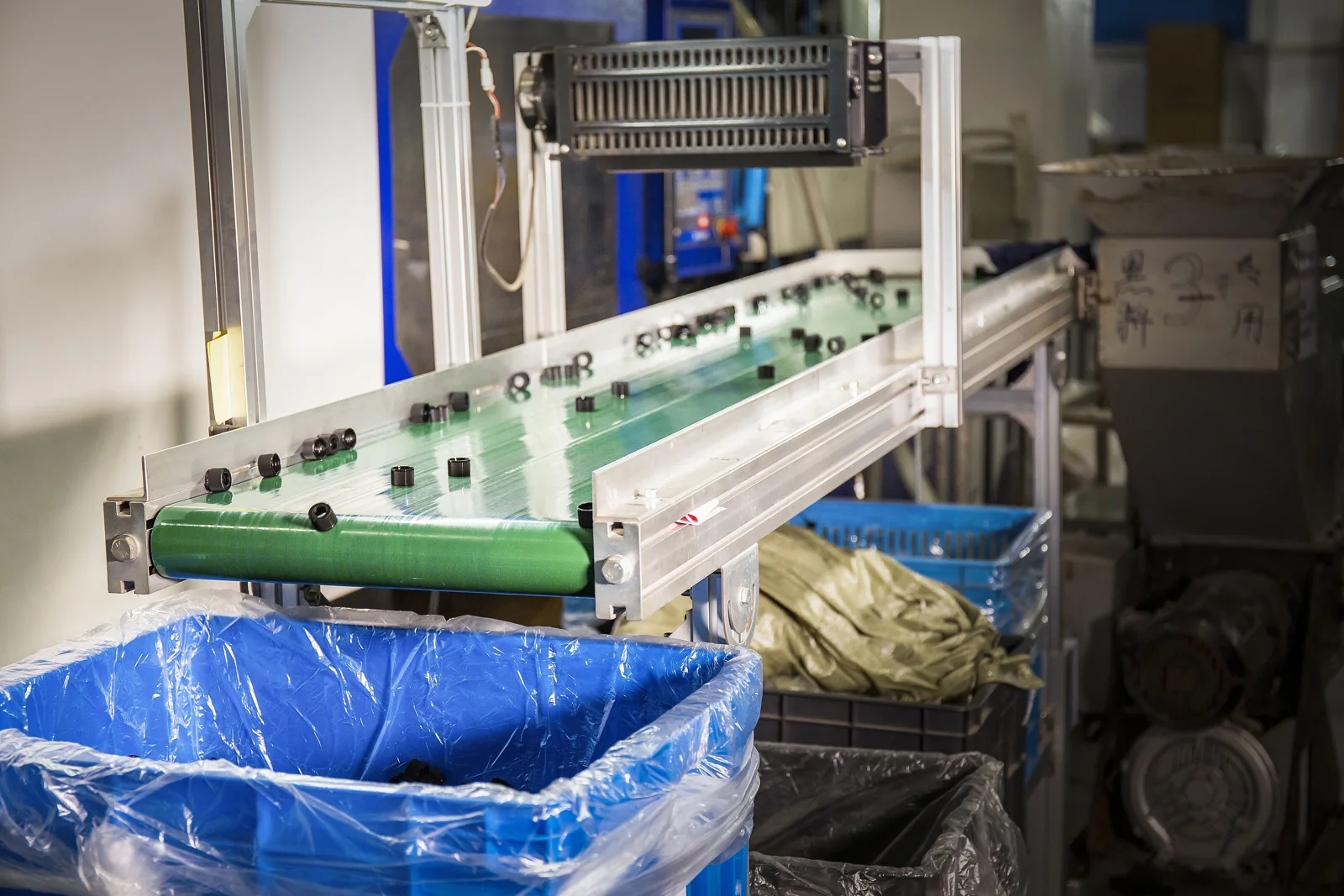
Oulete-supplied component photograph. Appearance does not establish PCR content, certification or recyclability.
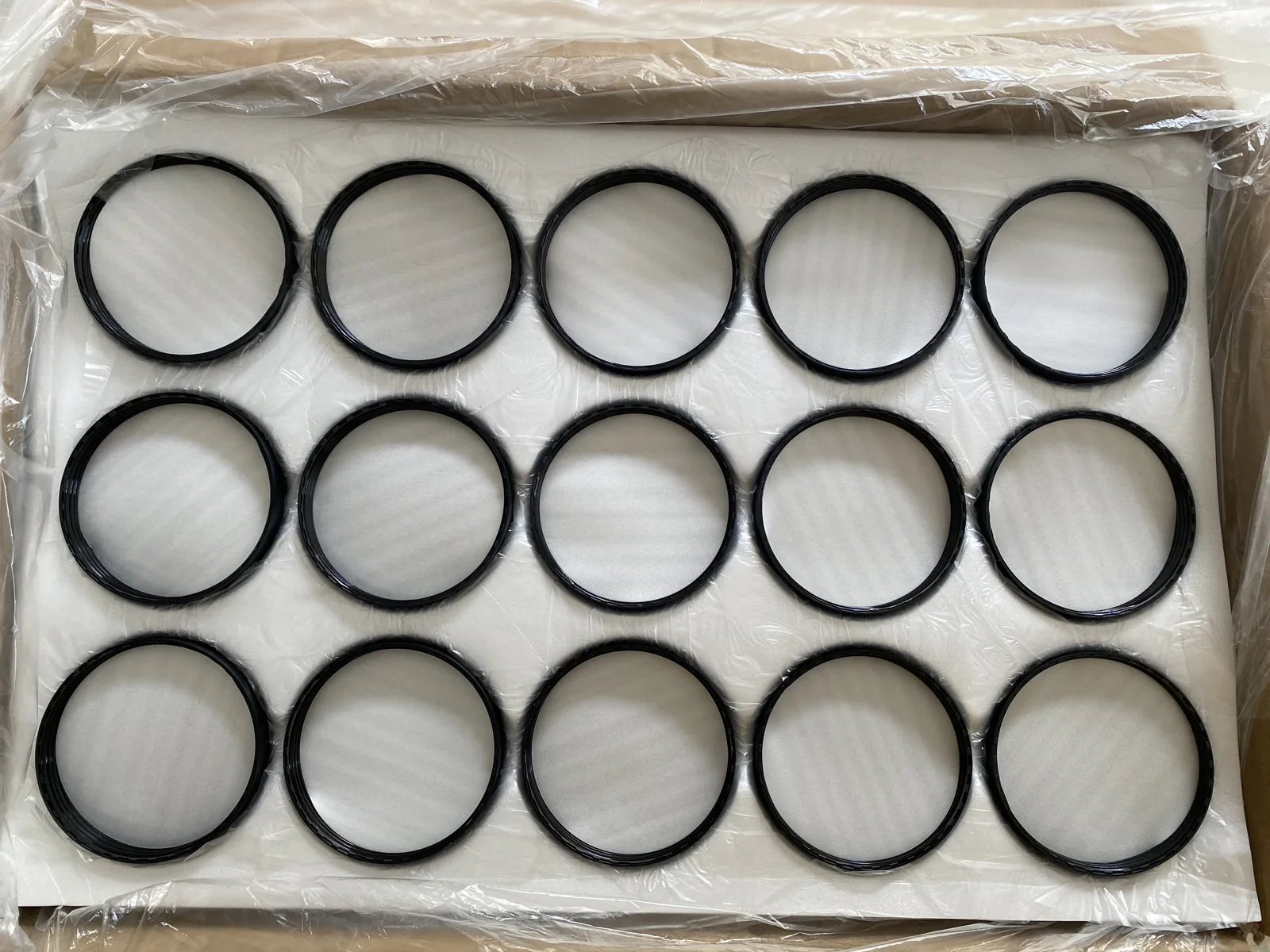
Black circular packaging components arranged separately in a protective tray
On this page · 12 sections
- Define the PCR claim before choosing its wording
- Calculate the percentage for the object you name
- Separate physical recycled content from allocated feedstock
- Review recyclability and EU wording as separate decisions
- Develop your Oulete pack and claim in the same project
- FAQ: PCR content and cosmetic packaging claims
- Does a 30% PCR bottle body mean the whole package is 30% PCR?
- Can “recycled plastic” automatically be described as PCR?
- Is mass-balanced recycled feedstock the same as physical PCR in the bottle?
- Does PCR content make a cosmetic pack recyclable?
- Can the brand use the resin supplier's sustainability logo?
- What should we send Oulete for a PCR packaging project?
PCR cosmetic packaging claims need a defined component, supported recycled-content percentage and traceable evidence before the wording reaches artwork, quotations or distributor listings.
“Thirty percent PCR” can describe a bottle body, an entire packaging assembly or an allocation under a particular accounting system. Those meanings are not interchangeable. Before choosing a green badge or approving an outer-box headline, ask the supplier to identify exactly what the percentage describes and how the evidence connects to your purchased configuration.
Bring your PCR target to Oulete with the intended bottle or jar, finish and markets. We support compliance-led packaging development by connecting the product discussion to the required evidence. The approved claim should describe the configuration you order, not just the initial material ambition.
Define the PCR claim before choosing its wording
Post-consumer recycled material, or PCR, originates from material recovered after consumer use. It should not be confused with every form of recycled input. A supplier offering “recycled plastic” needs to clarify whether the proposed statement concerns post-consumer material, pre-consumer material, or a combination, before the buyer adopts a PCR headline.
According to 16 CFR 260.13 in the U.S. Green Guides, a claim distinguishing post-consumer from pre-consumer content needs substantiation for that distinction. For partly recycled products or packages, the claim should clearly qualify the recycled amount or percentage by weight. These are U.S. marketing guides, not a worldwide certification standard.
Create a claim brief before creating artwork. Write the intended subject in full: bottle body, refill vessel, cap, pump or another defined item. Then name the claimed attribute, percentage basis and target market. This prevents a supplier's component-level statement from becoming a distributor's whole-product claim through abbreviated copy.
| Field in the claim brief | Question to settle | Evidence needed for the review |
|---|---|---|
| Subject | Which component or assembly is being described? | Controlled component identity and revision |
| Recycled category | Is the material post-consumer, pre-consumer or otherwise described? | Supplier information supporting the claimed origin |
| Quantity | Percentage of what, measured on what basis? | Component masses and supported content figures |
| Supply-chain method | Physical content or an allocation under a named system? | Applicable records and chain-of-custody explanation |
| Communication | Where will the wording and any logo appear? | Artwork, catalogue and listing versions |
| Destination | Which markets will receive this configuration? | Market review and applicable claim requirements |
A useful purchasing request is: “Please identify the body and closure separately, state the proposed recycled-content basis, and provide the evidence supporting each claimed component.” It leaves room for a supplier to explain available options without inviting a broad environmental promise. Require the response to distinguish established information from a proposed development target.
Use the Oulete PCR material page to frame the component enquiry. Discuss the existing model, material option, colour and finish as one configuration. Confirm the supported recycled-content basis for that chosen component before carrying the claim into the bottle artwork or distributor product sheet.
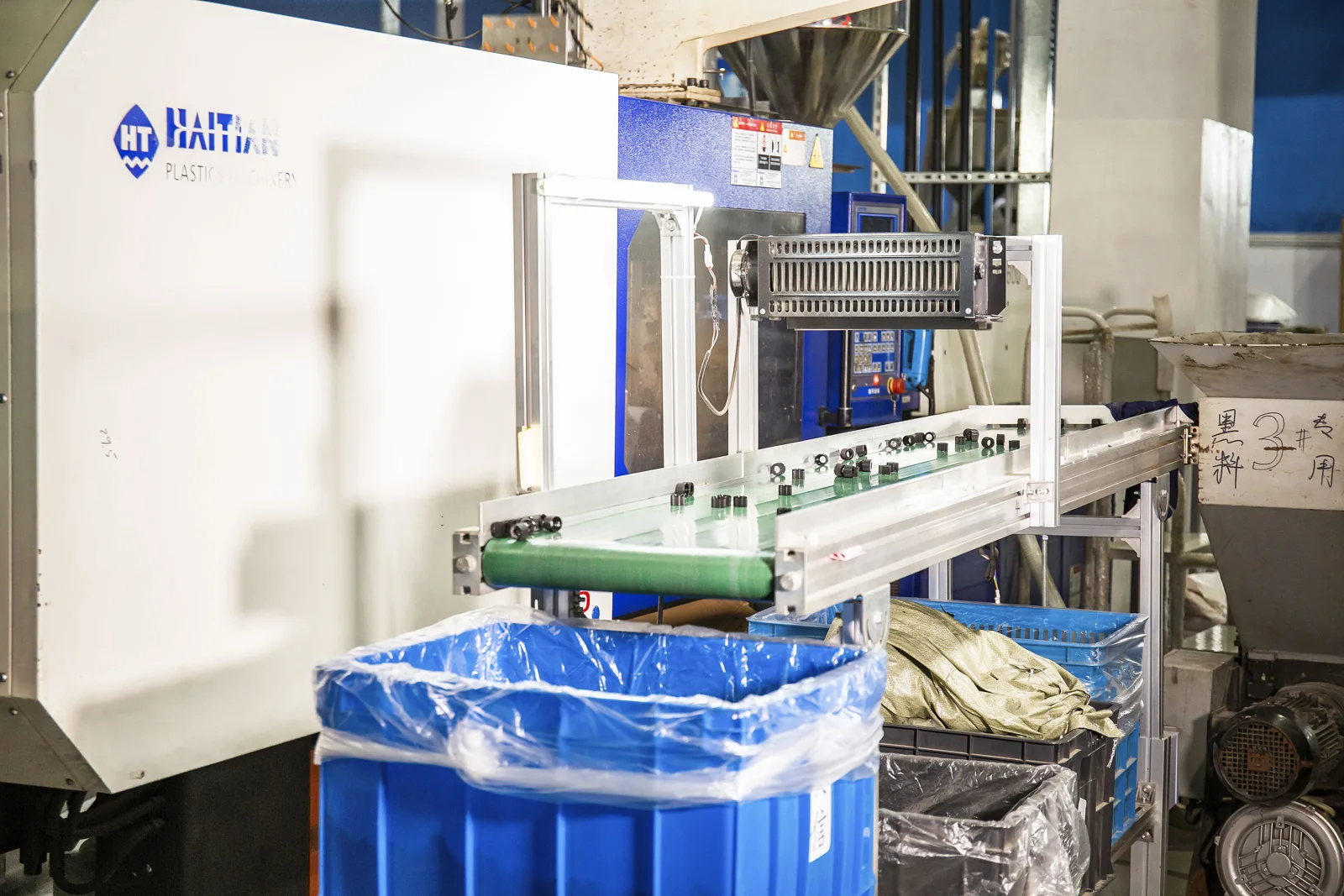
Oulete-supplied component photography illustrates a separately identifiable part. Colour and appearance do not establish polymer grade, recycled-content percentage, certification or recyclability.
Calculate the percentage for the object you name
A component percentage and an assembly percentage use different denominators. If the artwork names the bottle body, calculate and substantiate the body claim. If the artwork describes the complete package, first define everything included in that package. Changing the denominator changes the statement, even when the recycled material itself remains unchanged.
Consider this deliberately hypothetical example. The bottle body weighs 20 g and has supported physical PCR content of 30% by weight. Its recycled contribution is therefore 6 g. A virgin cap weighs 4 g, and a virgin pump assembly weighs 6 g. The defined three-part packaging assembly weighs 30 g in total.
| Hypothetical element | Element mass | Supported physical PCR share | PCR contribution |
|---|---|---|---|
| Bottle body | 20 g | 30% | 6 g |
| Cap | 4 g | 0% | 0 g |
| Pump assembly | 6 g | 0% | 0 g |
| Defined three-part assembly | 30 g | Calculated for the assembly | 6 g |
For that defined assembly, 6 g divided by 30 g gives 20%. The body remains 30% PCR; the combined assembly is 20% on this illustrative basis. These are teaching values, not an Oulete specification. The calculation demonstrates denominator control, not a prescribed method for calculating statutory packaging recycled-content targets.
For an actual project, ask who supplied each mass and content figure, whether it represents the approved configuration, and how it is supported. Do not substitute nominal container capacity for material weight. Include relevant additions in the declared scope rather than quietly excluding a heavy collar, label or coating to improve the percentage.
A component-specific draft might say that the bottle body contains a supported percentage of post-consumer recycled plastic by weight, with the pump and cap excluded. That is wording for market review, not an approved claim. Its visibility, placement and relationship to other statements still determine the impression created by the complete artwork.
Document the calculation in the component material list. Link each input to the supplier response and revision. If a body becomes heavier or a different pump is added, rerun any affected assembly calculation. A fixed marketing percentage should not survive a changed package simply because the artwork file was already approved.
Separate physical recycled content from allocated feedstock
Chain of custody is the method used to trace material or its attributed characteristics through the supply chain. According to ISCC's consumer explanation, physical segregation, controlled blending and mass balance are distinct methods. Mass balance tracks certified amounts through bookkeeping and allocation; it is not interchangeable with a measured physical PCR fraction in an individual bottle.
Ask the supplier which method supports the proposed statement. A sales quotation that says “certified recycled” may be abbreviating a more specific allocation claim. Copying that wording into “contains PCR” could change its meaning. Retain the scheme's terminology and submit the proposed consumer wording through the applicable claim and market review.
| Evidence described by the supplier | Question before adopting the statement | Interpretation to avoid |
|---|---|---|
| Physical recycled-content specification | Which component, share and material source are covered? | Every supplied part has the same content |
| Controlled blending under a named scheme | Which certified inputs and outputs support this product? | A certificate covers an unspecified entire assembly |
| Mass-balance allocation | What characteristics are allocated and how must they be described? | Allocated feedstock equals a measured physical PCR fraction |
| Site or supplier certificate | Which entity, site, scope and period does it cover? | Any customer may print the logo on any pack |
| Product or shipment documentation | Does it connect the ordered item to the claimed basis? | A document for another material closes the order |
A certificate screenshot is a starting point for verification. Establish its authenticity, scope and relationship to the ordered material, then identify any further transaction or product records required by the scheme. The buyer needs a traceable connection, not a collection of unrelated logos. Never attribute a resin supplier's certification automatically to the packaging supplier or finished assembly.
The comparison of GRS, ISCC PLUS and SCS claim scopes supports the initial scheme discussion. This claim review should retain the actual scheme and method rather than treating the names as interchangeable. Availability of one evidence route does not justify choosing the wording associated with another route.
Third-party certification does not remove the need to support what marketing actually communicates. The FTC's Green Guides summary makes that distinction explicitly. A scheme logo and a nearby headline can convey more than the certificate supports; review the combination, including implied claims, rather than approving the logo in isolation.
Review recyclability and EU wording as separate decisions
Recycled content describes material inputs; recyclability concerns the package's route through a recycling system. A pack can have one attribute without satisfying the proposed claim for the other. Review the exact decorated assembly, its disposal instructions and the destination market instead of assuming a PCR specification establishes a recycling outcome.
According to 16 CFR 260.12, U.S. recyclable claims depend on appropriate recycling systems and their availability. The guides define a substantial majority as at least 60% of consumers or communities where the item is sold, with qualification needed where access is lower. This access criterion is not an EU recyclability certification.
Request evidence about the intended market and the exact package. Resin identity alone does not answer whether the relevant collection and processing systems handle that format. A reviewer needs to consider the supplied components, decoration and any required consumer separation. Record the assumptions behind a proposed instruction, including which part the consumer is expected to remove.
| Proposed message | Separate review question | Procurement information to collect |
|---|---|---|
| PCR percentage | Is the claimed origin and proportion supported? | Defined subject, calculation and supply-chain evidence |
| Recyclable bottle body | Does the relevant system handle the described body? | Format, decoration and destination-specific assessment |
| Recyclable complete pack | Does the message fit all included parts and instructions? | Full assembly and component-separation assessment |
| Broad environmental benefit | What benefit does the complete presentation imply? | Specific evidence and market review of the wording |
| Sustainability logo | Is the scheme and use permitted for this subject? | Applicable certification scope and logo permission |
For EU consumer-facing marketing, Directive (EU) 2024/825 requires Member States to apply implementing measures from 27 September 2026. It addresses whole-product claims supported only by one aspect, generic environmental claims without relevant recognised excellent environmental performance, and sustainability labels outside qualifying certification schemes or public authorities. Check the target country's implementing rules.
As reviewed on 6 October 2026, that application date has passed. It should not be presented as a distant future deadline in a new procurement article. This guide does not establish how every Member State transposed the directive, or approve wording for an individual brand. Route the actual artwork and target-market list to the brand's competent reviewer.
A PCR body claim should remain identifiable as a body claim wherever it appears. A headline about a “sustainable skincare product” can broaden the impression beyond the packaging evidence. Ask the reviewer to assess the entire panel, imagery and nearby copy, rather than assuming a small exclusion below the headline resolves that impression.
Develop your Oulete pack and claim in the same project
Oulete supports compliance-led packaging projects with container selection and custom material, colour and decoration discussions. Introduce the PCR or recycling claim at this stage, while the body and closure are still being selected. Agree which component the claim concerns and what evidence your brand's reviewer needs before the artwork is fixed.
Our injection-moulded packaging and decoration capabilities let the brief address both appearance and the supplied part. Existing models can provide a starting point; new geometry requires a development discussion. A premium coating, printed label or decorative collar belongs in the configuration reviewed for the claim, rather than being treated as an unrelated design addition.
For the Oulete enquiry, separate the bottle body from the closure and dispenser. If the PCR target applies to the body, state that scope directly and ask for the supporting material and supply-chain information. The cap and pump need their own specifications; do not copy the body's percentage into their descriptions without evidence.
| Project decision with Oulete | Buyer input | Record to agree before release |
|---|---|---|
| Model and claimed component | Bottle or jar reference and PCR target | Proposed assembly and named claim subject |
| Material and content basis | Physical PCR requirement or documented alternative | Supported category, percentage and supply-chain method |
| Colour and decoration | Artwork and finish references | Decorated sample and its component scope |
| Market wording | Destinations, proposed text and reviewer requirements | Approved wording, exclusions and logo permission |
| Order evidence | Required documents and quantity | Quotation scope and supply-document requirements |
| Repeat supply | Approved assembly and artwork revisions | Changes requiring evidence or claim review |
Oulete's confirmed MOQ is 2,000 for plastic packaging and 5,000 for glass packaging. A project can begin with an existing model, a custom finish or a development concept. Identify the required PCR component and documentation in the enquiry, so the commercial response addresses the actual supply rather than a headline percentage.
Review the decorated sample alongside the component evidence. Procurement confirms what is being purchased, the supplier explains its material and document scope, and the brand's reviewer approves the consumer wording for the destination. Keep those decisions with the artwork revision. A graphic change that removes a component exclusion needs another review.
For distributors, agree a controlled product statement that preserves the claim subject and basis. Keep the technical description and permitted consumer wording identifiable, so a listing writer can use the right version. Updating a product photograph does not justify carrying forward an old percentage when the component or supply basis has changed.
Use the reorder change-control process to review substitutions affecting the claim. Then send Oulete your model, PCR target and market brief with the intended artwork. Ask the response to identify the component specification, evidence to be supplied and sample decisions that must be completed before production release.
FAQ: PCR content and cosmetic packaging claims
Does a 30% PCR bottle body mean the whole package is 30% PCR?
No. The body percentage uses the body as its subject. A complete-pack percentage depends on the defined assembly, the mass of each included part and each part's supported recycled share. In the hypothetical example above, the body is 30% PCR while the defined body-cap-pump assembly is 20% by weight.
Can “recycled plastic” automatically be described as PCR?
No. PCR specifies post-consumer origin. Ask whether the evidence distinguishes that origin from pre-consumer input and whether it supports the exact statement being proposed. A general recycled-content description does not establish the post-consumer share, and a darker or speckled appearance does not provide that evidence either.
Is mass-balanced recycled feedstock the same as physical PCR in the bottle?
No. Mass balance uses a defined tracking and allocation system. Do not turn an allocation statement into a physical-content claim without an appropriate basis. Preserve the documented chain-of-custody method, obtain the applicable scheme wording requirements and have the consumer-facing statement reviewed for the intended market.
Does PCR content make a cosmetic pack recyclable?
No. The recycled-input question and the recycling-system question need separate evidence. Identify whether the claim concerns the body or the full assembly, and assess the actual format and destination. A PCR declaration alone does not demonstrate that consumers can place the complete decorated pack into an appropriate local recycling route.
Can the brand use the resin supplier's sustainability logo?
Not on the strength of a screenshot alone. Verify the scheme's rules, product and supply-chain scope, and permission for the proposed logo use. A certificate associated with upstream material does not automatically authorise a logo on the brand's finished pack. Keep the approved wording and permission with the artwork record.
What should we send Oulete for a PCR packaging project?
Send the model or concept, claimed component, PCR target, quantity, colour and finish references, markets and proposed wording. Include your reviewer's document requirements. We can discuss the packaging and compliance brief together; the project response should establish the actual material basis, evidence scope and sample approval steps.
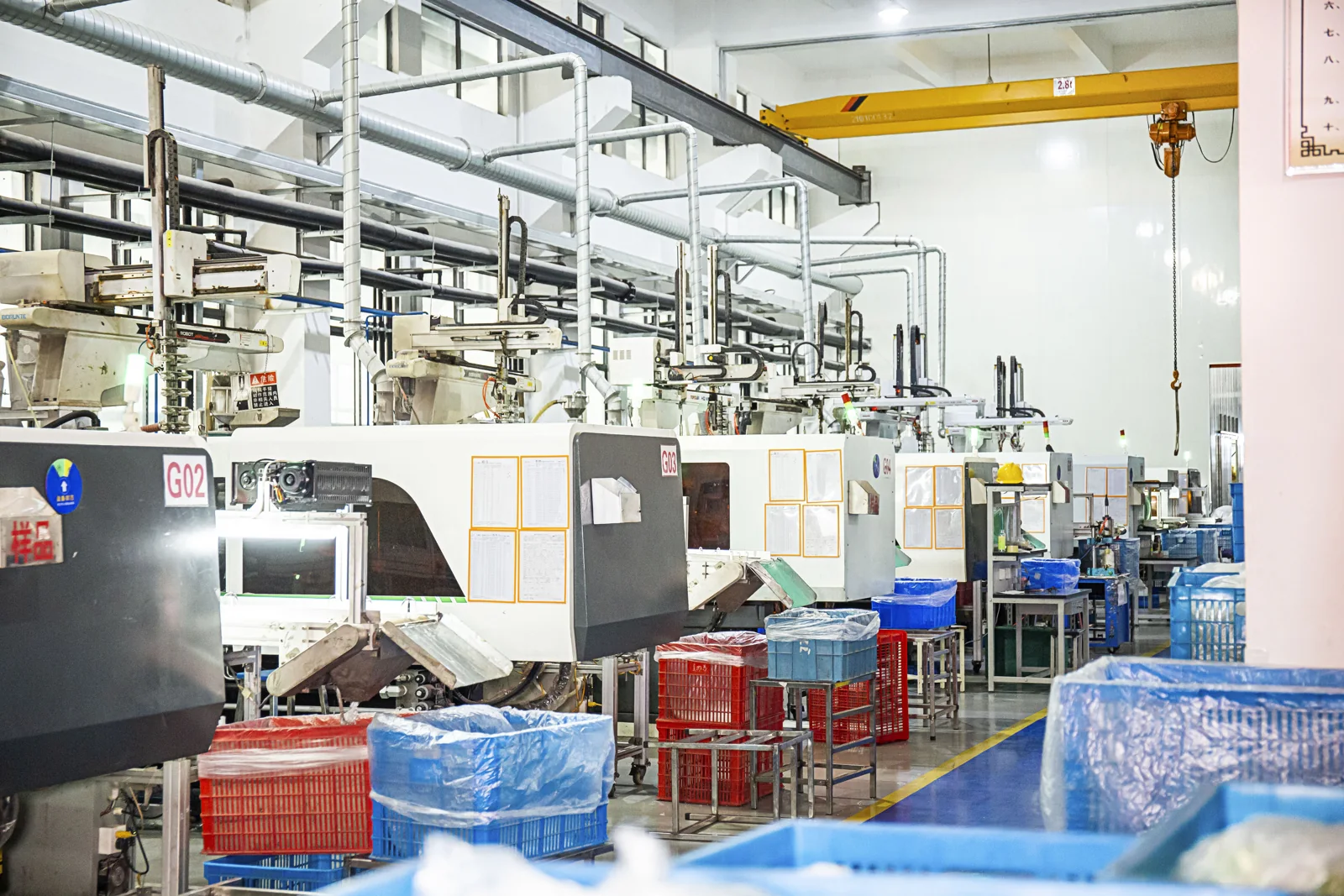
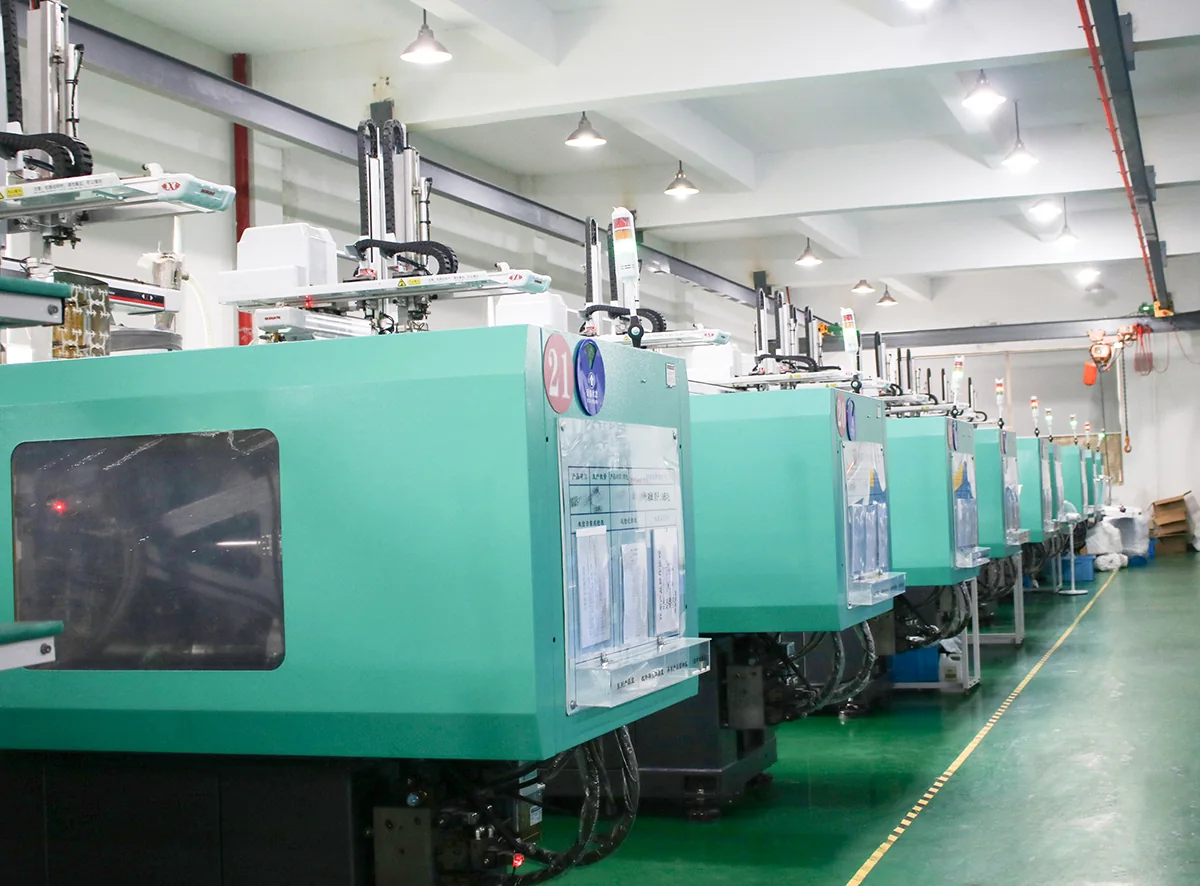
Photographed at Oulete
Inside the molding workshop
See the facility and visible operations behind a packaging enquiry. For your selected assembly, ask which steps apply and request the corresponding sample and inspection records.