Cosmetic packaging · Made for your brand
Cosmetic Tube Filling and Sealing: Supplier Handoff
Match cosmetic tubes to the filler: specify open-tail supply, construction, size parts, registration marks, seal area and the trial that approves the handoff.
Containers only — no compounding or filling.
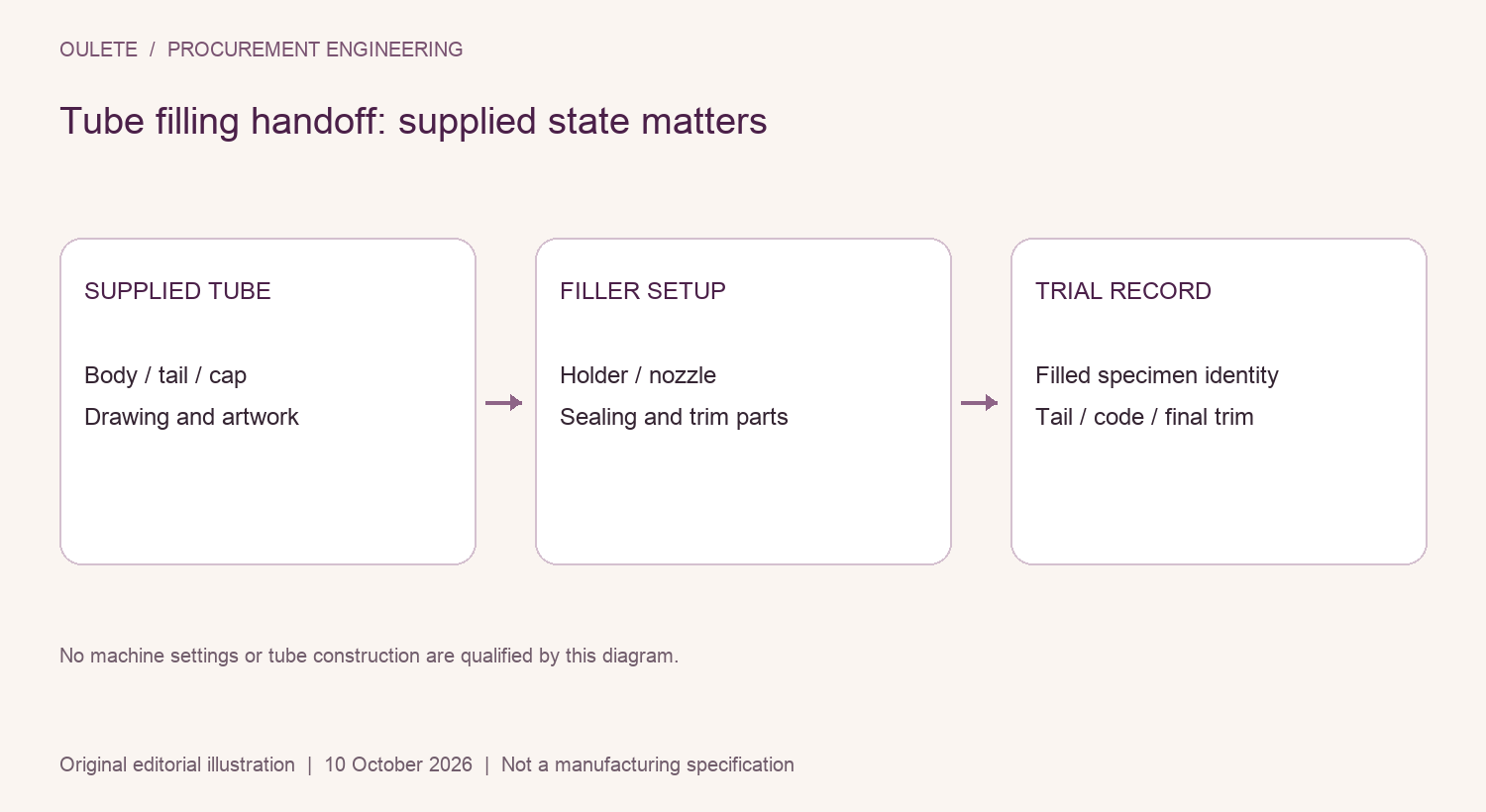
Tube filling handoff: supplied state matters showing supplied tube, filler setup, trial record
On this page · 13 sections
- Define what arrives at the cosmetic tube filling line
- Cosmetic tube filling and sealing: supply-state handoff
- Match tube construction to the actual sealing process
- Specify holders, registration marks and the finished tail
- Trace weak seals back through the filling station
- Approve a representative tube trial and divide responsibilities
- FAQ: tube supply, filling and tail sealing
- Should tubes arrive with the tail open or closed?
- Can the same machine seal plastic and aluminium tubes?
- Does a larger nominal capacity require new size parts?
- Can we omit a registration mark to simplify the artwork?
- Why can filling behaviour affect the tail seal?
- What proves that a tube is ready for the intended filler?
Cosmetic tube filling and sealing starts with the supplied tube state, matched machine parts, a controlled tail area and a trial using the actual formula.
A finished sample can conceal an unresolved filling route. The brand approves its appearance, the tube supplier assumes open-tail delivery, and the filler needs a particular holder and tail-sealing setup. This is an illustrative handoff risk, not an Oulete customer case. Record the delivered state and line configuration before approving decorated production.
Oulete coordinates tube sourcing around the construction and specialist supplier identified for the project. The filler owns the proposed filling and sealing process. The practical deliverable is a matched tube proposal, line-review inputs and a trial record, with each party's scope stated in the offer.
Define what arrives at the cosmetic tube filling line
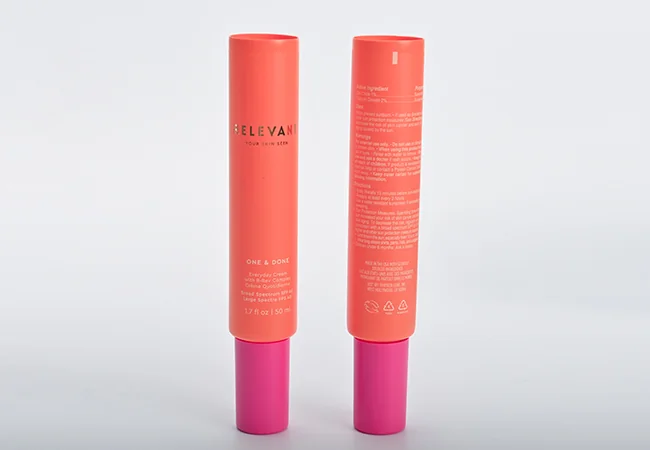
Oulete tube samples illustrate format and decoration. They do not prove the supplied tail state, line compatibility or seal performance.
The supply specification must state which end is open and which components are already fitted. An open-tail tube has its filling end left open for a defined filling and closing process. A decorated display sample with a closed tail can illustrate the intended appearance without representing the condition needed by the filler.
For a proposed tail-filled format, identify the body, shoulder, opening and cap as supplied. Confirm whether the dispensing opening has a membrane or other first-opening feature and when that feature is applied. A cap on the shoulder does not answer whether the opposite end arrives open, temporarily protected or permanently sealed.
A tail-closed supply is a different configuration. It needs an agreed filling route through the available opening and a closing sequence that suits the selected design. Do not assume the filler can simply use the dispensing orifice. Ask the filler to review the actual route, equipment access and required components before accepting that supply state.
Keep nominal content separate from the tube's geometry. The filler needs the relevant body dimensions, opening and finished-tail arrangement in addition to the target fill. The tube diameter discussion is a starting point; a capacity label alone does not establish holder fit, sealing access or sufficient space for the proposed filling operation.
The formula reference belongs in the same brief. Identify the actual trial material and any preparation required by the formula owner. A water-filled demonstration can answer limited setup questions, but it cannot reproduce every flow, stringing or contamination behaviour of the intended cream. Label what the demonstration does and does not establish.
Cosmetic tube filling and sealing: supply-state handoff
| Input | Tube supplier provides | Filler confirms |
|---|---|---|
| Body and construction | Exact tube reference, layer description and drawing revision | Fit with the intended holder and handling system |
| Supplied state | Open or closed tail, fitted cap and any protective or first-opening features | Available filling route and closing sequence |
| Fill requirement | Agreed geometric information for the selected tube | Actual formula, target fill and process access |
| Tail design | Proposed finished seal, trim and coding area | Installed sealing/trim capability and trial requirements |
| Artwork | Current decoration file and registration details where required | Detection, orientation and clearance on the actual line |
If the brand approves a closed-tail display sample while the filler expects open-tail supply, clarify the sample's purpose. Record the actual delivery state separately from the finished design.
The tube application guide covers face wash, sunscreen and hand-cream use. This handoff defines the selected line and delivered parts.
Match tube construction to the actual sealing process
Tube construction and installed sealing equipment must be reviewed together. A laminate tube uses a layered body construction; an aluminium barrier layer in a laminate does not make it equivalent to an all-aluminium tube. The supplier should identify the actual structure, product-contact layer and tail-forming requirements rather than relying on the broad word “aluminium.”
Norden's NM 602 product page lists plastic, laminate and aluminium tube applications alongside hot-air sealing or metal folding. That supports a practical distinction between routes. It does not mean every delivered machine includes every option, or that any tube can run using the settings from another material.
A hot-air sealing route uses the selected equipment to prepare a compatible tail area for closing. A metal-folding route forms the selected metal tail through the configured folding operation. The machine supplier and filler should identify which construction and installed parts they approve. This article does not prescribe an operating recipe or material-specific sealing window.
| Tube description to clarify | Process question for the filler | Information needed from the supplier |
|---|---|---|
| Extruded plastic body | Is the installed sealing arrangement suitable for this specific construction? | Resin/layer description, tail dimensions and process recommendations |
| Plastic barrier laminate | Can the line seal and trim this laminate as supplied? | Actual layer structure, seam and product-contact layer |
| Aluminium barrier laminate | Has the laminate been distinguished from an all-metal tube? | Laminate specification and recommended closing route |
| All-aluminium tube | Does the line have the appropriate folding configuration? | Tail preparation, coating and proposed fold requirements |
Use the ABL, PBL and mono-material comparison for material terminology. Then return to the exact supplier reference for the line review. The construction name is useful for shortlisting; it cannot replace the drawings, installed-tooling details and representative trial that establish the proposed combination.
Obtain trial conditions from the responsible filler and machine supplier. Temperature, dwell time, pressure and speed must belong to the selected construction and equipment. Keep the settings actually used with the recorded sample; competitor settings are not a production specification.
Specify holders, registration marks and the finished tail
Size parts are machine components configured for the selected tube and operation. The holder must support the actual body and cap/head geometry; the filler should identify the relevant parts by reference. A machine model describes the platform, while its installed size parts determine which proposal is being reviewed.
Norden's hot-air troubleshooting guide identifies tube diameter and ovality, holder fit, and matching sealing parts as review points. An overly loose or tight holder can disturb support or shape. The source is specific machinery guidance; it does not supply production tolerances for an Oulete tube or prove that a particular machine setup is acceptable.
Ovality describes departure from a circular cross-section. A round tube's nominal diameter does not fully describe that condition. For a deliberately oval format, the geometry and orientation have their own requirements. Ask the filler and tube supplier to agree the shape information, measurement approach and applicable limits for the actual handling system.
A registration mark is a printed reference that a detection system can use to orient decorated packaging. Where the line relies on such a mark, confirm its location, contrast, dimensions and relationship to the intended finished tail. The artwork team should use the filler's requirements, not place an attractive mark without a detection review.
The final tail can affect the front/back presentation and coding area. Specify the proposed seal orientation, trim profile and where the batch code will be applied. Identify artwork that must remain visible and areas reserved for processing. A decorative sample can show the intended result; a line trial needs to demonstrate that the selected equipment produces it on the actual tube.
Lisson's special-shaped tail product page illustrates a supplier-offered design feature. Ask who produces that profile and at which stage. For a comparable enquiry, the filler still needs the final geometry and applicable trim tools; a finished photo cannot establish the delivered tail state.
| Line interface to identify | Specific request for the filler |
|---|---|
| Tube infeed and holder | Box presentation, holder reference and fit of the actual cap/head and body |
| Orientation | Installed detection method, artwork registration requirement and finished-tail direction |
| Filling nozzle | Nozzle identity and suitability for the actual formula and available tube access |
| Hot-air route, if selected | Installed heating nozzle, cooling ring and their matched tube references |
| Fold or seal/trim route | Tooling identity, finished profile and applicable construction |
| Coding and discharge | Location, readable code and handling of the finished tail |
Norden's size-parts brochure connects holder selection to tube length, diameter and cap design, and identifies format-specific hot-air parts. It requests machine type and number for an enquiry. Those are useful handoff inputs, not proof that the buyer's machine has the listed configuration.
Trace weak seals back through the filling station
A weak tail seal should be investigated through the incoming tube, filling and closing operations. Raising the sealing setting is not a complete diagnosis. Preserve the failed samples and the conditions that produced them, then inspect the material and equipment interfaces before changing the process.
Norden's guidance also links sealing problems to a damaged or unsuitable filling nozzle, incorrect filling settings, and formula strings or splashes in the sealing area. Its review includes condition and sizing of hot-air components. Those mechanisms explain why the filler must investigate upstream operation as well as the closing station. No universal correction value is given here.
The sealing zone is the tail area needed for the selected closing process. Show it on the agreed tube/finished-tail drawing. The required clearance must come from the actual process review; a tube's nominal capacity is not permission to fill to the open end. Keep the proposed fill, geometry and sealing zone consistent before evaluating the result.
Observe the tube after filling and before closing when investigating product contamination. Record whether the formula is where the process expects it to be and whether material appears in the area required for closure. If a process change removes the symptom, record the changed condition and repeat the relevant review rather than assuming the same correction suits all formulas.
| Observed symptom | Questions to investigate before adjustment |
|---|---|
| Uneven or tilted final tail | Tube support, orientation, shape and installed trim parts |
| Formula in the tail area | Nozzle condition, withdrawal behaviour, fill quantity and actual formula flow |
| Closure variation during a run | Tube lot, incoming shape, machine state and recorded process changes |
| Acceptable appearance but leakage | Failure location, selected integrity method and the complete filled assembly |
| Sample run passes, production run differs | Whether material, formula, size parts or operating conditions changed |
Use the matrix to investigate rather than assign cause from appearance. If several factors changed together, preserve that uncertainty. A symptom disappearing after adjustment does not identify the original cause.
Distinguish the tail from the shoulder, dispensing opening and cap when recording leakage. A failed cap interface should not be recorded as a failed tail simply because product appears outside the tube. The filled-pack leak-testing guide supports defining the method, configuration and observation without inventing pressure or duration requirements.
Approve a representative tube trial and divide responsibilities
A representative line trial ties the tube reference, formula and installed equipment to the recorded result. Define the questions that the trial is intended to answer before it starts. A trial for holder fit may not include final decoration; a trial that approves artwork detection and the finished tail needs the relevant decorated configuration.
The tube supplier should identify the construction, supplied state and controlled drawings. The filler should identify the machine configuration, size parts and proposed process. The brand should identify the formula and required final presentation. These responsibilities meet at the approved sample and record; none should disappear behind a general statement that “the tube is suitable.”
| Proposed trial record | Information to preserve |
|---|---|
| Packaging identity | Tube, cap, supplied tail state, construction and drawing revision |
| Formula identity | Actual trial reference and agreed preparation conditions |
| Line configuration | Machine, installed size parts, sealing and trim route |
| Conditions used | Recorded filling and closing settings, changes and relevant handling |
| Results | Fit, orientation, fill, tail appearance, coding and agreed integrity assessment |
| Release decision | Deviations, limitations, accepted configuration and approval owners |
Retain identified samples at the stages needed to explain the result: incoming empty tube, filled tube before closing where safe and appropriate, and finished sealed/trimmed tube. Pair each with the lot and conditions recorded by the filler. This proposed sequence separates incoming geometry, tail contamination and the final seal without treating a finished photograph as a process record.
State sample deviations before assigning approval. Undecorated trial tubes may support a holder review but leave artwork detection unresolved. Substitute trial contents may support equipment setup but leave the intended formula's stringing behaviour unresolved. Release the scope demonstrated by the trial; keep the other questions open.
Oulete's MOQ is 2,000 units for plastic packaging and 5,000 for glass. For this plastic-tube enquiry, use the confirmed plastic MOQ and identify the offered construction and supplied scope. Tooling, trial responsibilities, decoration and any filler operations should appear in the commercial discussion without inventing an alternative minimum or claiming all work is performed in-house.
Use the hand-cream tube guide to define the desired format, then review whether a cap, shape or tail change affects the line trial.
Use the contract-manufacturer support page to send Oulete the formula type, intended fill, preferred tube construction, supplied-tail requirement, filler contact and available machine information. Include the desired final tail and artwork concept. A useful next response identifies candidate parts, missing line inputs and the sample work needed to confirm the supply, rather than promising process compatibility from an exterior photograph.
FAQ: tube supply, filling and tail sealing
Should tubes arrive with the tail open or closed?
The delivered tail state must match the agreed filling route. Open-tail tubes and tail-closed tubes are different supply configurations. Confirm the state and fitted components with the filler; a closed display sample may show only the intended finished appearance.
Can the same machine seal plastic and aluminium tubes?
A machine can support different constructions only through its appropriate installed configuration and approved process. Plastic or laminate sealing and all-metal folding require a specific review. A multi-material product description does not establish that every option is installed or interchangeable.
Does a larger nominal capacity require new size parts?
Size-part requirements depend on the actual tube geometry and equipment interfaces. Nominal capacity alone cannot establish compatibility. Ask the filler to review the body dimensions, shape, shoulder and tail against the installed holders and related parts.
Can we omit a registration mark to simplify the artwork?
A registration mark can be omitted only if the selected orientation process does not require it and the filler approves the arrangement. Resolve detection and orientation before artwork release. An exterior design preference cannot establish how the line will position the tube.
Why can filling behaviour affect the tail seal?
Filling can leave formula in the area required for closure, so nozzle condition and actual product flow belong in a sealing investigation. Review the evidence before changing settings. Keep the actual formula, tube and process references attached to the result.
What proves that a tube is ready for the intended filler?
A documented representative trial provides evidence for its recorded configuration and review scope. Identify the tube construction, supplied state, formula, installed parts, process and agreed results. A stock sample or completed trial for another configuration cannot substitute for that record.
Photographed at Oulete
From the sample room to packed containers
See the facility and visible operations behind a packaging enquiry. For your selected assembly, ask which steps apply and request the corresponding sample and inspection records.