Cosmetic packaging · Made for your brand
Cosmetic Packaging Documents: A Component-Level Review
Cosmetic packaging compliance documents support purchasing decisions when their material, component, revision and test scope match the assembly that will actually be supplied. A supplier sends a resin statement and a laboratory report…
Oulete-supplied component image. Identify the supplied assembly and review its actual material documents.
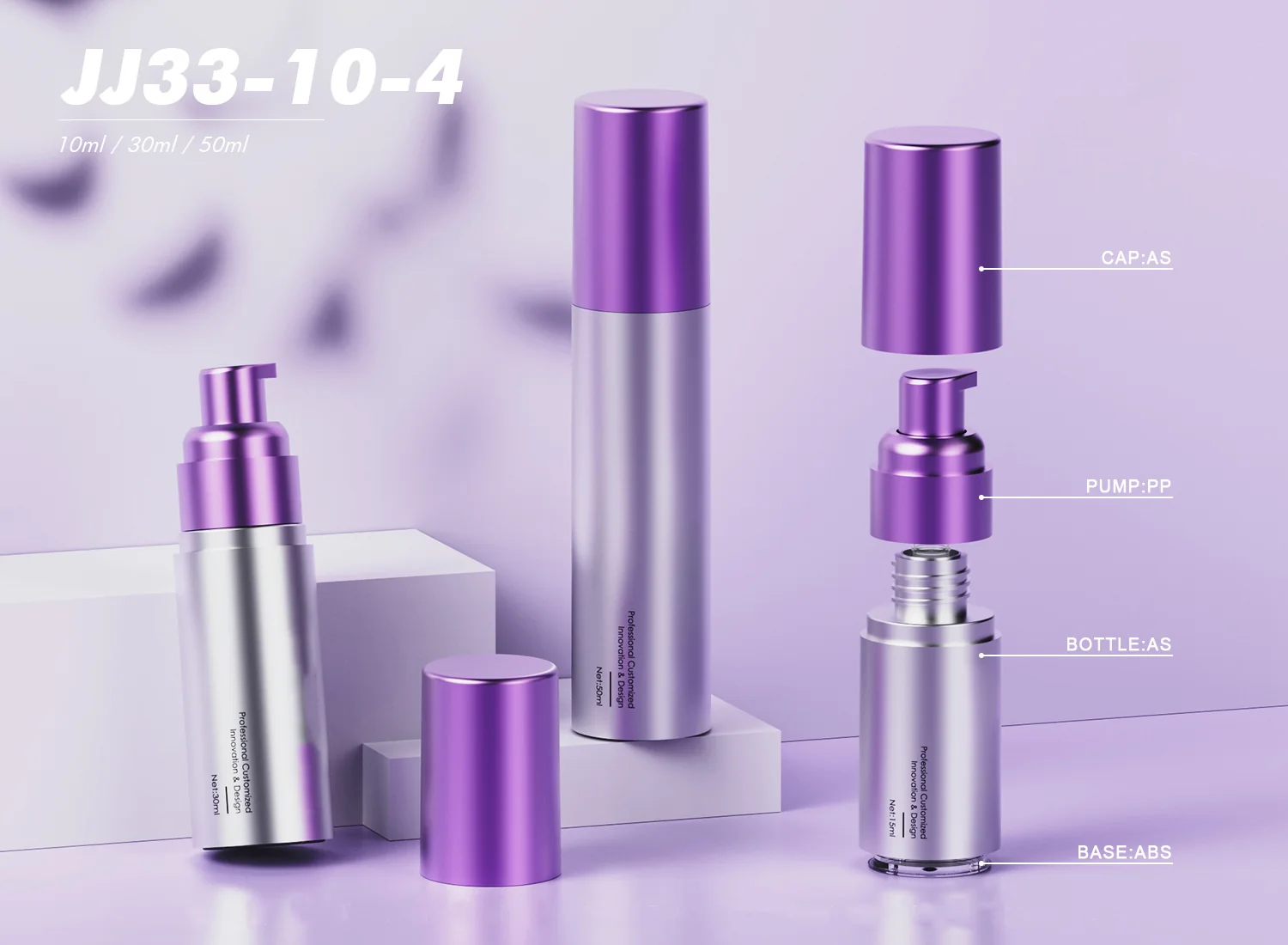
Purple cosmetic containers shown assembled and with separated cap and pump sections
On this page · 12 sections
- Identify the assembly before asking for certificates
- Match each document to the question it can answer
- Check REACH information at the relevant article level
- Read the tested specimen before accepting the result
- Build an Oulete compliance brief around the supplied assembly
- FAQ: cosmetic packaging compliance documents
- Does a resin declaration cover the finished decorated bottle?
- Is the REACH 0.1% threshold a universal ban?
- Can a test report for another colour be accepted?
- Who decides whether packaging information is sufficient for the EU cosmetic safety report?
- Should distributors send customers every supplier attachment?
- How does Oulete support a compliance-led packaging enquiry?
Cosmetic packaging compliance documents support purchasing decisions when their material, component, revision and test scope match the assembly that will actually be supplied.
A supplier sends a resin statement and a laboratory report. Your order specifies a coloured bottle, a decorated collar and a dispensing pump. The documents may be genuine, but the missing connection is whether they describe those ordered parts. Treat that situation as an evidence gap to resolve before release, rather than accepting the folder because it contains official-looking logos.
Oulete supports compliance-led cosmetic packaging projects, combining container selection, material and finish discussions, and the documentation requirements for your destination. This guide shows how to prepare that enquiry and connect the proposed assembly to the evidence your regulatory team needs.
Identify the assembly before asking for certificates
Oulete manufactures injection-moulded packaging and provides decoration options in Shangyu, Shaoxing. For a compliance-led enquiry, identify the container, closure and finish together. A statement for the body alone may leave the liner, dispensing path, coating or sourced component unresolved. Our manufacturing and sourcing scope should match the proposed assembly.
Build the review from the component material list. Give each supplied part a code or other controlled identifier. Record the drawing revision, material designation, colour reference and decoration specification. Where the supplier uses a proprietary grade, ask how that grade can be linked to the evidence without disclosing its entire formulation publicly.
A contact map is a record of which packaging surfaces meet the formula during filling, storage and intended use. Draw it from the assembled package, including the dispensing path. An outer cap that does not normally contact the formula should not silently replace an internal seal in the list sent to the safety assessor.
Oulete-supplied product imagery shows separate sections of a packaging assembly. Catalogue labels help identify questions; they are not declarations, test reports or confirmation of the materials in a particular order.
Use a component matrix before assembling the document folder. The entries below are review prompts, not findings about a specific Oulete model. Leave an unresolved field visibly unresolved; a material family is not a substitute for a traceable grade or an explanation of what the supplier can disclose.
| Purchased element | Identity to establish | Evidence connection to request | Question that remains separate |
|---|---|---|---|
| Bottle or refill vessel | Model, grade, colour and revision | Declaration covering the supplied material and finish | Suitability for the actual formula |
| Closure liner or seal | Part code and contact-side construction | Information covering that specific liner or seal | Performance under the agreed use conditions |
| Pump and dispensing path | Assembly revision and relevant internal parts | Coverage of the supplied contact components | Dose, priming and formula compatibility |
| Ink, coating or adhesive | Approved system and application location | Confirmation of inclusion or a clearly identified exclusion | Relevant interaction or transfer assessment |
| Decorative outer shell | Material and finish | Document scope for the ordered shell | Whether it belongs in the formula-contact assessment |
Set the intended market and the requested decision alongside the matrix. A distributor might need evidence for a retailer's procurement questionnaire; the brand's assessor might need information on potential packaging interactions. Those tasks can share documents, but their acceptance criteria differ. Ask what decision the recipient must make before promising a “complete compliance pack.”
Match each document to the question it can answer
A supplier declaration records a stated scope; a test report records observations under stated conditions. They are different forms of evidence. Neither should be judged by page count or letterhead alone. Read the issuer, subject, revision and limitations, then map the document to the component matrix before deciding whether it answers your request.
A technical data sheet describes a material or product through the issuer's stated properties and conditions. A safety data sheet supplies chemical hazard and handling information for its identified subject. Receiving either for a resin does not establish the composition or suitability of every subsequently moulded, assembled and decorated part.
The word “certificate” also needs a subject. A management-system certificate, a material certification and a laboratory report have different objects. Do not rename them in your customer folder. Keep the original document title, identify the issuing organisation and state exactly what it covers, rather than converting every attachment into a finished-packaging certificate.
| Evidence type | Useful purchasing question | Match needed | Unsupported conclusion to avoid |
|---|---|---|---|
| Resin technical sheet | What grade has been proposed? | Grade designation and document revision | The entire pump uses that resin |
| Supplier material declaration | What materials or specified substances are addressed? | Ordered part, finish, scope and issue date | Every market requirement has been evaluated |
| Laboratory report | What specimen was assessed and what was observed? | Sample identity, method, conditions and results | Every colour and formula has passed |
| Management-system certificate | Which organisation or site has the stated system scope? | Legal entity, site, validity and scope | The cosmetic product has been approved |
| Project compatibility record | What happened with the specified formula and pack? | Formula, assembly, protocol and conclusion | A different formulation is automatically suitable |
Confidential material information may require controlled access for the assessor. Agree that route with the supplier instead of replacing unavailable detail with a broader sales claim.
According to FDA's cosmetics authority overview, ordinary cosmetic products and ingredients do not require FDA premarket approval, apart from applicable colour additives. Consequently, a purchasing team should not treat a resin letter as evidence that FDA approved the finished cosmetic. Ask what the underlying document actually establishes.
Record a disposition for each attachment: accepted for an identified purpose, clarification required, not applicable, or superseded. An irrelevant report need not mean the supplier is unreliable; it means that report cannot close this particular requirement. Request clarification naming the missing component or scope.
Check REACH information at the relevant article level
REACH Article 33 communication is not the same as a blanket prohibition on Candidate List substances. According to ECHA's guidance on substances in articles, the communication requirement applies above 0.1% by weight in the relevant article. In complex objects, constituent items that remain articles retain that assessment basis.
The same guidance explains that business recipients should receive available information sufficient for safe use, including at least the substance name where the obligation applies. Do not take a result averaged across a complete bottle-and-pump assembly as proof that every constituent article is below the threshold. Identify the assessment basis used by the issuer.
A declaration reading “REACH compliant” leaves essential procurement questions open. Which product identifiers are covered? Which Candidate List version or assessment date was used? Does it include colourants and decoration? What information supports the conclusion? A clear, limited answer is more useful than an expansive statement that cannot be tied to your order.
| Clarification to request | Why it affects the review | Record to retain |
|---|---|---|
| Identify the constituent articles assessed | Prevents substituting an assembly-wide average | Component scope or mapped supplier identifiers |
| State the Candidate List assessment basis | Makes the substance review traceable | List version/date and declaration issue date |
| Explain colour and finish coverage | Connects the statement to the purchased configuration | Included systems or explicit exclusions |
| Identify the basis of the information | Distinguishes supplier knowledge from measured results | Supporting reference and any limitations |
| Address other requested REACH requirements separately | A Candidate List answer is not a review of all restrictions | Requirement-specific response from the reviewer |
Do not assume every material layer or chemical mixture is a separate article. The REACH classification needs to follow the relevant definitions and the actual component construction. Purchasing can supply the exploded view and supplier information; the competent reviewer should resolve an uncertain classification. The matrix is an information tool, not a legal determination.
A reissue date does not establish a new substance assessment. Record the actual list and material review basis, and reconsider the conclusion when the specified product changes.
Read the tested specimen before accepting the result
A laboratory result applies to its described specimen and test conditions. An undecorated bottle, coloured moulded body and finished pump assembly are not interchangeable specimen descriptions. Look for sample photographs, sample codes or another reliable identification method, then compare them with the approved purchased configuration before reading a “pass” result as project evidence.
In the European Commission's cosmetic safety-report guidelines, packaging characteristics, including purity and stability, contribute to the assessment of the cosmetic product. Section 3.4.3 discusses interactions and potential migration under relevant conditions. Material information therefore supports the assessor's work; it does not replace a conclusion on the finished formula and packaging.
That guidance distinguishes hazard information from the safety assessor's evaluation of risk. It also explains that cosmetic formulation-packaging interaction studies require relevant conditions, rather than prescribing a universal procedure for every cosmetic. Ask the assessor what information or testing is appropriate to this formulation, container and intended use.
A report showing that a named substance was not detected needs its analytical scope understood. “Not detected” refers to the method's detection capability and reported conditions. It should not be rewritten as “contains no chemicals” or extended to substances the laboratory did not assess. Retain the actual result language in the technical file.
| Report field | Comparison with the order | Action when the connection is missing |
|---|---|---|
| Sample identifier and photograph | Ordered component and finish | Request a supplier mapping or correctly identified specimen |
| Test scope | Requested substances or properties | Ask the reviewer whether the scope answers the requirement |
| Exposure conditions | Relevant formula and intended use | Define a justified project assessment with the assessor |
| Results and reporting limits | Exact conclusion being proposed | Preserve qualifications; avoid stronger marketing wording |
| Report version and issuing laboratory | Complete, authentic document | Resolve missing pages or amendments before acceptance |
Consider an explicitly hypothetical mismatch: the folder contains a report for a clear bottle, while the purchase order names a coloured bottle with a coated collar. The proper question is not whether clear bottles are generally safe. Ask which added materials are covered, what remains unassessed and whether the reviewer requires further evidence.
Keep mechanical and chemical questions connected but separate. A declaration does not establish leak performance; a leak test does not establish chemical suitability. Use the formula-and-packaging compatibility plan to organise the project work, and identify which conclusion belongs to the supplier, filler or brand's safety assessor.
Build an Oulete compliance brief around the supplied assembly
Oulete can support your packaging compliance project from model selection through the material, decoration and document discussions. Start with a target-market requirement and a defined product, so the response can address the actual assembly. Keep document availability, any additional assessment work and the buyer's release decision explicit in the project scope.
Our existing range includes ZK airless bottles, TY thick-wall bottles and jars. If an existing model fits your brief, discuss its material, colour and decoration before developing new geometry. Screen printing, hot stamping, spray coating and decorative plating are available routes to discuss; the selected material and part determine the appropriate sample and evidence scope.
For a refill project, Oulete has an existing glass jar option with a removable refill and magnetic lid. Specify the refill vessel, sealing interface and decorated outer jar separately in the enquiry. The premium opening system is a product option; the actual contact materials and formulation assessment still need to match the chosen assembly.
Use this enquiry record to put the technical and commercial questions into the same discussion. It is a proposed project brief, not a record of completed tests or supplied certificates. Assign the buyer's reviewer and identify which unresolved item must be closed before samples, production or filling can proceed.
| Brief for Oulete | What to include | Decision to agree |
|---|---|---|
| Model and application | Catalogue reference or concept, formula type and fill | Existing assembly or development route |
| Market and document requirement | Destination and the reviewer's requested evidence | Document scope, availability and remaining work |
| Component supply | Body, refill, closure, liner and dispenser | Manufacturing or sourcing responsibility for each part |
| Finish and sample | Colour, artwork and surface-treatment reference | Which decorated configuration the sample represents |
| Order and release | Quantity, assembly revision and decision owner | Quotation inclusions and stage-specific approval |
Oulete's confirmed MOQ is 2,000 for plastic packaging and 5,000 for glass packaging. Share your quantity with the model and compliance brief. Ask the quotation to identify the supplied components, decoration and requested documentation, plus any separately agreed assessment work. Quantity and document coverage are different parts of the same purchasing decision.
Approve the decorated reference together with the relevant documents and component revision. On reorder, use the change-control record to review material, finish or source changes before carrying forward earlier acceptance. The brand's responsible person and assessor retain their roles in the finished cosmetic's market release.
Use our material-declaration scope guide to prepare the request, then send Oulete the assembly and target-market brief. Include the specific questions your assessor or customer needs answered. That creates a purchasing discussion about a deliverable pack and its evidence, with clear sample and approval steps.
FAQ: cosmetic packaging compliance documents
Does a resin declaration cover the finished decorated bottle?
Only if its stated scope and supporting information justify that connection. A resin statement identifies its subject; colourants, decoration and other supplied components may fall outside it. Ask for a documented mapping to the purchased bottle configuration, plus clarification of additions or exclusions. Do not infer finished-pack coverage from the resin name alone.
Is the REACH 0.1% threshold a universal ban?
No. In this context it triggers Candidate List information duties under Article 33 when exceeded in the relevant article. Other restrictions and obligations require their own review. A statement addressing that communication threshold is not a complete legal assessment of every substance or every intended market.
Can a test report for another colour be accepted?
The reviewer must decide whether the report and additional information cover the ordered colour and finish. Similar appearance or the same bottle shape is insufficient justification by itself. Request the tested specimen identity, the added-material scope and a documented explanation before accepting the report for a different configuration.
Who decides whether packaging information is sufficient for the EU cosmetic safety report?
The brand's responsible person must arrange the required safety assessment, with the qualified safety assessor evaluating the relevant evidence. Procurement and the supplier provide traceable information on the actual assembly. Their document exchange supports that assessment; it does not independently establish that the finished cosmetic is safe or ready for market.
Should distributors send customers every supplier attachment?
Send a controlled set that addresses the customer's request and respects confidentiality. Keep original titles, versions and limitations, identify which parts each document covers, and distinguish open items from accepted evidence. A large unfiltered folder can create unsupported impressions of coverage and make later revisions difficult to manage.
How does Oulete support a compliance-led packaging enquiry?
We support the packaging project through model, material, finish and document discussions. Send the assembly or concept, formula type, target markets and your reviewer's requirements. MOQ is 2,000 for plastic and 5,000 for glass. Agree the actual component evidence, sample scope and release steps in the project response.
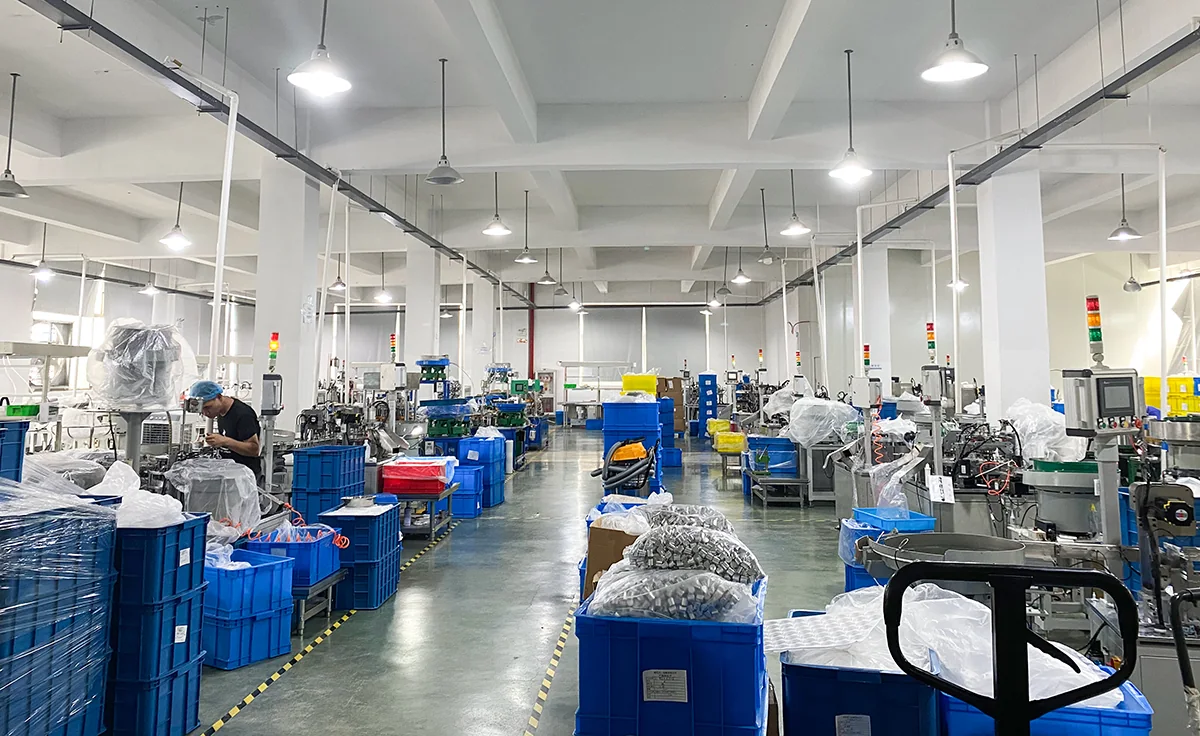
Photographed at Oulete
Assembly workstations in the factory
See the facility and visible operations behind a packaging enquiry. For your selected assembly, ask which steps apply and request the corresponding sample and inspection records.