Cosmetic packaging · Made for your brand
Cosmetic Formula Viscosity: Selecting the Right Pump
Choose a cosmetic pump using controlled viscosity data, flow behavior and identified assemblies. Prepare an Oulete sample request for the actual formula.
Containers only — no compounding or filling.
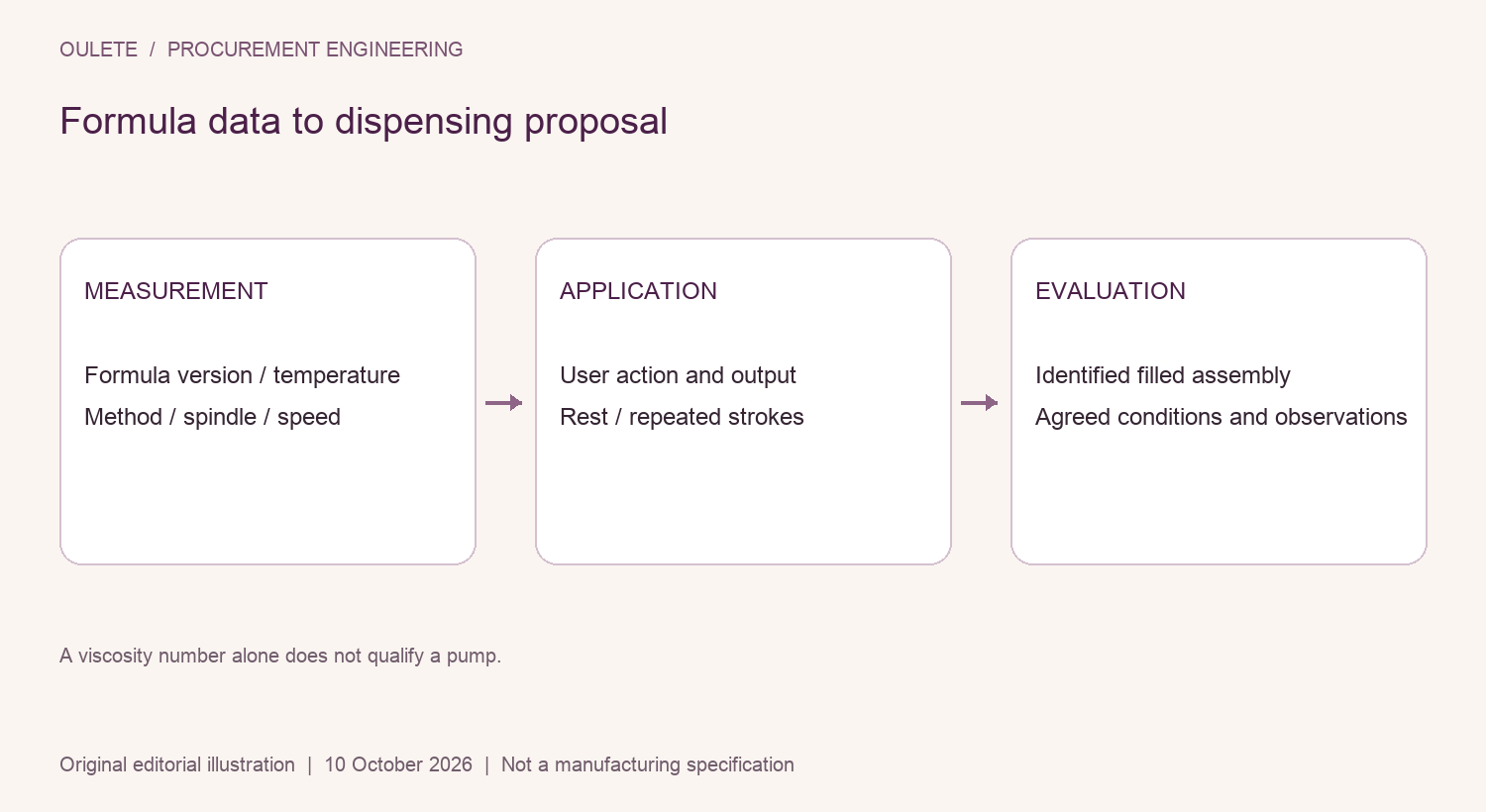
Formula data to dispensing proposal showing measurement, application, evaluation
On this page · 13 sections
- A viscosity report needs its measurement conditions
- Flow behavior changes what the pump must do
- Cosmetic formula viscosity pump selection: decision table
- Specify the dispensing action before selecting the body
- Compare complete samples at the same stage
- Build an Oulete proposal around the missing decisions
- Frequently asked questions
- Can I select a cosmetic pump from a single viscosity number?
- Does an airless bottle automatically work for a thick cream?
- What should I send if my laboratory has no flow curve?
- Why can the same formula dispense differently after a pause?
- Should we change the formula or change the pump first?
- What MOQ should an Oulete enquiry use?
Cosmetic formula viscosity pump selection starts with a measurement method, an intended dose and an identified dispensing assembly. A viscosity number alone cannot establish that a pump will prime, recover between strokes or dispense acceptably after storage.
Choose a cosmetic pump using controlled rheology data, the required dispensing action and formula-filled samples of the exact proposed bottle and dispensing assembly.
A buyer may describe a serum as “thick” while the laboratory reports a low reading after mixing. Both observations can be valid under different conditions. The useful question is how the formula behaves when the customer first presses the actuator, repeats a stroke and returns to the bottle after a pause. The selection brief should describe those actions before asking for a pump recommendation.
A viscosity report needs its measurement conditions
Viscosity is a fluid's resistance to flow under specified measurement conditions. For a procurement decision, the conditions belong beside the result. A supplier receiving only “viscosity approved” cannot tell whether that result represents the formulation at rest, after mixing or at the temperature expected during use.
Brookfield's official FAQ identifies spindle, speed, temperature, container and instrument conditions as relevant to repeatable readings. The buyer does not need to prescribe unfamiliar laboratory settings. Ask the formulation laboratory to provide its existing controlled method, rather than changing methods to obtain a more convenient number.
Use the same formula reference across the laboratory report and sample request. Record whether the tested material is a development sample or the proposed production formulation. A pump trial with an earlier base can still inform development, but it should remain labelled that way. It should not silently approve a later thickener system, fragrance addition or manufacturing change.
A useful report identifies instrument and measurement geometry, test temperature, speed or shear conditions, sample preparation, time of reading and the units reported. Where the laboratory records several readings, retain the sequence. A single rounded average may hide the change that matters when a pump must restart after the contents have rested.
Do not ask a packaging supplier to convert a descriptive texture into a certified viscosity range. “Gel serum”, “rich cream” and “light lotion” help communicate the intended experience, but they do not identify a measurement. Supply both the descriptive category and available data. If data are unavailable, state that openly and discuss what the formulation team can provide before narrowing the assembly.
Flow behavior changes what the pump must do
Rheology is the study of how materials flow and deform under applied forces. It extends the buying discussion beyond one viscosity reading. A formula can behave differently during a first stroke, repeated dispensing and a return to use after storage, so these actions should be included in the proposed sample review.
Anton Paar's cosmetics rheology reference explains flow curves and thixotropic recovery. In a thixotropic material, viscosity changes with sustained shear and subsequent recovery. This is a reason to ask the laboratory about its findings, rather than assuming a continuously mixed sample represents a bottle reopened after a pause.
A flow curve records behavior across defined shear conditions. Ask whether the available curve describes the current formula and whether its test conditions answer the development team's question. It is supporting evidence for discussion with a dispenser supplier, not an automatic calculation of the force a consumer will need to press a particular actuator.
A yield stress describes the stress associated with the onset of flow under an identified method. If the formulation team considers it relevant, retain that result and method with the brief. Do not substitute a supplier's informal “maximum thickness” for the laboratory's explanation. The dispensing team still needs to evaluate the candidate assembly with actual contents.
The same discipline applies to particles, suspended effects and entrained air. Ask the formulator to disclose relevant features through the agreed confidential exchange. The packaging supplier should explain what information it needs about the formula pathway and propose an appropriate review. A clear formula description helps avoid trials in which an unsuitable outlet is mistaken for a general viscosity problem.
Cosmetic formula viscosity pump selection: decision table
| Information available | Procurement decision it supports | What it does not establish | Next useful request |
|---|---|---|---|
| One viscosity reading with a controlled method | A reproducible starting description | Pump suitability across all use conditions | Candidate assembly and proposed filled-sample review |
| Readings across defined shear conditions | Discussion of flow during changing use conditions | Actuator force or output for an untested pack | Dispenser supplier's interpretation and sample proposal |
| Time-dependent recovery information | Choice of pause and restart observations | A universal restart acceptance limit | Agreed user sequence and recorded results |
| Relevant temperature observations | Candidate comparison under identified conditions | Performance at every transport or use temperature | Brand-approved trial conditions for the intended market |
| Formula with particles or suspended effects | Review of the intended product pathway | That any large outlet or airless pack will work | Component information and a representative formula trial |
Specify the dispensing action before selecting the body
A dispensing brief connects the formula description to what the customer must receive from a complete pack. Define the target amount, where the dose should land, whether one full stroke is expected and how the user is likely to hold the container. These requirements give a pump proposal something concrete to answer.
Treatment, lotion and airless descriptions are useful categories, but category names are not interchangeable specifications. An atmospheric dispenser and a piston airless assembly present different systems to evaluate. The supplier should identify the proposed dispenser, actuator, outlet, attachment and contents-contact components. A polished bottle photograph does not settle those choices.
A product-specific example appears on Aptar's EuroMist Cardinal page. Aptar describes a low-output pump for high-viscosity formulations and recommends compatibility testing. That is a named supplier proposal, not a universal viscosity limit or an Oulete product specification. It illustrates why a pump reference is more useful than a broad “for serum” label.
Ask the supplier to state which claimed dose applies to the proposed configuration and how that dose would be evaluated with the formula. If the brand specifies mass and the dispenser specification uses volume, keep both units explicit. The separate pump-output measurement guide addresses that conversion; this selection decision concerns whether the proposed dispensing action is suitable.
Outlet presentation deserves its own discussion. A controlled dot, an elongated ribbon and a spray are different intended experiences. Do not change the actuator only for appearance without asking whether the product pathway also changes. The opening, internal passage and return behavior should be reviewed as part of the selected assembly, with drawings or component references where available.
For a dropper presentation, use the actual formula and a matched bulb, pipette and bottle proposal. The Oulete 30 ml dropper selection identifies catalogue body references, but a body size does not establish aspiration, release or dispensing consistency. Keep the dropper option in the comparison only if its intended user action fits the product.
Compare complete samples at the same stage
A meaningful pump comparison uses identified assemblies, the same controlled formula reference and an agreed observation sequence. Comparing an empty decorated bottle with a filled engineering sample confuses appearance approval with dispensing evidence. Each sample should carry its purpose, configuration and the decision it is intended to support.
Discuss the sequence with the brand, formulator, filler and component supplier. The useful observations include first-use priming, full stroke, actuator recovery, consecutive use, pause and restart, and dispensing as the container is used. These are review topics. The parties must agree the conditions, sample scope and acceptance criteria appropriate to the project.
Record both an observation and its location. “Difficult dispensing” is incomplete. Note whether the user could not depress the actuator, the actuator did not return as expected, material reached the outlet inconsistently or the desired application pattern was not achieved. A photograph or short recording can communicate the action, but it should reference the same sample identifier as the written record.
Separate a rheology question from a physical assembly question. A collar that is not fitted as proposed, an unresolved fill process or a changed internal part can complicate interpretation. Ask the supplier to confirm the sample construction before deciding the formula is too viscous. The sample should be inspected against the component list rather than judged from its outer shape.
Chemical compatibility remains a parallel review. A dispensing result does not establish that materials remain suitable over the product's intended life. The compatibility trial guide provides a separate framework for that decision. Keep the findings connected through the same configuration and formula references, while retaining distinct approval records.
If a candidate is rejected, preserve the reason. A statement such as “restart did not meet the agreed user action after the defined pause” gives the supplier a direction for the next proposal. “Bad pump” encourages a random substitution. Require any replacement reference to be identified before repeating the relevant observations.
Build an Oulete proposal around the missing decisions
Oulete's proposal should connect an identified packaging selection to the actual formula, dispensing requirements and sample scope. Send the preferred appearance alongside the measurement report, rather than making the photograph the only instruction. State which information is available and which decisions need supplier input.
For an airless shortlist, ZK29 provides named catalogue variants and nominal capacities to start that discussion. Request the current complete assembly for the selected code and size. Its family name does not establish a viscosity range, measured output or successful use with the buyer's formula.
Oulete's confirmed plastic-packaging MOQ is 2,000 pieces; the glass-packaging MOQ is 5,000. Treat those figures as the starting commercial boundary. The quotation should identify quantities by configuration, colour and artwork, and clarify the proposed component and sample scope. Do not interpret a material MOQ as proof that a custom pump development is included.
A controlled enquiry can remain concise: identify the formula reference, attach the existing measurement method, describe the intended dose and user action, name the selected body and request the dispenser proposal. Ask which additional information is required before samples can represent the intended order. The project brief is the route for that exchange.
There is no need to share a full confidential formula in a general website field. State the product category and available technical information, then arrange the appropriate controlled exchange. The formulator should determine which details can be disclosed and which technical questions require direct discussion with the supplier's project team.
The purchasing decision should end with an identified candidate and recorded open points. It may be ready for a dispensing trial while material review or artwork remains pending. Naming those stages allows the project to move forward without converting a preliminary pump recommendation into production approval.
Frequently asked questions
Can I select a cosmetic pump from a single viscosity number?
A single viscosity number is insufficient to approve a cosmetic pump. Retain the measurement conditions and formula identity, then evaluate the proposed complete assembly against the intended dispensing action. The reading helps shortlist candidates; it does not prove priming, restart or use behavior for a particular pack.
Does an airless bottle automatically work for a thick cream?
An airless category name does not establish suitability for a thick cream. Request the identified dispenser and complete assembly for the actual formula. The proposal should explain its intended application, while filled samples provide evidence for the brand's agreed dispensing requirements and separate compatibility review.
What should I send if my laboratory has no flow curve?
Send the laboratory information that actually exists and identify the missing data. A controlled single-point method, formula category and clear intended user action are more useful than an invented curve. Ask the formulation and dispensing teams whether further measurements are needed before narrowing the candidate assembly.
Why can the same formula dispense differently after a pause?
A formula's time-dependent behavior can make a pause relevant to the dispensing review. Laboratory evidence and filled-sample observations should be considered together. Record the defined pause and restart action, and check sample construction before attributing every difference to viscosity or choosing a replacement pump.
Should we change the formula or change the pump first?
The formulation and dispensing teams should interpret the identified trial result before choosing a change. Determine which requirement was not met and confirm the sample configuration. Either change creates a new proposal that needs appropriate review; changing both at once can make the result difficult to interpret.
What MOQ should an Oulete enquiry use?
An Oulete enquiry should start from 2,000 pieces for plastic packaging or 5,000 for glass packaging. List the quantity against the exact configuration, colour and artwork. Ask the quotation to clarify dispenser selection, development work and sample scope rather than assuming the packaging MOQ covers every customization.
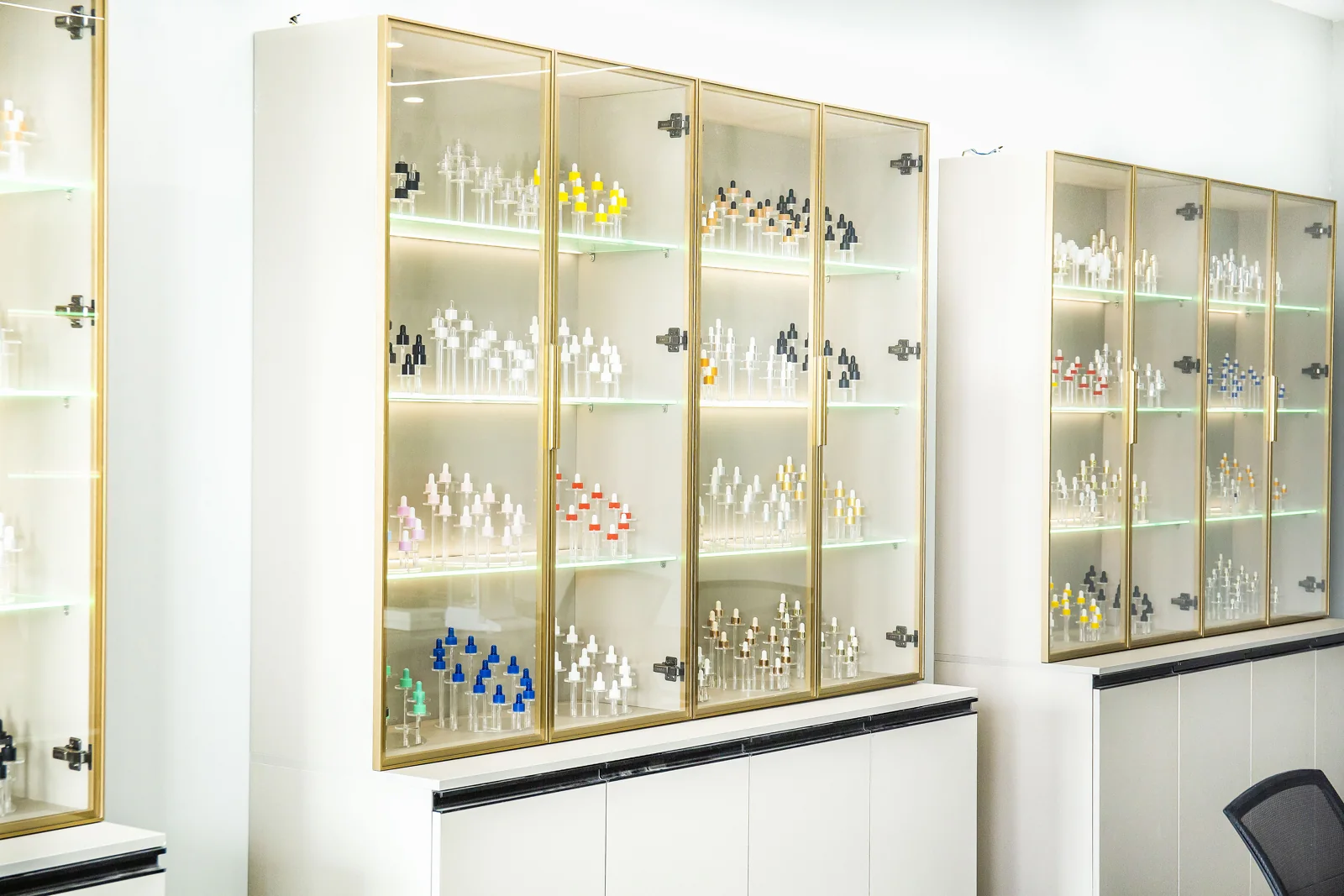
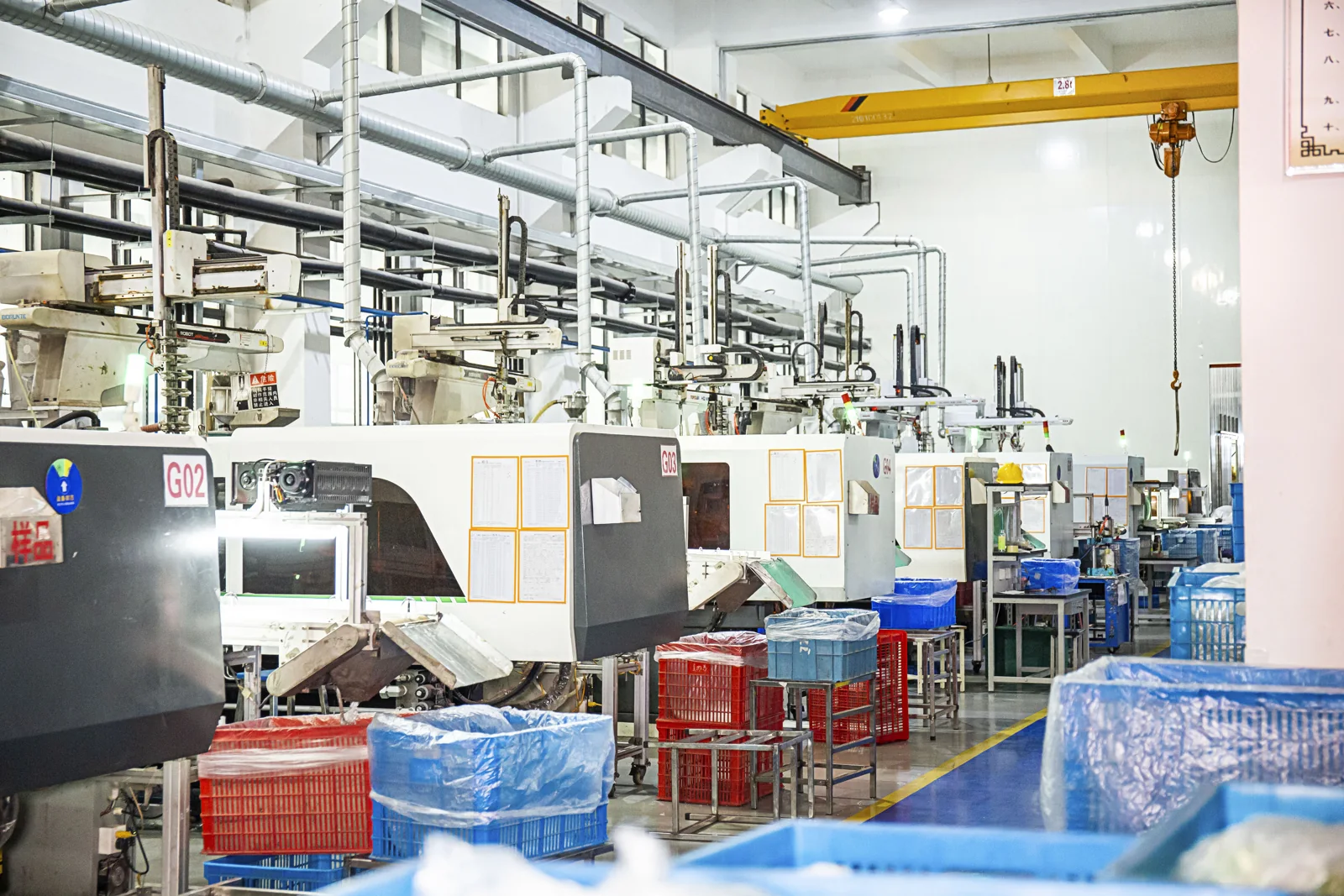
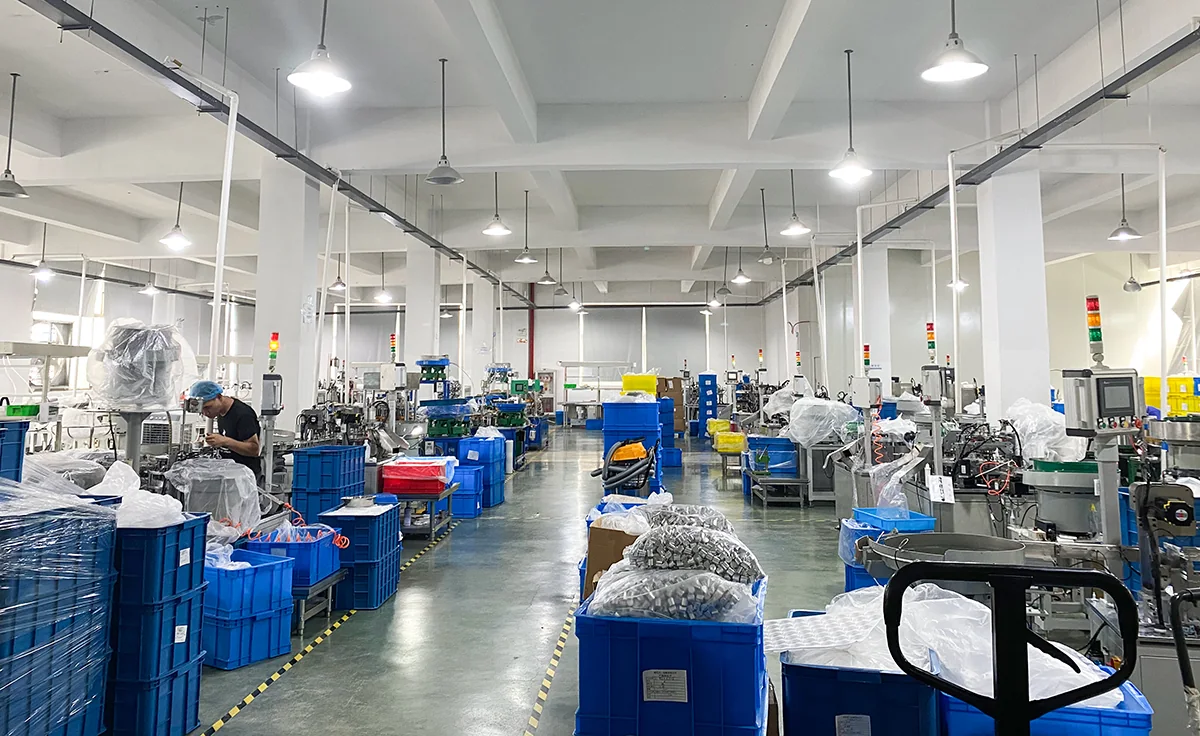
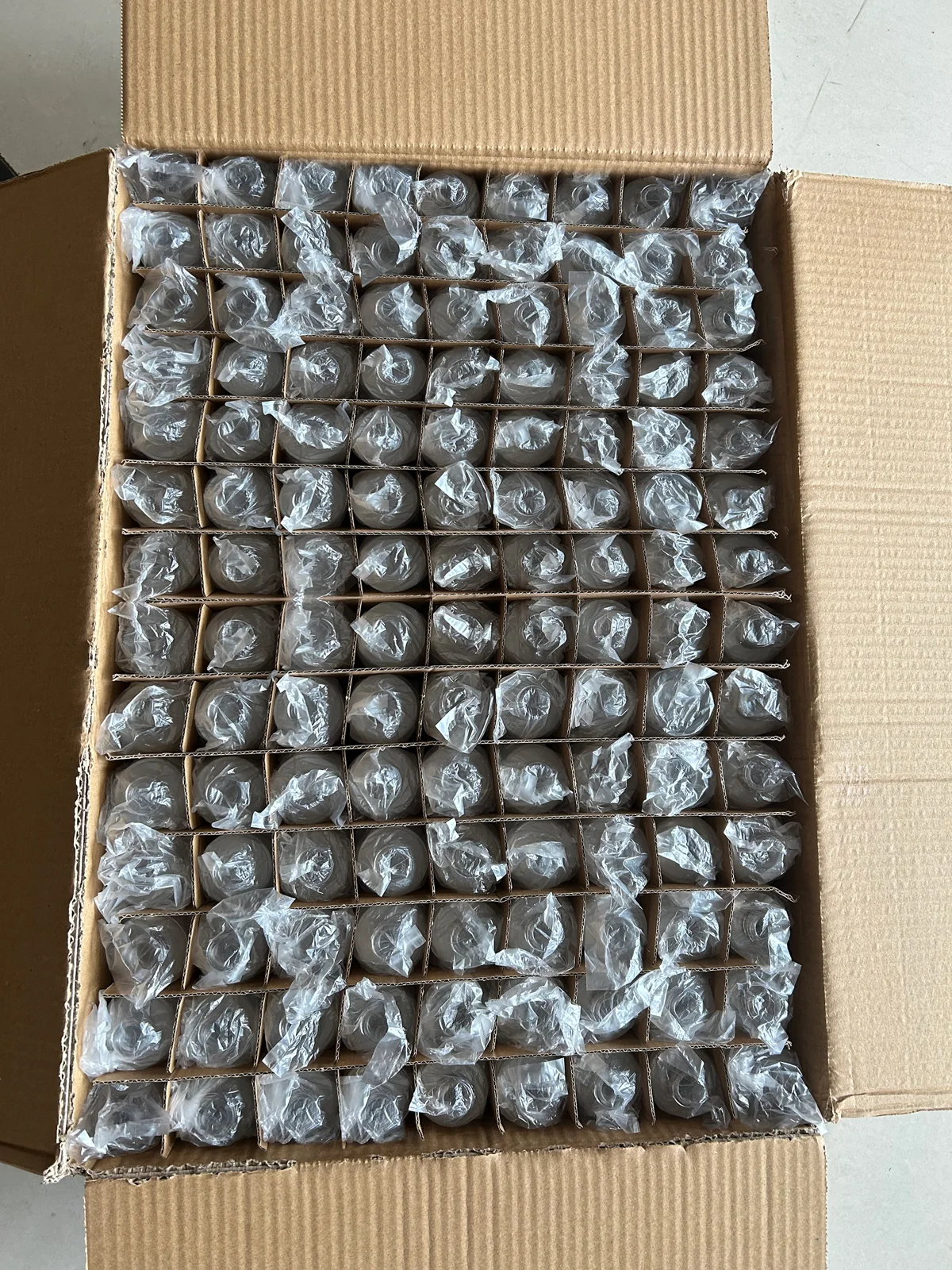
Photographed at Oulete
From the sample room to packed containers
See the facility and visible operations behind a packaging enquiry. For your selected assembly, ask which steps apply and request the corresponding sample and inspection records.