Cosmetic packaging · Made for your brand
Is ISO 22715 Mandatory? How Cosmetic Packaging Standards Relate to EU, US and China Rules
Understand ISO 22715 vs ISO 22716, mandatory EU, US and China cosmetic labelling rules, and the bottle-and-carton evidence to approve before printing.
Containers only — no compounding or filling.

Cosmetic packaging bottle and dispenser samples displayed in the Oulete showroom
On this page · 7 sections
- What ISO 22715 covers—and why it is not ISO 22716
- EU: approve the finished cosmetic against the Cosmetics Regulation
- US: check the retail panels and the separate MoCRA contact requirement
- China: an ISO reference does not replace Chinese labelling requirements
- One 50 mL bottle, three artwork versions: a purchasing example
- Read the scope of a supplier certificate before using it
- Make the purchase approval specific enough to use
ISO 22715 is voluntary in itself. It is not a stand-alone licence to sell cosmetics in the EU, US or China. It addresses cosmetic packaging and labelling. The destination market's laws still determine the finished product's obligations; a customer may also make the standard part of a purchasing specification. Those are different reasons for a requirement to apply. ISO explains the voluntary status of its standards.
For a skincare brand buying bottles, the useful question is therefore more specific than “Is the factory ISO compliant?” Ask which standard, which activity, which package version and which market requirement the evidence actually covers. A certificate or approved empty-bottle sample cannot, on its own, approve the formula, label text and finished retail pack.
What ISO 22715 covers—and why it is not ISO 22716
ISO 22715:2006 addresses cosmetic packaging and labelling for products sold or distributed free. ISO's catalogue lists the 2006 edition as current, following confirmation in 2022. That confirmation did not create an “ISO 22715:2022” edition.
ISO 22716:2007 addresses good manufacturing practice for cosmetic production, control, storage and shipment. A reference to this manufacturing standard does not answer whether a particular bottle-and-carton label carries the correct market information.
Keep the request attached to the activity. A cosmetic manufacturer's GMP documentation, a packaging supplier's dimensional drawing and the brand's approved ingredient declaration answer different questions. Substituting one for another leaves a gap even when every document looks professional.
| Buyer question | What controls the answer? | What remains to be checked? |
|---|---|---|
| “Must this information appear on our retail pack?” | The applicable market's law and any mandatory standards it invokes. | Product category, market, pack format, language and any permitted exception. |
| “Did our customer specify ISO 22715?” | The actual purchase specification or quality agreement. | The edition, agreed scope, acceptance evidence and any conflicting local rule. |
| “Does this supplier document approve our artwork?” | The document's actual subject and the approval it records. | Whether it covers this container, formula, market and artwork revision. A general statement does not establish that connection. |
A voluntary international standard can become a contractual requirement when the parties adopt it. It can also support regulation where legislation references it. Neither route makes a broad “ISO compliant” statement a substitute for reading the applicable requirement.
EU: approve the finished cosmetic against the Cosmetics Regulation
For the EU, the starting point is Regulation (EC) No 1223/2009. Article 19 generally requires information on both the container and packaging, with specific exceptions. For example, ingredients may appear on the packaging alone; the responsible person's details and other required fields need their own placement review. An outer box does not automatically remove bottle-level duties.
GMP is a separate issue. Article 8 requires it and provides a presumption of compliance through relevant harmonised standards. The published cosmetics GMP reference is EN ISO 22716:2007. This is not a blanket legal requirement to present an ISO 22715 certificate.
The EU responsible person remains central to product compliance. Before printing, obtain approved market text and a bottle/carton allocation. For the formula-specific ingredient and space decisions, use our separate EU fragrance-allergen artwork guide.
US: check the retail panels and the separate MoCRA contact requirement
For a US retail cosmetic, review the FD&C Act, FPLA and FDA's cosmetic labelling rules in 21 CFR Part 701. Product identity and net quantity belong on the principal display panel of the outer retail package. Ingredient declaration generally belongs on that retail package; without a carton, the bottle serves that role. Exceptions require their own review.
Section 701.12 requires the relevant manufacturer, packer or distributor's name and place of business. Ingredient naming follows section 701.3; “use INCI everywhere” is not an adequate US naming instruction.
Separately, MoCRA's label-contact provision, 21 USC 364e(a), requires a domestic address, domestic phone number or electronic contact information through which the responsible person can receive adverse-event reports. These are alternatives, not a requirement to print all three. This contact route does not replace the business identity/address statement.
A label carrying an ISO reference still needs these US-specific decisions. FDA's labelling guide helps distinguish the outer retail pack from the immediate container; our MoCRA procurement page separates packaging evidence from product responsibilities.
China: an ISO reference does not replace Chinese labelling requirements
For ordinary China-market cosmetic sales, review CSAR and the NMPA Cosmetics Labelling Measures, Announcement No. 77 of 2021. The registrant or filer is responsible for the label. Imported products may carry an added Chinese label, with the required consistency to the original; the Measures specifically address corresponding safety and efficacy content.
A boxed product still needs its Chinese product name and use-period information on the direct-contact container. Article 14 provides date-format options: this is not a demand to duplicate every carton field verbatim. Article 17's small-pack provisions apply at no more than 15 g or 15 mL, with conditions. They are not a general exemption for a 50 mL bottle.
Also distinguish international standards from mandatory Chinese standards. As checked on 21 October 2026, SAMR lists GB 5296.3-2008 as current and mandatory. Its revision project remains listed at consultation stage. A proposed transition in a draft is not a confirmed replacement date. “Standards are voluntary” is therefore an unsafe blanket instruction for a China label.
One 50 mL bottle, three artwork versions: a purchasing example
Consider a hypothetical skincare serum order: the same 50 mL bottle and closure, originally intended for sale in a carton, with EU, US and China artwork versions. This is an illustration of an approval decision, not an Oulete model, customer project or approved label.
The buyer has a container drawing, an attractive decorated sample and a supplier statement referring to ISO 22715. These items do not yet support printing for all three markets. The physical bottle may be unchanged while the required text and its location differ.
Start with the retail presentation. Record whether each SKU includes a carton and which approved text appears on each surface. If the US team later removes its carton, the bottle becomes the outer retail package. Reopen its panel and ingredient-placement review; do not simply delete the carton artwork file. EU placement exceptions likewise need their specific basis, rather than a common assumption that everything can stay on an outer box.
Keep the China bottle in the approval set. A Chinese carton alone does not settle the direct-container name and use-period requirements. Do not approve a visually identical, unmarked bottle merely because the carton has been translated.
Then connect text approval to the physical proof. The regulatory reviewer may approve wording, while the packaging proof still uses an older revision. Compare the actual files and samples: bottle code, carton code, text revision and decoration drawing. An approval email for one of those items should not silently release the others.
This is the procurement value of separating a standard from market approval: it reveals the exact decision that is still open. The next action is a revised market-specific proof, not another generic certificate request.
Read the scope of a supplier certificate before using it
If a quotation says “ISO 22715 certified,” ask what the statement means before including it in your qualification record. ISO itself does not issue certificates. That does not make every external document invalid; it means the issuer, subject and assessment basis matter.
Read four things together:
- The subject: Is it a company management system, cosmetic manufacturing activity, particular product, or a statement about label requirements?
- The scope: Which legal entity, site, process or package is named? Does that correspond to the activity you are buying?
- The basis: Which standard and edition are stated, and what assessment or evidence supports the claim? Do not assume a full-product approval from the standard number alone.
- The link to the order: Does it cover the selected version, or is it only general background information? Artwork approval still needs the actual market text and proof.
A useful supplier response may be narrower than the claim in the quotation. For example, a drawing can establish the nominated print area; it cannot determine the serum's ingredient names. A document review should preserve that narrower scope rather than upgrade it into a compliance conclusion. For material and report questions, see our cosmetic packaging compliance-document guide.
Make the purchase approval specific enough to use
The following is a suggested purchasing workflow, rather than a legal safe harbour or a prescribed ISO form.
The brand's regulatory owner supplies the destination-market decision. Identify the product category, countries, languages and approved wording. Keep the ingredient declaration, business details, relevant contact route, warnings and date instructions tied to that version. The legally responsible parties still retain their duties; an internal workflow does not transfer them.
The packaging enquiry identifies the physical surfaces. Request the selected container and closure references, the decoration drawing or usable label area, and where the agreed variable coding can be applied. Availability and detail need confirmation for the actual configuration. A showroom photograph is useful for discussing format; it is not a dimensioned print drawing.
The filler confirms the operational handoff. Agree who applies the label, who prints batch/date information, and which approved file each party receives. Do not infer those services from an empty-container quotation.
The release record names what was approved. Keep a short record for each market SKU: container/closure reference, bottle artwork revision, carton artwork revision or “no carton,” approved text revision, physical proof reference and approving party. If the container, market, formula text or retail format changes, assess which approvals need reopening before reusing the previous sign-off.
For an Oulete packaging enquiry, send the target markets, intended bottle-and-carton presentation and the artwork you need to fit. Ask which drawings and decoration details are available for the selected container through the labelling specification page. Keep the finished cosmetic's regulatory approval separate from the packaging quotation.
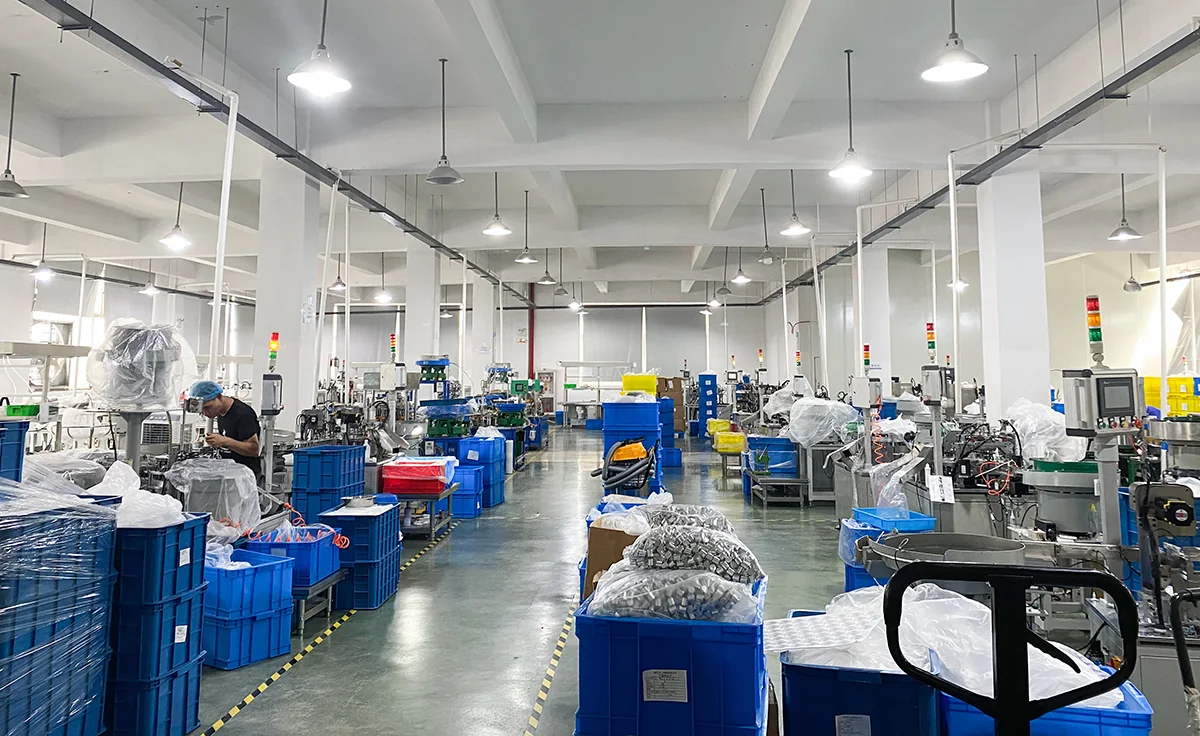
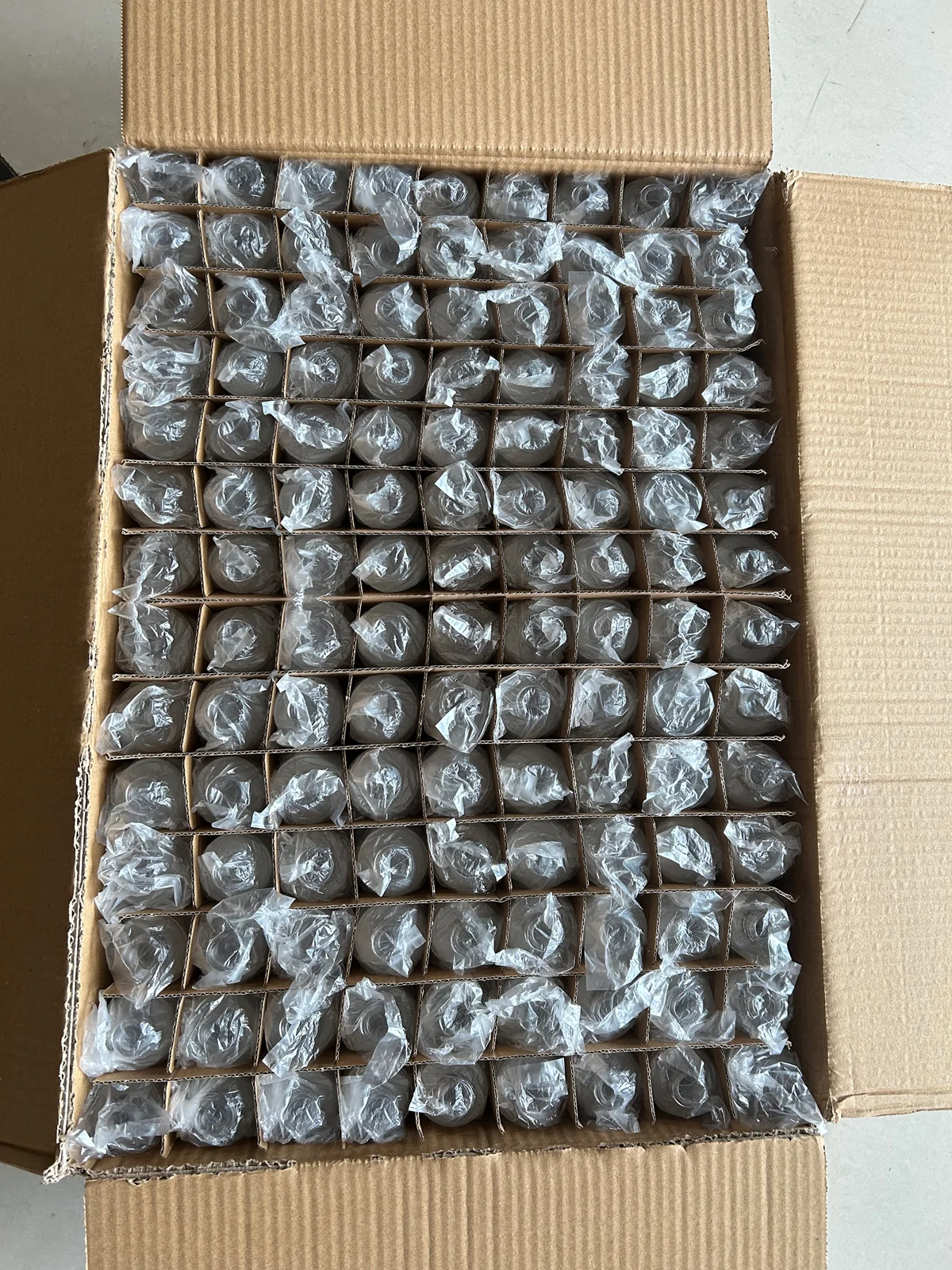
Photographed at Oulete
From the sample room to packed containers
See the facility and visible operations behind a packaging enquiry. For your selected assembly, ask which steps apply and request the corresponding sample and inspection records.