Solid personal care · Filling decisions
50 g Hot-Pour Deodorant Sticks: Filling and Platform Approval
Assess a 50 g hot-pour deodorant stick: compare top and bottom fill, resolve g/ml capacity, and check platform movement before production approval.
Containers only — no compounding or filling.
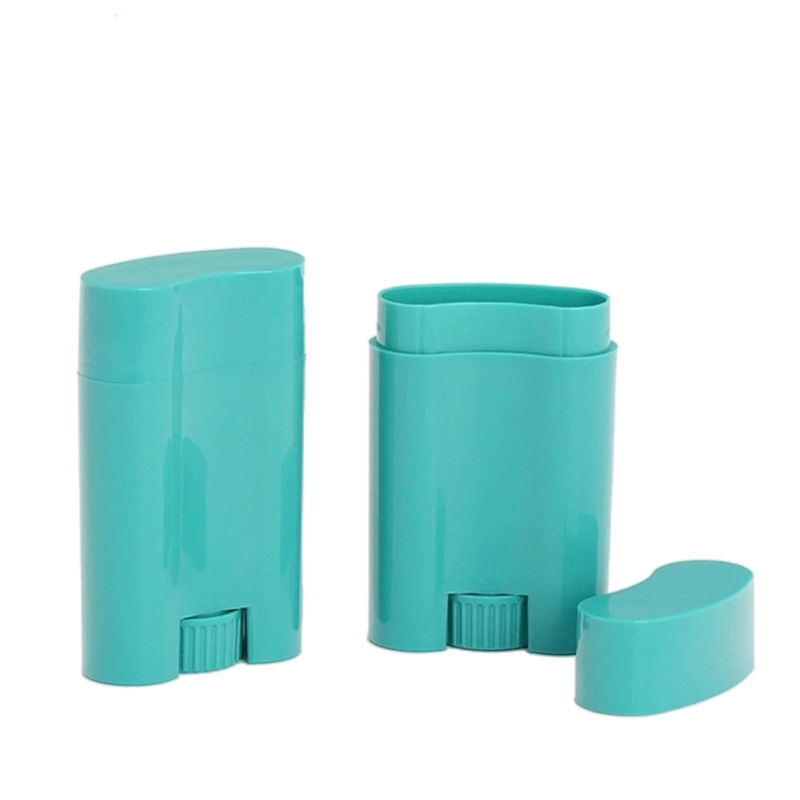
Oulete green empty stick-container views with open rims, ridged base wheels and a detached cap
On this page · 6 sections
A 50 g deodorant brief does not yet specify a suitable stick container. The buyer still has to connect that mass to a cavity, a filling route and a platform that moves the cooled formula. For a contract filler, those details determine whether a promising catalogue pack deserves a formula-filled trial.
For hot-pour deodorant stick packaging, confirm the capacity basis, fill access, delivered assembly and cooled-product movement before approving a 50 g production configuration.
The decision is more specific than “Which supplier sells a 50-size PP stick?” A useful shortlist must survive the handoff from the supplier’s catalogue to the filler’s actual process. The examples below show where that handoff needs clarification, using named supplier pages rather than treating a material label as a filling specification.
A 50 g brief needs a capacity basis
Net product mass and container volume are different quantities. A net-content brief in grams describes how much formula the finished pack must contain; a catalogue size in millilitres describes a volume whose measurement basis still needs to be identified.
The distinction matters on a real catalogue page. Quadpack’s Multi Stick describes its sizes as 30, 50 and 75 g, while the specification columns use ml. The reference in the 50 column is PDO0050MSPP. A buyer cannot resolve that mixed presentation by silently assuming the formula has the density of water.
Ask Quadpack what the 50 designation represents for the quoted variant: a nominal product mass at a reference density, a cavity volume at a specified assembly position, or another catalogue basis. The answer should identify the usable fill limit. It is a clarification request, not evidence that the supplier’s pack is defective.
To see what can change the decision, consider two hypothetical densities, both at a declared measurement condition. These values are illustrative inputs for arithmetic, not measured deodorant properties:
Scroll horizontally to compare all columns.
| Hypothetical formula input | Calculation for a 50 g target | Required formula volume at that condition |
|---|---|---|
| Density of 0.90 g/ml | 50 g ÷ 0.90 g/ml | Approximately 55.56 ml |
| Density of 1.10 g/ml | 50 g ÷ 1.10 g/ml | Approximately 45.45 ml |
The lower-density example needs more volume than 50 ml. The higher-density example needs less. Neither result approves or rejects PDO0050MSPP: its usable cavity and the meaning of its size designation are still unresolved. Outer dimensions cannot supply that answer because they do not describe the internal platform position or permitted fill boundary.
Use density measured for the formula at the condition relevant to the volume comparison. A hot liquid measurement is not automatically interchangeable with a conditioned solid measurement. Do not turn the difference into an assumed shrinkage allowance. The supplier and filler need an explicit basis for the quoted cavity and actual fill; the broader nominal, brimful and working-capacity guide explains those distinctions.
Compare the documented fill route
Top fill and bottom fill identify where product enters the assembly; they do not identify the direction in which the consumer turns the dial. They also do not, by themselves, establish the parts supplied open, the platform’s starting position or the closing operation after filling.
The following comparison concerns the published pages and variants shown, not every design sold by these suppliers. It is a process shortlist rather than a performance ranking.
Scroll horizontally to compare all columns.
| Published source | Documented fill route and size basis | What that establishes for the shortlist |
|---|---|---|
| Amcor/Berry Exclusive Refill, item 13940786 | The Exclusive launch describes bottom filling. The product page displays 50 ml and PP/rPP. | A named bottom-fill candidate with a volume designation; not a formula-specific 50 g approval. |
| Quadpack Mono Deo Stick, PST0050MNDE | Bottom filling; reference appears under the 50 ml column. | A named bottom-fill candidate. Its narrative says fully PP, while its material table says Other Plastic; request reconciliation for the quoted assembly. |
| Quadpack Multi Stick, PDO0050MSPP | Bottom filling; the narrative uses g and the table uses ml. | A named candidate with an unresolved capacity basis. |
| Berlin Packaging’s deodorant guide, dated 20 October 2019 | Top filling, with the movable base fully lowered before filling through the top opening. | A described top-fill preparation. The guide does not identify a model-specific assembly in this comparison. |
Amcor’s Exclusive launch also attributes PP to the cap, outer body and internal parts. That is a useful description of the family. It does not identify the contact grades, assembly revision or approved exposure conditions for the sample a filler will receive.
Nova-Pak’s 50 g oval PP stick supplies another useful contrast: it publishes a nominal mass and twist-up mechanism, but the read page does not state a top- or bottom-fill route. Nova itself says actual fill weight and performance depend on the formulation and calls for compatibility and filling tests. A gram-labelled catalogue entry therefore still needs a process discussion.
Variant restrictions belong in the same discussion. Multi Stick’s page offers an airtight version only for 75 g and describes the 30 and 50 g options as solid-colour only. Do not carry the 75 g closure feature into a 50-size quotation. If the brief needs a particular barrier or handling performance, ask which exact variant can be evaluated for it.
Translate fill direction into the filler’s assembly sequence
A filling route becomes useful when it can be connected to the as-delivered assembly and the operations on the line. Berlin’s lowered-base instruction gives a preparation for its described top-fill containers. It cannot be transferred to a bottom-fill design without that design’s own instructions.
Use the product view to identify the visible housings, open rims, detached cap and base wheels. Use the selected model’s drawing to locate the filling access and prescribed platform starting position. The photograph is an Oulete form reference, separate from the supplier models compared above.
For a proposed bottom-fill pack, obtain a drawing or sequence that shows the actual access opening and the parts present at each stage. Establish whether the supplied assembly already contains the platform and drive, whether a base or other part is separate, and how the access opening is closed. These are questions about the selected design, not assumptions that all bottom-fill sticks share one construction.
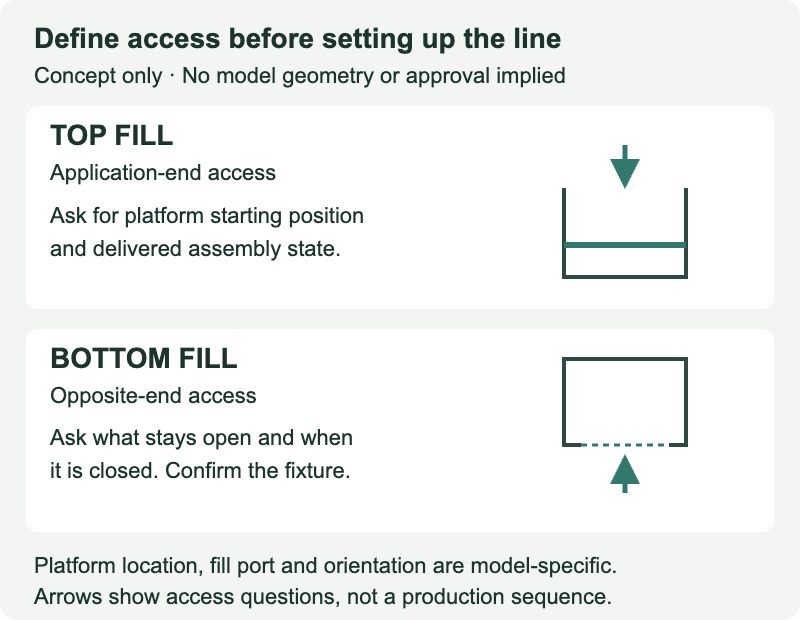
Open the concept diagram at full size
Write the line sequence against that drawing, recording the receiving condition, positioning and support, formula access, closing operation and conditioning orientation. The supplier must define the assembly constraints and order of operations; the filler must check them against the actual nozzle, fixture and handling equipment. A bottom-fill label alone cannot demonstrate compatibility with an existing top-fill setup.
The order of closing and setting deserves its own decision. If the agreed sequence closes an access opening while the formula is still fluid, the trial must observe containment at that interface under those conditions. If it closes after setting, the filler must evaluate that assembly operation in the specified product state. Neither sequence is a default recommendation; the correct one comes from the selected assembly and process.
Keep platform position separate from pack orientation. Turning an assembly upside down changes how it sits in a fixture; it does not establish where its platform is within the cavity. A photograph of a filled stick cannot replace that position in the drawing. Recording both lets the buyer and filler distinguish apparently similar samples filled in different configurations.
Check the cooled stick, not just the empty mechanism
A dial turning on an empty pack does not demonstrate that the cooled product moves with the platform. Empty mechanism motion, platform travel and movement of the set formula are separate observations.
For a mechanism intended to advance a solid stick, the useful filled-pack question is whether the product follows the specified motion through application and, where the design provides it, retraction. Here, product retention means the connection between the platform and the formula that keeps that relationship. The public pages reviewed here do not reveal enough internal geometry to assign one retention design to every pack.
An empty sample can help establish how the supplied mechanism behaves before formula is introduced. A formula-filled sample adds the product and the actual fill, closing and conditioning history. Keep both records tied to the same model and variant. Otherwise, a smooth empty demonstration and a failed filled sample might concern different assemblies, leaving no reliable comparison.
These possible observations are useful investigation paths, not reported factory failures or automatic diagnoses:
Scroll horizontally to compare all columns.
| Observation during an agreed trial | Evidence that helps separate the interfaces | Question to resolve before approval |
|---|---|---|
| Dial turns but the product does not rise | Marked positions or video of the dial, visible product and platform where accessible; empty versus filled comparison | Did the platform move, and did the set formula follow it? Consult the actual drive and retention drawing before assigning a cause. |
| Product rotates without the expected rise | Product position relative to the body, operation direction and exact assembly identity | What movement does this variant specify, and how is the formula intended to remain coupled to it? |
| Product separates or develops a visible crack after setting | Location of the separation, formula version and fill/conditioning record | Which interface is affected, and what do the agreed process and geometry checks show? A crack alone does not identify shrinkage or material incompatibility as the cause. |
| Cap contacts the exposed product or opens after handling | Product/platform position, matched cap identity and the agreed handling sequence | Is the issue at the closure fit, the allowed storage position or product clearance? Do not infer cap retention from its appearance. |
The first row can conceal two very different problems: a platform that fails to advance, or a platform that advances without carrying the product. Recording only “twist mechanism failed” loses that distinction. If the platform is not visible, keep the cause unresolved and ask the supplier how its approved inspection can distinguish the interfaces without changing the specimen.
Closure evaluation must use the paired body, cap and product position. A cap that fits an empty body has not demonstrated clearance over the set product. Likewise, advance and retract behaviour does not prove that the closure remains secured during the brand’s intended handling. Define those observations and acceptance criteria with the supplier, filler and brand before the trial, rather than inventing a universal cycle count or torque.
Set a thermal window for the quoted assembly
A resin family name is not a complete assembly-level thermal approval. A useful hot-pour specification identifies the formula temperature at first contact, permitted exposure duration, assembly condition and process configuration for the exact quoted variant.
Berlin’s general guide publishes temperature advice for its described PP containers and asks buyers to test compatibility samples before production. Those statements do not approve Amcor’s or Quadpack’s different assemblies. The material descriptions in their catalogue pages also do not supply the missing contact-grade and process record.
Ask for the basis of the proposed window: the drawing and component versions it covers, the record or supplier specification supporting it, and the required support and closing sequence. Then have the filler compare that window with the actual product-at-contact condition, not simply the kettle setpoint. If the formula process and pack limit do not overlap, a good catalogue size does not rescue the configuration.
The trial should retain the actual fill conditions alongside the resulting pack observations. A later distortion or operation problem can then be reviewed against the configuration that produced it. For the broader relationship among exposure, support and cooling, use the hot-fill process guide. This stick decision adds the fill access, platform position and cooled-product interface to that process discussion.
Make the sample request specific enough to answer
The immediate decision for Multi Stick PDO0050MSPP is whether its supplier can clarify the capacity and assembly basis well enough to plan a formula-filled trial. The public bottom-fill claim supports that enquiry; it does not yet support a 50 g production order.
The following is an illustrative procurement request, not a customer message, completed test or supplier reply:
Subject: PDO0050MSPP assessment for a 50 g hot-poured deodorant
We are assessing your 50-size Multi Stick for a nominal 50 g solid deodorant. Please reconcile the g description with the ml specification column and provide the usable capacity basis for the quoted assembly. Our formula’s density at the relevant condition is not yet measured; we will provide that result before capacity approval.
Please identify the supplied platform/drive and cap variant, delivery state, bottom-fill access, starting platform position, support requirements and closing sequence. We need the approved contact-temperature and exposure basis for that assembly, so our filler can compare it with the formula process. Please do not substitute the 75 g airtight option for the quoted 50-size configuration.
After these points are resolved, we propose agreeing a trial that records fill mass, actual fill and conditioning conditions, empty versus filled operation, set-product movement and matched-cap handling. Please confirm the applicable instructions and criteria, along with sample availability and the MOQ for that exact configuration. We are requesting trial planning information, not authorising production.
A usable reply would bind those answers to one drawing and quoted variant. It would allow the filler to determine whether it can reproduce the required sequence and the brand to agree what filled-pack behaviour it will accept. A different platform, cap or material version would need its own applicability check rather than inheriting approval from the first sample.
Keep the resulting sample identity, formula version and agreed observations together using the existing sample-approval guide. The approval question remains concrete: does this identified assembly, filled by this process with this formula, contain the intended mass and operate as agreed after setting and handling?
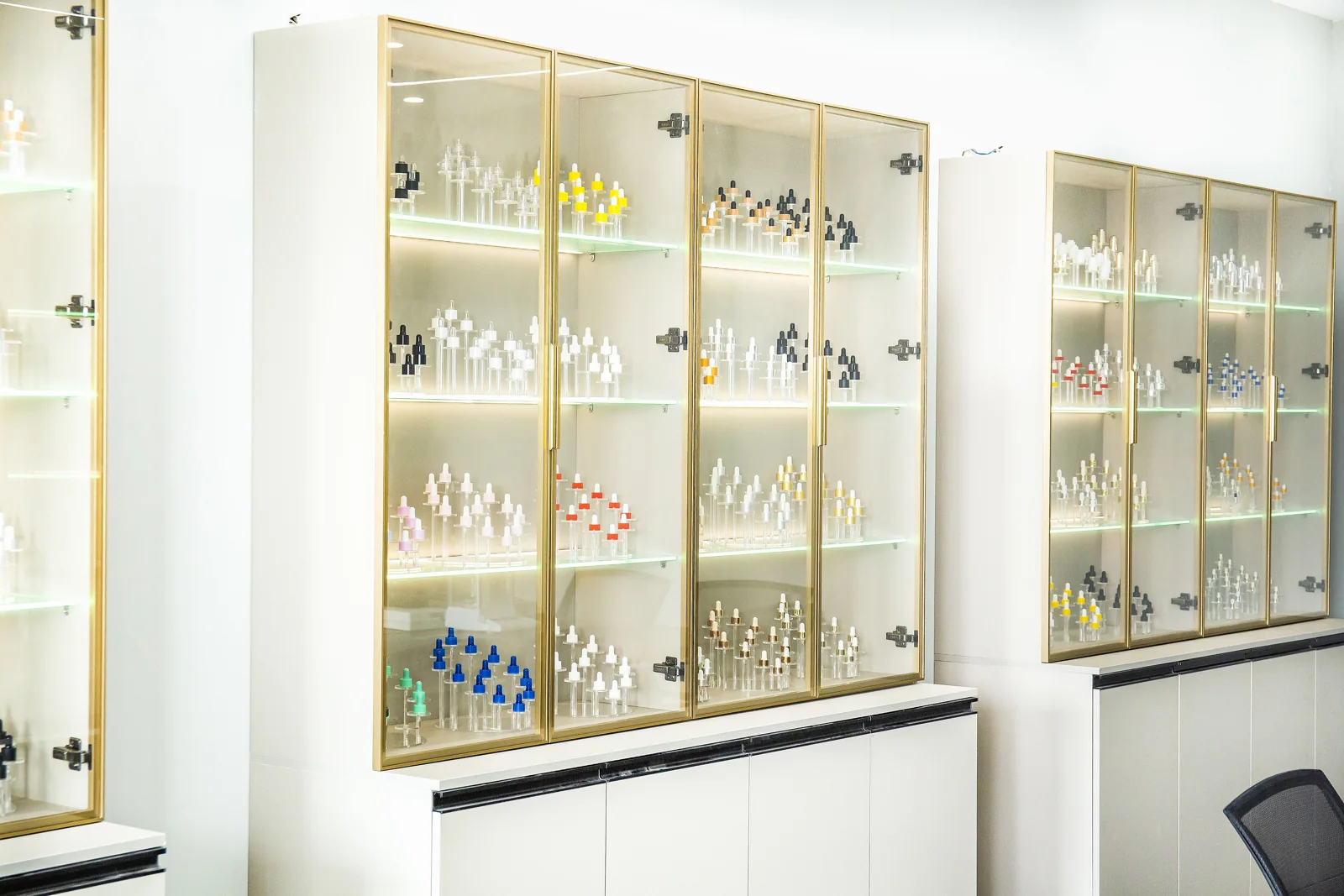
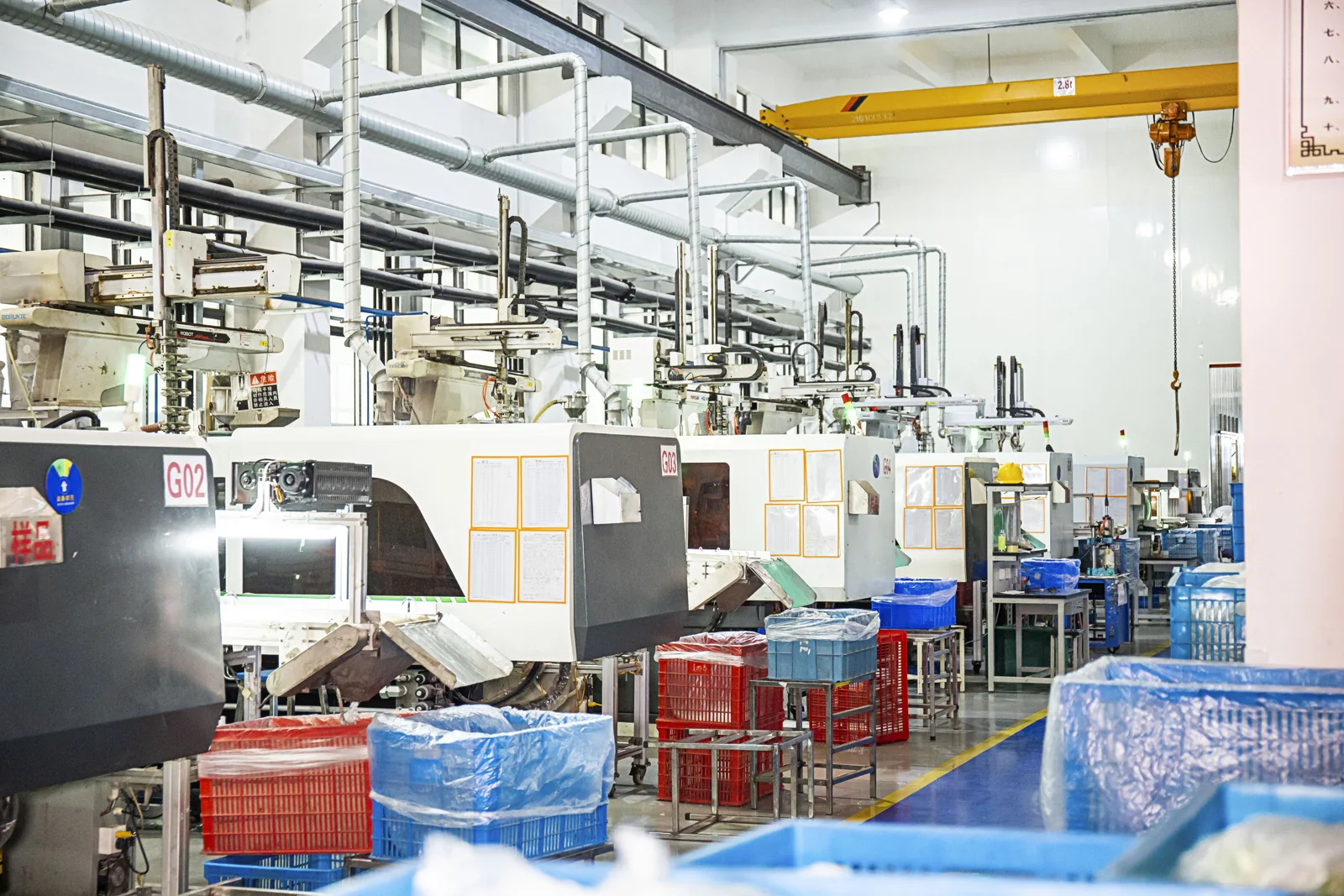
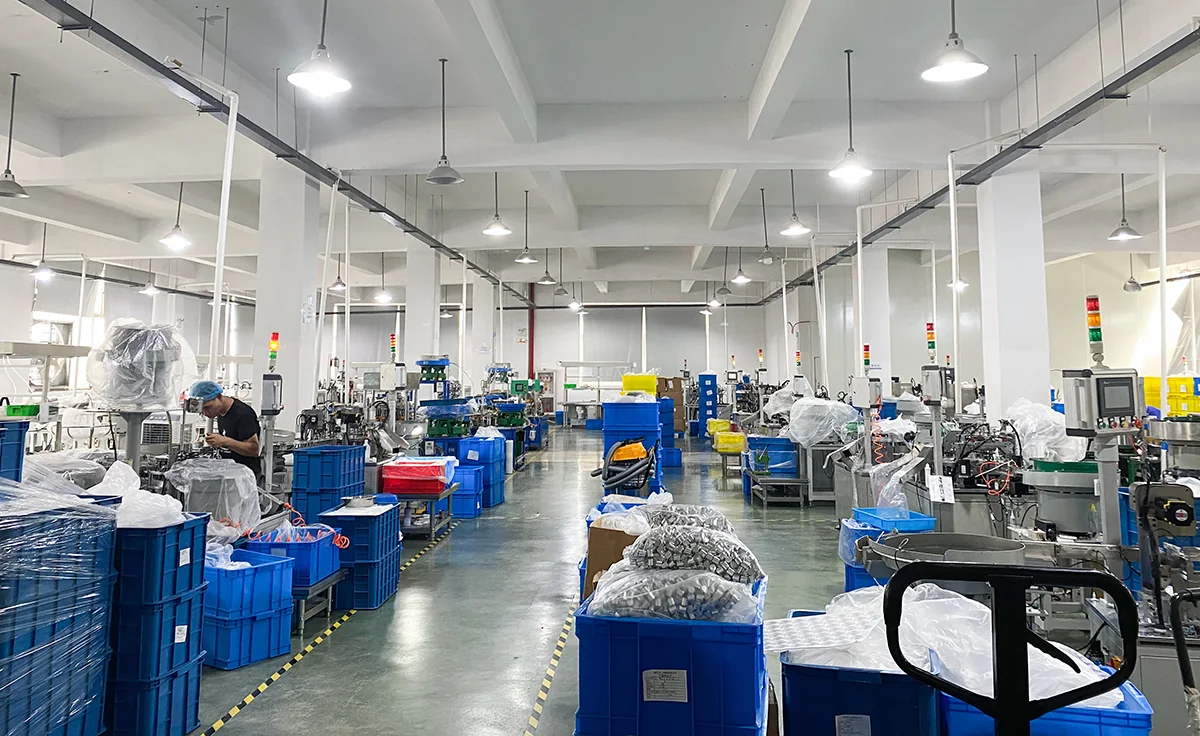
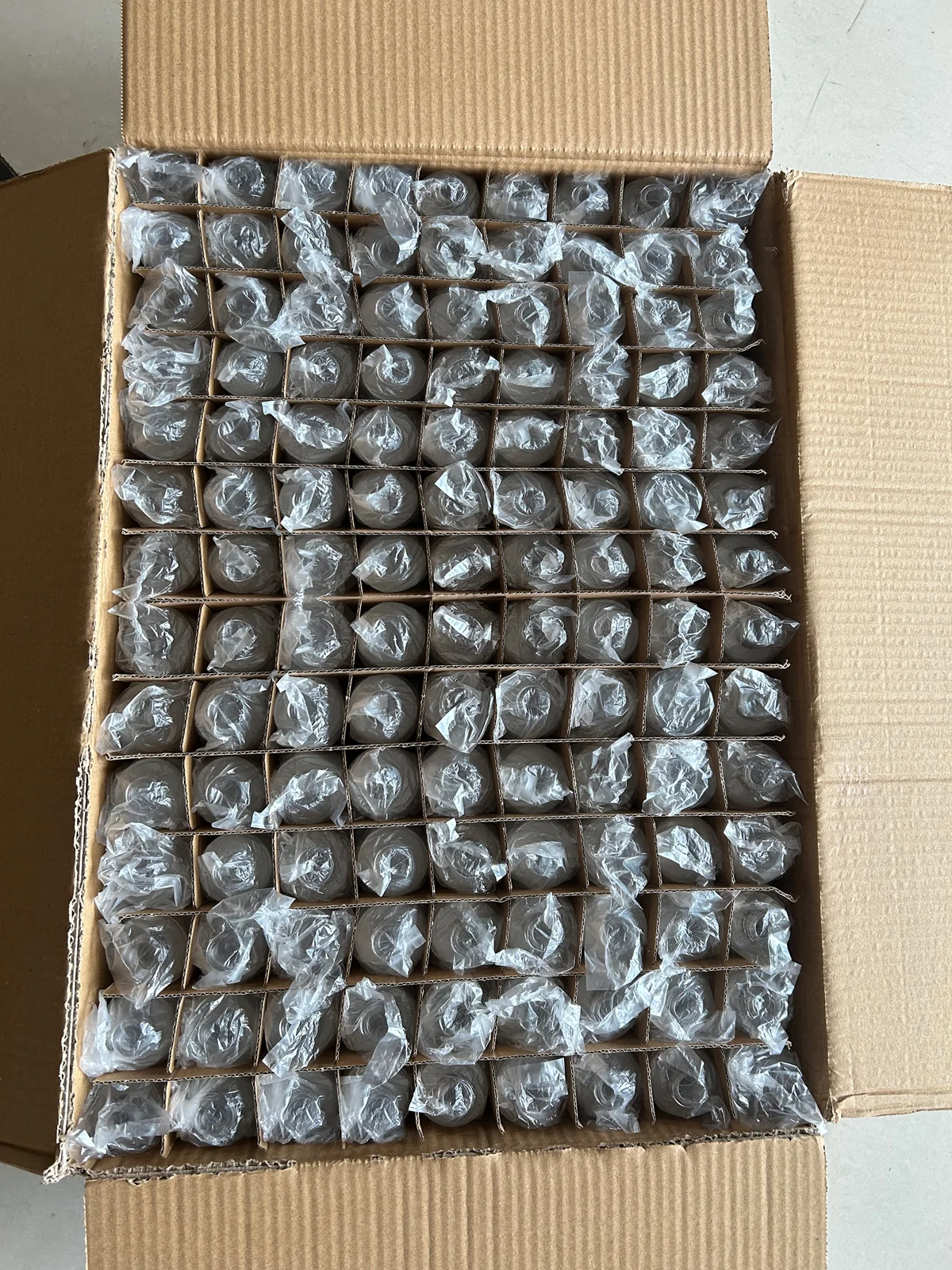
Photographed at Oulete
From the sample room to packed containers
See the facility and visible operations behind a packaging enquiry. For your selected assembly, ask which steps apply and request the corresponding sample and inspection records.