Snap-On vs Screw-On Cosmetic Bottle Caps: What Buyers Must Check Before Ordering
A snap-on closure base engages a matching bottle finish by pressing it into place; a screw-on base engages the bottle threads by turning. A flip-top describes a hinged lid and can exist above either kind of base. For a cosmetic bottle…
A snap-on closure base engages a matching bottle finish by pressing it into place; a screw-on base engages the bottle threads by turning. A flip-top describes a hinged lid and can exist above either kind of base. For a cosmetic bottle order, identify both interfaces, obtain the drawings for the actual parts, and have the supplier and filler approve a matched assembly. A familiar diameter or a satisfying click does not establish interchangeability or a leak-resistant pack.
This guide is for packaging buyers and contract fillers comparing closure proposals. The photographs show Oulete factory work and components as background; they do not identify a qualified snap-on model or document a closure test. Availability, sourcing, drawings and assembly settings must be confirmed for the selected project.
First separate the bottle connection from the way the consumer opens it
A bottle closure can have two separate decisions: how the base attaches to the bottle, and how the user accesses the product. A hinged flip-top lid may be opened by lifting a tab while its base remains on the bottle. Whether that base snaps onto a bead or screws onto threads is a separate design detail. A removable screw cap, by contrast, is itself turned off for access; a protective overcap may merely cover a dispenser rather than seal the bottle opening.
Describe the actual assembly before comparing quotations
Feature
Buyer action and limit
Snap-on base
Identify: Press-on connection, the engaging feature and the matched neck or collar on the proposed drawing. Limit: That another snap closure with a similar stated diameter will fit or seal.
Threaded base
Identify: Complete finish designation where specified, thread geometry and sealing surface on both parts. Limit: That a shared nominal diameter alone establishes thread engagement.
Flip-top lid
Identify: Hinge, tab, lid and the closing feature; record whether the base snaps or screws onto the bottle. Limit: That the bottle connection itself is snap-on.
Overcap
Identify: Whether the cover engages the bottle, pump or collar, and what it is intended to protect. Limit: That it is the primary liquid seal.
Amcor describes a snap-on flip-top closure as one supplier example. That is Amcor's own product example, not Oulete model specifications or evidence of interchangeability. Oulete's tube-closure guide addresses a different interface: the cap and the tube head.
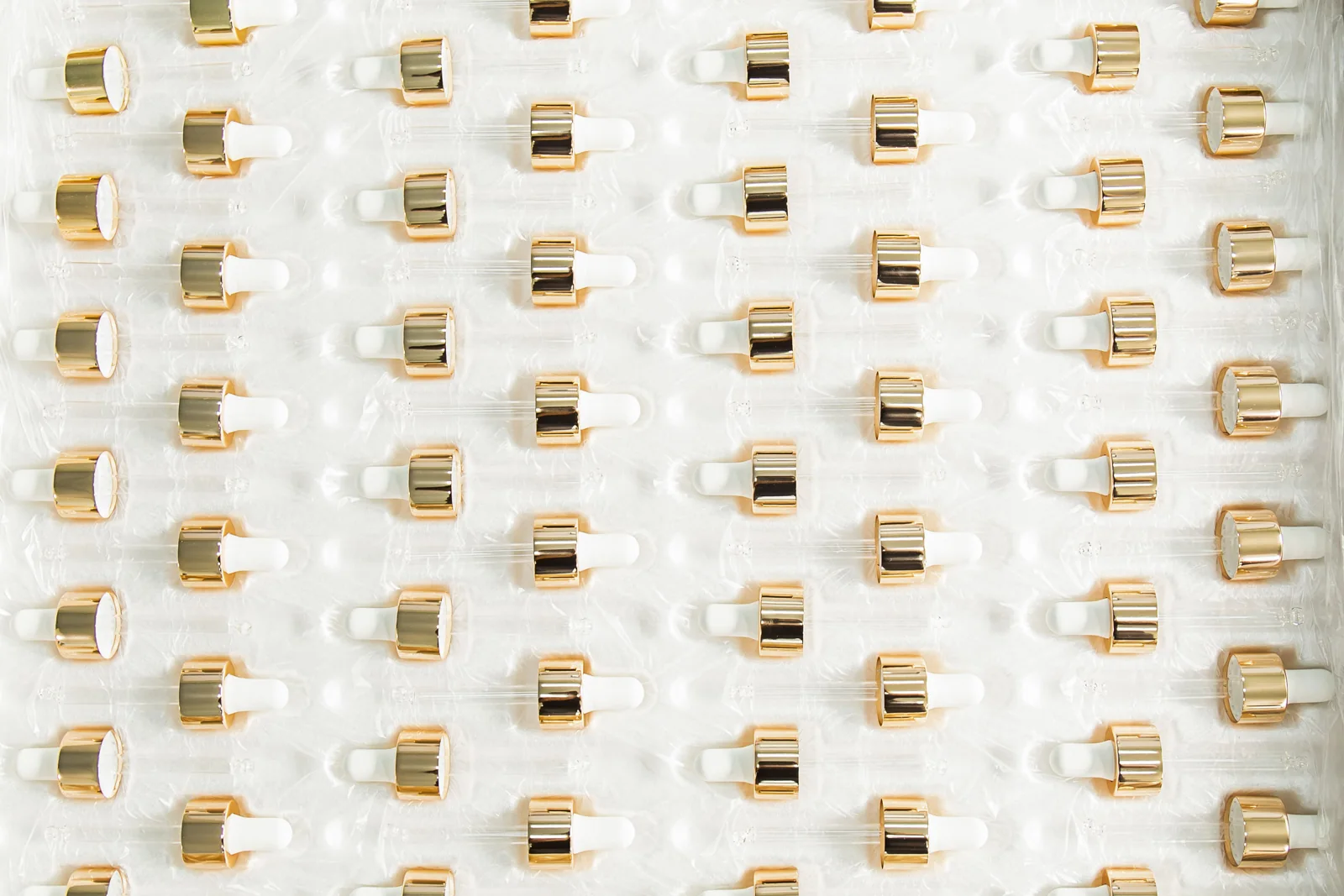
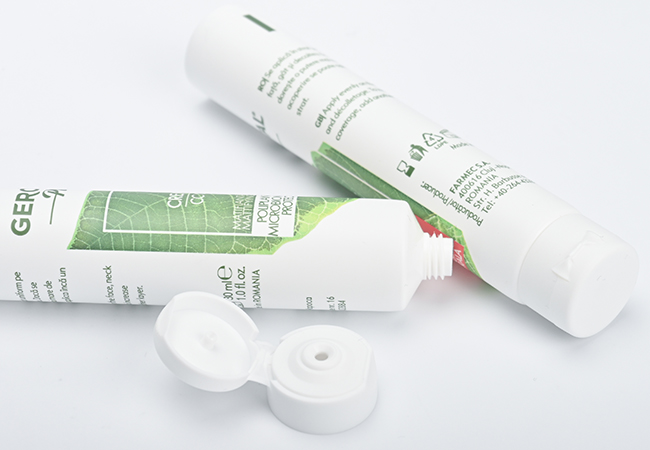
Components arranged on trays at Oulete. This photograph shows factory handling; the visible parts are not identified as the snap-on closure in this guide.Historical Oulete-supplied tube sample: external tube threads and an open flip-top are visible. The cap interior is not visible; this is not a bottle or snap-on sample and does not establish the cap attachment method or interchangeability.
Why “same diameter” is not enough for a snap fit
For a snap-on base, the bottle and closure drawings should identify the features that engage, where they sit relative to the top and shoulder, and the relevant dimensions and tolerances for both parts. The mating profile can include a bottle bead or recess and a corresponding feature in the closure. Ask the suppliers to mark the actual contact and retention areas rather than assuming that every circular bead is identical.
For a threaded base, request the full neck-finish information and the corresponding closure drawing, including the thread and intended sealing surface. A nominal neck diameter narrows a shortlist; it is not a complete drawing. WB Bottle's technical library distinguishes several snap finishes and identifies a bead-locating dimension in its terminology. Its diagrams are general supplier references, not a specification for an Oulete bottle. The Oulete neck-finish guide explains how to retain the detail available for a particular catalog entry.
Request a section through the actual closure and finish where possible. It should make the retention feature, sealing contact, required seating position and any insert or liner identifiable. The supplier responsible for each part should confirm the current drawing revision and how it was measured. If either drawing is missing, keep the matching decision open and request physical parts for review rather than substituting an unrelated nominal size.
Injection molding equipment at Oulete. The photograph does not show a snap-closure tool, its dimensions or a production trial.
Compare the two connection routes with the filler
A snap-on closure is applied by a pressing operation appropriate to the specified assembly. A threaded closure is applied by rotation. Neither route should be assumed to work on a particular line without the filler and equipment supplier reviewing the selected bottle, closure and delivered state. A cap that can be assembled by hand is a useful early observation; it is not approval for a production machine.
Questions to resolve before releasing the order
Decision
Comparison
Incoming state
Snap-on: Loose or preassembled; identify the matched neck and any orientation feature. Threaded: Loose or preassembled; identify the exact thread finish and any liner or insert.
Application review
Snap-on: Ask who defines the pressing method, seating reference and equipment contact surfaces. Threaded: Ask who defines thread engagement, rotation method and agreed application setting.
Seating
Snap-on: Compare the actual seated position and any visible gap with the approved reference. Threaded: Check alignment and seated condition; record any cross-threading or damage.
Release evidence
Snap-on: Agree the appropriate retention, sealing and handling evaluations for the complete pack. Threaded: Agree the appropriate application/opening torque, sealing and handling evaluations.
Provide the filler with the assembly drawing, part and revision list, bottle and closure samples, proposed line speed and handling sequence. Ask how the line holds the bottle, locates the closure, applies it, and detects or separates an unseated or misaligned unit. For a hinged design, agree whether hinge orientation matters to the holder, artwork or packing arrangement. Do not state a universal press force, torque or line speed: the responsible teams must establish the settings and acceptance criteria for the actual assembly.
Operator handling a packaging component at an Oulete assembly fixture. It is not evidence of snap-cap application or a filler-line test.
Separate attachment, seal and consumer opening
Attachment asks whether the base remains in the intended position under the agreed handling conditions. Sealing asks whether the identified sealing surfaces or parts perform with the actual bottle, formulation and closed condition. Consumer opening asks whether the lid or cap can be operated and reclosed as intended. These are related, but a good result for one does not automatically approve the others.
For a hinged lid, request an evaluation of the tab, hinge movement and reclosure with representative filled samples, including any residue condition the team considers relevant. For a removable threaded cap, agree application and first-opening conditions before comparing torque reports. For an overcap, agree how and where the whole cover is held and pulled; the overcap pull-off guide explains why that measurement differs from lifting a flip-top tab. Do not substitute that overcap result for a bottle-to-base retention decision.
Inspect visible damage, incomplete seating and uneven gaps using the project reference, but treat appearance as an observation rather than proof of sealing. The separate cap visual inspection guide helps document those observations. Agree filled-pack, storage, transport or compatibility work with the responsible product team; the test conditions and criteria belong to that specific project.
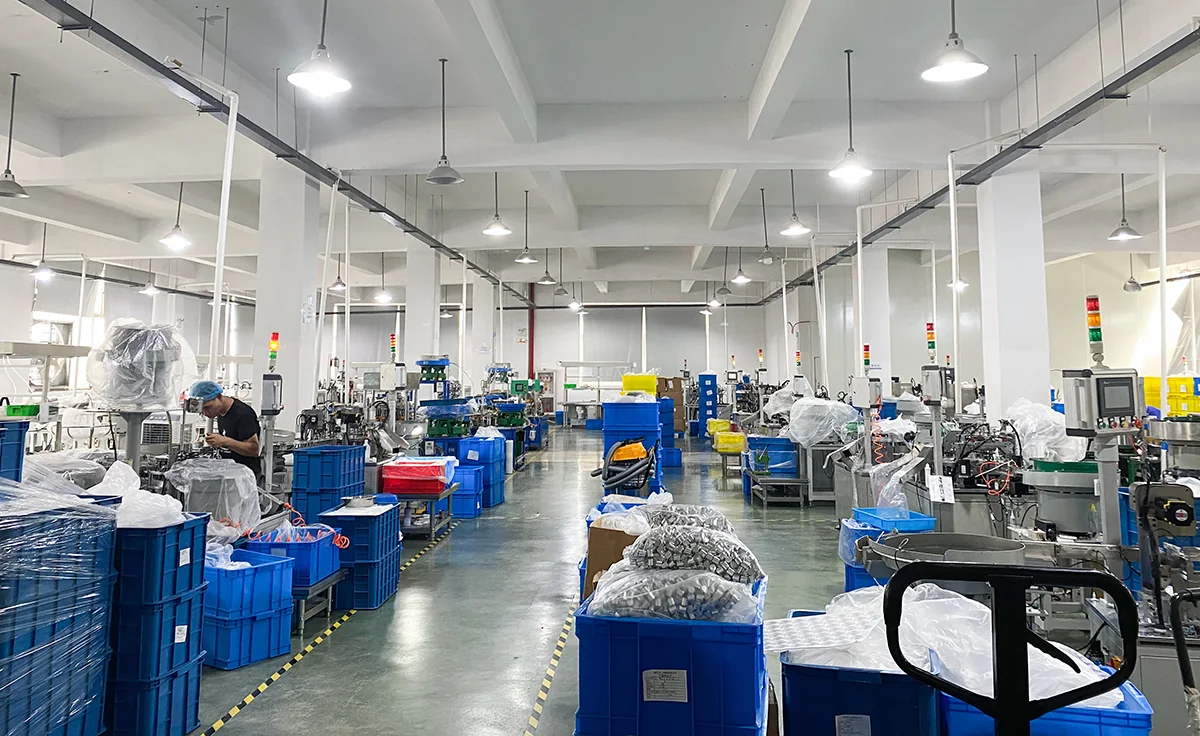
Packaging assembly workstation at Oulete. The image illustrates a factory work area, not a qualified closure model or assembly procedure for this article.
Example: a closure is called “24 mm” in both quotes
Hypothetical example: a brand requests a hinged cap for a lotion bottle. One quotation describes a snap-on base and the other a threaded base; both use the same nominal diameter in their descriptions. The available bottle drawing has not yet identified which connection will be supplied. There is no actual client, Oulete measurement or factory trial in this example.
Ask each supplier to label the base-to-bottle connection and the lid-opening action separately, with component references and revisions.
Obtain both closure sections and the specific bottle-finish drawing. Mark the engaging and sealing features; do not compare only the number in the product title.
Have the filler review the quoted incoming state and the proposed application method. Record whether samples were applied by hand or using the intended production equipment.
Review matched samples and agree separate decisions for seating, retention, sealing and consumer use. Keep any untested condition open until the responsible team signs it off.
The practical purchasing choice is the complete, approved bottle–closure–filling arrangement. The lower per-cap quote may omit a different application step, a separately sourced component or an unresolved line adaptation; identify those items before comparing total project cost.
Put these fields in the RFQ and sample-approval record
Assembly identity: bottle, closure base, lid, liner or insert, their supplier references and revisions.
Connection: snap-on, threaded or another identified connection; the actual mating feature and supplier drawings.
Opening: hinged lid, removable cap or overcap; identify the primary sealing function.
Supply and line: fitted or loose components, installation owner, orientation, equipment contact and changeover questions.
Evidence: approved reference, agreed seating/retention and filled-pack checks, conditions, acceptance authority and unresolved questions.
Commercial scope: included components, decoration, sampling, tool or equipment changes and project-specific minimum quantities.
If the bottle or closure supplier changes material, mold, drawing or source, compare the proposed change with the approved assembly and agree which checks need repeating. Send the caps and closures team the part drawings, intended contents, target quantity and filler contact points; a snap-on component, its supplier route and its commercial terms require confirmation for the specific project.
Frequently asked questions
Is a flip-top always a snap-on cap?
No. Flip-top describes a hinged lid. Its base may attach to the bottle by a snap feature, a thread or another construction. Confirm the selected assembly.
Can a snap-on cap replace a screw cap with the same stated diameter?
Not on that number alone. Compare the actual bottle and closure drawings, attachment features and sealing surfaces, then approve the matched assembly with the filler.
Does a snap sound prove the bottle is sealed?
No. A sound may be an observation during assembly; it does not by itself establish the final seating, retention or filled-pack seal.
Which drawing should a buyer request first?
Start with the controlled bottle-finish drawing and the matching closure section or drawing. Identify the proposed sealing part and the supplied component state as part of the same assembly record.
Can a flip-top leak even if its base is firmly attached?
Yes. Base retention and liquid sealing are separate functions. Review the lid, sealing surfaces, bottle, contents and agreed filled-pack test conditions together.
Does Oulete supply every snap-on closure shown by another manufacturer?
No such supply is implied. Competitor products are cited as their own examples; ask Oulete to confirm the exact closure, sourcing route and project terms.
Photographed at Oulete
From the sample room to packed containers
See the facility and visible operations behind a packaging enquiry. For your selected assembly, ask which steps apply and request the corresponding sample and inspection records.
Cosmetic packaging samples displayed in the Oulete showroom.Row of injection molding machines in the Oulete workshop.Wide view of the Oulete packaging assembly workshop.Cosmetic containers separated by protective packaging inside a carton.
Research with AI
Paste this prompt into your assistant. Check its answer against the page and the approved packaging specification.