Cosmetic Bottle Cap Defects: A Visual Inspection Guide for Packaging Buyers
A cosmetic cap can look perfect on the shelf and still have an incomplete thread, a damaged sealing surface or a misplaced liner inside. For an actionable inspection, identify the actual closure and inspect its top, outer wall, edge and…
A cosmetic cap can look perfect on the shelf and still have an incomplete thread, a damaged sealing surface or a misplaced liner inside. For an actionable inspection, identify the actual closure and inspect its top, outer wall, edge and inside against an agreed sample. Then distinguish an observable defect from a performance question: seeing a liner does not prove a seal, and seeing a cap on a bottle does not establish its opening torque or retention force.
This guide helps brand procurement, packaging suppliers and contract fillers agree what to look at before a lot is released. An overcap, screw closure and flip-top have different functions; select the checks that fit the ordered assembly. The photographs show Oulete factory operations, not defects or test results.
First identify which cap and which surface you are checking
Use the purchase order, drawing revision and approved component list to name the part. A decorative overcap may simply cover an actuator; a threaded cap can close the bottle opening; a hinged flip-top has a lid, hinge and dispensing feature. A liner may be present in some closures and absent by design in others. Do not reject a cap for a missing component unless the approved specification calls for it.
Identify the sample as loose, assembled or removed after application. Record whether it is molded, decorated or finished with a liner, and whether a matching bottle, pump or inner closure was used. The same mark on an external display surface and an internal mating surface can prompt different questions. Agree inspection conditions, cosmetic zones and reference samples before classifying it.
Where to look: five cap views and the decision each supports
Visual checks on the specified cosmetic cap
View or feature
What to look for and what to do next
Top and visible outer surface
Observe scratches, spots, colour or gloss variation and decoration defects against the agreed reference. Photograph the location and view; a visual match does not prove coating adhesion.
Skirt and edge
Look for cracks, excess material at an edge, incomplete shape or distortion. Record orientation and whether the feature touches a mating surface; compare fit separately.
Inside and thread, if threaded
Look for missing material, contamination, damage or an obstructed thread. Use a view and access suitable for the actual geometry; a clean appearance alone does not establish thread fit or sealing.
Liner or sealing feature, if specified
Check identity, presence, position and visible damage against the approved assembly. An apparently centred liner still needs the applicable seal and compatibility assessment.
Hinge, closure or dispensing opening, if present
Look for an incomplete, broken or blocked feature. Agree a separate functional check with the intended part and contents where relevant.
Pressco’s closure inspection page lists examples on the product-facing and visible sides, including short shots, flash, misplaced liners and surface marks. Its machine is a competitor’s equipment; the list does not establish that Oulete uses it or detects every defect.
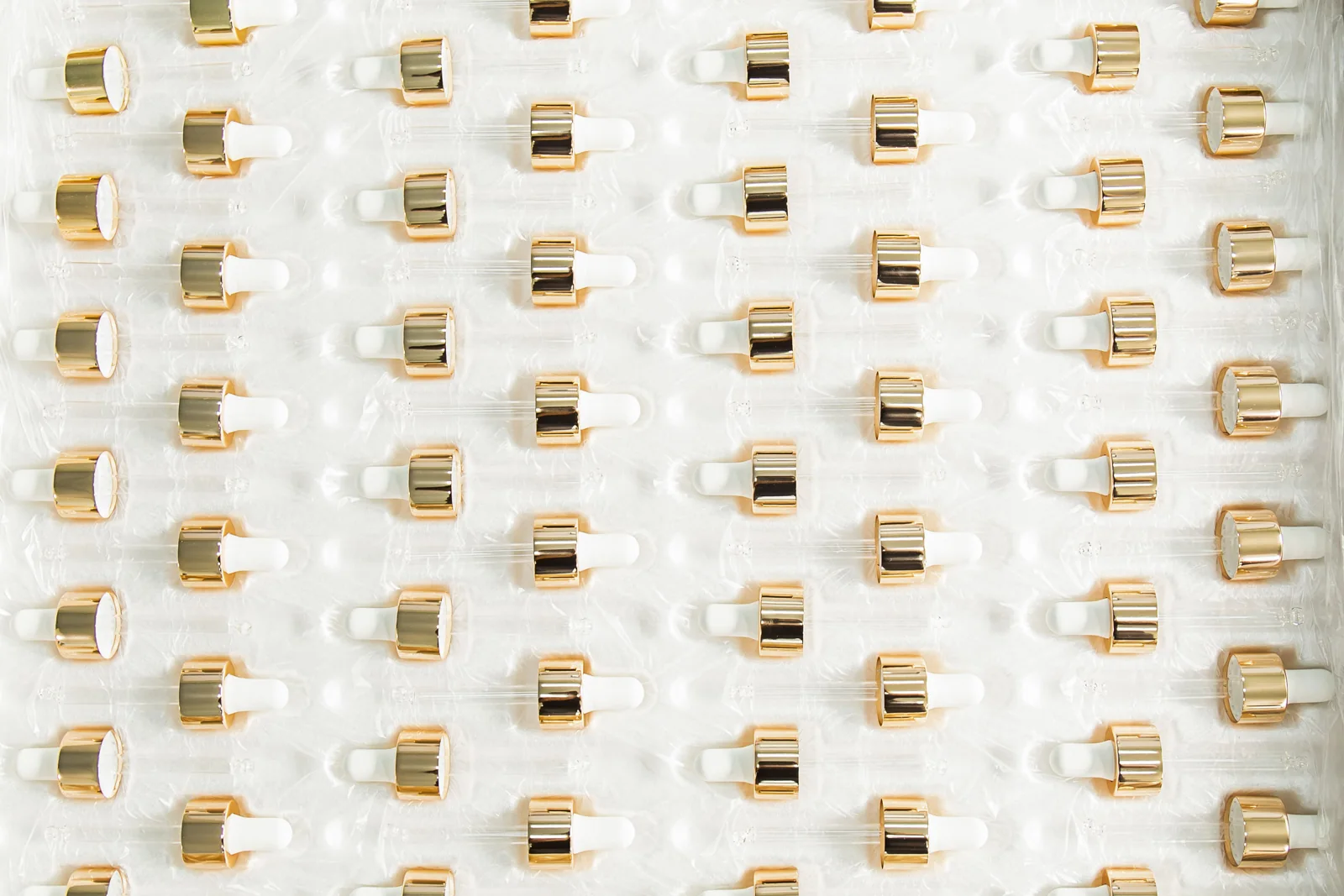
Packaging components arranged on trays at Oulete. The image illustrates component handling; it is not an inspection result or a defect reference.Gold-finish packaging components arranged on trays at Oulete. This factory photograph shows appearance and handling, not a documented surface defect or test.
Use precise words before deciding severity
Flash is excess material extending from a molded edge or parting region. A short shot is a part that has not completely filled the mold. A sink mark is a local surface depression. The APT Mold cosmetic inspection standard defines these terms for its own molded parts. Its acceptance limits are not Oulete’s specifications and should not be copied into a cosmetic packaging purchase order.
Use the observation and location before asserting a cause. “Raised material on the inner edge, near the thread start” is more useful than “bad cap.” A scratch may be cosmetic on one approved surface; damage on a sealing or engagement feature may require additional assessment. Do not assign a universal critical, major or minor class: the classification, acceptance boundary and authority to release must be agreed for the part and intended use.
For each observation record the part revision, lot, sample identifier, cap orientation, feature and its approximate location. Add an overview image plus a close view with a scale where useful. Compare with a retained approved sample or agreed boundary sample under specified viewing conditions. A phone image can help communicate location but does not replace the physical reference where colour, gloss or texture must be judged.
Inspect the loose closure and the applied pack at different points
At the component supplier or on receipt, the relevant sample may be a loose cap. That allows review of the interior, thread, liner and visible molded or decorated surfaces before the cap is fitted. Preserve supplier lot and carton identity; the incoming inspection guide explains sampling, records and lot disposition.
After application, the filler can inspect whether the specified cap is present, correctly oriented and visibly seated on the selected pack. Compare the cap and bottle together, noting an uneven gap, displaced decoration or new surface mark. A gap can signal a need for investigation, but the observation alone does not establish whether the cap, bottle, application equipment or handling caused it. Keep examples from before and after application, with their lot and time context.
Operator handling a packaging component at an Oulete assembly fixture. The photo does not identify the customer's cap, inspection procedure or result.Assembly fixture beside a conveyor at Oulete. The equipment and operation shown do not establish the method or outcome of a cap inspection.
What visual inspection cannot approve on its own
Seal integrity: a liner that appears present and flat is not proof of sealing under the intended contents and conditions. Agree the complete assembly, test and acceptance with the responsible parties.
Opening torque: a seated screw cap does not reveal the force needed to open it. Define application, conditioning and first-opening history in the cap torque report.
Overcap retention: a cosmetic overcap can look aligned while its removal force remains unknown. Review the overcap pull-off method for the actual assembly.
Decorative durability: a clear print or uniform finish does not by itself establish resistance to handling, product contact or transport. Agree the finished surface and applicable evaluation separately.
If an automated vision system is proposed, ask the provider which views, lighting, part colours and defect examples it can detect; confirm how false rejects and missed defects will be assessed on the actual cap. Camera images cannot automatically prove hidden geometry, retention, chemical compatibility or a seal. Do not describe another supplier's machine as Oulete equipment.
Example: a mark discovered after the filler applies the cap
Hypothetical scenario: a brand receives a decorated cap that matches its approved appearance sample before assembly. After the filler applies it to the intended bottle, an operator observes a mark on the outer skirt and a visibly uneven gap on some units. No measured value, real customer or factory result is implied.
Identify the cap and bottle revisions, lot and affected carton or production interval. Retain unassembled caps and affected assembled units separately.
Photograph the cap from the same orientation before and after application, noting the feature and surface. Compare with the approved appearance reference; document what is observed, not a presumed cause.
Ask the supplier and filler to review the cap, bottle and application setup. If the relevant acceptance rule is missing, keep the issue open and agree how the responsible team will decide.
Where seating, seal, torque or overcap retention is in question, request the appropriate separate assessment. Record which configuration and conditions it represents before making a release decision.
Put the acceptance record into the order
A useful cap inspection brief links each observable feature to a reference and an action. The buyer should not be left with a general promise of “good quality,” while the supplier should not be asked to infer an unstated limit from a picture.
Fields to agree before production or incoming release
Field
Specify or request
Part identity
Cap and mating-part references, revisions, material and supplied state; identify any liner or insert.
Surface and feature
Top, outer wall, edge, inside, thread, hinge or sealing feature; define visible and contact areas on the drawing.
Reference and conditions
Approved sample, boundary samples, viewing setup, comparison method and the owner of each reference.
Sample and evidence
Lot, collection point and agreed sampling plan; record count, observed feature, photos and retained examples.
Disposition and follow-up
Who can hold, investigate, sort or accept by concession; what further fit, seal or functional test is needed.
When the cap, liner, supplier, material or decoration changes, identify which prior approvals still apply and which need to be repeated. Send Oulete the selected part or sample, drawing revision, intended mating component, cosmetic reference, quantity and inspection questions; component availability and project terms require confirmation.
Frequently asked questions
What are common visible defects on cosmetic caps?
Examples include scratches, spots, excess molded material, incomplete edges, deformation and visibly misplaced liners where a liner is specified. The relevant features and acceptance limits depend on the agreed part and use.
Is flash always a reject?
Its significance depends on location, size, the approved standard and potential contact with an assembly feature. Record and compare the observation; the responsible parties should decide against their agreed criteria.
Does a centred liner prove the bottle will not leak?
No. Visual inspection can help identify presence and position, but seal integrity requires an appropriate assessment of the specified closure, bottle, contents and conditions.
Can the filler use the same check as the cap supplier?
Some observations overlap, but loose caps expose interior features that may be hidden after application. The filler should also check the applied configuration and agree any functional or filled-pack evaluation.
Does a visible gap prove the cap is defective?
No. Record the actual gap and parts, then investigate the cap, bottle and application process against agreed references. Do not infer the cause from appearance alone.
Should we approve every colour from one cap sample?
Agree which part, colour, material and finish each reference represents. Different appearances can make a feature easier or harder to observe, so the inspection approach may need review for another configuration.
A useful inspection does not end with a list of marks. It connects the observed cap and surface to a controlled reference, a lot and a decision—and keeps untested performance questions visible.
Photographed at Oulete
Assembly workstations in the factory
See the facility and visible operations behind a packaging enquiry. For your selected assembly, ask which steps apply and request the corresponding sample and inspection records.
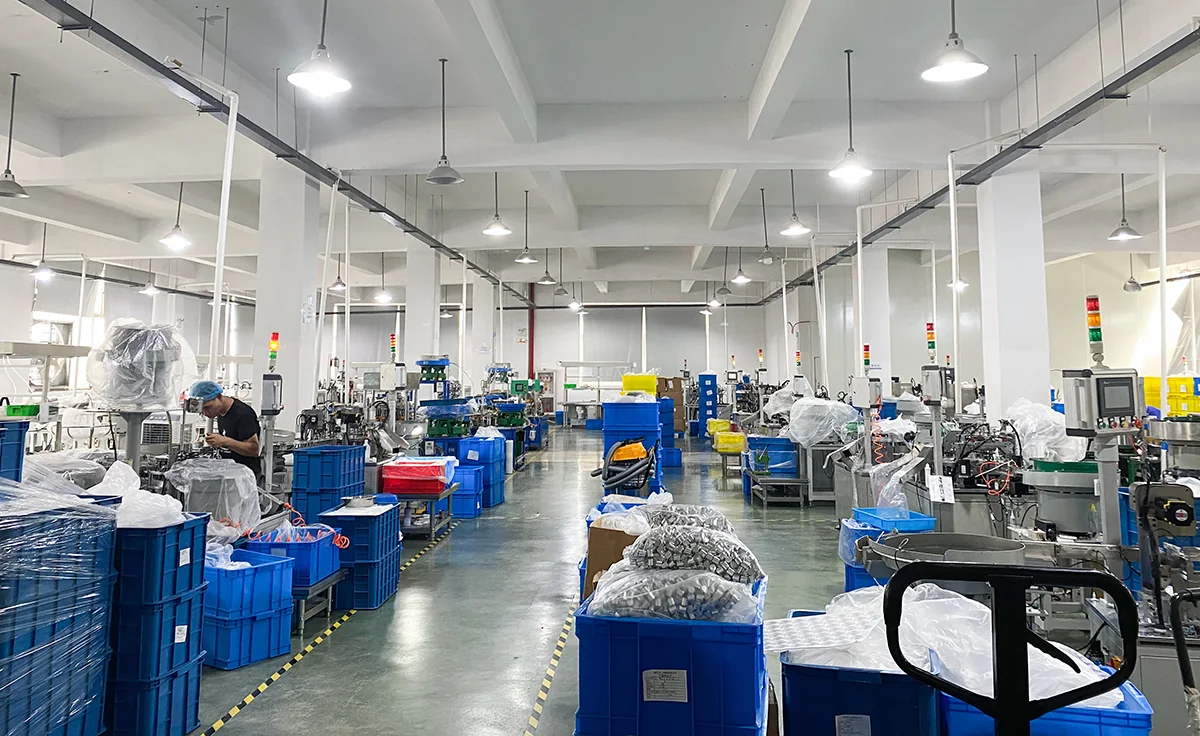
Operator's hands positioning a packaging component at an assembly fixture.Cosmetic packaging assembly workstation with components beside the equipment.Assembly fixture beside a factory conveyor.Wide view of the Oulete packaging assembly workshop.
Research with AI
Paste this prompt into your assistant. Check its answer against the page and the approved packaging specification.