Cosmetic packaging · Made for your brand
Cosmetic Cap Torque: How to Compare Opening-Test Reports
Compare cosmetic cap torque reports by opening event, conditioning, specimen history and capper head. A worked example shows what a retention percentage can hide.
Containers only — no compounding or filling.
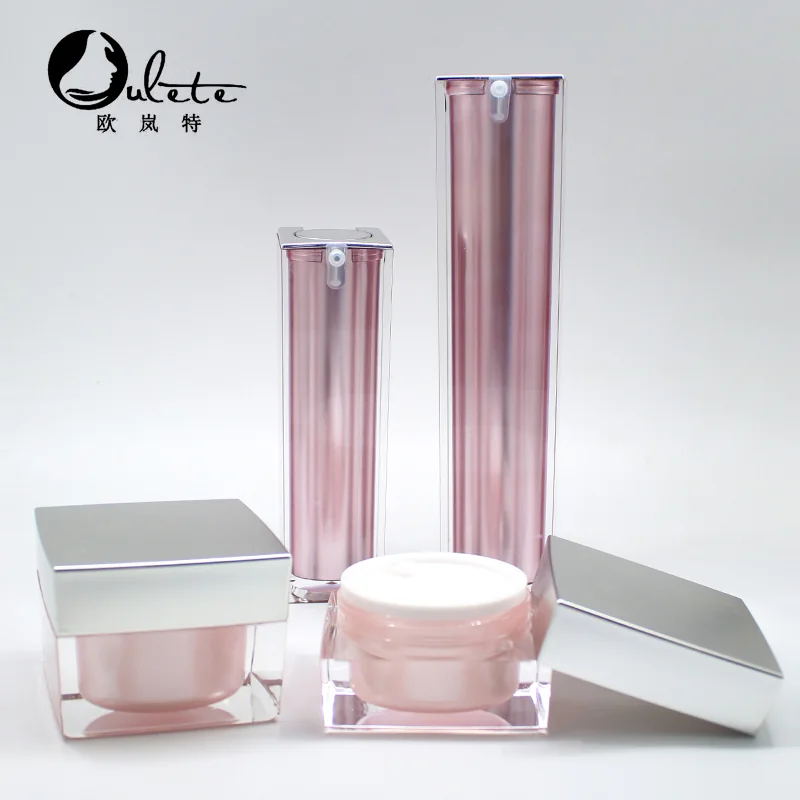
Oulete pink bottle and jar samples with one jar lid removed
On this page · 10 sections
- First identify what actually moved
- Match time, seal state and first-opening history
- Worked example: similar percentages, different opening results
- Turn the result into a specific next decision
- If one head is lower at both time points
- If results differ mainly after sealing or conditioning
- If a reclosed pack is being compared with a never-opened pack
- If two laboratories disagree
- Define what the report can approve
- Bring the selected assembly into the sourcing discussion
A bottle supplier reports an opening torque of 0.82 N·m. The filler reports 0.41 N·m. Has the closure lost half its opening resistance—or did the two teams measure different packs, at different times, after different operations?
You cannot decide from those two numbers. Before comparing cosmetic cap torque reports, identify the threaded joint, the opening event, elapsed time, process state and specimen history. Then compare the individual readings under an agreed method. A percentage alone cannot establish that a closure is easy to open, leak resistant or ready for production.
This guide shows how to review that evidence, using a worked example. All example readings are hypothetical. They are not Oulete test results, acceptance limits or recommended filling settings. The method of comparison applies to an identified continuous-thread cap and container; snap-on closures, flip-lid opening forces and pump locks require different questions.
First identify what actually moved
“Cap torque” can describe tightening the cap onto a neck, starting its first removal, or opening it again after it has been reclosed. Those are different measurements and histories. Ask which event the reported value captures, in which direction, with which instrument mode and unit. A column headed “peak” is incomplete if the two reports select different events on the opening trace.
The joint matters as much as the cap's appearance. For example, MENSHEN's 52128..3 product page identifies a screw-on flip-top closure with a cone seal. Turning that threaded closure on its container is a different action from lifting its hinged lid. A lid-opening force cannot be substituted for threaded-cap removal torque. Those details describe MENSHEN's specific model, not an Oulete configuration.
For a jar with an inner disc, specify whether the reported event is unscrewing the outer lid or removing the disc. For a dropper pack, distinguish the threaded collar from any other opening action. Begin with the selected cap and container drawing revisions and the actual sealing components. A nominal neck diameter alone does not identify that assembly; use the neck-finish guide to frame the drawing request.
Match time, seal state and first-opening history
Two useful supplier sources illustrate why the timing needs to travel with the number. Enercon's application and removal torque guide discusses a one-minute pre-sealing check in an induction-sealing context, as well as changes after sealing. The Cary Company's torque guide discusses settled removal readings at around 24 hours. These are source-specific contexts, not interchangeable universal instructions for cosmetic packs.
A pre-seal reading and a post-seal reading may answer different questions. A room-temperature empty-pack result and a filled, conditioned-pack result may also answer different questions. Record what happened between capping and opening: filling, sealing, storage orientation, temperature exposure and the defined conditioning interval. If the state differs, keep the results separate until the responsible technical team defines a valid comparison.
First opening also requires a never-opened specimen. You cannot open a cap immediately, screw it back on, then call its next measurement the first-opening result after storage. That second measurement includes a reclosure history. It can be useful for a repeated-use question, but it does not replace a separately identified, unopened specimen at the later time point.
For a timed first-opening study, allocate separate specimens to each time point and preserve their identities. Have the responsible team choose the sample count, conditioning and acceptance criteria. The small dataset below exists to make the arithmetic visible, not to prescribe that study design.
Worked example: similar percentages, different opening results
Imagine one identified cap, container and seal configuration sampled from three capper heads. Each head supplies two never-opened specimens for an initial check and two different never-opened specimens for a check after 24 hours. The comparison assumes the same defined opening event, instrument method and reporting unit for every reading. The 24-hour interval is an illustrative choice, not a recommended interval for your package.
Hypothetical first-opening readings, in N·m
On a narrow screen, scroll the table sideways to see the 24-hour readings and ratios.
| Capper head | Initial cohort readings | Initial mean | Separate 24-hour cohort readings | 24-hour mean | Ratio of means |
|---|---|---|---|---|---|
| H1 | 0.80, 0.84 | 0.82 | 0.64, 0.66 | 0.65 | 79.3% |
| H2 | 0.82, 0.86 | 0.84 | 0.65, 0.67 | 0.66 | 78.6% |
| H3 | 0.50, 0.54 | 0.52 | 0.40, 0.42 | 0.41 | 78.8% |
For this example only, define a descriptive retention index = mean of the conditioned first-opening cohort ÷ mean of the initial first-opening cohort × 100. It is a ratio between separate cohorts. It is not a measurement of the same cap losing torque, an ASTM acceptance formula, or a comparison against application torque.
For H1, the calculation is 0.65 ÷ 0.82 × 100 = 79.3%, rounded to one decimal place. Pooling all six readings at each time point gives initial and conditioned means of approximately 0.727 and 0.573 N·m. Their ratio is 78.9%, calculated from the unrounded means.
The percentages look similar. The absolute values do not: H3 is lower than H1 and H2 in both cohorts. A pooled “78.9% retained” headline conceals that pattern. Keep the individual readings, head identities and allocation records beside any summary.
There is still no pass or fail. No agreed opening window appears in this example, and two readings per head do not establish production variability or process capability. Nor does the pattern prove that head H3 caused the difference. Part allocation, component variation, actual application conditions and measurement handling remain possible investigation paths.
The purchasing decision is to resolve the pattern before accepting the three heads as equivalent, not to increase a machine setting from this table. A changed setting would need its own evidence on the selected pack.
Turn the result into a specific next decision
If one head is lower at both time points
Preserve that head's identity in the investigation. Check whether its specimens used the same component lots and configuration, how they were allocated, and whether the application conditions were verified. A capper's displayed setting is not, by itself, a measurement of every assembled joint. Confirm the measurement setup before treating the observed head pattern as a machine fault.
In the worked example, H3 needs this investigation even though its percentage resembles the other two heads. Averaging it into the line result would remove a useful distinction from the record.
If results differ mainly after sealing or conditioning
First check whether the comparison really held the pack, head and measurement method constant. Keep sealed and unsealed results labelled separately. Review the actual intervening conditions with the filler and component suppliers. Do not assign the change to a liner, resin or formula from opening torque alone.
If the initial readings came from one head and the later readings from another, you cannot isolate a time effect. Rebuild the comparison with a defined allocation rather than labelling the difference “torque loss during storage.”
If a reclosed pack is being compared with a never-opened pack
Separate the reports. Ask whether the decision concerns first consumer opening or repeated opening during use. Retain the reclosure method and number of opening cycles for the second question. Converting a repeatedly opened specimen into an “aged first-opening” result changes the meaning of the evidence.
If two laboratories disagree
Compare the selected opening event, instrument mode, unit, fixture, handling and instrument verification records before pooling results. Mark-10's historical CT-series manual, revision 2, cautions that excessive clamping can deform a thin-walled specimen and that sudden hand loading can affect a reading. Those are useful setup checks; they do not establish that a particular instrument is suitable, calibrated or owned by Oulete.
Record any method difference that remains unresolved. A table with more decimal places cannot repair an unidentified difference in how the pack was held or opened.
Define what the report can approve
Before a trial, agree which result will support which decision. An initial application check may help assess the capping setup. A conditioned first-opening result addresses a later opening state. A repeated-opening result addresses a use history. Keep the measurement event, approved range, conditions and responsibility for sign-off attached to each one.
For a project considering a formal test method, ASTM lists D2063/D2063M-24 for torque retention of continuous-thread closures using manual, non-automated equipment. The public method identity does not supply your project's acceptance limits. Have the responsible laboratory obtain and review the applicable method before specifying conformance; this guide does not reproduce its procedure.
Opening torque also does not establish leakage performance, formula compatibility, transport survival, tamper evidence or child resistance. Those need their own applicable qualification. Use the filled-pack leak-testing guide for the separate containment question, and keep any unresolved test outside the approval scope.
A useful approval statement identifies the exact assembly and revision, the measured event, the agreed conditions, the result and the decision it supports. “Torque passed” without those details leaves purchasing unable to tell whether the next delivery matches the tested pack.
Bring the selected assembly into the sourcing discussion
When discussing caps and closures with Oulete, send the cap and container references, neck drawings, seal or liner details, formula and filling context, and the decision your test report needs to support. If you already have reports, include individual readings and specimen histories rather than only a percentage summary.
Ask which exact parts and supporting records are available for that proposed assembly. An appearance sample cannot establish a torque window. This guide does not provide a qualified Oulete cap-and-container pairing, an Oulete torque dataset or an approved filling protocol; establish those for the selected project before approval.
Keep the agreed configuration with the pre-production sample approval. That gives the buyer, filler and component supplier one defined pack to discuss—and prevents a valid result for one closure from being carried over to an unverified alternative.
Photographed at Oulete
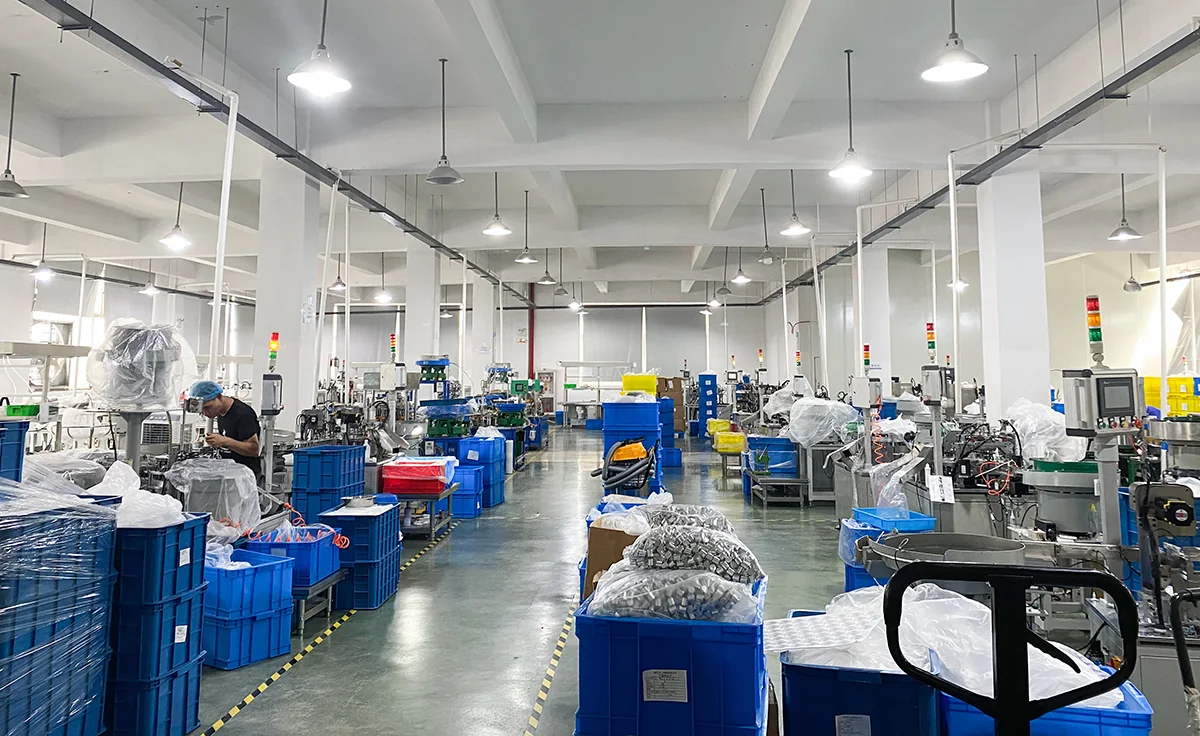
Assembly workstations in the factory
See the facility and visible operations behind a packaging enquiry. For your selected assembly, ask which steps apply and request the corresponding sample and inspection records.