Cosmetic packaging · Made for your brand
Cosmetic Packaging Data Sheets: A Distributor’s Guide
A cosmetic packaging product data sheet should identify the sellable configuration, distinguish catalogue references from approved specifications, and connect claims to current evidence. Consider a hypothetical distributor listing. The…
Containers only — no compounding or filling.

Operator's hands positioning a packaging component at an assembly fixture
On this page · 12 sections
- Give the sellable configuration its own identity
- Separate body dimensions, capacity and complete-pack data
- Describe material and performance at the correct component scope
- Control photographs, drawings and the sales description
- Add commercial and logistics fields without making them permanent promises
- FAQ
- Is a bottle-body model enough to identify a complete pack?
- Can catalogue dimensions be republished as approved production specifications?
- What should an unresolved field show on the product sheet?
- Can the distributor copy factory photographs into its own catalogue?
- Can one data sheet combine similar packs from different suppliers?
- Which fields need reconfirmation before a repeat order?
A cosmetic packaging product data sheet should identify the sellable configuration, distinguish catalogue references from approved specifications, and connect claims to current evidence.
Consider a hypothetical distributor listing. The distributor receives a supplier photograph, a body code and a capacity table. Its sales team turns those into a catalogue listing called “complete serum bottle.” The image includes a dropper, but the quotation does not identify that applicator. The original dimensions describe the body, while the new listing presents them as complete-pack dimensions. The catalogue has become more definite than its source.
Build the product record before writing the sales description. The sheet should tell the reader which parts are included, what each value describes and where its evidence comes from. It can remain useful while some fields await confirmation, provided those limits are visible. A well-controlled data packet helps sales, purchasing and a customer’s filler describe the same proposed product.
Give the sellable configuration its own identity
A distributor’s sellable configuration is the combination of parts and services offered under an identified sales reference. It may include only a bottle body, a matched body and dispenser, or a decorated complete pack. The data sheet needs to state that scope explicitly. A manufacturer’s body model should not silently become the distributor’s reference for several different complete assemblies.
Retain the supplier’s original part reference alongside the distributor’s sales reference. Identify the body, capacity, proposed dispenser and other applicable components, then connect them to the current quotation. If a customer selects different decoration or a buyer-supplied closure, record that configuration separately enough for the responsible teams to distinguish it. Appearance similarity is not an adequate product identity.
GS1’s Global Data Model attribute guide distinguishes the information associated with product, case and pallet levels. That distinction is useful for building a product record with clear units. Apply the distributor’s actual identification and data-exchange requirements; the guide is not a reason to invent a barcode or declare a particular identifier mandatory for every empty cosmetic pack.
| Product identity field | Information to retain | Sales ambiguity it prevents |
|---|---|---|
| Distributor sales reference | Controlled reference for the offered configuration | Similar listings representing different parts |
| Supplier body reference | Original model and capacity | Losing the link to the manufacturer’s documents |
| Complete assembly | Included body, dispenser, cap and relevant fitments | Photograph mistaken for a complete offer |
| Supplied state | Fitted, subassembled or separate components | Assembly responsibility left unstated |
| Decorated version | Part-specific finish and artwork reference | One generic image representing every customer version |
| Document control | Sheet revision, source references and responsible owner | Obsolete specifications circulating through sales |
Where a supplier family has companion capacities, give each offered configuration a clear identity. Oulete’s ZK29-family catalogue lists 15, 30 and 50 ml options, but the family name does not establish a common dispenser for every variant. The ZK29 selection page provides the family context; the distributor sheet must identify the particular proposal it offers.
Keep commercial availability separate from physical identity. The same controlled configuration can appear in a current stock offer or a future made-to-order quotation. The sheet should show which availability statement applies and its confirmation date where relevant. A timeless product specification is not proof that all required components are presently allocated to a distributor’s order.
Separate body dimensions, capacity and complete-pack data
Every product value should name the object measured, the unit and the source status. Body height, assembled closed height and outer carton height describe different objects. Nominal capacity, brim-full capacity and the intended filling specification answer different questions. A shortened catalogue table can lose those distinctions if headings are removed or translated into a more confident sales claim.
Oulete’s supplied Product Catalog 2, printed page 07, provides a useful example. TY030-30ML lists a body height of 55.9 mm, body diameter of 35 mm, neck diameter of 20 mm and brim-full capacity of 33 ml. These are catalogue references for shortlisting a nominal 30 ml body. They do not establish an independently proposed complete dropper assembly or its qualified fill.
| TY030-30ML catalogue-only field | Source value | Safe status in the distributor record |
|---|---|---|
| Body reference | TY030-30ML | Preserve the manufacturer’s code |
| Nominal selection | 30 ml | Capacity reference in the selected model designation |
| Body height | 55.9 mm | Catalogue body reference; request current drawing |
| Body diameter | 35 mm | Catalogue body reference; not a tolerance statement |
| Neck diameter | 20 mm | Diameter notation; complete interface needs confirmation |
| Brim-full capacity | 33 ml | Catalogue reference; not the customer’s filling instruction |
| Complete assembled envelope | Not established for a separately proposed applicator | Request the matched assembly document |
| Pump or dropper performance | Not established by the body row | Request the identified component and applicable evaluation |
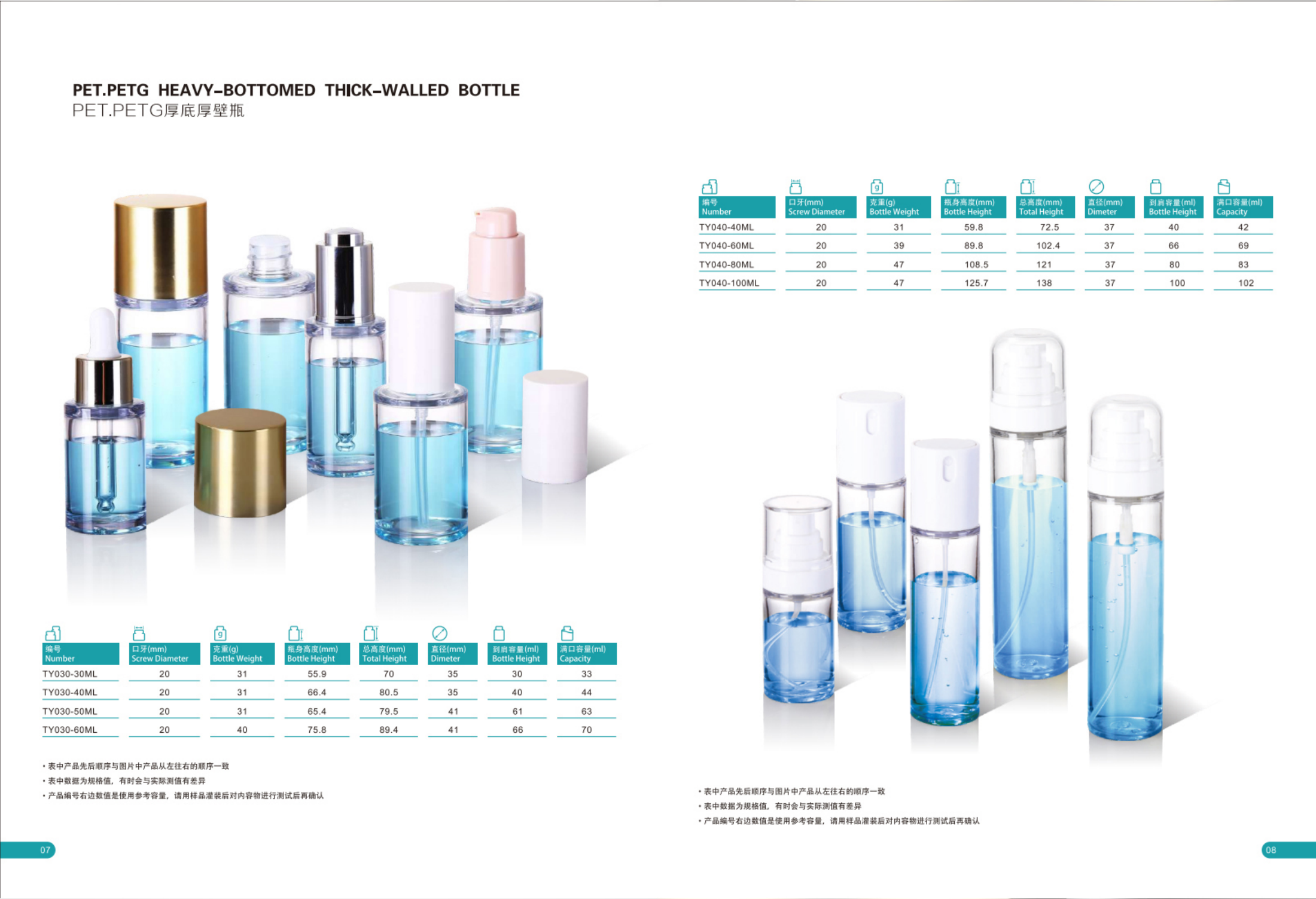
Original Oulete-supplied catalogue spread, retained without changing its printed values. The example above preserves reference status; the current complete-pack proposal needs its own documents.
Berlin Packaging’s neck-finish guide distinguishes separate dimensions of a finish. A neck-diameter figure should therefore remain a diameter figure unless the applicable drawing identifies the complete interface. Do not add a familiar thread-finish suffix to the TY030 catalogue notation simply to populate a distributor’s search filter or product comparison column.
Use the nominal and brim-full capacity guide when preparing the capacity fields. The customer’s filler needs to review actual usable fill and headspace with the chosen components and process. Keep that decision connected to the selected assembly rather than republishing the catalogue’s brim-full value as an instruction to fill to that level.
Describe material and performance at the correct component scope
A product data sheet should distinguish the visible body description from the construction of the complete assembly. Ask the supplier for the body, inner container, dispenser, cap, seals and applicable inserts as relevant to the design. Record the material proposal by part. The customer can then identify the configuration its technical team needs to review rather than assuming that the headline material covers everything.
APC Packaging’s JW jar description identifies different materials for the outer jar and inner bowl. That product-specific example belongs to APC. It demonstrates why a distributor should preserve component scope when transferring a supplier’s material description into its own listing. It does not identify the construction of an unrelated Oulete model or establish compatibility with a customer’s formula.
The Oulete materials overview supports a material shortlist. The proposed material and contact assembly still need their own records. If a field remains unresolved, identify the missing supplier information and its responsible reviewer. A blank qualified field is more useful than a grade, recycled-content value or contact-path claim inferred from a category photograph.
Performance fields need the same scope discipline. A pump output statement should identify the proposed dispenser, unit, evaluation conditions and applicable contents. A compatibility statement needs its evidence for the relevant configuration. The body’s capacity does not establish either. Link detailed questions to the pump-output guide instead of importing an unrelated performance value into a body data sheet.
| Claim or field | Evidence connection to retain | Wording to avoid without that connection |
|---|---|---|
| Body material | Identified body and proposed material reference | Whole assembly assumed to have the same composition |
| Contact construction | Supplier-confirmed relevant components and surfaces | Contact path inferred from visible appearance |
| Dispensing information | Named dispenser, units and applicable evaluation | Universal dose copied from another model |
| Formula evaluation | Contents, assembly and assessment record | Compatible with every serum, oil or cream |
| Recycled-content statement | Relevant component and supporting scope | Body claim transferred to all included parts |
| Certification or test document | Issuer, identity, scope and relevant dates | Factory document represented as qualification of every pack |
Do not collapse proposed, reviewed and accepted fields into one status. The supplier can propose a material; the customer’s responsible team can review it; an order can identify the accepted configuration. Show the relevant stage beside the evidence. This prevents a sales colleague from presenting an early proposal as a completed formula or filling-line qualification.
Keep exclusions readable to the customer. If the sheet covers the body only, say so near the product identity. If an applicator is available only through a separate matched proposal, make that relationship visible. The customer should not need to interpret an internal source file to discover that the attractive complete-pack image represents an option rather than the included quoted assembly.
Control photographs, drawings and the sales description
A useful catalogue asset needs an identity and an authorised use scope. Ask the source owner which photographs, drawings and descriptions the distributor may reuse, in which channels, and with what attribution or restrictions. A file available on a supplier website should not be treated as an unrestricted asset licence. Keep the owner’s response with the source record.
Product photographs should identify the configuration they represent. A family image can introduce a range, while an individual listing needs an appropriate relationship to the offered body and components. If a colour or finish is illustrative, label that status. Do not edit a supplier image so it appears to document a different dispenser or an unavailable assembled configuration.

Oulete-supplied showroom photograph used here as a range illustration. A distributor should request identified product assets and an agreed reuse scope for its own catalogue.
Preserve drawing units, dimension names and revision references when adapting a document. A translated table should retain whether it describes the body, assembly or shipping package. If a source column appears ambiguous, ask for clarification and keep the disputed field out of the confirmed specification. Reformatting should make evidence easier to read, not create technical information the supplier never supplied.
Separate the approved sales description from a technical document update. A new photograph can leave the configuration unchanged, while a replacement drawing can reveal a part revision that needs review. The data owner should examine the affected fields and notify the relevant users. A website publishing task should not silently decide that two drawings or assemblies are technically equivalent.
Prepare the customer-facing description from the controlled product record. Lead with the actual format, included scope and supported capacity or appearance options. Follow with the relevant selection and enquiry information. Avoid promotional claims that outrun the evidence packet. The sales team can explain the value of a matched proposal without inventing a stock position, technical approval or guaranteed performance.
Add commercial and logistics fields without making them permanent promises
A distributor product packet needs commercial and logistics information, but those fields can change independently of the physical model. Record the source and current status of the quotation, sample offer and availability statement. Keep the catalogue’s stable body information separate from a dated offer so a future reader can identify which conditions require reconfirmation before placing an order.
Oulete’s confirmed container MOQ baseline is 2,000 pieces for plastic and 5,000 for glass. Those values should not become an automatic minimum for every dispenser, decoration version or mixed order. Request the actual quantity conditions for the offered configuration. The distributor needs to explain how customer demand maps to the supplier’s itemised proposal, not promise that every version shares the body minimum.
| Commercial or logistics field | Source and status to retain |
|---|---|
| Quantity conditions | Current quotation by configuration, colour and artwork |
| Sample scope | What the offered sample represents and applicable charges |
| Availability | Dated supplier confirmation for the included components |
| Timing | Proposed milestone, dependencies and current approval status |
| Packing unit | Actual contents, counting unit and proposed supplied state |
| Package dimensions and weight | Defined package, unit and confirmed or preliminary status |
| Delivery scope | Destination and responsibilities in the applicable offer |
Give stock and allocation distinct meanings in the record. A supplier may have bodies available while the matching pumps or decorated versions remain unresolved. Ask what quantity of the required configuration is confirmed and what is reserved for the order. Do not let a generic stock banner support a precise delivery promise for an unspecified complete pack.
Use the distributor solution page to frame the supplier relationship, and retain the itemised product packet with the actual offer. When similar-looking packs come from different suppliers, keep their source and component records separate. Consolidating them into one marketing family should not conceal different materials, drawings, supplied states or approval evidence.
Send the Oulete sample brief with the selected manufacturer references and the fields missing from the distributor packet. Ask for the matched component proposal, current documents, appropriate sample and authorised product assets. The result should be a product record that sales can explain clearly and the customer’s technical team can review against identifiable evidence.
FAQ
Is a bottle-body model enough to identify a complete pack?
A bottle-body model is insufficient when the offer includes separately identified dispensing and closing components. The data sheet should name the included assembly and supplied state, with the supplier references connected to the quotation. Keep optional or buyer-supplied parts visible so a product photograph does not imply that unspecified components are included.
Can catalogue dimensions be republished as approved production specifications?
Catalogue dimensions should retain their source and reference status unless the current applicable documents support a more specific claim. State whether each value describes the body, assembly or package. Request the selected drawing, revision and agreed limits where required. Do not convert a body reference into a complete-pack production specification through a changed table heading.
What should an unresolved field show on the product sheet?
An unresolved field should identify the missing information, its relevance and the source or responsible party needed to close it. Keep its status distinct from confirmed data. A useful product sheet can support shortlisting while a dispenser or material proposal is pending, provided that pending field is not presented as an included or qualified specification.
Can the distributor copy factory photographs into its own catalogue?
The distributor should obtain an agreed reuse scope from the asset owner before treating factory photographs as catalogue assets. Retain the relevant permission and identify the products or configurations shown. Keep illustrative colours and family photographs labelled appropriately. Public availability of an image does not itself establish unrestricted rights or prove that the photographed assembly is the offered configuration.
Can one data sheet combine similar packs from different suppliers?
A combined comparison can show similar packs, but each configuration needs its own supplier, component and evidence references. Do not merge different materials or drawings into one confirmed specification because the photographs look alike. Keep the source-specific records available so purchasing and the customer’s filler can identify which actual proposal they are reviewing.
Which fields need reconfirmation before a repeat order?
Before a repeat order, reconfirm the offered configuration, relevant document revisions, quantity conditions, availability, timing and packing proposal. Compare any changed component or claim against the accepted evidence record. Update the customer-facing sheet only after the responsible review, so a stable marketing model name does not conceal a different assembly or a stale commercial offer.
Photographed at Oulete
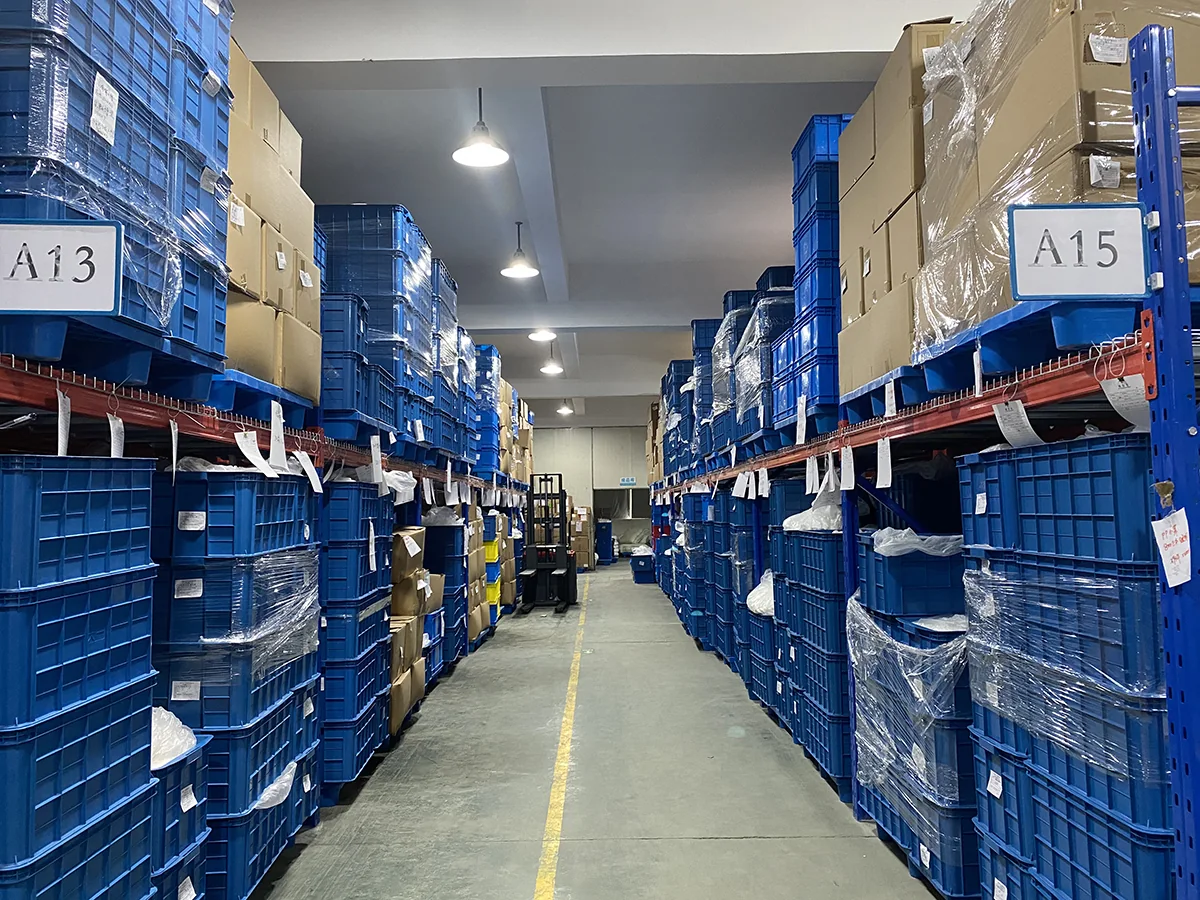
Packing and warehouse photographs
See the facility and visible operations behind a packaging enquiry. For your selected assembly, ask which steps apply and request the corresponding sample and inspection records.