Treatment Pump for Skincare Packaging: Selection and Sourcing Guide
A treatment pump for skincare packaging is a dispenser selected for a controlled application of a serum, lotion or cream. To buy one, specify the formula and intended dose, choose a pump mechanism, match it to a bottle and obtain a…
A treatment pump for skincare packaging is a dispenser selected for a controlled application of a serum, lotion or cream. To buy one, specify the formula and intended dose, choose a pump mechanism, match it to a bottle and obtain a complete sample for the filler. A catalogue dose or a shared neck-size label alone does not approve the finished pack.
This guide helps brand buyers and contract fillers compare an atmospheric dip-tube treatment pump with an airless package, read actual supplier specifications and send a useful sample request. Manufacturer examples are identified as such; their specifications do not describe an Oulete pump.
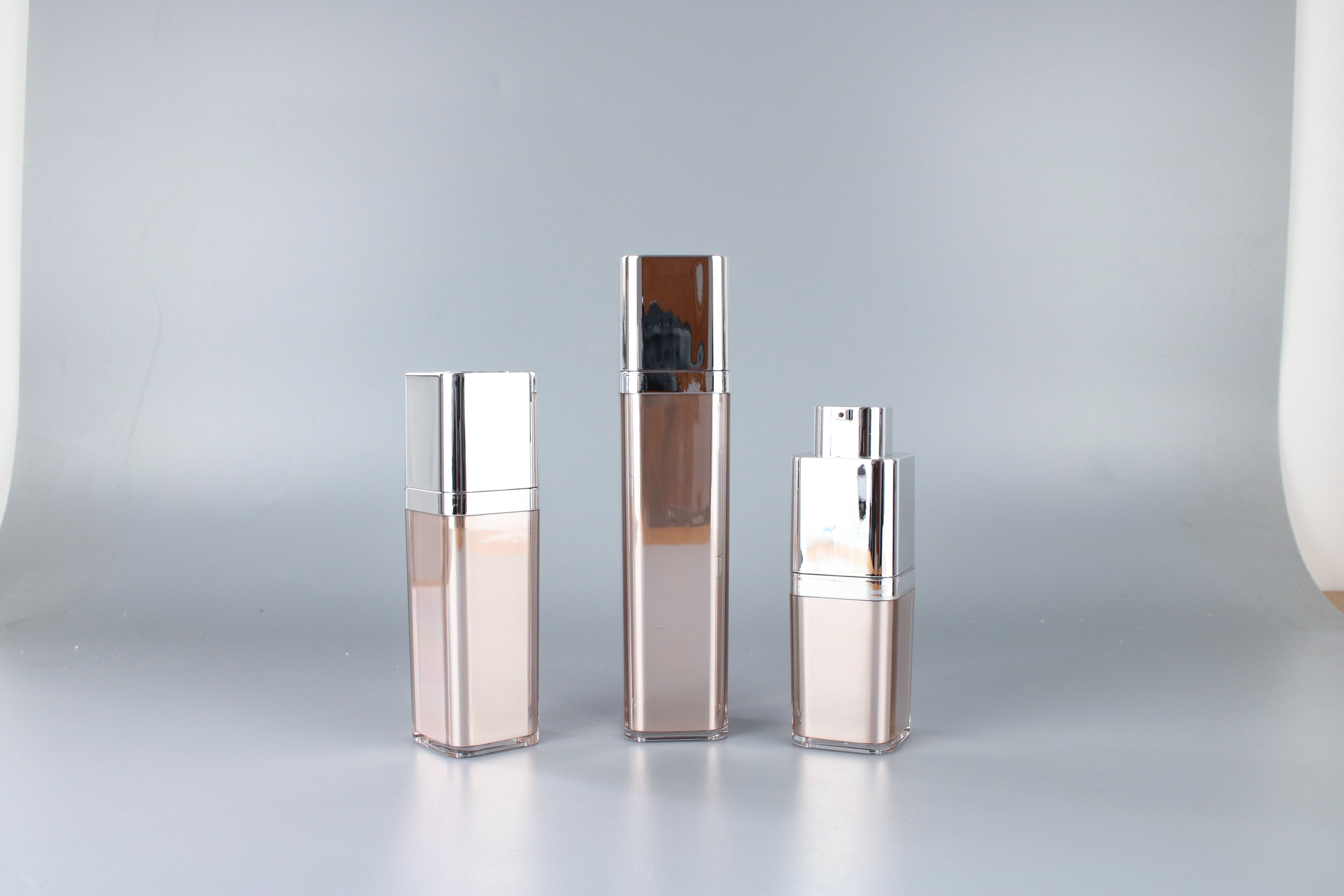
Historical cosmetic bottle samples from Oulete materials. The photo illustrates packaging appearance; the pump model, internal mechanism and current configuration are not identified.
Start with the product and application, then choose the pump system
Write down the intended fill quantity, the amount the consumer should apply, the desired point of application and whether the user should dispense it in one press or several. Share the product's physical description with the dispenser supplier: for example, whether it is a thin serum, a thick emulsion or contains visible particles. A product category by itself is not a viscosity measurement or a compatibility result.
A conventional atmospheric pump draws product through a dip tube into a dispensing chamber. The bottle needs a way to replace the volume dispensed; confirm the venting arrangement with the pump supplier and assess the filled pack. An airless system uses a different package design, often a moving piston or a collapsing reservoir. Ask for the whole system and how it is filled: a component called a “treatment pump” does not by itself make a bottle airless.
If the formula team has identified oxygen exposure or product protection as a concern, compare complete systems with that team. An airless label is not a measurement of oxygen ingress or proof of shelf life. If dispensing a measured portion is the immediate need, compare candidate pump outputs and test them with the actual formulation rather than choosing solely by appearance. See the viscosity and pump selection guide for the measurement conditions to give the supplier.
Compare two treatment pump specifications without treating them as interchangeable
The following examples show how to read published manufacturer records. They are not Oulete products, a recommendation of either option or proof that either fits a particular bottle. Confirm the product revision and commercial terms with the relevant supplier.
HCP Affinity Atmospheric Pump: 701H-702A-702C
HCP's product sheet describes a screw-on dip-tube pump with a slanted actuator, flared collar and GCMI 20/410 neck. It lists PP for the actuator and collar and PE for the dip tube. HCP says its construction keeps the metal spring out of formula contact; that statement applies to its described design and is not a complete wetted-material declaration.
The same sheet is inconsistent about one dosage option: its descriptive paragraph lists 0.12 cc, while its specification table lists 0.15 cc. Both list 0.20, 0.25 and 0.30 cc. Do not resolve the difference by selecting or averaging a value. Before comparing prices or ordering samples, ask HCP which output applies to the exact quoted reference and revision, and how it is determined.
NABO CP20A-2S treatment pump
NABO's CP20A-2S listing identifies a 20/410 pump with a stated 0.25 ml output per full compression, a clear PP overcap and a dip tube made to the bottle height. The listing's commercial conditions belong to NABO and may change. Request an offer for the actual finish, tube and quantity, and ask for the materials of the complete formula-contact path.
These examples show why the complete reference matters. Both records mention 20/410, but that designation alone does not establish sealing, thread tolerances, tube fit or compatibility with every bottle labelled 20/410. The HCP discrepancy also shows why a supplier should resolve a data-sheet conflict before a buyer treats a sample as the correct output variant.
Match the treatment pump to the bottle: four interfaces
1. Neck and closure
Send the bottle neck drawing and revision to the pump supplier and ask for the mating closure drawing. Check the finish designation, thread geometry, sealing surface, dimensions and tolerances as a matched pair. A catalogue entry of “20 mm” describes a nominal dimension; it does not identify the full 20/410 finish. Put responsibility for the mating review in writing, especially when bottle and pump come from different suppliers.
2. Dip tube and pickup
Request the tube material, length reference, end shape, installation method and who cuts it. A tube must be assessed in the proposed bottle and filling arrangement: a tube that is too short can leave more product inaccessible, while one that interferes with the bottle base can alter the assembled geometry or pickup. Do not derive the cut length from bottle height alone; request the supplier's drawing or cut basis and inspect the assembled sample.
3. Formula-contact path
Ask which parts of the exact pump and tube contact the formulation and what material information is available for each. A catalogue list of external actuator and collar materials is not a complete wetted-parts list. If a supplier says the spring is outside the product path, record whose design and revision that statement describes; do not transfer it to another pump. Agree the compatibility assessment and information-sharing route with the formulator.
4. Actuator, collar and overcap
Check the outlet direction and shape against where the consumer should apply the product. Record how the pump is supplied, including actuator, collar, overcap and any lock or clip. The cap must fit the selected actuator and collar, and the filler needs to know whether it arrives assembled. A cover can protect an actuator during handling; it is not by itself proof of leak resistance.
Specify dosage and test a representative filled sample
One cubic centimetre (cc) equals one millilitre (ml). Catalogue dose describes a supplier's stated option; a test with the actual formula answers whether the chosen assembly dispenses acceptably in the project's conditions. The method must state whether each result is volume or mass, how a full stroke is defined, the number and treatment of actuations, and the formula and temperature. See pump output in grams and millilitres for converting mass using the formula's measured density.
Illustration, not a measured result: if a hypothetical product calls for 0.5 ml per use and the selected pump is labelled 0.25 ml per full stroke, two nominal strokes total 0.5 ml. This is only a planning calculation: it does not establish actual delivered volume, the right number of consumer presses, or acceptance of the assembly. Agree those decisions using the test record and representative users.
Before a filler trial, label samples with bottle, pump, tube and overcap references, versions, finish and source. Record whether the supplied components are representative of the proposed order and whether any are prototypes. Agree the sample count and acceptance limits with the relevant teams before testing; no universal threshold is established by the manufacturer examples above.
For an identified filled assembly, the project plan can include: priming and the number of initial actuations; output after priming; full and partial strokes; pause and restart; nozzle cleanliness after dispensing; residual product; package leakage and closure integrity; and compatibility after the agreed exposure and storage conditions. These are potential evaluations, not tests claimed to have been performed by Oulete. Record failures by sample and condition so the supplier can inspect the actual pack.
Make pump quotations comparable before placing an order
A pump-only quotation and a filled-pack-ready offer do not cover the same work. Compare the following in writing:
Scope: bottle, pump, dip tube, collar, overcap, assembly and packing. Identify who cuts the tube and supplies each component.
Variant: supplier and reference, neck drawing revision, actuator and finish, nominal dose option, tube specification and any decoration.
Commercial basis: quantities and MOQ for each component or process, colour and decoration, tooling or setup charges, samples, unit price, currency, delivery terms and quote validity. Leave an unstated item open rather than assigning a default.
Change control: identify who informs the buyer of a substitution and whether a changed pump, bottle neck, tube or decoration requires renewed sample review.
Ask the contract filler to review sample identification, bottle handling, orientation, fill process, pump application, tube installation, capping and packing. Record who owns each check and whether the line can handle the actual sample. A supplier's component drawing and a filler-approved assembly answer different questions; retain both with the quotation.
Copyable treatment pump RFQ for a skincare project
We are sourcing packaging for [product type], with a planned fill of [quantity and unit]. We need [pump only / bottle and pump assembly] for [target use and desired amount per application]. Our formula is [physical description]; detailed formula information can be shared through an agreed confidential channel.
Please quote the exact pump and actuator reference, bottle reference and neck drawings, nominal output and its test basis, dip tube specification and overcap or lock. Identify formula-contact materials available for the proposed version. State which parts, assembly, colours and decoration are included; list component and decoration MOQs, sample terms, lead time, delivery terms and quote validity. Please identify any unavailable information and provide a representative complete sample for our filler to review.
For an Oulete enquiry, provide the same scope and ask for the actual bottle and dispenser proposal. The historical photograph above does not establish the pump type, current model availability, output or component MOQ. Those details must be confirmed for the selected configuration.
Frequently asked questions
Is a treatment pump the same as an airless pump?
No. “Treatment pump” describes a dispensing use or format; whether a pack is airless depends on the complete system. Confirm the reservoir and filling method for the proposed assembly.
Does 20 mm mean that a treatment pump fits a 20/410 bottle?
No. A nominal 20 mm entry alone does not identify the complete neck finish. Compare the bottle and pump drawings and review the assembled sample.
Can I use the catalogue output to calculate the dose for my serum?
It is useful for shortlisting, but it is not a measured result for your serum. Test the actual formula in the identified assembly using an agreed method and units.
Is the spring always outside the formula path?
No. Construction varies. Ask the supplier for the contact path and available material information for the exact pump version.
Photographed at Oulete
From the sample room to packed containers
See the facility and visible operations behind a packaging enquiry. For your selected assembly, ask which steps apply and request the corresponding sample and inspection records.
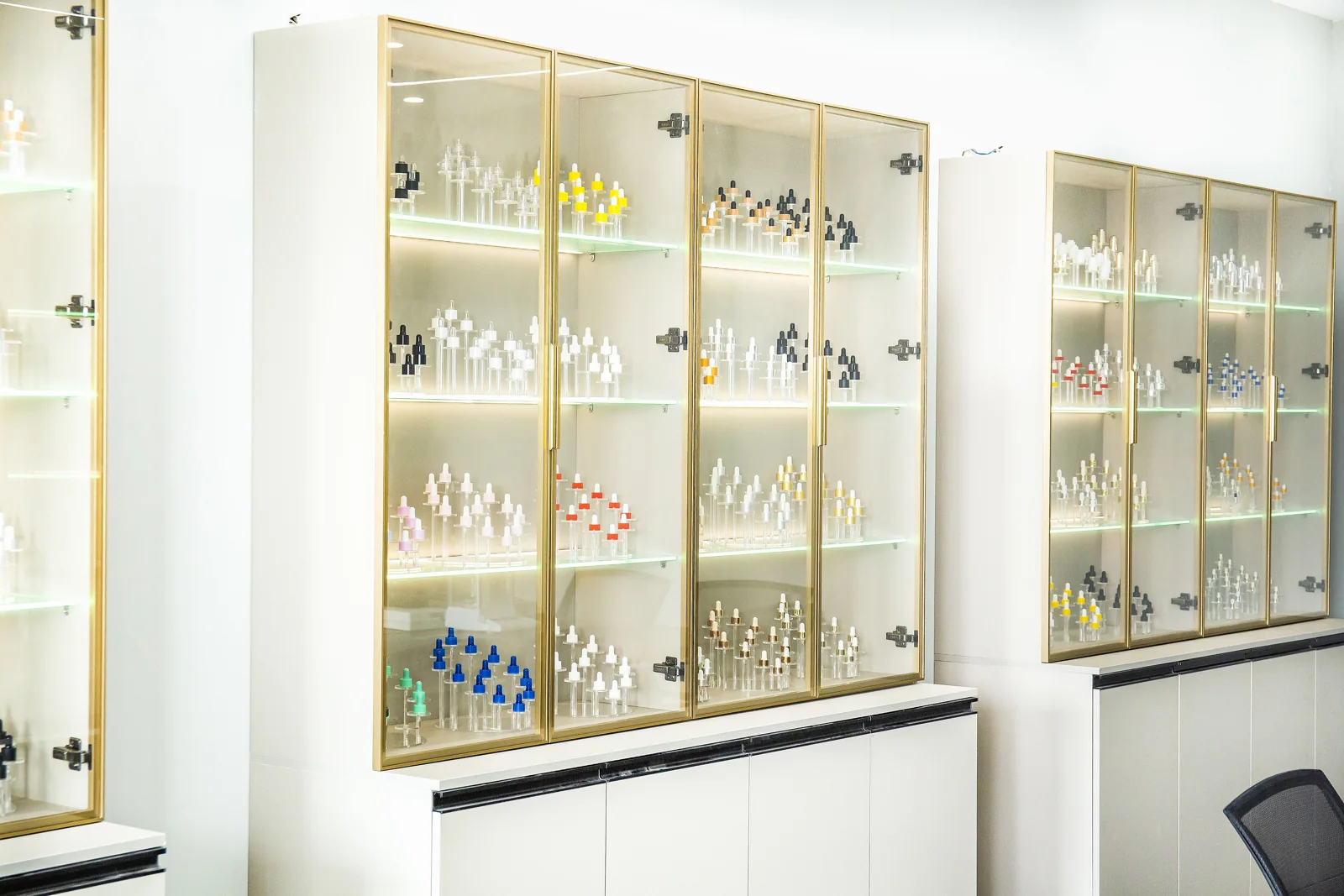
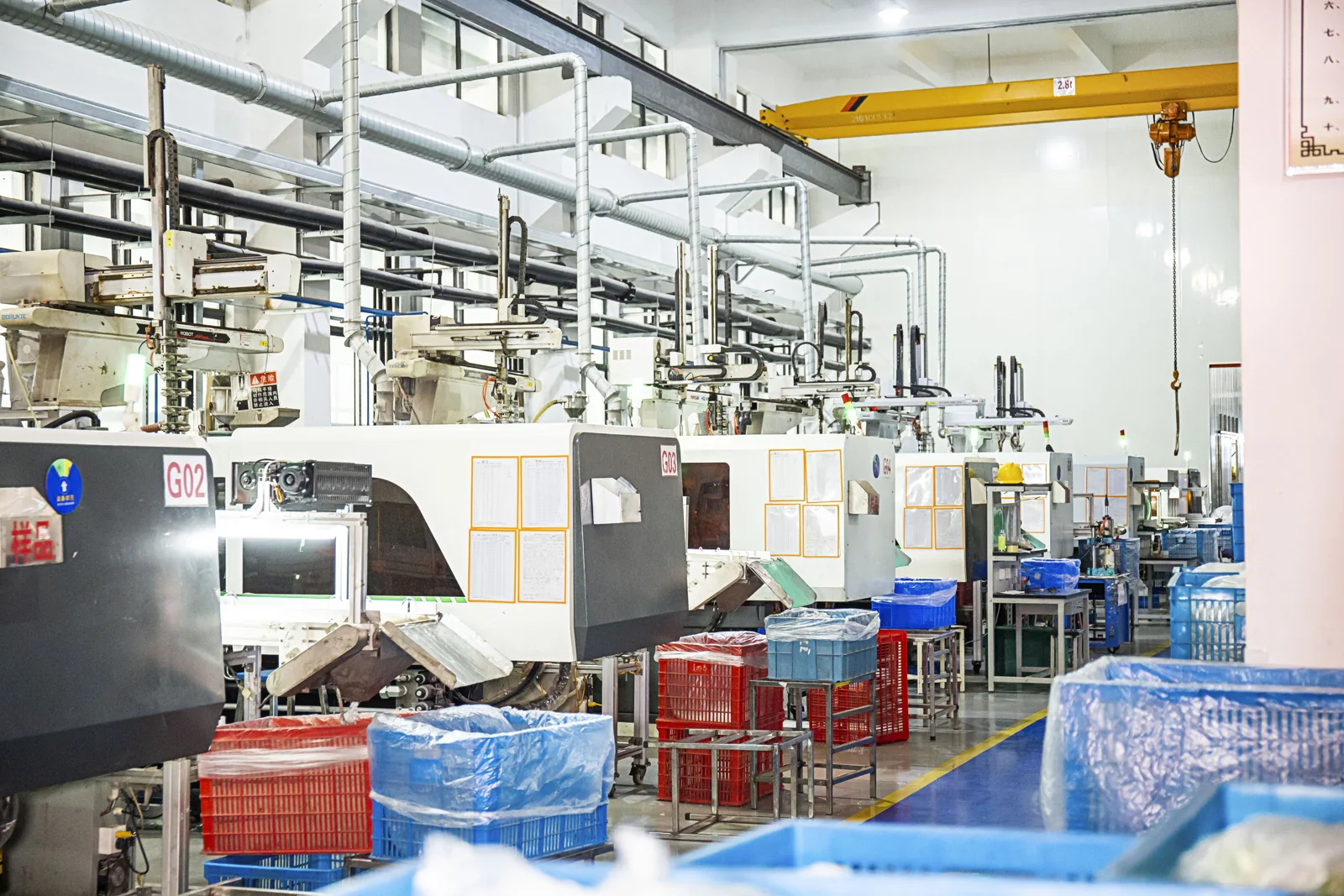
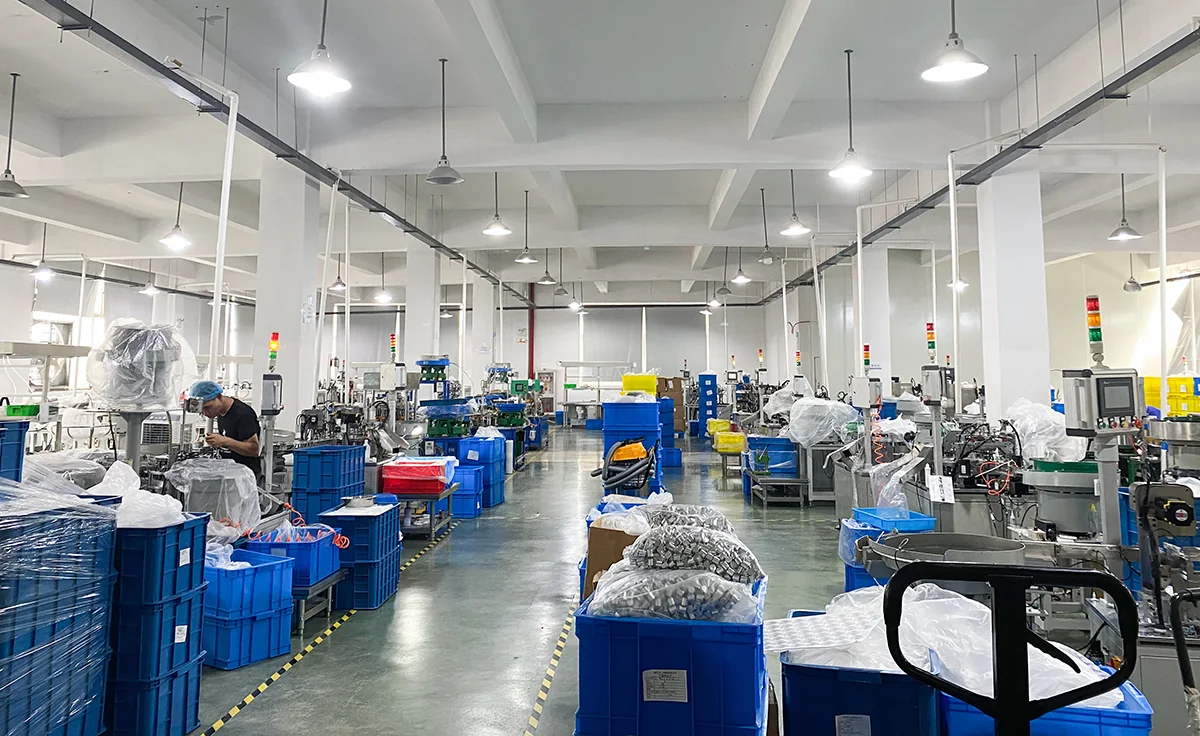
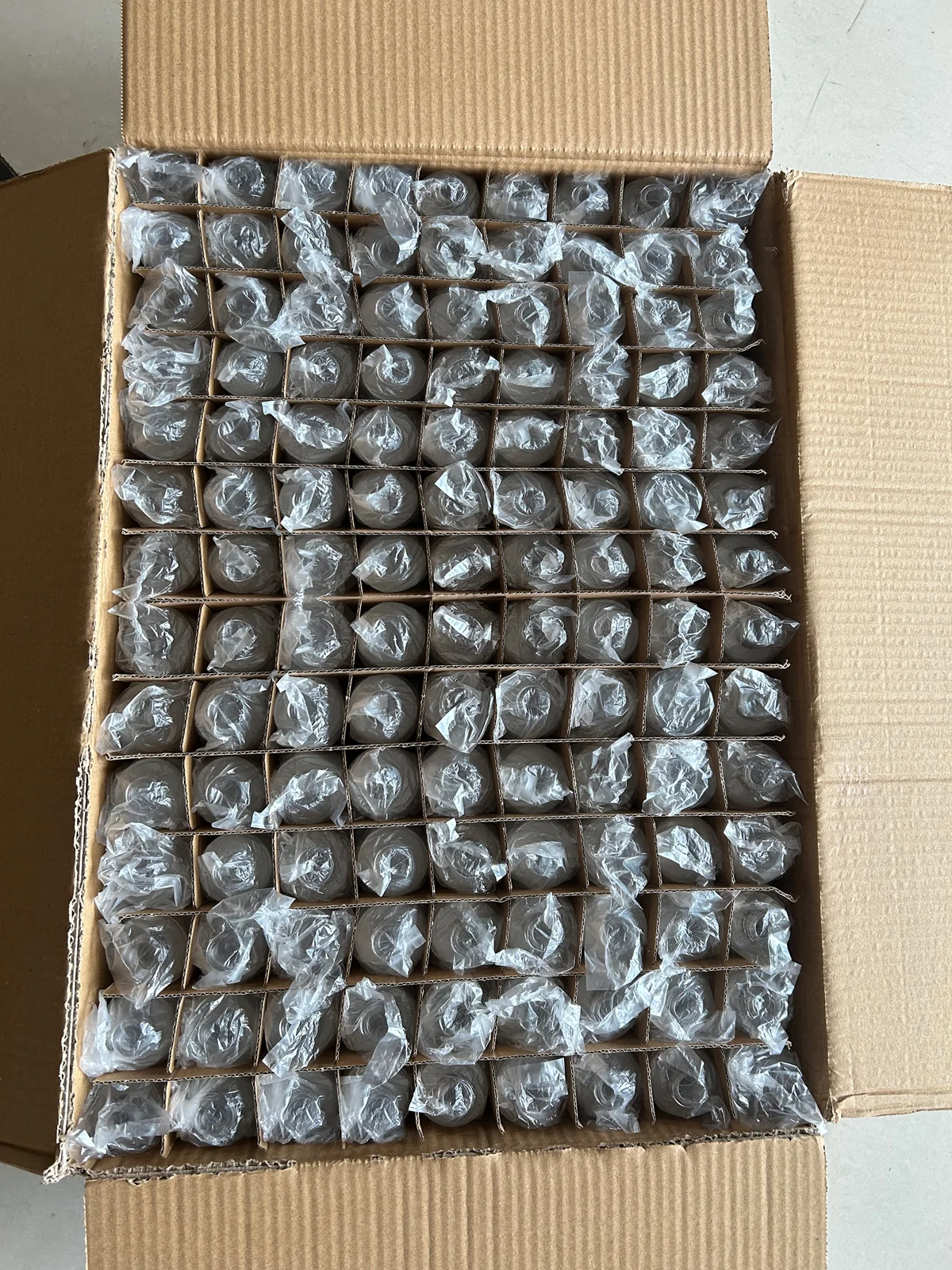
Cosmetic packaging samples displayed in the Oulete showroom.Row of injection molding machines in the Oulete workshop.Wide view of the Oulete packaging assembly workshop.Cosmetic containers separated by protective packaging inside a carton.
Research with AI
Paste this prompt into your assistant. Check its answer against the page and the approved packaging specification.