Cosmetic packaging · Made for your brand
Eye Cream Tube Applicators and Caps: A Buyer’s Guide
Choose an eye cream tube applicator by comparing how the formula exits, how the tip touches the skin and how the cap protects that tip after use. A roller, a shaped surface and a narrow outlet do not create the same user experience, even…
Containers only — no compounding or filling.
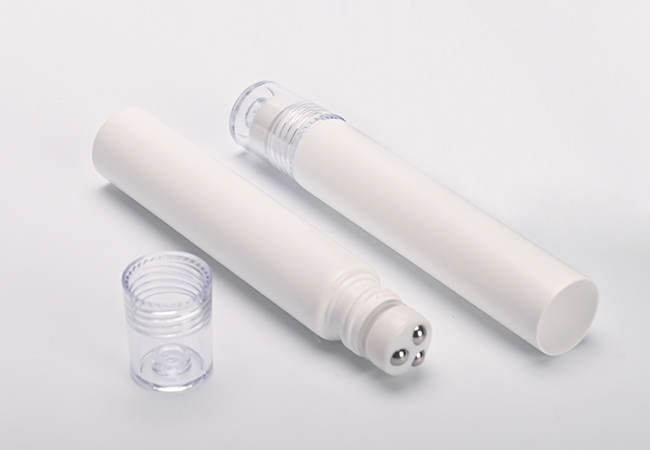
White cosmetic tubes with a three-ball contact head and a separate transparent cap
On this page · 13 sections
- Choose an eye cream applicator for the intended use
- Check the applicator, tube and cap interfaces
- Compare eye cream tube supplier specifications
- Test the filled eye cream tube and cap
- Plan the applicator tube filling handoff
- Eye cream applicator packaging RFQ checklist
- Eye cream applicator packaging FAQ
- Is a roller applicator interchangeable with another tube of the same diameter?
- Does a protective cap seal the applicator outlet?
- Can a metal-looking tip be assumed to be stainless steel?
- Is a direct applicator hygienic enough to replace a preservation assessment?
- What is the minimum order for an eye cream applicator tube?
- Can I request a custom eye cream tube with an applicator?
Choose an eye cream tube applicator by comparing how the formula exits, how the tip touches the skin and how the cap protects that tip after use. A roller, a shaped surface and a narrow outlet do not create the same user experience, even when the tubes appear similar. Request an assembled sample and evaluate it with the actual formula before approving the cap, decoration or production order.
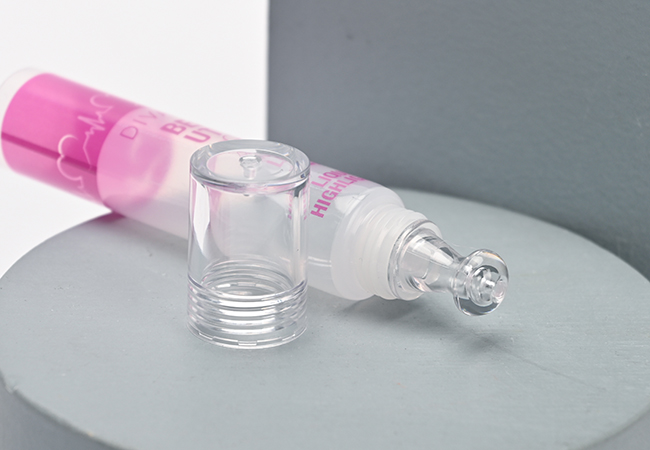
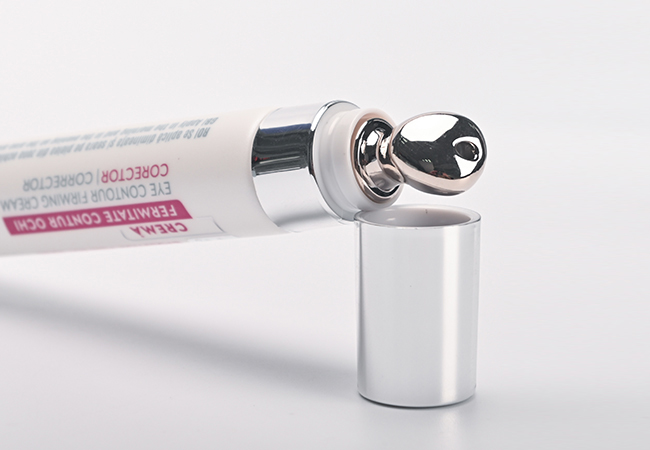
This guide is for skincare brands, packaging buyers and contract fillers comparing an applicator tube. The Oulete photographs below are historical supplied samples for visual reference; the exact model, materials, current availability and component arrangement need confirmation. They do not show a documented formula test.
Choose an eye cream applicator for the intended use
Write down what the customer should do in one use: remove the cap, dispense, spread the product, replace the cap and store the tube. Decide whether the package should place a small amount for the user to spread with a fingertip, or whether its surface should touch the skin directly. The latter adds questions about surface finish, retained product, cleaning instructions and repeat use.
Ask the formulation owner whether the product flows when gently squeezed and whether it contains particles or ingredients that require special contact-material review. Do not assume a shiny head is stainless steel, that a white head is ceramic, or that a visually similar tip has the same internal flow path. Request a component material declaration for the actual configuration.
On small screens, swipe the table sideways to compare all columns.
| Tip geometry | What the buyer is selecting | What to check in a filled sample |
|---|---|---|
| Narrow outlet | Product is placed through an opening; the user may spread it separately. | Control of the amount, stringing or drips after squeeze release, outlet cleaning and cap contact. |
| Fixed shaped contact surface | The outlet and surface guide direct application. | Flow location, smoothness of the actual surface, residue around edges and cap clearance. |
| Single or multiple rolling elements | Moving contact elements meet the product and skin. | Movement with the intended formula, evenness across elements, trapped residue, closure and repeat-use condition. |
These are comparison questions, not claims that every item in a category has the same mechanism. Ask for a section drawing or a physical disassembled sample if the location of the outlet or moving parts is unclear.
Check the applicator, tube and cap interfaces
Tube to applicator. Identify the shoulder, outlet and method by which the head is retained. Mark whether the applicator arrives fitted to the empty tube and whether any part can be removed without damaging the seal. Ask the supplier to show the relevant dimensions, tolerances and revisions on the drawing; a nominal tube diameter does not establish interchangeability between heads.
Applicator to formula. Request the complete list of parts that may touch the product, including moving elements, inserts, seals and any coating or adhesive where applicable. A decorative outer surface is not automatically a wetted surface, and a drawing of the exterior may omit an internal insert. The formulation owner determines the compatibility assessment with the selected materials, finish and formula.
Cap to assembly. Identify where the cap retains and where it seals, if it has a sealing function. A cap can cover a head without sealing the outlet. Check clearance around the application surface and whether product left after use transfers to the cap. Ask how the closure is opened and reclosed, and whether the approved cap is included in the quotation.
Compare eye cream tube supplier specifications
Manufacturer listings are useful because they expose what needs to be specified. ASME's eye-cream tube page identifies its own compact tube families and offers several applicator concepts. Function Packaging's TH190655 listing identifies a 19 mm tube and a zinc-alloy applicator for that supplier's configuration. Ask each supplier for the exact drawing and quote revision: the same nominal diameter does not establish the same shoulder, cap fit or wetted materials.
Compare like-for-like quotations. First identify whether each quote includes the tube body, head, protective cap and assembly; ask whether the tip is fixed, rolling or otherwise configured. Then request the same three documents for each offer: a drawing showing attachment and cap clearance, a list of product-contact materials, and the sample and commercial terms for the quoted configuration. Record any missing field as unconfirmed instead of treating a blank as a pass.
A useful comparison ends with an approval decision: a visually attractive head with unknown wetted materials remains a sample candidate, while a documented assembly that cannot be filled by your line needs a revised filler plan or a different pack. This distinction can save a buyer from selecting a unit price before establishing what is included.
For an Oulete enquiry, identify the preferred historical image as a visual reference, then ask which current tube, applicator and cap assembly can be proposed. Do not treat the competitor's diameter, material, MOQ, production time or test claims as an Oulete offer. The Oulete 19 mm tube page is a starting point for a size enquiry, not proof that every pictured head fits every 19 mm tube.
Test the filled eye cream tube and cap
Before comparing appearance, label each sample with the tube, applicator and cap references, their drawing revisions, the formula batch, fill amount and the date. Agree the sample count and the acceptance criteria with the brand, supplier and filler before a trial. The following is a practical planning sequence, not an Oulete test report or a universal laboratory standard.
- First dispense: Open the cap and apply the intended squeeze. Record when the formula reaches the outlet, the initial amount and any air or inconsistent flow. Do not compare a partly primed sample with a newly filled one as equivalent.
- Normal use: Repeat a defined use gesture with the same formula and orientation. Observe whether the product lands where the user needs it; on a roller design, check movement and wetting on each contact element. Assess the surface for sharp edges or damage without claiming a medical result.
- Release and reclose: Stop squeezing and observe continued flow, stringing or residue around the outlet. Refit the cap and inspect whether it contacts the tip or gathers product. Reopen and note the state of the head and cap.
- Storage and transport: With the agreed cap and fill, evaluate the package in the orientations and conditions chosen for the project. Record leakage, cap movement, visible changes and dispensing after the agreed interval. Do not claim a shelf life from a short handling trial.
- Near the end: At the fill level selected by the brand, repeat the use gesture and record remaining usable product and changes in dispensing. A tube's nominal capacity alone cannot predict the amount recovered.
For each observation, record the condition, pass/fail rule, result and decision owner. Compare like with like: a different formula, fill level or use gesture may be responsible for a difference. Keep a retained, approved assembly so that a later component change triggers the appropriate re-evaluation.
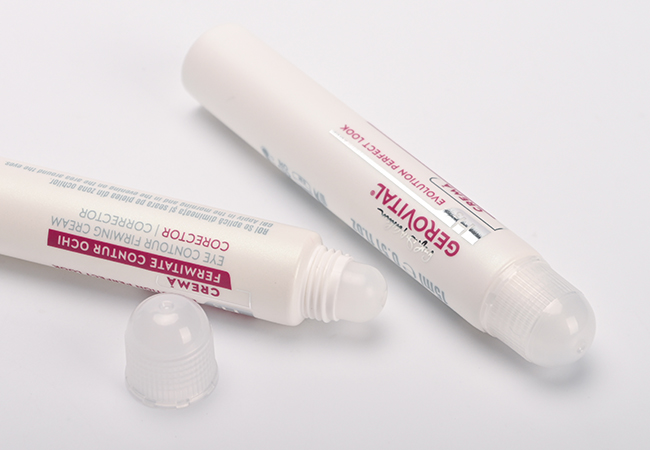
Plan the applicator tube filling handoff
Ask whether the proposed tubes arrive with the head and cap assembled and the tail open, or in another agreed state. The filler should check the tube holder, orientation, filling nozzle access, fill height, seal area and coding position on the actual proposed drawing. Agree who checks the applicator after filling, who seals the tail and who supplies the accepted reference sample.
The existing tube filling and sealing handoff guide covers the wider open-tail and artwork decisions. For the applicator, add the head-support point, any constraint on cap installation, and how the filler will protect the contact surface from damage or contamination. Neither an empty sample nor a component quotation substitutes for a filled-pack trial.
Eye cream applicator packaging RFQ checklist
- Product and use: formula reference, target fill, application area and desired user gesture; share sensitive formula details through an agreed route.
- Assembly: tube body, shoulder, applicator, moving elements, cap and any seal or insert, with the proposed supplied state and the corresponding drawing revision.
- Approval: sample quantity, formula-contact documentation, owner of compatibility assessment, dispensing and reclosure checks, and who signs the final sample.
- Commercial scope: quantities for the tube and specialist applicator, decoration variants, assembly, samples, lead time and delivery terms. Confirm each project; a general container minimum does not automatically apply to the applicator.
Send the preferred appearance and this brief through Oulete's enquiry page. Use the component material list guide to distinguish confirmed materials from information still needed. Formula development, filling and final product safety decisions remain with the relevant project parties.
Eye cream applicator packaging FAQ
Is a roller applicator interchangeable with another tube of the same diameter?
Not necessarily. The shoulder attachment, opening, cap engagement and tolerances must match. Compare the specific drawings and approve an assembled sample.
Does a protective cap seal the applicator outlet?
It may protect the surface without sealing the outlet. Ask the supplier to identify the actual sealing feature and confirm it on the selected filled pack.
Can a metal-looking tip be assumed to be stainless steel?
No. Appearance does not identify the substrate or coating. Request the material and finish for all formula-contact and skin-contact surfaces on the actual component.
Is a direct applicator hygienic enough to replace a preservation assessment?
No. Repeated use, formulation and the consumer's handling all matter. The formula owner must evaluate product preservation and safety; see the FDA's cosmetic product testing guidance for the broader product-testing context.
What is the minimum order for an eye cream applicator tube?
Request a quotation for the complete chosen assembly. Applicator type, cap, decoration and assembly can have separate minimums and costs; an ordinary container baseline is not a confirmed specialist-component minimum.
Can I request a custom eye cream tube with an applicator?
Share the desired application gesture, target fill, design reference, expected quantity and filling route. Ask the supplier to distinguish an existing assembly from a modified or newly tooled design, then confirm feasibility, component minimums and samples for that specific proposal.
Photographed at Oulete
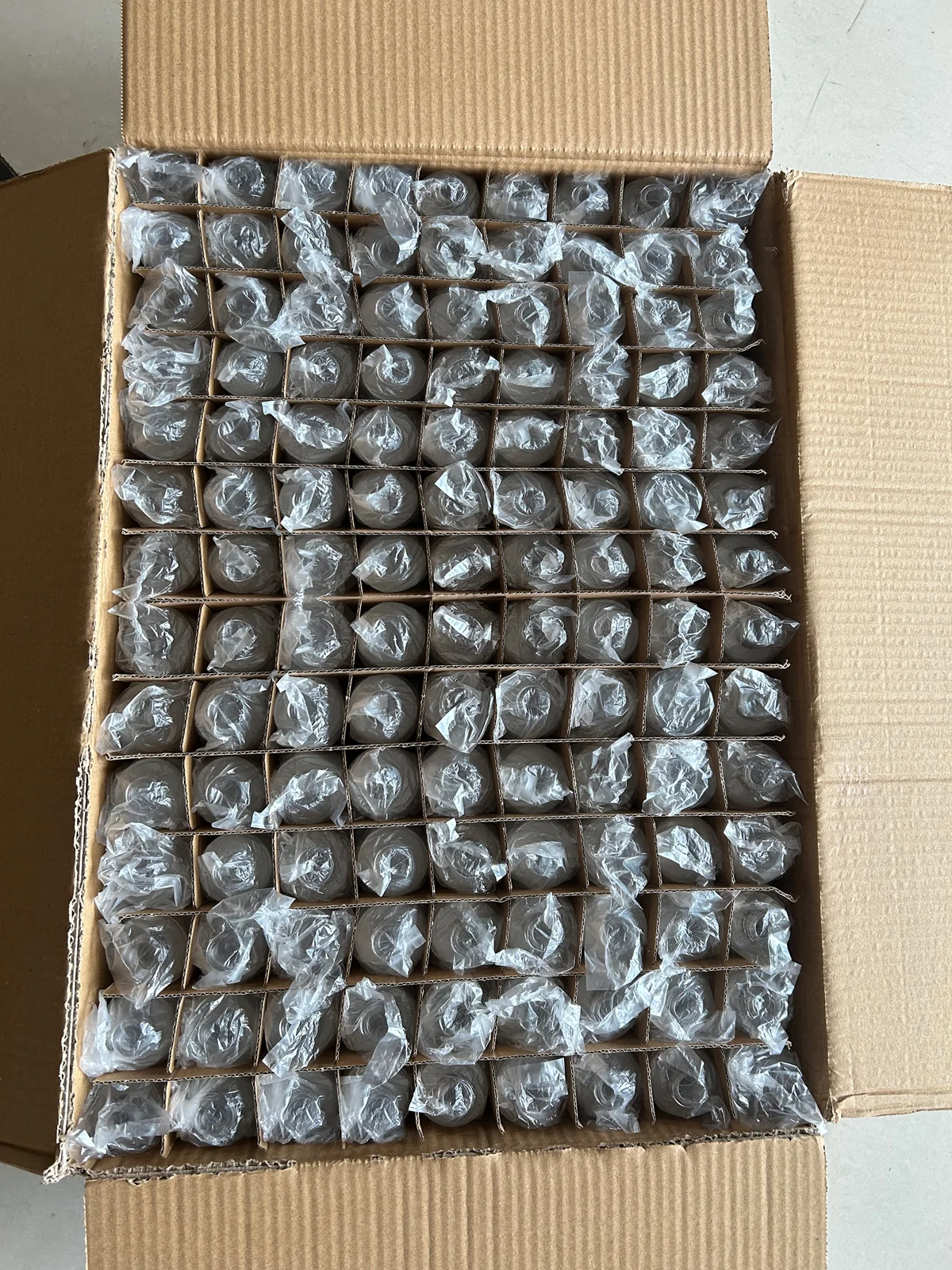
From the sample room to packed containers
See the facility and visible operations behind a packaging enquiry. For your selected assembly, ask which steps apply and request the corresponding sample and inspection records.