Cosmetic packaging · Made for your brand
Custom Cosmetic Packaging: Preparing a Tooling Brief
Define new parts, prototypes, DFM and approval gates before custom cosmetic tooling. Ask Oulete for explicit development, sample and commercial scope by part.
Containers only — no compounding or filling.
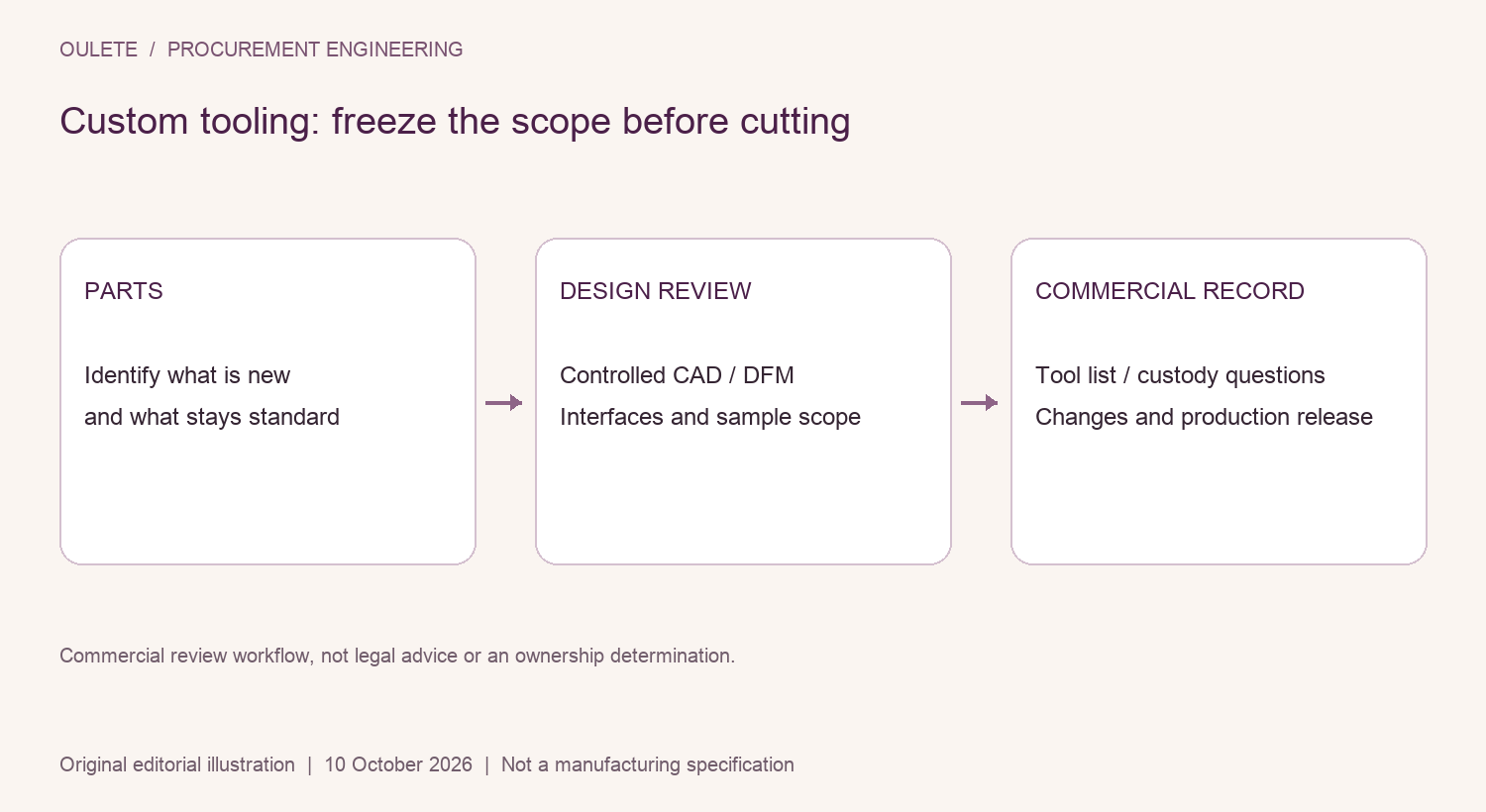
Custom tooling: freeze the scope before cutting showing parts, design review, commercial record
On this page · 13 sections
- Define which parts are genuinely new
- Custom cosmetic packaging tooling brief: scope table
- Provide controlled geometry and visible-surface priorities
- Give every prototype a specific decision
- Review production tooling with the finished pack in mind
- Make the tooling quotation answer commercial questions
- Frequently asked questions
- Does a custom bottle require a completely new dispensing system?
- Can we approve production from a 3D-printed sample?
- What belongs in a cosmetic-packaging DFM review?
- Does paying for tooling mean we own it?
- Does Oulete's 2,000-piece plastic MOQ include custom tooling?
- What should we send if we only have an initial concept?
A custom cosmetic packaging tooling brief should describe the parts to be developed, the functions they must preserve and the evidence required before production. “We need our own mould” is an opening conversation, not a tooling specification. It leaves the supplier to guess which elements are new and which existing components the brand intends to retain.
Prepare a custom tooling brief with part boundaries, controlled geometry, prototype purpose, manufacturing review, approval gates and explicit commercial questions before requesting a tooling quotation.
A premium skincare pack may need a distinctive outer shell while an existing dispenser remains suitable. Another project may require a new refill interface as well as a new shape. Those developments have different scope. Identify the functional change first, then ask for the simplest proposal that can achieve the brand's actual requirement.
Define which parts are genuinely new
Tooling scope is the list of production parts and associated manufacturing tools included in the development proposal. A complete pack can contain an outer body, internal container, collar, actuator, closure, refill and sealing parts. The brand should identify which are existing, which require adaptation and which remain undecided.
Start with an exploded concept or a labelled sketch. Name each part and state its intended function. A reference image can communicate appearance, but it cannot identify hidden interfaces or the assembly sequence. Ask the supplier to return a proposed part breakdown and identify any function that the concept does not yet resolve.
For a distinctive silhouette, consider whether the proposal retains an existing formula container and dispenser. That may focus new work on the presentation parts, but it is still a proposal requiring review. Changing an outer shell can affect assembly access, protection, decoration and the user grip. Do not call a shape-only change risk-free.
For a removable refill, identify the parts the user retains and those replaced. State where the contents are sealed, how the refill is removed, and how the user recognizes correct installation. If a premium lid is involved, separate its opening experience from the contents seal. The development should identify the proposed interfaces rather than treating a magnetic lid as the entire closure system.
Oulete's refillable-packaging solution includes a confirmed existing glass outer jar, removable refill and magnetic lid. That is a useful starting enquiry. It does not establish that a new outer geometry, stacking feature or alternative refill interface can use the same components without further review.
Custom cosmetic packaging tooling brief: scope table
| Brief field | Buyer input | Supplier response to request | Decision before commitment |
|---|---|---|---|
| New parts | Labelled part list and intended function | Proposed new and retained component references | Agree what the tooling price actually covers |
| Appearance | Brand-owned concept, finish and visible surfaces | Proposed geometry and appearance sample approach | Decide which features define the presentation |
| Functional interfaces | Refill, dispenser, cap, seal or attachment requirements | Drawings and unresolved interface questions | Identify what needs functional validation |
| Manufacturing route | Intended part material and production use, where known | Proposed process and design review | Confirm route-specific assumptions |
| Prototype purpose | Appearance, fit or a named functional question | Sample process, materials and stated limitations | Decide which conclusions the prototype can support |
| Commercial scope | Quantity plan, required milestones and quote boundary | Separate development, tooling, parts and sample items | Approve the named scope and open terms |
The table should be attached to the concept, not used to replace drawings. Its purpose is to expose the decisions that affect the proposal. A supplier can then identify an existing customizable assembly, a limited part development or a broader custom design, instead of pricing every request as an unspecified complete new pack.
Provide controlled geometry and visible-surface priorities
A controlled geometry reference identifies the part, revision and dimensions used for development. It should be clear which file defines the current proposal and which images are only inspiration. Keep previous concepts available for discussion, but label them so a discarded shape does not become the basis of a tooling quote.
Ask whether the supplier needs native CAD, an exchange-format model, dimensioned drawings or a combination. The file requirement depends on the proposed manufacturing route and the state of design development. If only a sketch exists, say so and ask what design work is included before the project can reach a manufacturable part definition.
Mark the functional interfaces and surfaces that matter to the brand. These can include a refill rim, a dispenser attachment, the fit of a cap or the relationship between a decorated collar and body. The supplier should advise what dimensional review is needed. Do not invent a tight tolerance simply to make a brief appear technically advanced.
Distinguish functional dimensions from appearance expectations. A seam or visible mark may be acceptable on a hidden underside while an uninterrupted front surface is central to the brand concept. Identify those surfaces early so the supplier can discuss the consequences of the proposed manufacturing process rather than discovering the conflict after the appearance sample.
A concise manufacturing example appears in Protolabs' injection-molding quality guidance. Its DFM analysis addresses thick walls, insufficient draft and gate or ejector locations. These are that supplier's described review topics. They illustrate why an attractive model still needs manufacturing review, not a claim about Oulete's inspection equipment or procedures.
Design for manufacturing, or DFM, is a review of a proposed part against the intended production process. Request the supplier's actual findings and the changes it proposes. Keep the brand's response beside each finding. “DFM approved” is less useful than a record showing which changes were accepted and which require another design decision.
Give every prototype a specific decision
A prototype is a development sample made to answer identified questions about a proposed design. Its process, material and construction determine the conclusions it can support. A visually convincing sample is useful, but appearance alone cannot approve a production seal, dispenser attachment or moulded assembly behavior.
An appearance model can help review silhouette, proportions, hand feel and the position of visible features. It can also communicate the concept to a filler or packaging designer. Record any features represented by a simplified construction so the buyer does not mistake them for resolved engineering interfaces.
A fit sample should identify the mating parts it represents. If one part is production-standard and another is a development model, record that distinction. Ask which fit observations are meaningful and which depend on later production-intent materials or geometry. An informal “it fits” statement should not release an unidentified interface.
A functional prototype should name the function under review. For example, the question may concern access to remove a refill, an assembly sequence or how a lid is handled. The parties should agree what the sample represents and how it will be assessed. A prototype should not be called a validated complete pack merely because one action works.
Protolabs' prototyping-to-production page distinguishes development-stage and production-stage molding choices. The buying lesson is to ask which stage a quoted tool and sample are intended to serve. The page's commercial model is not an Oulete tooling offer and does not establish cost, duration or expected production life for this project.
Keep prototype approval and tool approval as separate records. A concept may be accepted for further development while the production geometry is still changing. Ask what work follows each approval and which decisions become costly to revise. The quotation should make those boundaries visible before the brand authorizes the next stage.
Review production tooling with the finished pack in mind
A production-tooling review should connect the proposed part design to assembly, filling, decoration and use. The supplier's process review and the brand's appearance review address different questions about the same proposed pack. Both need the identified design revision, rather than separate files that gradually diverge.
Discuss how parts will be assembled and which operations occur before or after filling. A distinctive shape can change access for a closing operation or the way a filler holds the container. Request the relevant interfaces and pack envelope for the filler to review. The packaging supplier should not assume that the buyer's current line can accept a new design unchanged.
Decoration should be included before approving visible surfaces. Ask whether the proposed finish requires a particular usable area, orientation or handling arrangement. An embossed feature belongs to the part geometry, while a printed logo belongs to a separate artwork process. Specify them independently so changing one does not silently change the other.
Protolabs' secondary-operations guidance requests clearly located printing information and provides assembly or packaging input requirements. That is an example of supplier-specific inputs extending beyond a CAD model. It supports asking for the actual documentation required by the proposed Oulete process, without transferring another manufacturer's capability or turnaround time.
For a multi-part pack, review the assembled concept after component changes. A modification that improves one part's manufacturability may alter the visual gap, refill removal or cap relationship. Retain the reason for the change and identify which earlier decisions need confirmation. Avoid an approval chain in which each individual part is accepted but nobody reviews the updated assembly.
Production-intent samples should be connected to the agreed component list and drawing revisions. The sample approval guide helps separate appearance, fit and relevant functional decisions. A tool trial creates evidence for review; it is not, by itself, an instruction to ship the resulting parts as approved saleable packaging.
Ask what evidence the supplier proposes for the named critical interfaces and visible surfaces. Let the responsible engineering and quality teams agree the method and acceptance criteria. Do not import a generic tolerance or inspection plan from another supplier's website and label it as the project's approved standard.
Make the tooling quotation answer commercial questions
A useful tooling quotation separates development work, manufacturing tools, samples, production parts and any related fixtures or operations. A single tooling total can be acceptable only if its scope and exclusions are explicit. The buyer needs to know what is being authorized and which unresolved decisions could change the price.
Ask for the part or tool references covered by each item, the design revision used and the assumptions about materials and quantity. Identify whether decoration fixtures, assembly aids or revisions are included. These are commercial questions for the proposed project, not claims that every development requires the same equipment or number of tools.
Distinguish a nominal packaging MOQ from the conditions for a custom development. Oulete's confirmed starting MOQ is 2,000 pieces for plastic packaging and 5,000 for glass packaging. A newly developed part may have its own quoted production, sampling and commercial scope. Ask explicitly rather than treating the material MOQ as an included tooling entitlement.
Tool ownership, storage, maintenance, exclusivity and transfer are questions for the actual quotation and agreement. Paying a fee does not answer those questions by itself. Ask which rights and obligations are proposed, what happens when a tool is inactive and how a transfer request would be addressed. The responsible contracting parties should review the resulting terms.
Keep change authorization specific. Ask what happens when the brand changes appearance after design approval, a material changes during development or a sample reveals an unresolved function. The supplier should state which work is proposed, which earlier approvals it affects and whether the quotation or schedule must be revised before proceeding.
A schedule should identify milestones and dependencies rather than promise one unsupported “custom tooling lead time”. Request the intended sequence for design review, sample stages, tool work and production approval. State whether the brand's target date concerns sample receipt, dispatch or arrival at the filler, and identify who supplies the inputs required for each stage.
Use Oulete's OEM/ODM route to frame the development discussion, then submit the concept and scope table through the project brief. Request an existing-solution comparison where appropriate. The outcome should be a proposed route with identified new parts, evidence stages and commercial decisions that can be reviewed before commitment.
Frequently asked questions
Does a custom bottle require a completely new dispensing system?
A custom bottle does not automatically require a new dispensing system. Identify the parts and functions the brand wants to change, then ask whether an existing assembly can be retained. The proposed combination still needs review of interfaces, assembly, filling and the actual product requirements.
Can we approve production from a 3D-printed sample?
A 3D-printed sample can support only the decisions its process and construction represent. It may help review appearance, handling or a named fit question. Production approval needs the appropriate evidence for the proposed production configuration; a convincing prototype does not establish a contents seal or dispenser performance.
What belongs in a cosmetic-packaging DFM review?
A cosmetic-packaging DFM review should address the proposed parts and manufacturing route, with functional interfaces and visible surfaces identified. Ask the supplier for its findings, proposed changes and unresolved questions. Keep accepted changes against the controlled design revision and confirm their effects on the assembled pack.
Does paying for tooling mean we own it?
Tooling payment alone does not establish the proposed ownership or transfer terms. Ask the supplier to state ownership, use, exclusivity, storage, maintenance and transfer arrangements in the actual commercial documents. Those questions should be resolved by the responsible contracting parties before commitment.
Does Oulete's 2,000-piece plastic MOQ include custom tooling?
Oulete's 2,000-piece plastic-packaging MOQ does not, by itself, define a custom tooling offer. Ask for separate development, tool, sample and production scope against the selected parts. The project quotation should state quantity conditions and assumptions instead of relying on a general material MOQ.
What should we send if we only have an initial concept?
Send the initial concept with a labelled part breakdown, intended functions and the appearance features the brand wants to preserve. Identify missing drawings openly. Ask Oulete what design and feasibility work is proposed before tooling, and which existing customizable solutions should be compared with the custom route.
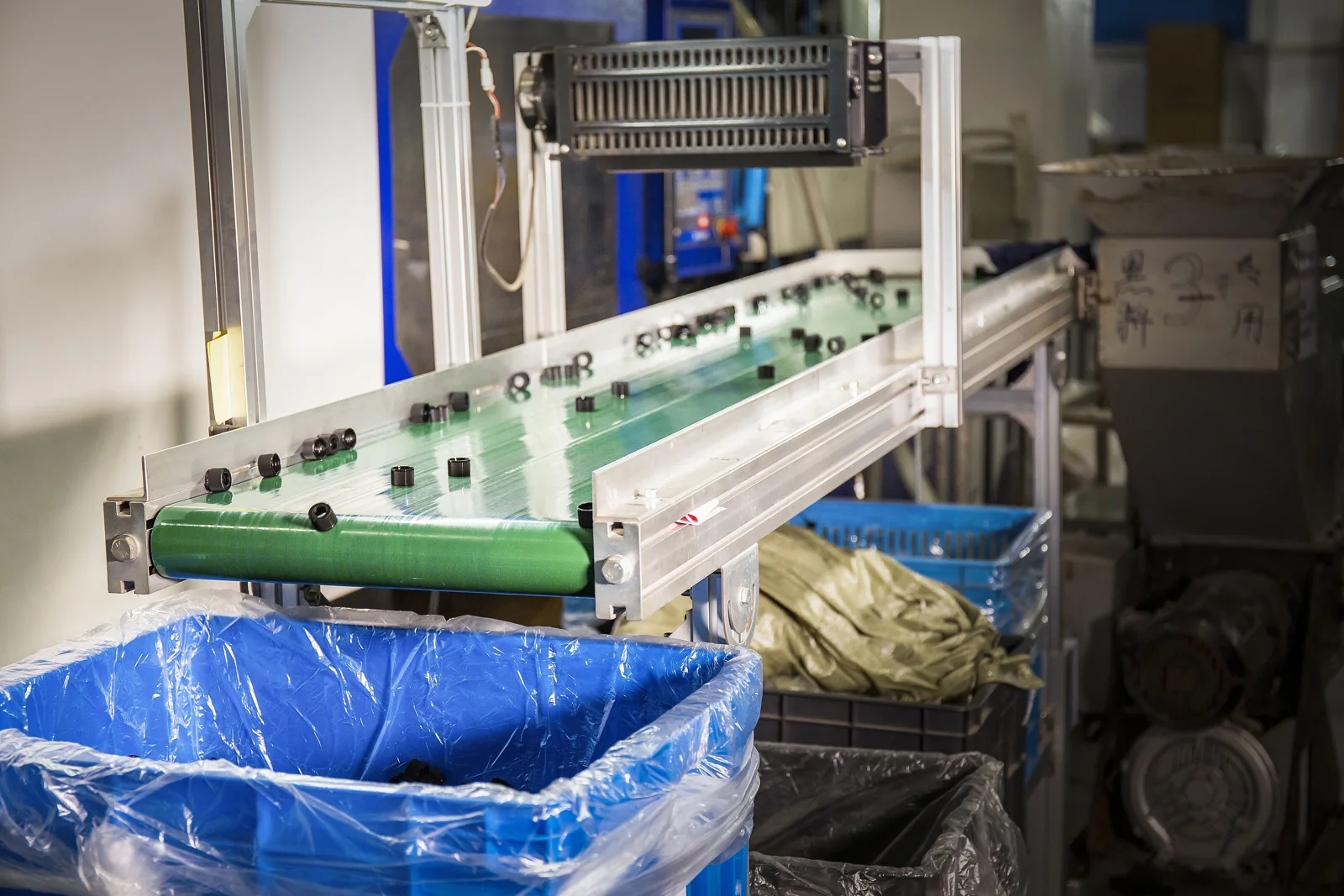
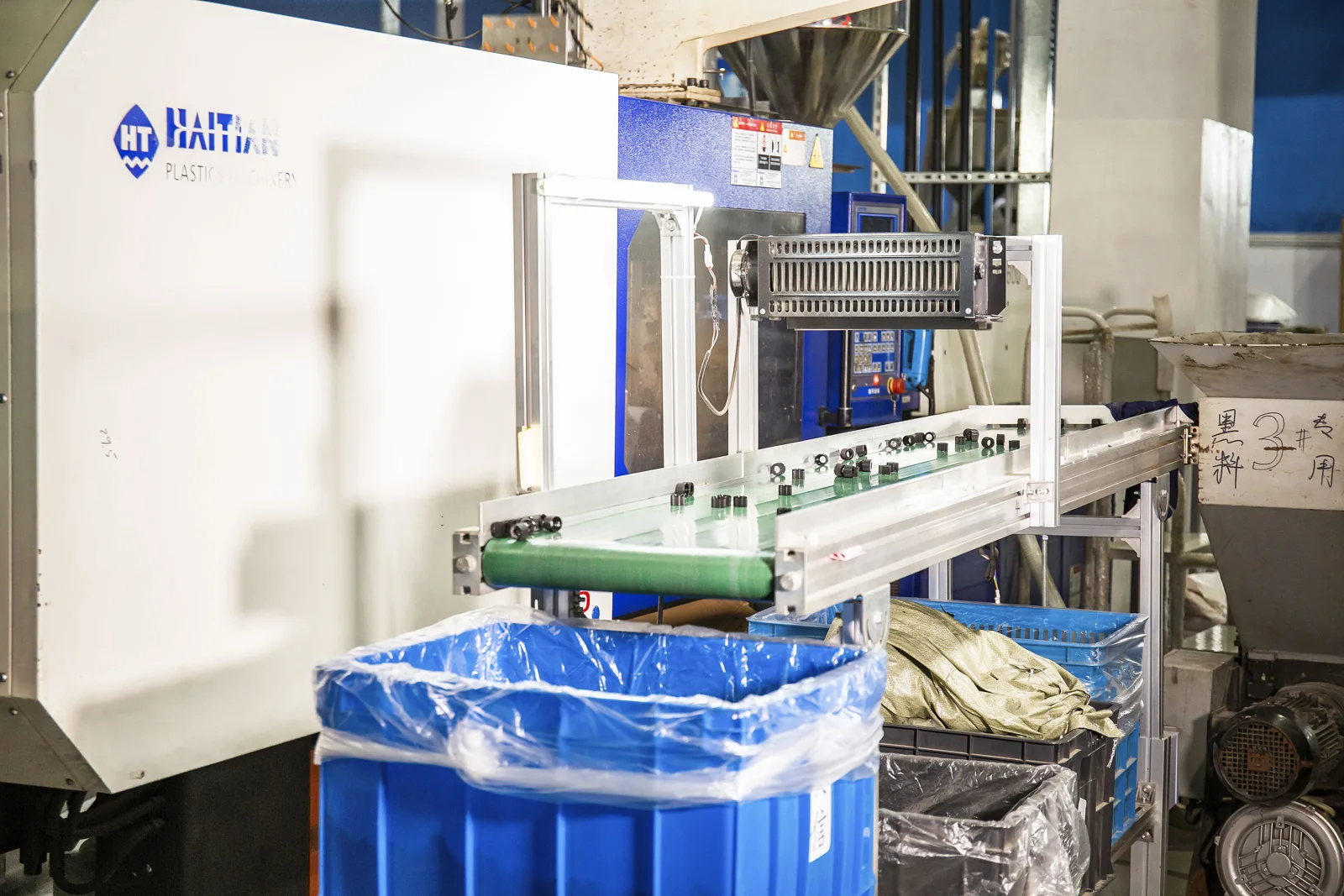
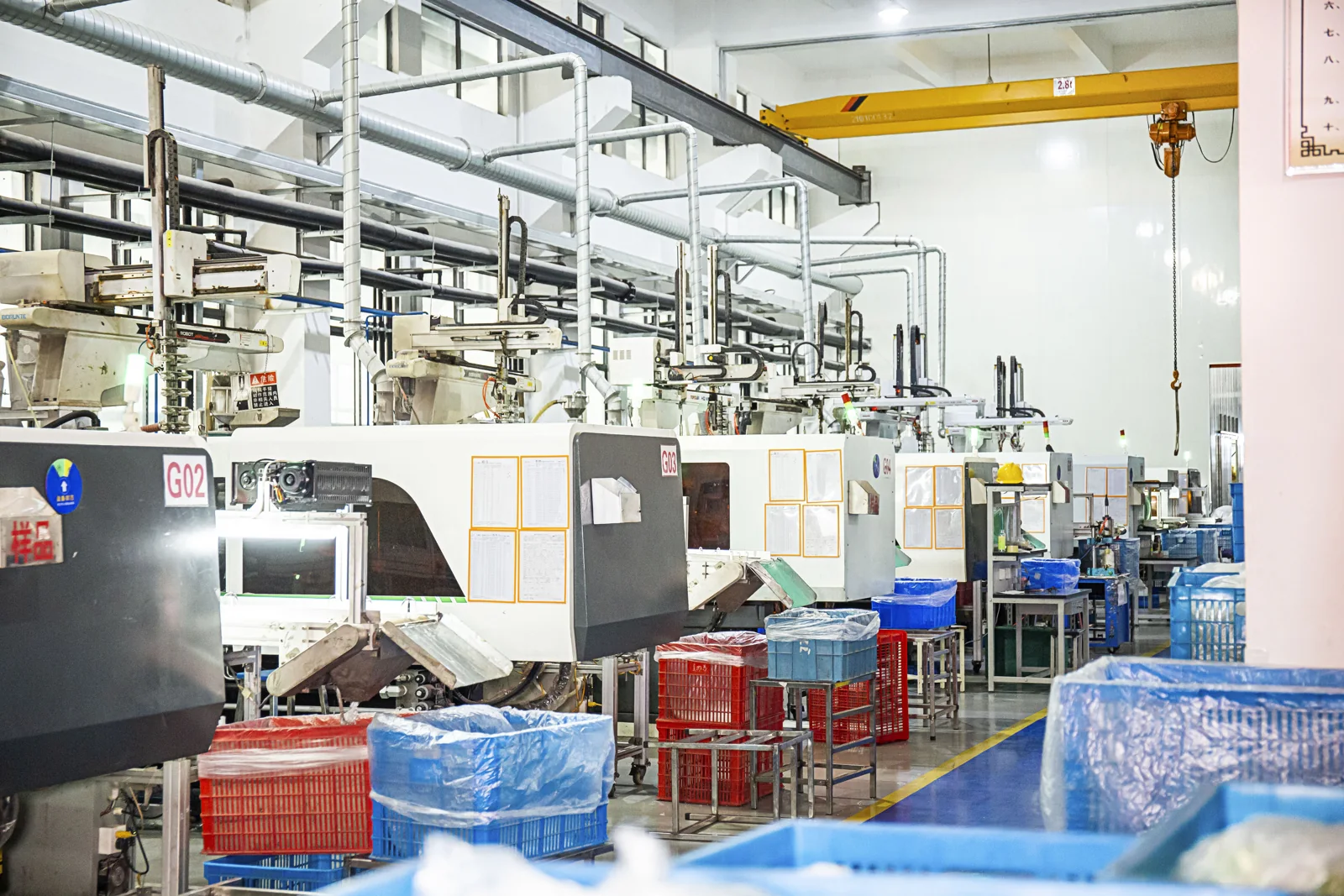
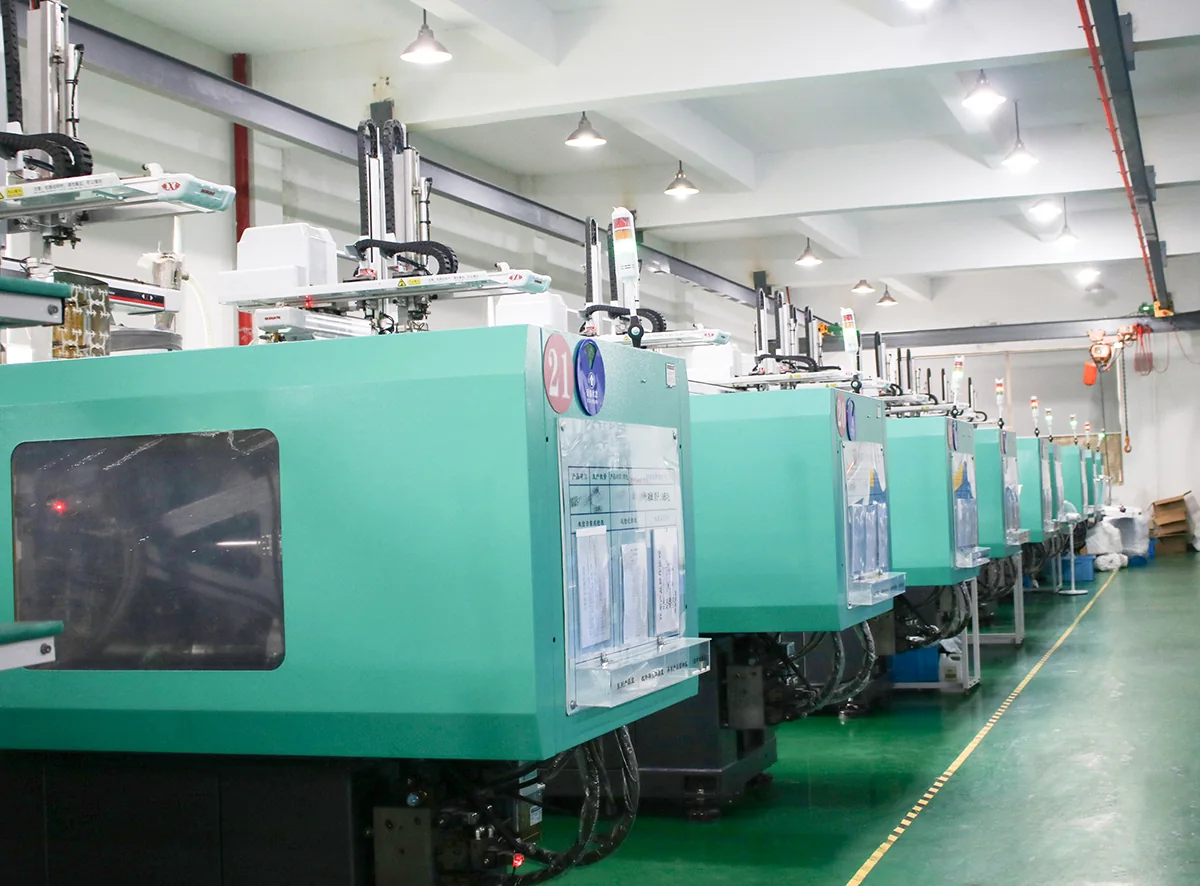
Photographed at Oulete
Inside the molding workshop
See the facility and visible operations behind a packaging enquiry. For your selected assembly, ask which steps apply and request the corresponding sample and inspection records.