How Many Cosmetic Bottles Fit in a Carton? A Buyer’s Packing and Quantity Guide
There is no fixed number of cosmetic bottles or jars per carton. The count depends on the actual container, whether components ship fitted or loose, the protective packing and the approved carton layout. Ask the supplier for a packed…
There is no fixed number of cosmetic bottles or jars per carton. The count depends on the actual container, whether components ship fitted or loose, the protective packing and the approved carton layout. Ask the supplier for a packed sample and the verified count per packing level before using a carton calculator or booking freight.
This guide concerns empty packaging components shipped to a brand or contract filler. A finished, filled cosmetic product can have a different retail box and shipping arrangement. The photographs show Oulete factory packing and handling; they do not establish a standard carton quantity or a passed transport test.
What does “one carton” contain?
First name the unit being counted. A master carton might contain loose bottle bodies, individually protected jars, smaller inner packs or a complete assembly. A pump in a separate carton is a separate component count, even if it will eventually be fitted to one bottle. Record the part reference, colour, decoration and revision beside every quantity.
Cosmetic packaging carton counts: agree the packing level
Level
What to record
Component
One bottle body, jar, pump, cap or other specified part; state whether it is assembled.
Inner pack, if used
Quantity and identity inside a bag, tray or inner box. Do not assume each layer or bag has the same count.
Master carton
Total identical components or complete assemblies per full carton, internal arrangement and outside measurements.
Shipment
Full cartons plus any partial carton, separately packed components and total by SKU. Identify mixed cartons explicitly.
Mirun’s export-carton discussion illustrates why an inner pack and a master carton need separate quantities. Its article discusses finished private-label products; for empty components, the buyer must also reconcile separately supplied bottles, pumps and caps.
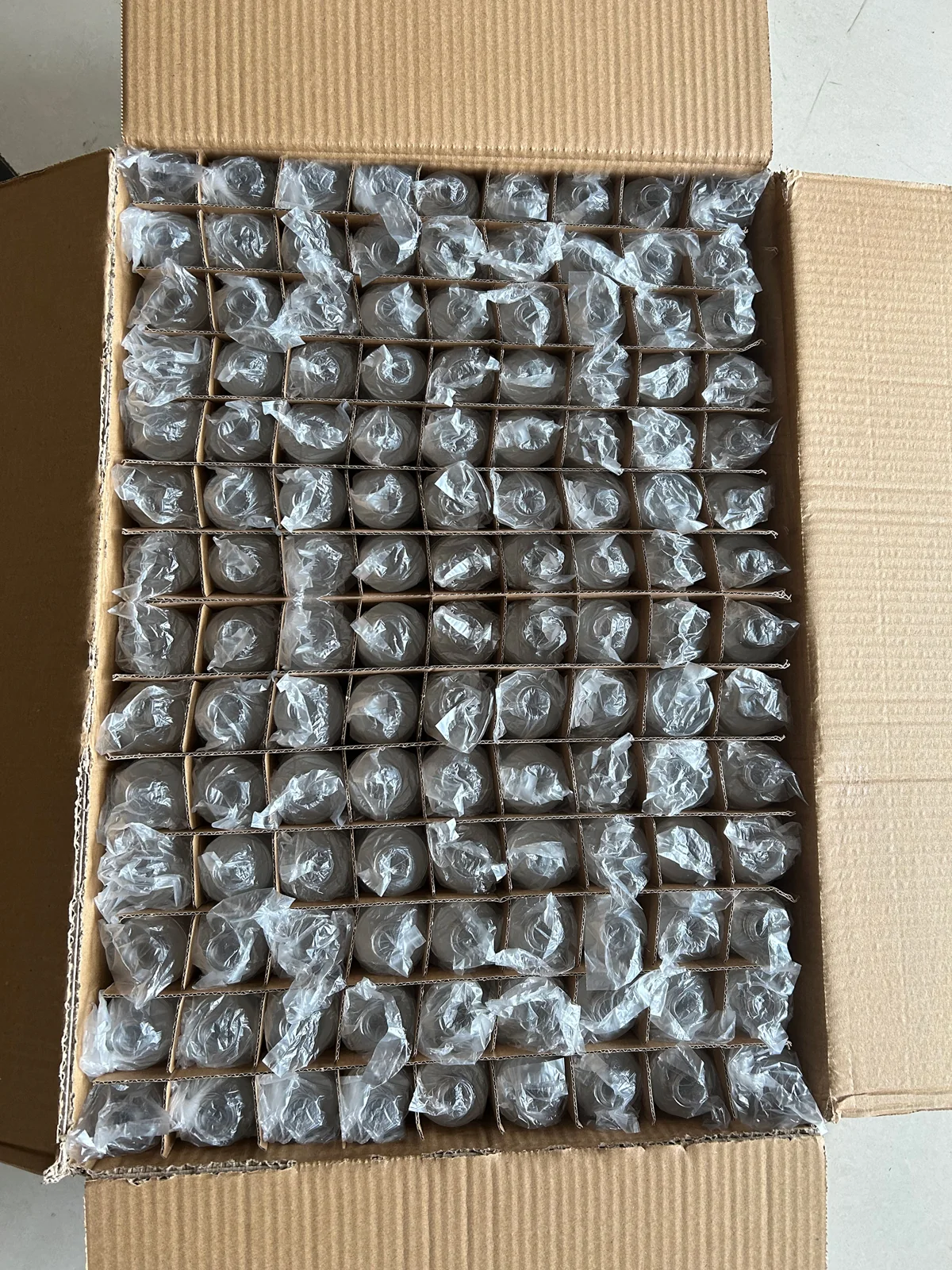
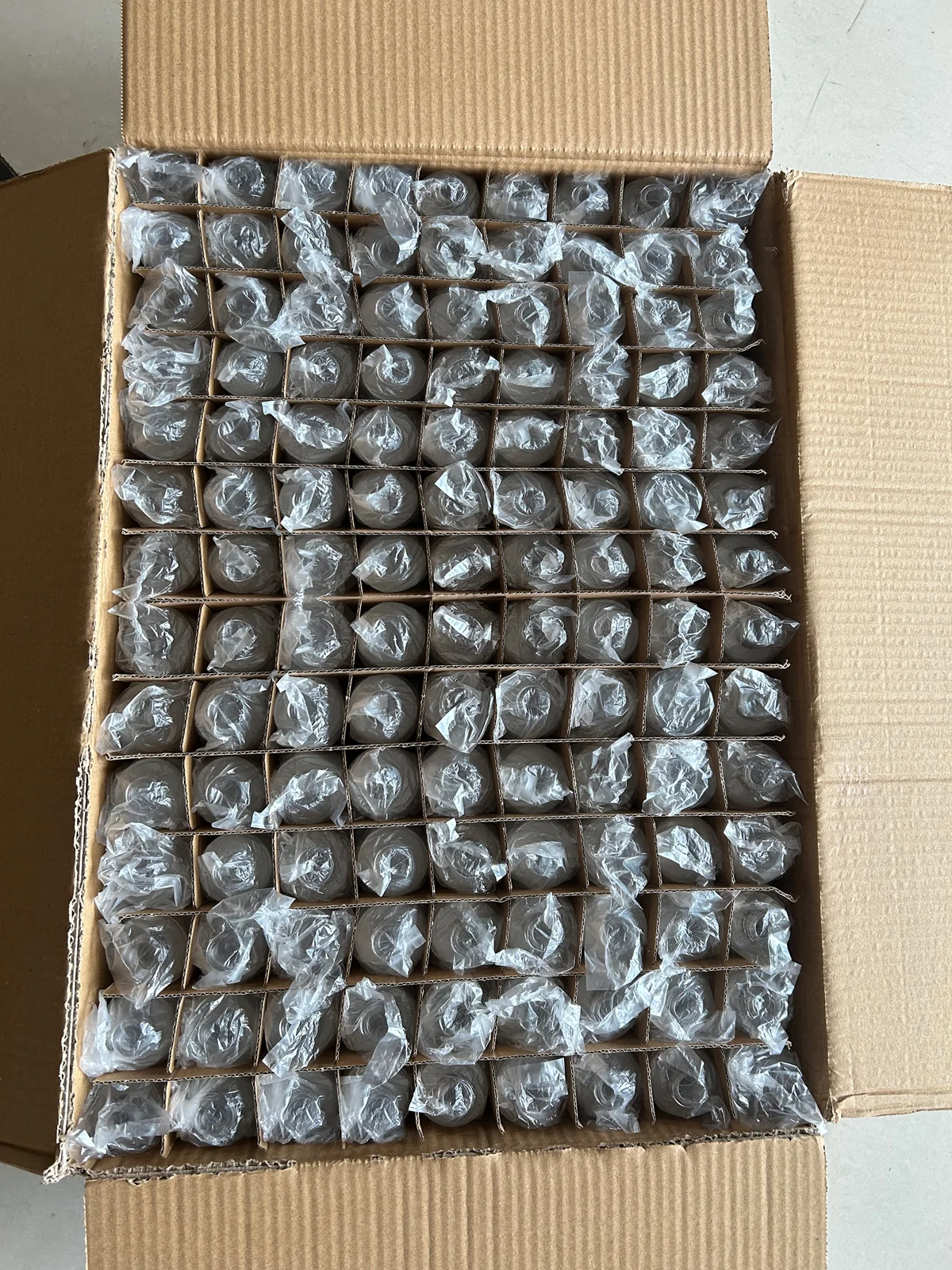
Oulete-supplied factory photograph of containers separated in a carton. The image shows one historical arrangement; count, material and protection for a new order are project-specific.
How to determine a credible units-per-carton count
Start with the proposed part and its packed state, not the catalogue fill volume. Ask for the actual assembled or loose-part envelope, including any pump, cap, sleeve or other protection. A 50 ml designation tells you nominal capacity, not the outside shape or how many pieces fit. The technical drawing guide explains why the complete assembled envelope differs from the body drawing.
Have the supplier lay out representative parts with the proposed separators and close the carton without forcing protruding features. Record rows, positions per row and layers only where they describe the actual arrangement. Check for unused positions, alternating orientations or different inner-pack counts. A regular grid calculation is a planning estimate; a packed carton count is the better basis for the packing list. Confirm whether each carton contains only one SKU and whether the final carton will be marked as partial.
For a regular hypothetical arrangement, six positions per row × four rows × two layers = 48 units in a full carton. This is arithmetic, not an Oulete specification. A layer with an omitted position changes the count. A photo of an unrelated carton, or a bottle dimension alone, cannot verify the number.
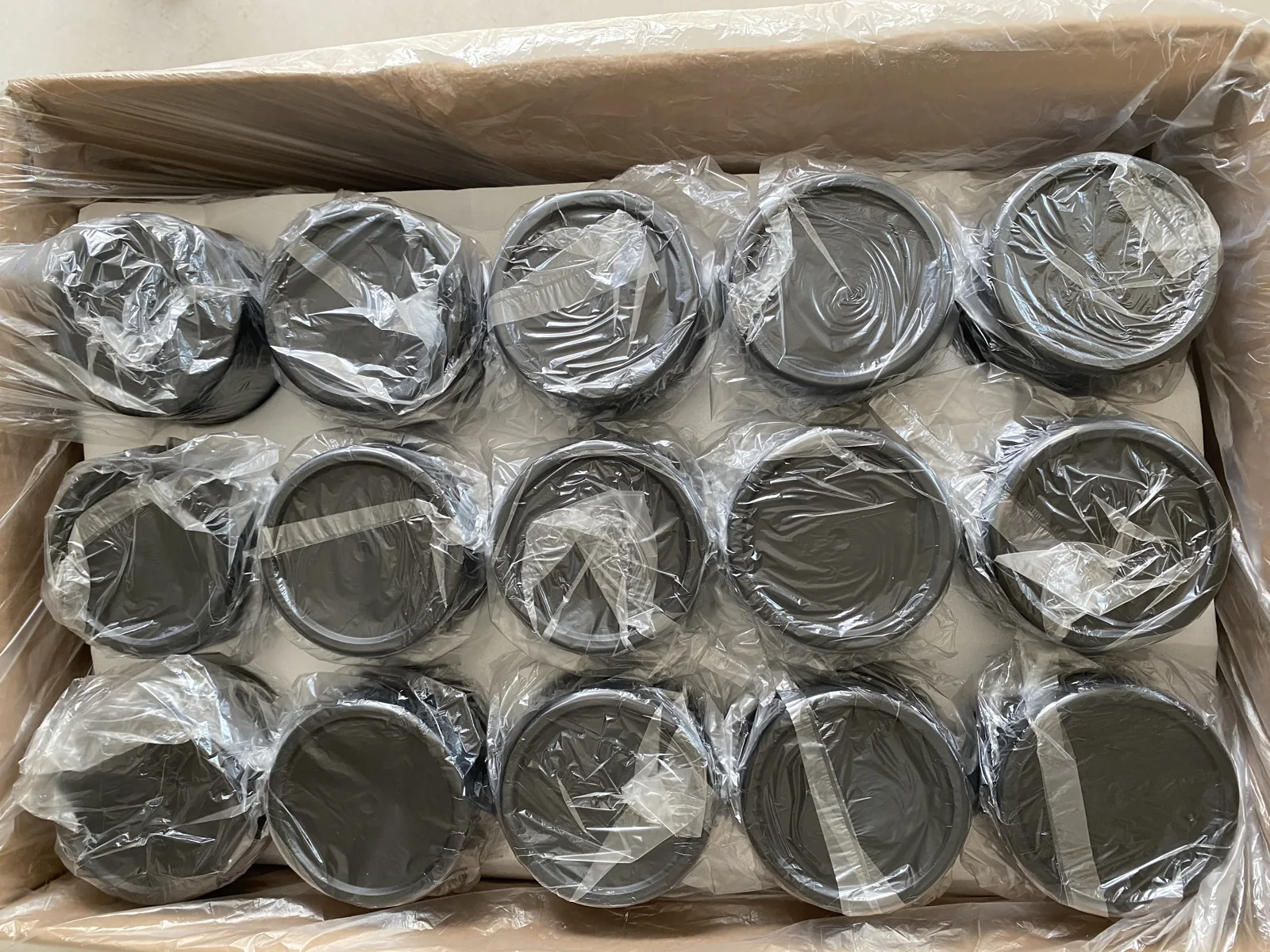
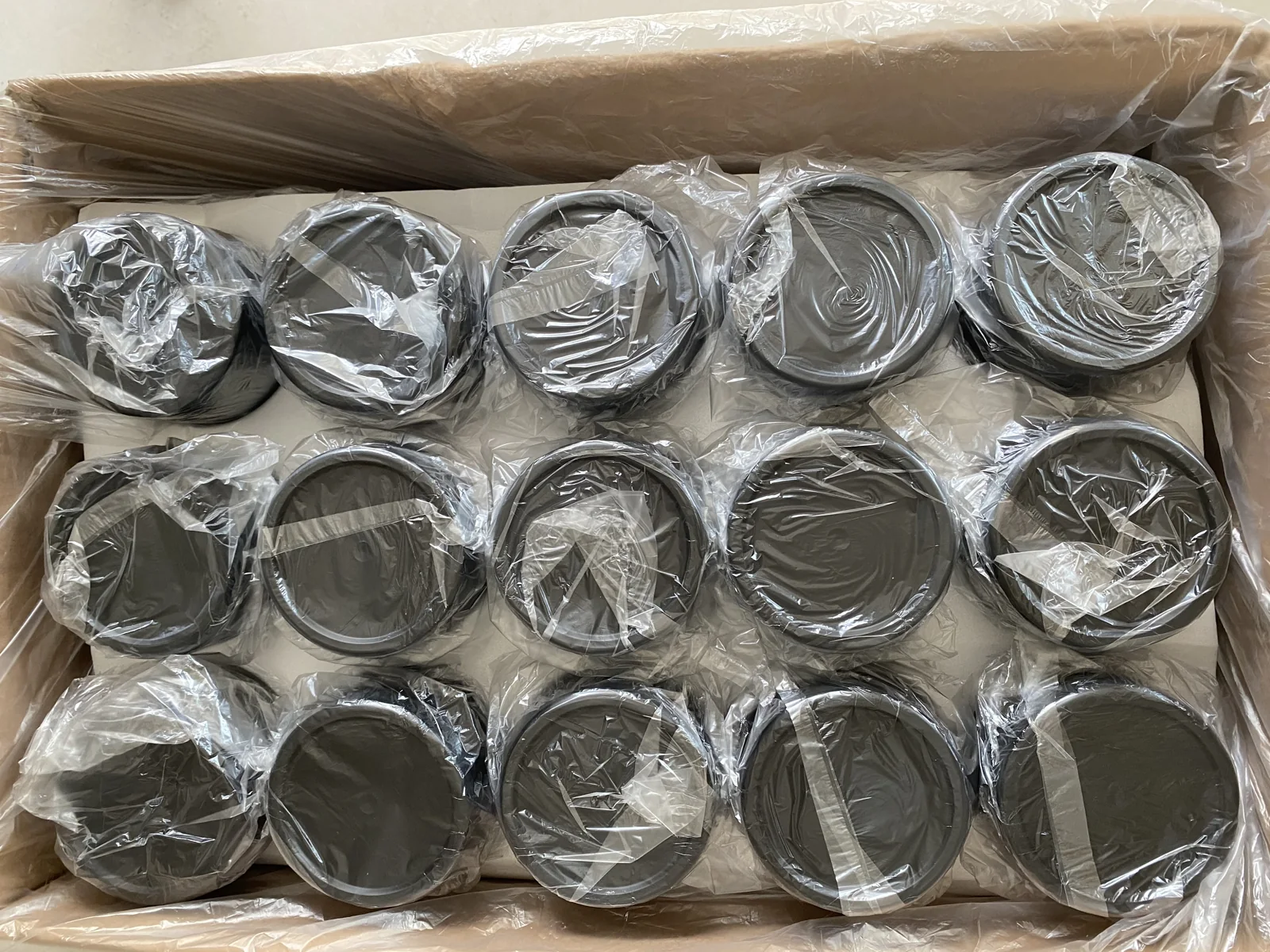
Historical Oulete-supplied photograph of bagged containers in a carton. It illustrates separation, not a packing specification or a verified quantity for this order.
Calculate full cartons and the remainder
Divide the order quantity by the verified full-carton quantity. The whole-number quotient gives full cartons and the remainder gives pieces in the last carton. If there is a remainder, count one additional partial carton. State the partial-carton quantity in the packing list and mark it as agreed; do not silently round the shipment quantity up to a full carton.
Hypothetical cosmetic bottle carton calculation
Input or decision
Example and action
Bottle-body order
1,000 bodies; hypothetical quantity only, not an Oulete MOQ or order.
Verified full carton
48 bodies per carton in the hypothetical layout.
Result
20 full cartons × 48 = 960; 40 bodies remain, so ship 21 cartons if the partial carton is accepted.
Loose pumps
Count and pack separately. Do not assume the pump carton also holds 48 or that 21 bottle cartons mean 21 pump cartons.
Reconciliation
20 × 48 + 40 = 1,000 bodies. Compare pumps and caps with their own agreed quantities, including any separately ordered spares.
Check whether a supplier requires full cartons or permits a partial carton, mixed SKU or over-delivery. Those are commercial decisions for the quotation. If the order changes to full cartons only, obtain the buyer’s approval for the revised number and cost before treating the surplus as ordered goods.
Connect count to freight without guessing the packed carton
For volume, measure the outside length, width and height of the sealed, packed carton. In centimetres, cubic metres per carton = length × width × height ÷ 1,000,000. Multiply by the actual number of cartons only when their outside dimensions are the same; calculate different carton sizes separately and add their volumes.
Example only: an outer carton measuring 40 × 30 × 25 cm has a volume of 0.030 m³. Twenty identical full cartons and one partial carton of the same external size total 0.630 m³. If the partial carton has a different outer size, measure and calculate it separately. This is carton volume only: pallets, empty gaps, carrier rounding, volumetric-weight rules and charges are outside the calculation. The carton volume calculator can calculate from confirmed inputs; it cannot determine the count or approve protection.
Ask for actual gross weight of a representative packed full carton and the separate partial carton, plus the units and scale basis. Gross weight includes the carton and packing material. Do not multiply the body’s catalogue weight by the piece count and call the result a weighed gross carton. Confirm the booking method with the forwarder before converting volume or weight to a freight quote.
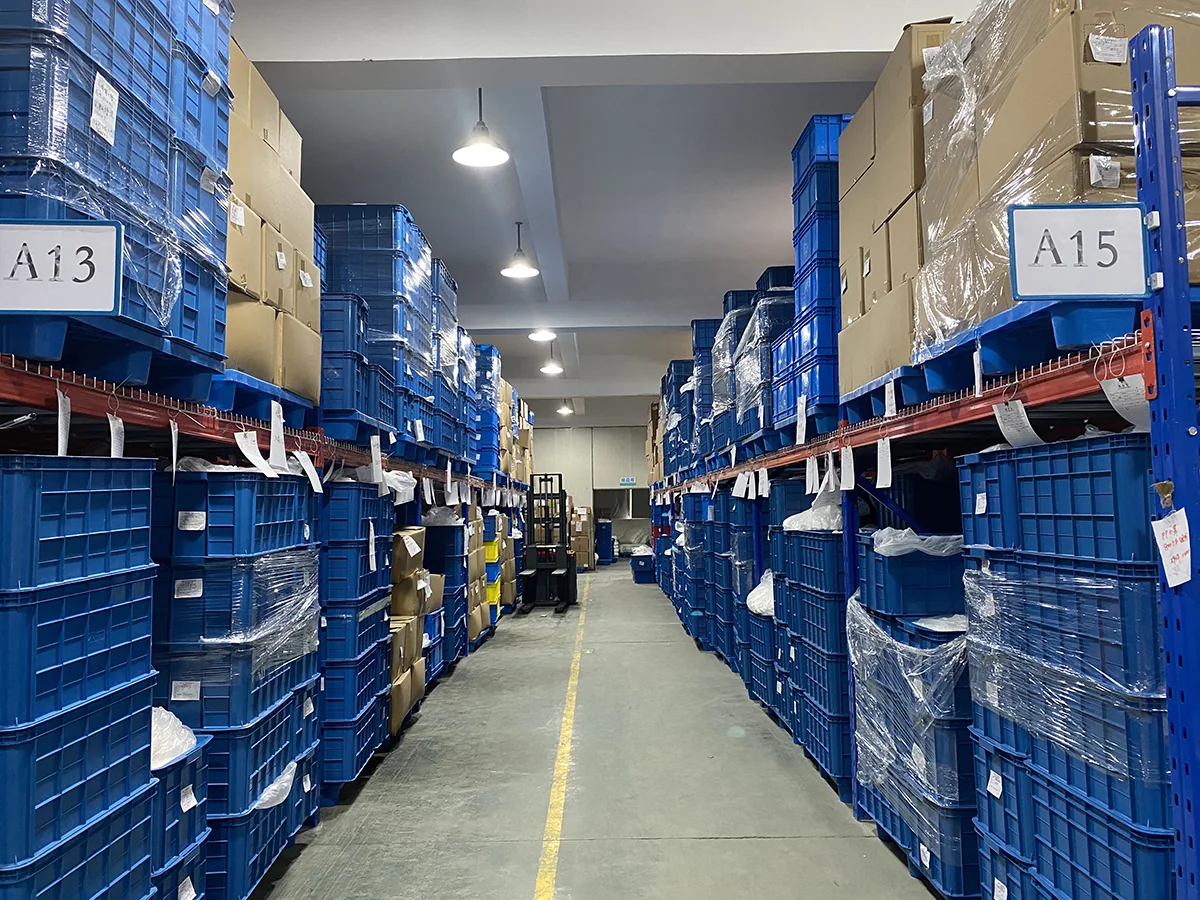
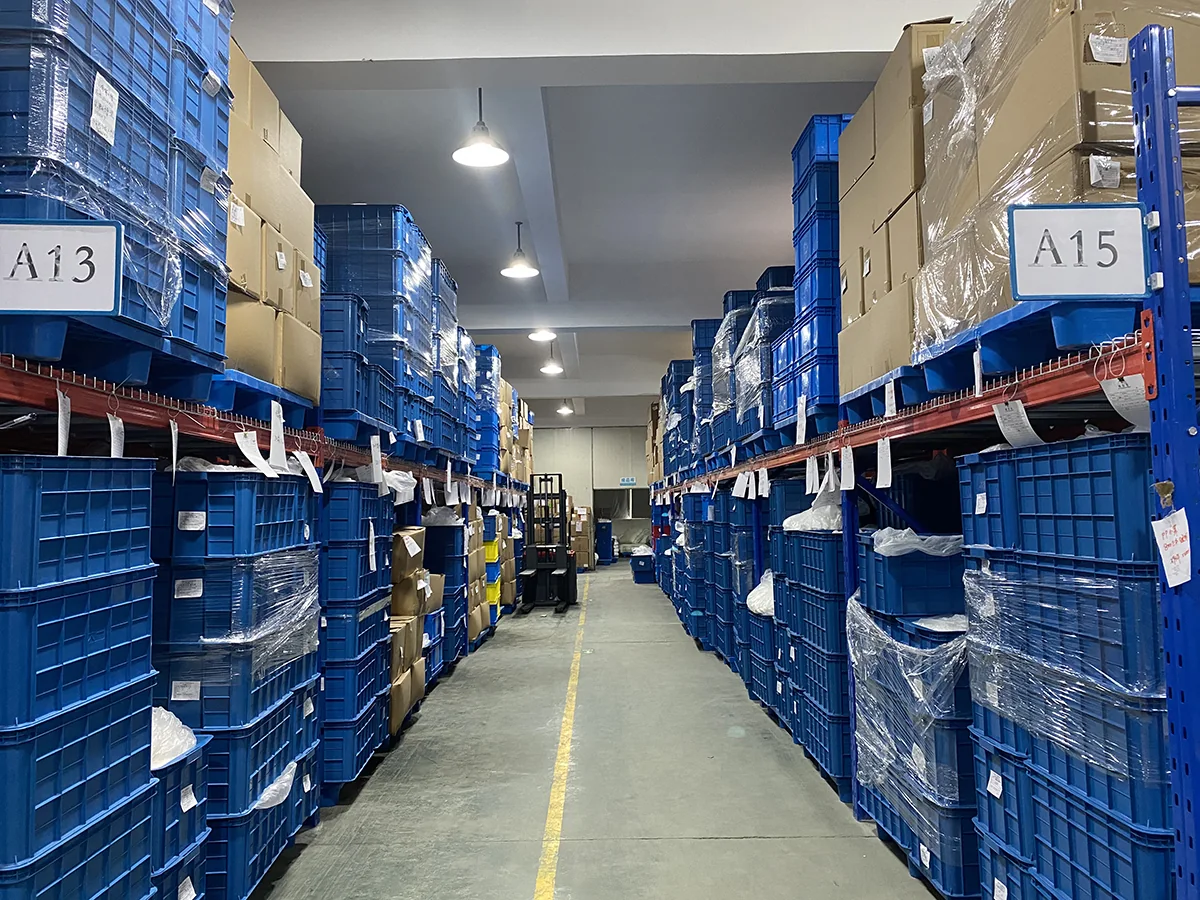
Oulete warehouse area with bins and cartons. The image is context for handling and does not identify this order, its packaging or stock availability.
Protect the finish and make receipt practical
Identify the surfaces and features exposed to contact: a printed face may rub, an exposed pump may be pressed, and a bottle neck may touch another part. Ask what physically separates or restrains the parts, which materials touch finished surfaces, and whether the layout can be packed and unpacked without dragging the finish. Bags, sleeves, partitions and trays are possible options, not interchangeable guarantees. Cavoriq describes its own project-dependent packing options; that is a competitor example, not an Oulete service promise.
Agree the shipping route and handling assumptions with the responsible supplier and logistics team. Review a representative packed carton and decide which transit or handling evaluations, if any, are required for that route. Record the configuration, conditions, acceptance criteria and actual result. Neither a photograph nor an unfilled sample proves the finished, filled product will survive transport.
Tell the filler how the contents arrive: bodies and pumps loose or preassembled, counts per inner and outer pack, identity labels, expected carton marks, and any clean handling requirement. Confirm how opened bags, damaged cartons and mixed lots will be reported. The sample-approval guide places shipping-pack approval alongside assembly and appearance approval.
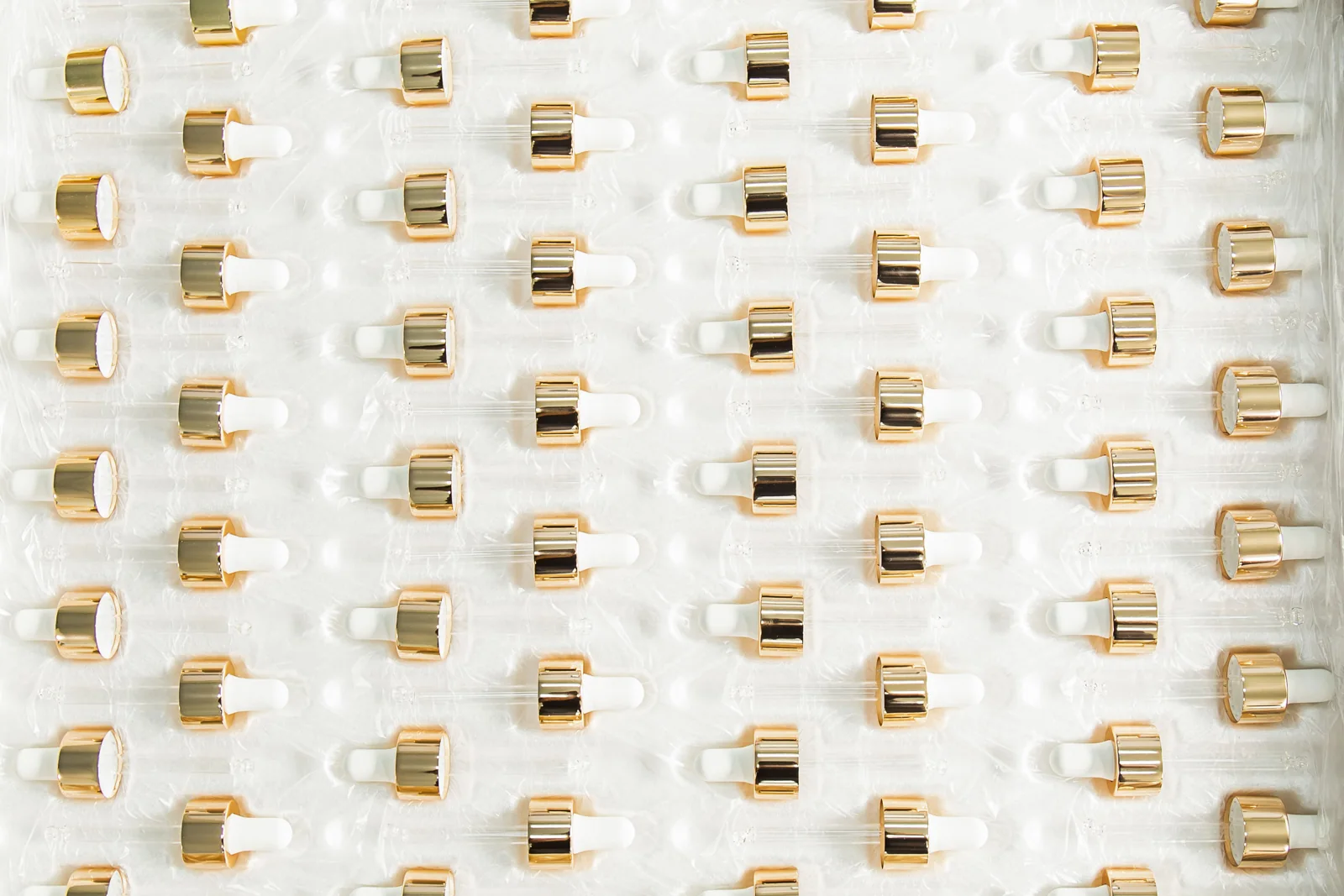
Components arranged on trays at Oulete. This is a factory handling photograph, not proof of a specific bottle-and-pump shipment or carton count.
What to request before releasing the order
Ask the supplier for a packing specification attached to the exact part and revision: component and SKU, assembled or loose state, units per inner pack and full master carton, full and partial carton treatment, inner protection and orientation. Add actual outer dimensions and gross weights, carton identification, lot traceability and the receiver’s requirements. A photographed packed sample can help explain the layout; the buyer and supplier should retain the approved record and identify who can approve changes.
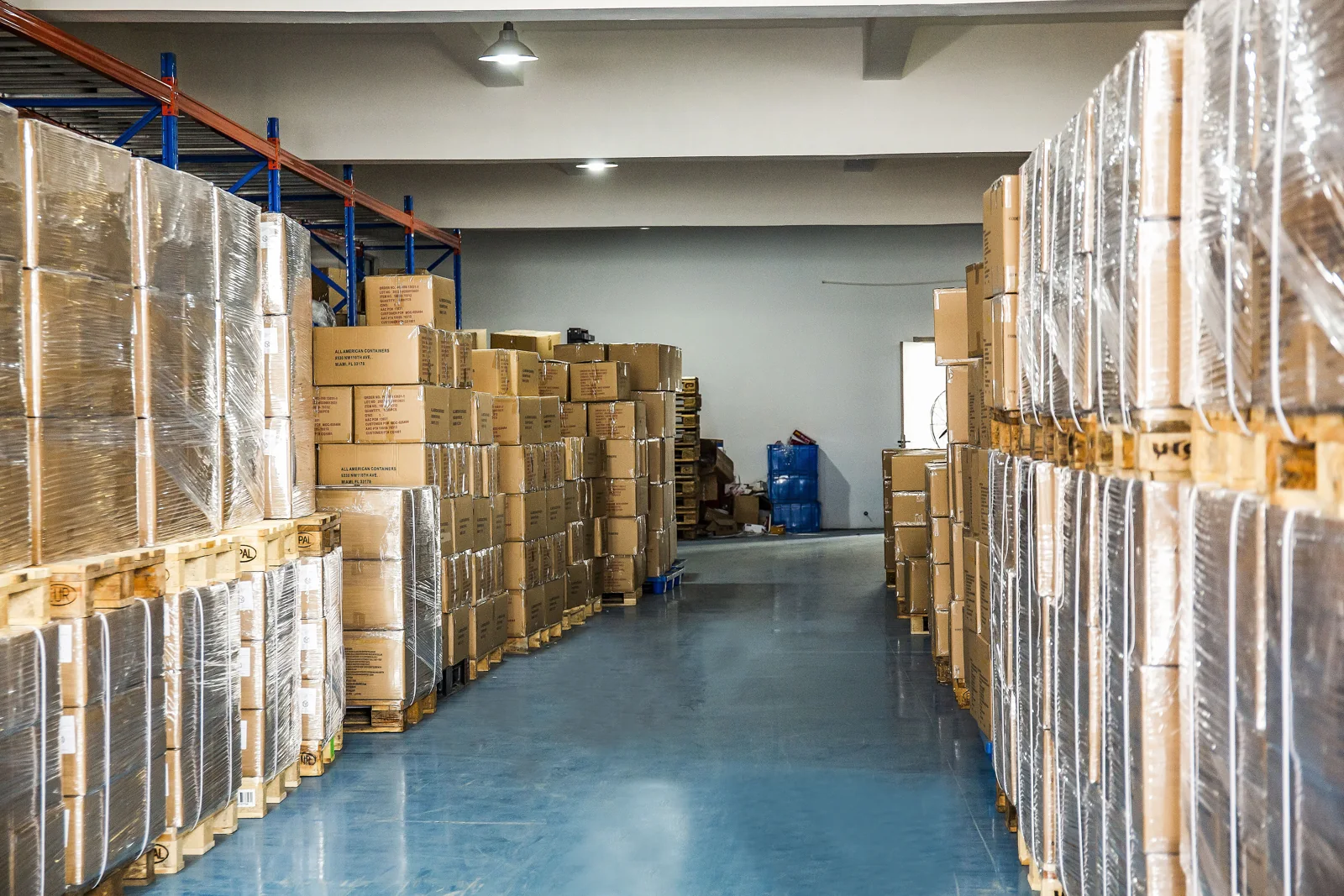
For mixed-source assemblies, assign responsibility for matching body, pump and cap counts. Record any overage or spare components separately. Reconfirm the pack-out when a decoration, component, carton, protection material or transport route changes. A warehouse photograph does not reserve inventory, and a past packing layout does not establish current availability. The trader and distributor guide discusses neutral packing and SKU handoff; agree actual carton marks and commercial terms in the project quotation.
Frequently asked questions
How many 50 ml bottles are in one carton?
There is no universal count for a 50 ml bottle. The actual shape, assembled components, protective material and carton layout determine the approved count.
Can I calculate bottle count from carton dimensions alone?
Carton dimensions alone do not establish a safe or usable count. You also need the actual part envelope, orientation, separation, usable inner dimensions and a verified packed layout.
How do I count a partial carton?
Divide the ordered quantity by the agreed full-carton quantity and record the remainder as the actual contents of the partial carton. Count the partial carton as a shipping carton and identify it on the packing list.
Do pumps and bottles always ship in the same carton?
Pumps and bottles may be shipped assembled or separately, depending on the agreed supply and filling process. Confirm the component counts and carton marks independently.
Does carton volume include a pallet?
A sum of individual outside carton volumes does not automatically include the pallet, stacking gaps or carrier rounding. Agree the booking basis with the forwarder.
Does a packed sample prove transport performance?
A packed sample shows the proposed arrangement but does not by itself prove transport performance. Agree any route-specific evaluations and acceptance criteria for the actual configuration.
Photographed at Oulete
Packing and warehouse photographs
See the facility and visible operations behind a packaging enquiry. For your selected assembly, ask which steps apply and request the corresponding sample and inspection records.
Cosmetic containers separated by protective packaging inside a carton.Stacked cartons in the Oulete warehouse.Bagged cosmetic containers packed inside cartons.Blue storage bins and cartons in the Oulete warehouse.
Research with AI
Paste this prompt into your assistant. Check its answer against the page and the approved packaging specification.