Cosmetic packaging · Made for your brand
Airless Bottles for Skincare: PP vs PET vs PCR Airless Pump Buyer's Guide
Compare PP and PET airless assemblies, define component-specific PCR content, and specify formula, filling and sample checks before ordering skincare packaging.
Containers only — no compounding or filling.
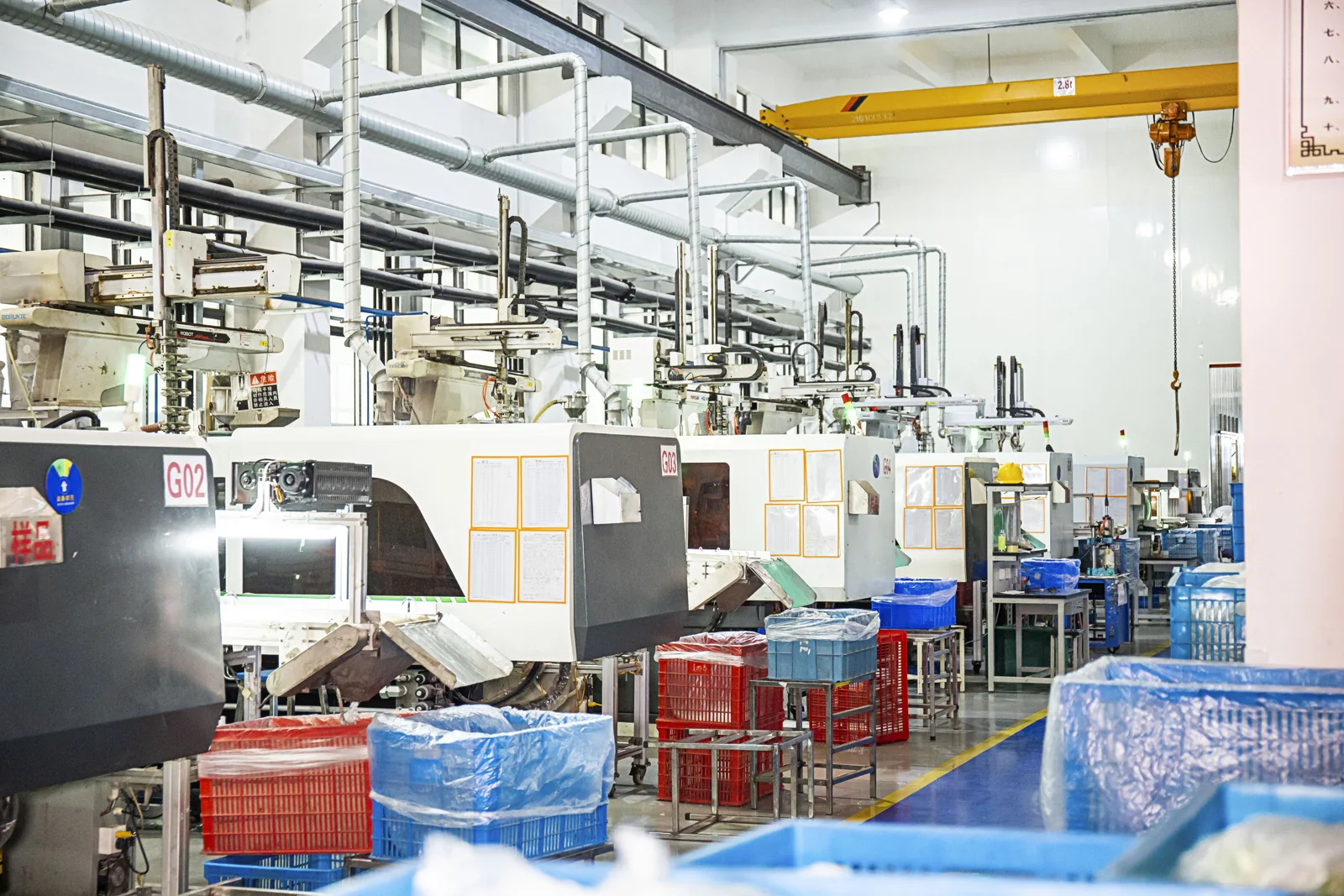
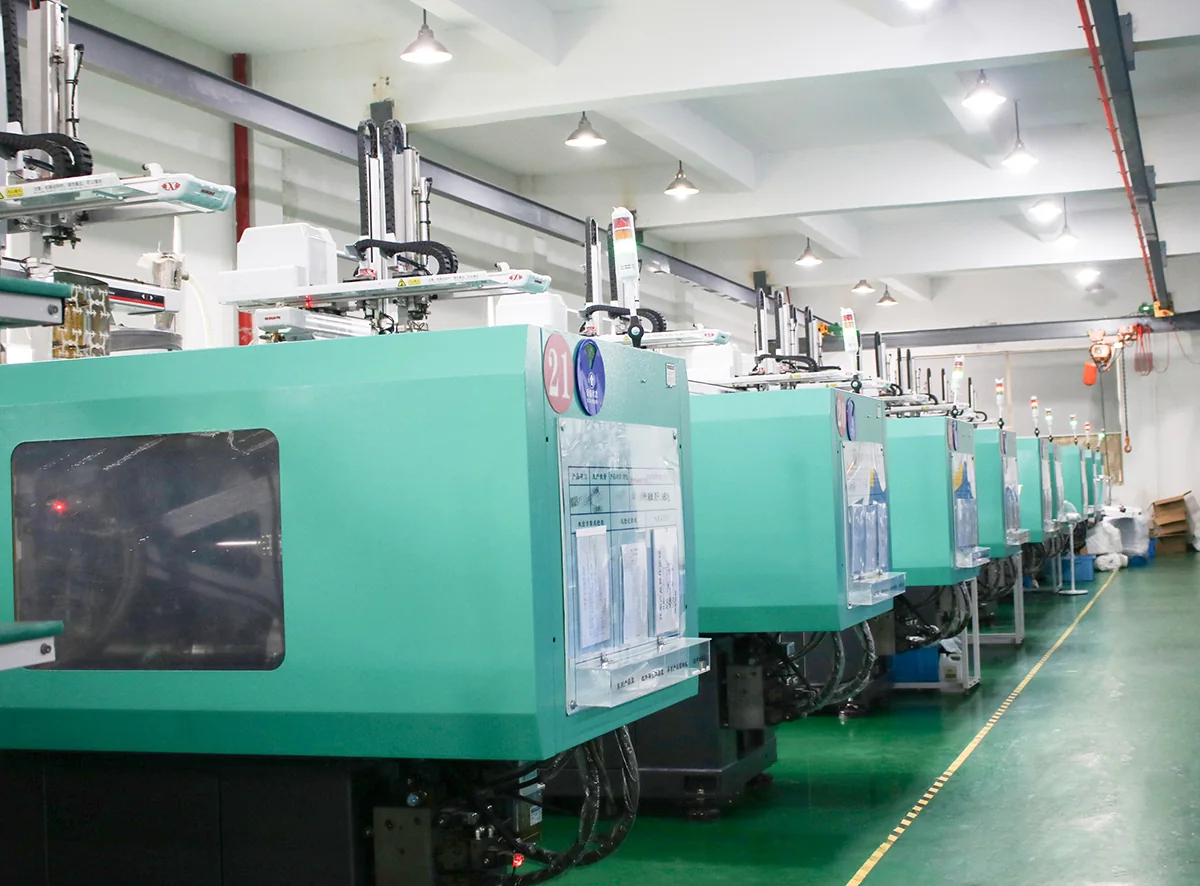
Row of injection molding machines in the Oulete workshop
On this page · 9 sections
- Start with the formula reservoir, then identify the mechanism
- How to compare PP and PET airless proposals
- Add PCR to the selected material version
- A 50 ml quotation example: keep capacity constant and inspect what changed
- Approve the formula and package together
- What to send with an Oulete airless enquiry
- Is PCR an alternative to PP or PET?
- Does a PET airless bottle have a PET pump?
- Can an existing formula approval cover a new PCR version?
Choose an airless bottle by the materials in its formula-contact system, its filling method and its tested dispensing performance. The outer bottle alone does not tell you whether the pack suits your serum or cream.
PP (polypropylene) and PET (polyethylene terephthalate) identify polymers. PCR (post-consumer recycled) identifies the source of recycled material. A PCR airless bottle could contain recycled PP, recycled PET or recycled material in only one component. Before comparing quotations, ask which polymer, which component and which recycled-content percentage the description covers.
That distinction changes the buying decision. A transparent outer shell, a moving piston and a pump cartridge can have different materials and functions, even when a catalogue describes the complete product with one short material label.
Start with the formula reservoir, then identify the mechanism
The reservoir is the part that holds the formula. In a piston airless system, a moving piston follows the product as it is dispensed. Other airless systems use a flexible inner container. These architectures need their own filling and assembly instructions; they are not interchangeable because both are called airless.
Ask the supplier to mark the formula-contact path on the proposed assembly drawing. It may include the reservoir, piston or flexible liner, pump passages, valves and seals. An outer housing or decorative overcap may be outside that path. A material change in a dry outer shell therefore needs a different assessment from a material change in the reservoir or valve.
Named supplier systems make the distinction concrete:
| Published system | What the manufacturer actually identifies | What a buyer should take from it |
|---|---|---|
| Aptar Micro | A top-fill piston platform. Its product leaflet identifies PE/PP and PET or recycled-PET options; the standard packaging is described as all plastic. | A platform name or “all plastic” description does not establish a single-polymer assembly. Select the exact material version and components. |
| Aptar Micro rPET for SVR, announced in March 2024 | A 30 ml application with a container made from recycled PET. | The recycled-PET statement applies to the container. It does not establish that the pump, piston and cap are all recycled PET. |
| Aptar and Pinard Future Airless PET | A PE dispensing pump paired with a PET bottle-in-bottle, published as a 400 ml format. | A PET airless package can contain a different polymer in the pump and use a flexible inner bottle rather than a conventional piston. This example is not a specification for a 50 ml pack. |
Sources: Aptar Micro, Micro rPET announcement, and Future Airless PET. These are examples of the named manufacturers’ designs, not Oulete product specifications.
How to compare PP and PET airless proposals
The useful comparison is between two specified packages that could deliver the same product. A PP bottle-body quotation and a PET complete-pack quotation leave too many differences hidden to support a material decision.
Start with the requirement that is driving the project. If the brief calls for a transparent presentation, ask for the actual PET or other proposed transparent construction, including the inner reservoir and final decoration. If the brief calls for a PP-led assembly, ask which parts are PP and which use PE, elastomers or other materials. Neither appearance nor a resin abbreviation establishes the complete construction.
| Buying requirement | What to compare on the proposed versions | Evidence needed before choosing |
|---|---|---|
| Appearance and light exposure | Finished colour, transparency, coating and the visibility of any inner reservoir or piston | Decorated samples and a formula-specific assessment of light exposure |
| Formula contact | Reservoir, piston or liner, valve and seal materials, including the actual grades proposed | Component material record and compatibility assessment with the intended formula |
| Filling-line fit | Top or bottom filling, assembly sequence, sealing operation and fixture requirements | Instructions for that exact assembly and a line trial agreed with the filler |
| Dispensing | Priming, dose consistency, actuator behaviour and product remaining near empty | Results from the selected package and actual formula under agreed conditions |
| Reorder consistency | Which materials, component revisions and finishes are fixed by the approval | A retained sample and a revision-controlled order specification |
Do not choose PP on a blanket promise of chemical resistance, or PET on a blanket promise of oxygen protection. Formula ingredients, material grade, wall construction, closures and storage conditions affect the package assessment. A supplier’s documented result for one assembly is more useful than a general claim about a polymer family.
For the same reason, a clear catalogue bottle is not automatically PET, and a white bottle is not automatically PP. Colour and surface treatment can conceal the underlying construction. Material identity belongs in the specification rather than being inferred from a photograph.
Add PCR to the selected material version
A useful PCR proposal identifies recycled PP or recycled PET, the component containing it, its stated proportion and the evidence supporting that proportion. “PCR available” leaves all four points unresolved.
The scope can differ within one package. Aptar’s Future Airless PET page, for example, describes a bottle-in-bottle that can be made from rPET and a PE pump that can contain up to 52% PCR. Those statements concern different components. Without component weights and the selected configuration, they do not provide a whole-package recycled-content percentage.
Ask whether a proposed PCR change affects a dry external part or a formula-contact component. If it changes the reservoir, piston, valve or another contact part, include that selected version in the formula and dispensing assessment. Approval of the earlier material version does not, by itself, approve the replacement.
The same control applies to colour and decoration. Evaluate the version you intend to buy, and agree how a change of resin source, colour, component or finish will be communicated before a repeat order. A recycled-content statement also does not establish that the finished decorated pack is recyclable in every destination market. Our PCR packaging claim evidence guide explains component and whole-pack claim boundaries in more detail.
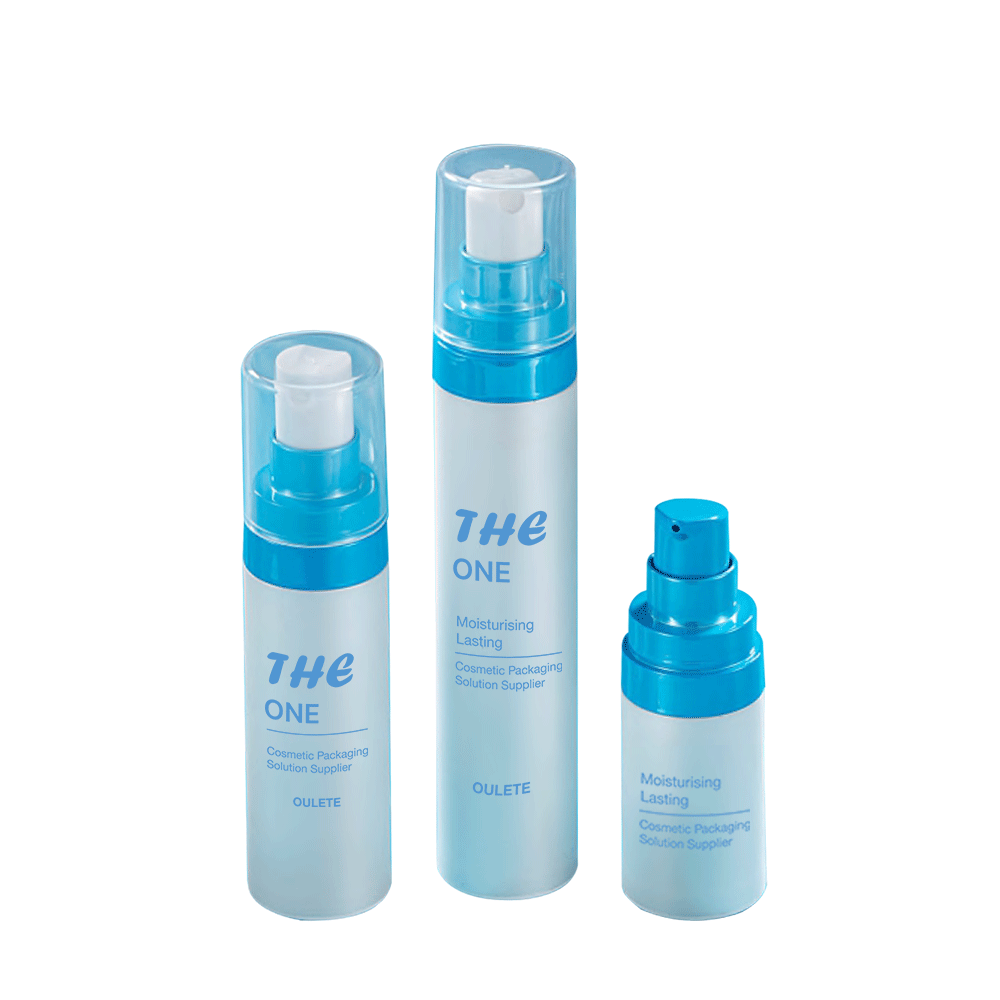
A 50 ml quotation example: keep capacity constant and inspect what changed
Consider a hypothetical skincare launch comparing three offers for a 50 ml airless pack. All three have the preferred external shape. The following descriptions are illustrative buying scenarios, not Oulete quotations or approved product configurations.
Offer A specifies a PP formula reservoir and a piston mechanism. The quotation includes a pump, but its material record and filling instructions have not been supplied. This is a candidate to investigate. It is not yet a complete technical specification, even if its price includes all the visible parts.
Offer B describes a PET outer bottle but does not identify the inner reservoir. The purchasing team cannot yet compare its formula-contact material with Offer A. The immediate request is an assembly drawing and material record, not a price reduction. If the inner construction is different, the filler must also review the assembly and filling process.
Offer C offers a PCR option for the outer housing while retaining the same formula-contact assembly as a previously evaluated sample. The buyer still needs the specified PCR input, colour and dimensional requirements. However, the change should be recorded as an outer-housing change rather than described as a new recycled formula-contact reservoir.
The first decision is therefore which proposals are sufficiently defined to sample on equal terms. Keep the nominal fill, formula, required dispensing behaviour and evaluation conditions consistent. Record the actual material and mechanism differences. A lower-priced offer with an unidentified inner pack has not yet demonstrated an equivalent alternative.
This approach also prevents a common handoff error: approving one material version and then placing an order under a broader catalogue description. Put the selected body, pump and material-version references on the purchase specification. The component material record guide covers the supporting document in detail.
Approve the formula and package together
An airless mechanism does not establish a formula’s shelf life, allow preservatives to be removed or guarantee the absence of oxidation and contamination. Those are product-level questions requiring appropriate formulation, packaging and microbiological assessment.
The Cosmetics Europe and CTFA stability-testing guidance identifies product–container compatibility as part of stability assessment. Its packaging section calls for test materials matching those intended for the market pack and considers interactions between the product and its container. This is technical guidance, not a single universal test recipe.
For procurement, translate that principle into a defined sample approval:
- Identify the sample. Record the reservoir, piston or liner, pump, seals, cap, colour, decoration and material version actually supplied.
- Confirm the filling procedure. Have the supplier and filler agree how that assembly is filled and closed. Record the formula and the conditions used in the trial.
- Evaluate use and storage. Agree the observations and acceptance criteria for leakage, package changes, formula changes, priming, delivery and near-empty behaviour. Include the intended decorated market pack where relevant.
- Control the approved version. Retain the sample and record which substitutions require review before production or reordering.
A claim such as “high evacuation” needs its method and conditions. Ask what formula was used, how the initial fill and remaining product were measured, how the pack was operated and when the test ended. A published percentage without those details may help select a candidate, but it cannot establish the result for your cream.
What to send with an Oulete airless enquiry
Start with the required fill volume, formula type, preferred appearance and intended filling process. Then identify the candidate in the Oulete airless bottle range and request the proposed complete assembly, including the material version of every formula-contact part.
For a PP/PET/PCR comparison, state whether you are selecting the reservoir material, an external presentation or a recycled-content option. Ask for the differences between the proposed samples to be identified in writing. Include the planned order quantity, colour, decoration and launch destination so the quotation covers the actual project.
Oulete’s container-production baseline is 2,000 plastic containers or 5,000 glass containers. This is not a promise that every airless mechanism, PCR version, component, colour or printed complete pack is available at that quantity. Those terms need a project-specific quotation. If your first launch is below the production baseline, separate a stock-purchasing enquiry from a new production order.
The approval should end with a specific answer: which assembly, which material version, which formula and filling process, and which order scope. That gives purchasing, the filler and the supplier the same package to work from.
Is PCR an alternative to PP or PET?
PCR is a recycled-material origin description, so it must be attached to an identified material and component. Ask whether the offer means recycled PP, recycled PET or another specified input, and which parts contain it.
Does a PET airless bottle have a PET pump?
A PET airless bottle does not necessarily have a PET pump. The named Future Airless PET example pairs a PET bottle-in-bottle with a PE pump. Obtain the component record for the actual package offered.
Can an existing formula approval cover a new PCR version?
An existing approval does not automatically establish suitability after a material change. Identify the components and material sources that changed, then agree the necessary review and testing with the responsible formula and packaging teams.
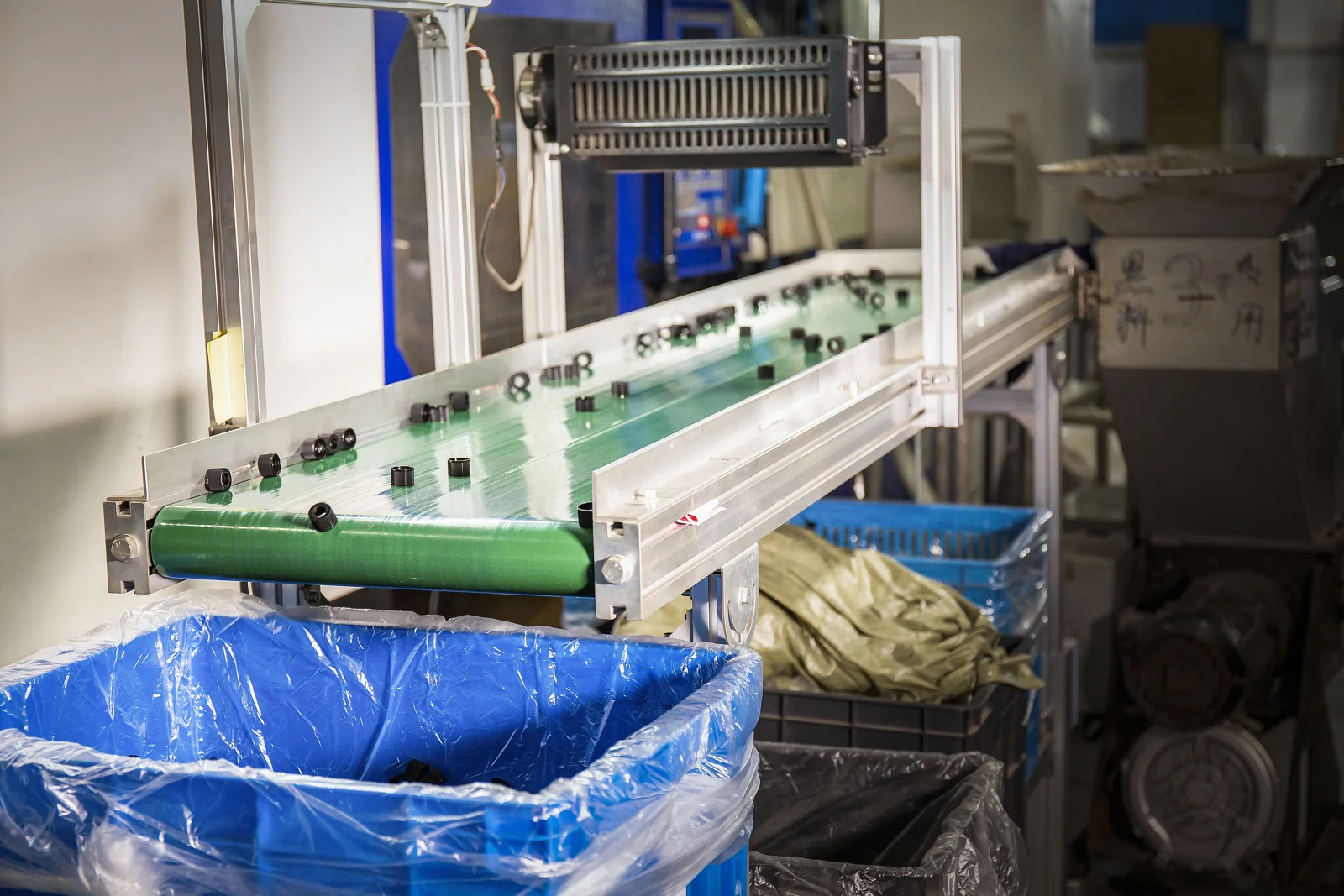
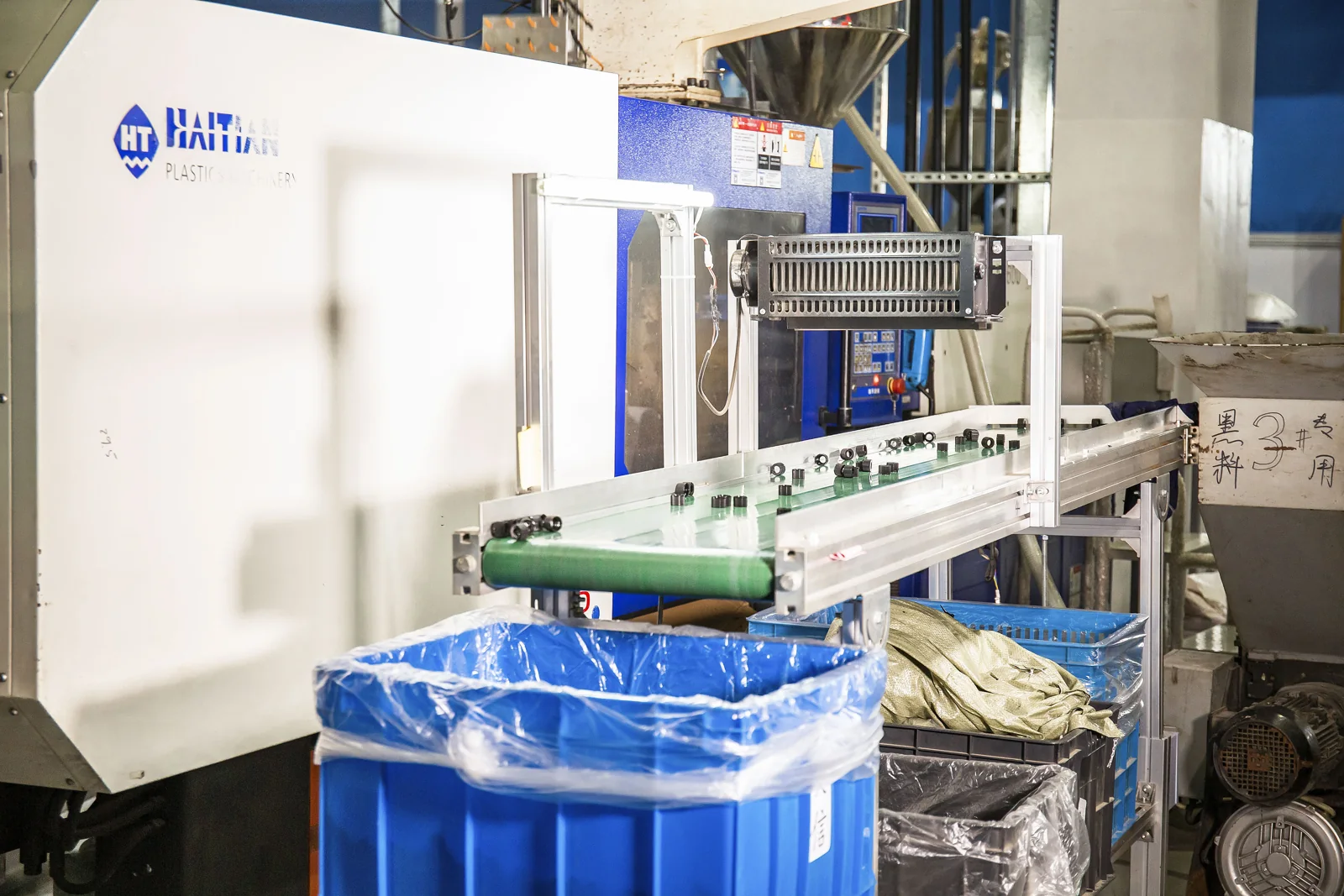
Photographed at Oulete
Inside the molding workshop
See the facility and visible operations behind a packaging enquiry. For your selected assembly, ask which steps apply and request the corresponding sample and inspection records.