Cosmetic packaging · Made for your brand
Airless Bottle Not Dispensing After Filling: What to Check
An airless bottle not dispensing after filling requires assembly identification, preserved failed samples and a recorded filling history before any model-specific troubleshooting begins. A filler presses a newly closed bottle and receives…
Containers only — no compounding or filling.
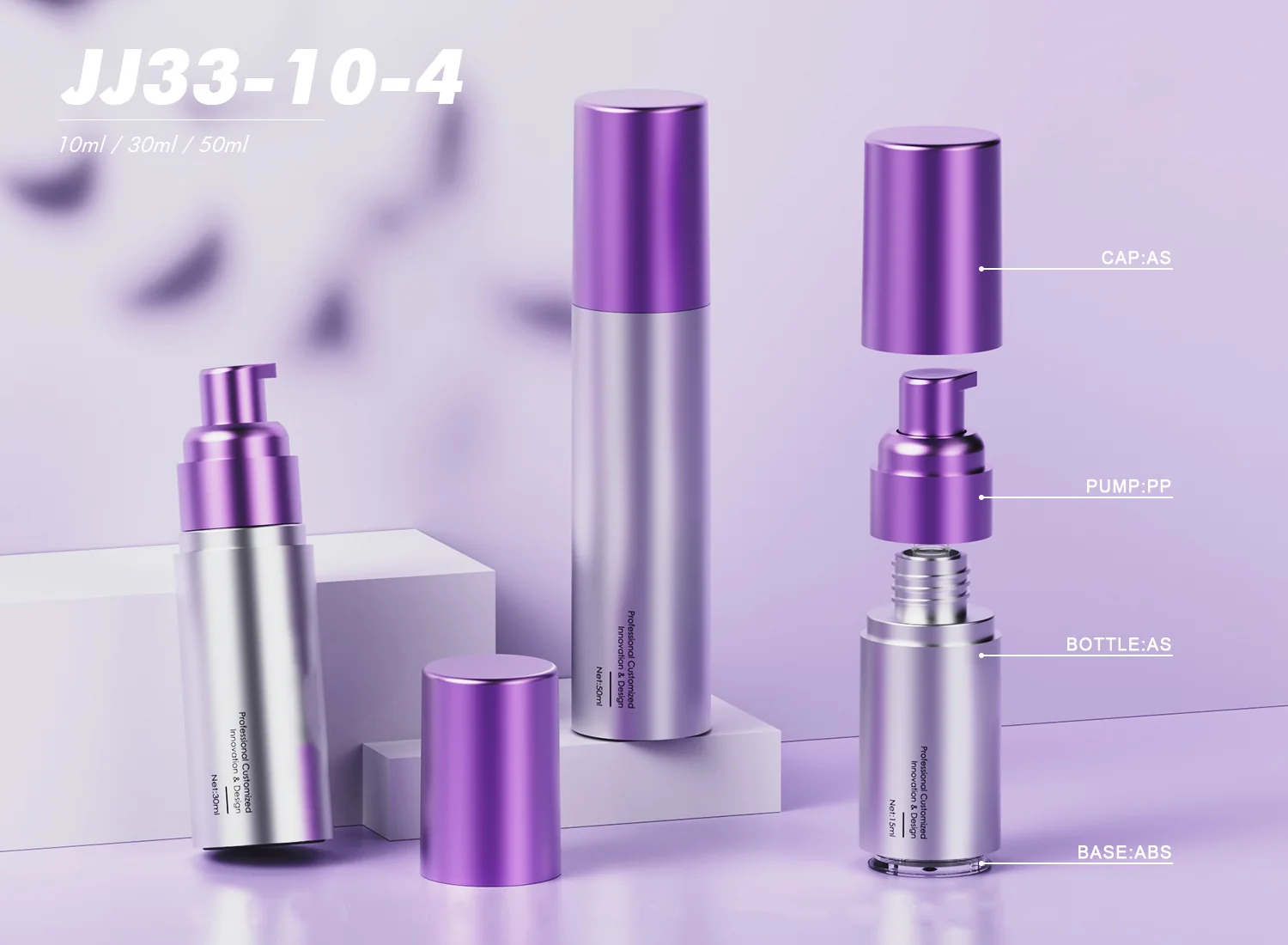
Purple cosmetic bottle with cap and separated pump components
On this page · 15 sections
- Separate the dispensing symptom from its cause
- Airless bottle not dispensing: observation and decision table
- Identify the complete pack and its supplied state
- Reconstruct filling, closing and storage
- Blank filling-history worksheet
- Compare samples without losing the investigation
- Illustrative comparison, not a factory case
- Define the supplier decision and qualification handoff
- FAQ
- How many strokes should an airless bottle need before dispensing?
- Can I reset the piston or open the bottle to make it work?
- Does a dispensing failure mean the formula is too thick?
- Should the filler wait before closing a newly filled bottle?
- Which samples should we keep when only some units fail?
- Does dispensing after an adjustment approve the pack for production?
An airless bottle not dispensing after filling requires assembly identification, preserved failed samples and a recorded filling history before any model-specific troubleshooting begins.
A filler presses a newly closed bottle and receives no product. Another bottle from the same carton starts normally, then stops during evaluation. Calling both samples “faulty pumps” removes the information needed to investigate them. The buying decision is whether the proposed complete pack can be qualified for the intended formula and filling process, with a reproducible record supporting the answer.
The fastest useful response is a comparison the supplier can review: exact components, actual process conditions, the sequence of failed strokes and an untouched reference sample. A generic reset trick may change the symptom while destroying evidence. Keep operating instructions specific to the selected assembly, and keep observations separate from explanations until the responsible technical team examines them.
Separate the dispensing symptom from its cause
A dispensing failure describes what the pack did, while a failure mechanism explains why it happened. “No output during the recorded initial strokes” is an observation. “The piston is stuck” is a proposed cause. A useful investigation preserves that distinction so the supplier can ask for evidence rather than inherit an unsupported diagnosis.
First identify the stage at which performance changes. A pack that never dispenses presents a different history from one that delivers product and later stops. Irregular output is also different from visible leakage. Record actuator movement, orientation, the sequence of output and the remaining product condition without assuming these observations identify a defective component.
Airless bottle not dispensing: observation and decision table
| Observed symptom | Evidence to preserve | First decision for the reviewer |
|---|---|---|
| No product during initial strokes | Stroke history, actuator movement, fill record and original sample condition | Confirm the applicable priming and assembly instructions |
| Normal dispensing followed by a stop | Previous output, remaining product, storage history and sample identity | Define which comparison or examination can reproduce the change |
| Intermittent output | Individual successful and failed strokes, pauses, orientation and video | Agree a consistent actuation method before comparing units |
| Leakage accompanying low output | Leakage location, timing, package mass history and photographs | Preserve the assembly for seal and component review |
| Deformed or visibly damaged pack | Carton identity, handling history and photographs before further operation | Decide whether further actuation would obscure the original condition |
Priming is the initial actuation sequence used to establish delivery through the selected dispensing system. Its method and acceptance requirement belong to the model documentation and trial protocol. Do not borrow a stroke count from a different cosmetic product, or interpret continued pressing as proof that the pack must eventually operate correctly.
Record a short video with the sample label visible, showing the complete press-and-release motion and outlet. Note whether the actuator returns normally and whether output collects on the nozzle rather than reaching the receiving surface. Those are useful observations; none proves formula incompatibility, a seal fault or a piston problem by itself.
The operator should also preserve unsuccessful strokes. Reporting only the strokes that produced product creates a misleading performance history. If the test ended because the reviewer requested a hold, record that endpoint. “Test stopped pending instructions” carries a different meaning from “pack emptied” or “actuator could no longer be operated.”
Identify the complete pack and its supplied state
An airless bottle model identifies a container option, not necessarily every component needed for dispensing. A bill of materials, or BOM, is the controlled record of parts included in an assembly. For a useful investigation, it must distinguish the bottle, pump, actuator, closure, moving container parts and the drawing revisions applicable to the tested sample.
HCP's Affinity 30 ml product page provides separate bottle, pump and overcap references. That supplier-specific example shows how a complete pack can be identified more precisely than “30 ml airless.” It does not establish component interchangeability, filling instructions or performance for an Oulete assembly.
Record the references actually supplied, including suffixes and component lots where available. An actuator with the same appearance may cover a different pump variant. A product family image cannot replace the identity printed on the approved specification. Ask the supplier to resolve missing references before treating visually similar samples as the same configuration.
Supplied state means the assembly condition in which packaging reaches the filler. One project may receive partially assembled components, while another arrives with different operations already completed. The investigation needs to distinguish supplier assembly from filler assembly, because the same final appearance does not document the same handling or closing sequence.
For the selected Oulete ZK29 catalog option, use the exact model and capacity as the starting reference, then request the proposed pump and closure details. A listed bottle option does not establish its internal pump materials, dosage, approved fill route or operating procedure. Those belong in the project specification.
Retain cartons, component bags and delivery labels with the sample record. A photographed bottle without lot context may be impossible to connect to a component shipment. If a distributor combined parts from separate deliveries, identify that assembly history explicitly. The investigation should follow the pack that failed, rather than an assumed standard configuration.
Do not exchange pumps between failed and reference bottles before preserving the original evidence and obtaining a review plan. A swap can be a useful controlled experiment, but it changes more than a label: the pump, seal contact, closure handling and product pathway may change together. Record every permitted exchange and keep the original parts identifiable.
Reconstruct filling, closing and storage
The selected airless design determines the applicable filling route. Aptar identifies Macro as bottom-fill airless packaging, illustrating why “airless” alone cannot specify a filling sequence. A supplier's route for its product is not an operating instruction for a different bottle family.
Ask for the current instructions before running a corrective trial. The record should name who performs each operation, which components are already installed and what the filler changes. Where instructions and actual practice differ, preserve both versions. Rewriting the process record to match the intended method hides the discrepancy the reviewer needs to investigate.
APC's skincare-pump engineering discussion treats the formula, bottle, pump and filling operation as a connected system. It identifies filling temperature, speed, headspace and aeration as potential influences on package performance. These are useful investigation inputs, not universal settings or diagnoses for every airless pack.
Capture the actual formula code and bulk batch, preparation history relevant to the formulation team, measured filling temperature, net fill and equipment identity. Retain line settings and their timestamps. If a value was not recorded, leave it unrecorded; an estimate inserted afterwards creates a false baseline for the next trial.
Blank filling-history worksheet
| Field | Entry for the identified sample |
|---|---|
| Assembly | Bottle, pump, actuator, cap, component lots and revisions |
| Formula | Coded identity, bulk batch and responsible formulation contact |
| Delivered condition | Parts already fitted and parts assembled by the filler |
| Filling | Actual route, equipment, measured temperature and net fill |
| Closing | Operation, equipment setting, time and applicable instruction revision |
| Observation interval | Elapsed time between filling, closing and first actuation |
| Storage | Recorded environment, orientation, duration and handling |
| Dispensing | Priming method, individual stroke history and visible output |
| Attachments | Sample photographs, video, line record and retained-unit location |
Air bubbles and settling need a formula-specific observation plan. Photograph the product condition at agreed checkpoints and record any level change before closing or actuation. The formulation team should determine what constitutes a relevant change. An arbitrary waiting period cannot qualify a pack when formula preparation, fill conditions and storage remain undocumented.
Closing history deserves the same attention as filling. Record the instructed torque or snap operation, the actual equipment setting and any rework. A setting displayed on a machine is not automatically a measurement of the installed closure. State what the evidence represents, so the reviewer does not compare a control setting with a measured result.
Storage can separate apparently identical samples. A reference tested immediately after filling is not equivalent to a failed unit stored under different conditions. Retain the time and orientation record, including movement between teams. Where records are incomplete, describe the limitation and agree a repeat trial rather than filling the gap with a presumed standard practice.
External reference — Songmile Packaging: How Does Airless Pump Bottle Work ?
External airless-pack demonstration by Songmile Packaging. It is a reference for that publisher's assembly, not an operating instruction for an Oulete model.
Compare samples without losing the investigation
A controlled comparison changes an identified variable while retaining a documented reference. It can help test a proposed explanation, but success after an adjustment does not by itself establish the original cause or approve the adjustment for production. The comparison must state exactly what changed and what remained comparable.
APC's compatibility discussion explains how formulas and contacting package materials can interact. Material swelling is a review topic when supported by examination. A dispensing symptom alone does not prove that swelling occurred, and a glass or plastic bottle name does not identify all pump contact materials.
Have the responsible team define retained controls: the same approved component configuration, known filling conditions and a traceable formula identity. If a control uses another bulk batch or storage history, state that difference. A functioning pack from an unrelated trial is a useful reference, but it is not an identical experimental control.
Illustrative comparison, not a factory case
Suppose Case A contains a newly filled sample that never produced output under its recorded actuation sequence. Case B contains the same catalog bottle family and formula code, but it dispensed before stopping after storage. The catalog family alone does not make these failures equivalent. The supplier first needs component revisions and the actual fill and storage records for both.
For Case A, the reviewer may ask whether the supplied state and priming method match the assembly instructions. For Case B, the reviewer may request the earlier output record, remaining product and a retained comparison unit. Those requests identify the next evidence step. Neither scenario justifies declaring a stuck piston or unsuitable formula before examination.
If the team later authorizes a component exchange, label the sample before and after the change. Preserve the removed component, record the exchange method and separate the new result from the original record. Do not write “fixed” without stating whether the change has only restored dispensing in that sample or has completed the agreed validation.
Avoid adjusting several variables simultaneously when the purpose is to isolate a mechanism. Changing formula handling, closing equipment and pump variant in one trial may find a workable combination, but it cannot show which change explained the original failure. State whether the trial is diagnosing a cause or screening an alternative pack.
Define the supplier decision and qualification handoff
A useful supplier request identifies a decision, not only a complaint. Ask which examination is appropriate, which records are missing and what evidence will qualify the proposed corrective action. The response should specify the assembly and conditions it covers, so a successful preliminary check is not reused as unrestricted production approval.
Split ownership across the brand, filler and packaging supplier. The brand controls the required user experience and formula identity; the filler documents its actual operations; the supplier identifies components and applicable packaging instructions. Use the contract-manufacturer handoff to make those interfaces explicit before arranging another sample run.
Keep appearance approval separate from functional approval. A decorated sample accepted for color and artwork may never have been filled. The cosmetic packaging sample approval guide provides a structure for defining the scope of each sign-off and the conditions that still need evaluation.
Before a repeat trial, agree the actual configuration, formula code, method, observations, acceptance criteria and reviewers. Set sample counts, conditions and pass limits for the trial's purpose. After review, attach the results to the assembly revision. If the pump, contacting material or filling route changes again, evaluate which earlier conclusions still apply.
For an Oulete enquiry, submit the identified bottle option and complete pack requirement through the sample brief, together with the preserved failure history. Request the model-specific component specification and instructions. A reviewable enquiry gives the supplier enough information to propose a defined comparison without inventing a diagnosis or promising an unsupported remedy.
FAQ
How many strokes should an airless bottle need before dispensing?
The approved priming requirement depends on the selected assembly and its test method. Record the actual stroke count, actuator motion and output, then compare them with the applicable instructions. A count stated for another brand or bottle is not a universal acceptance limit.
Can I reset the piston or open the bottle to make it work?
Opening or resetting an airless pack requires instructions applicable to that model. Preserve the original failed condition first and ask the supplier which examination is appropriate. A reset changes the sample and may remove evidence needed to understand the initial failure.
Does a dispensing failure mean the formula is too thick?
A dispensing failure alone does not establish that viscosity caused the problem. The review needs actual formula information, component identity, filling history and reproducible observations. A supplier viscosity description is a screening input, while filled-pack performance must be evaluated under the agreed conditions.
Should the filler wait before closing a newly filled bottle?
The closing interval should come from a verified model and formula process, rather than a universal waiting time. Record aeration, settling and actual timing during the pilot fill. The responsible formulation and packaging teams can then define the observation and closing criteria for that configuration.
Which samples should we keep when only some units fail?
Preserve identifiable failed units and traceable comparison units with their original records. Keep component lots, formula identity, filling conditions and storage history attached to each sample. Do not combine unrelated working bottles into one control group simply because they share a catalog family name.
Does dispensing after an adjustment approve the pack for production?
Successful dispensing after an adjustment establishes an observation for the changed sample, not complete production qualification. The responsible team must review what changed, whether the method was controlled and which function, compatibility, storage and line checks remain before approving the revised configuration.
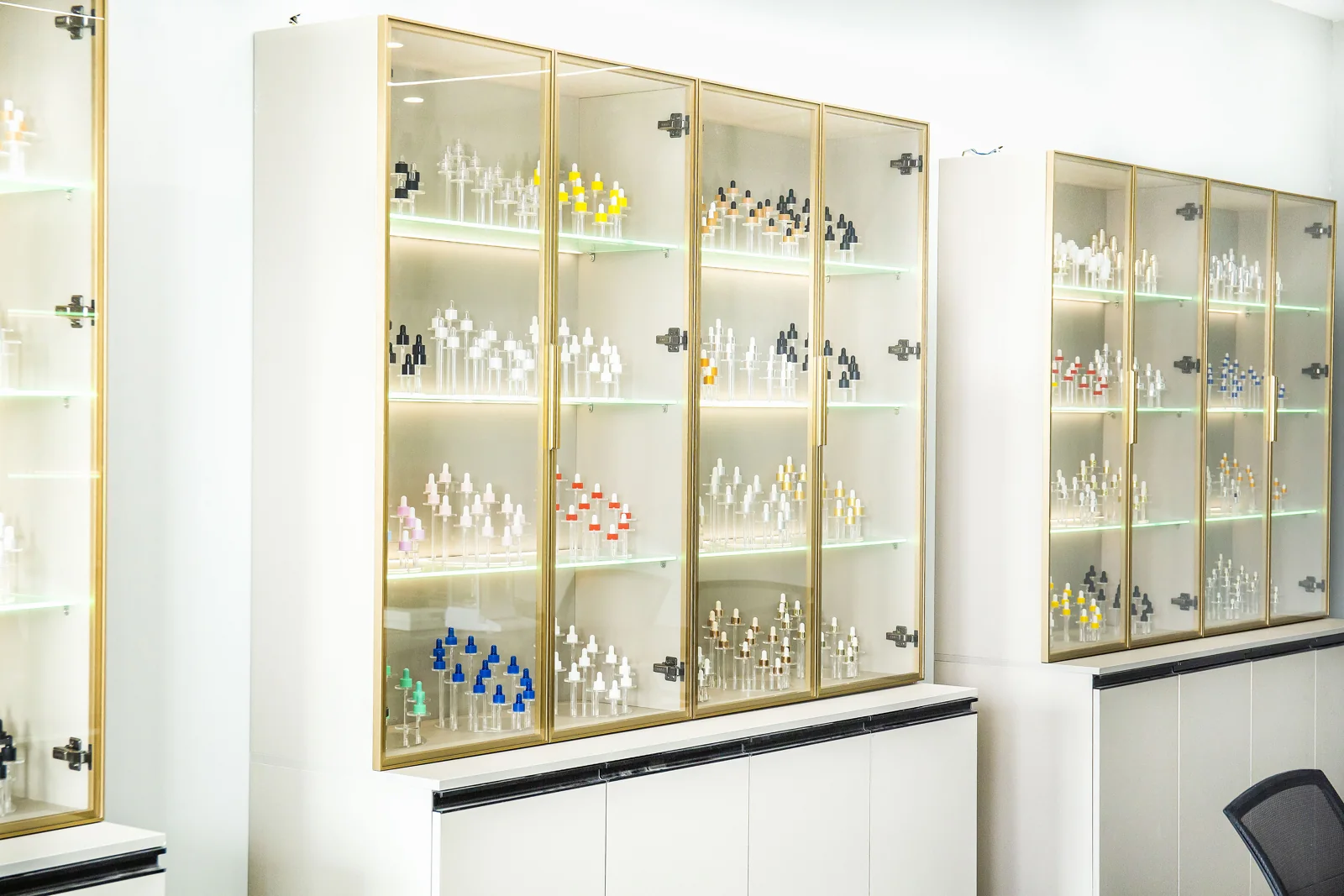
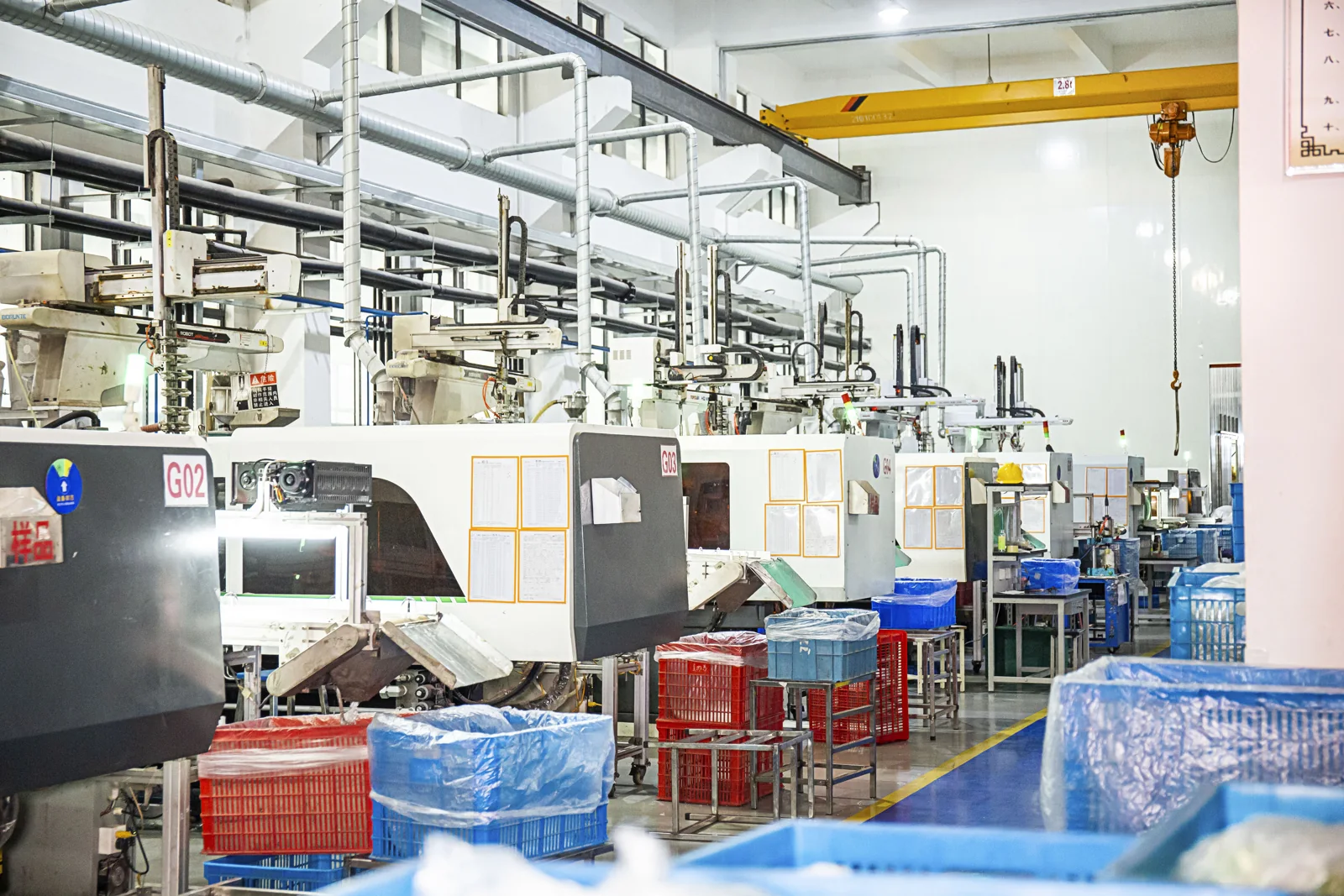
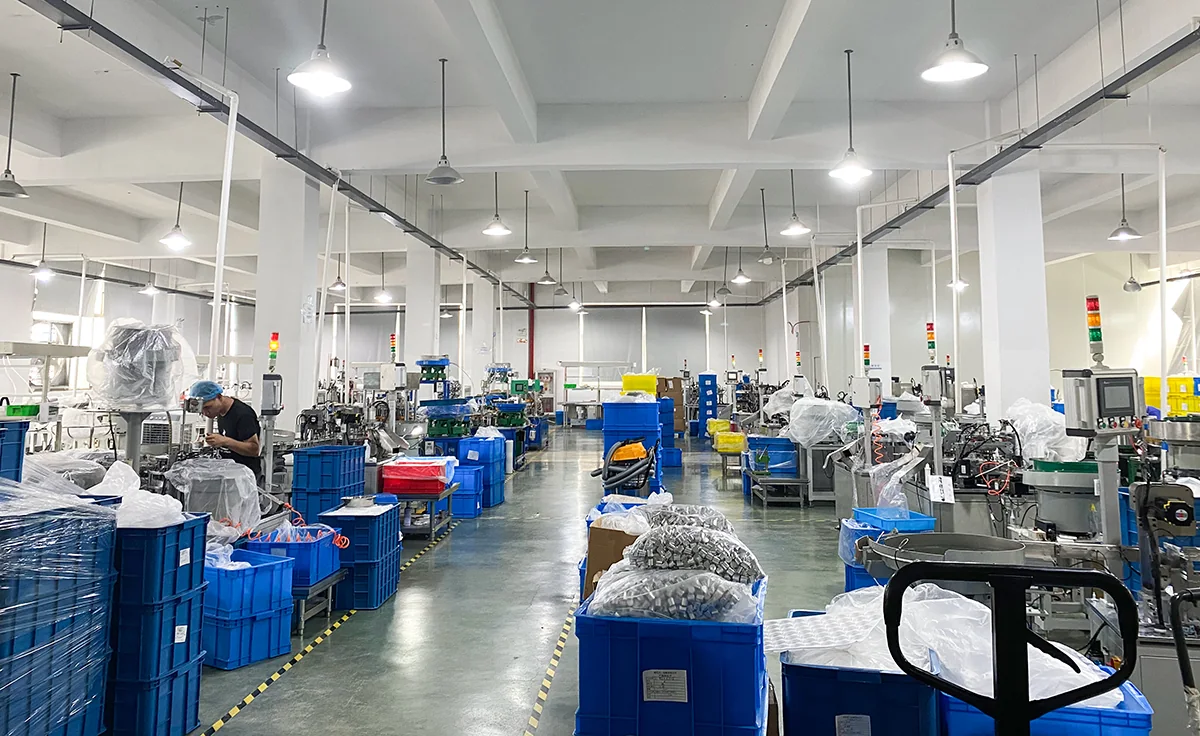
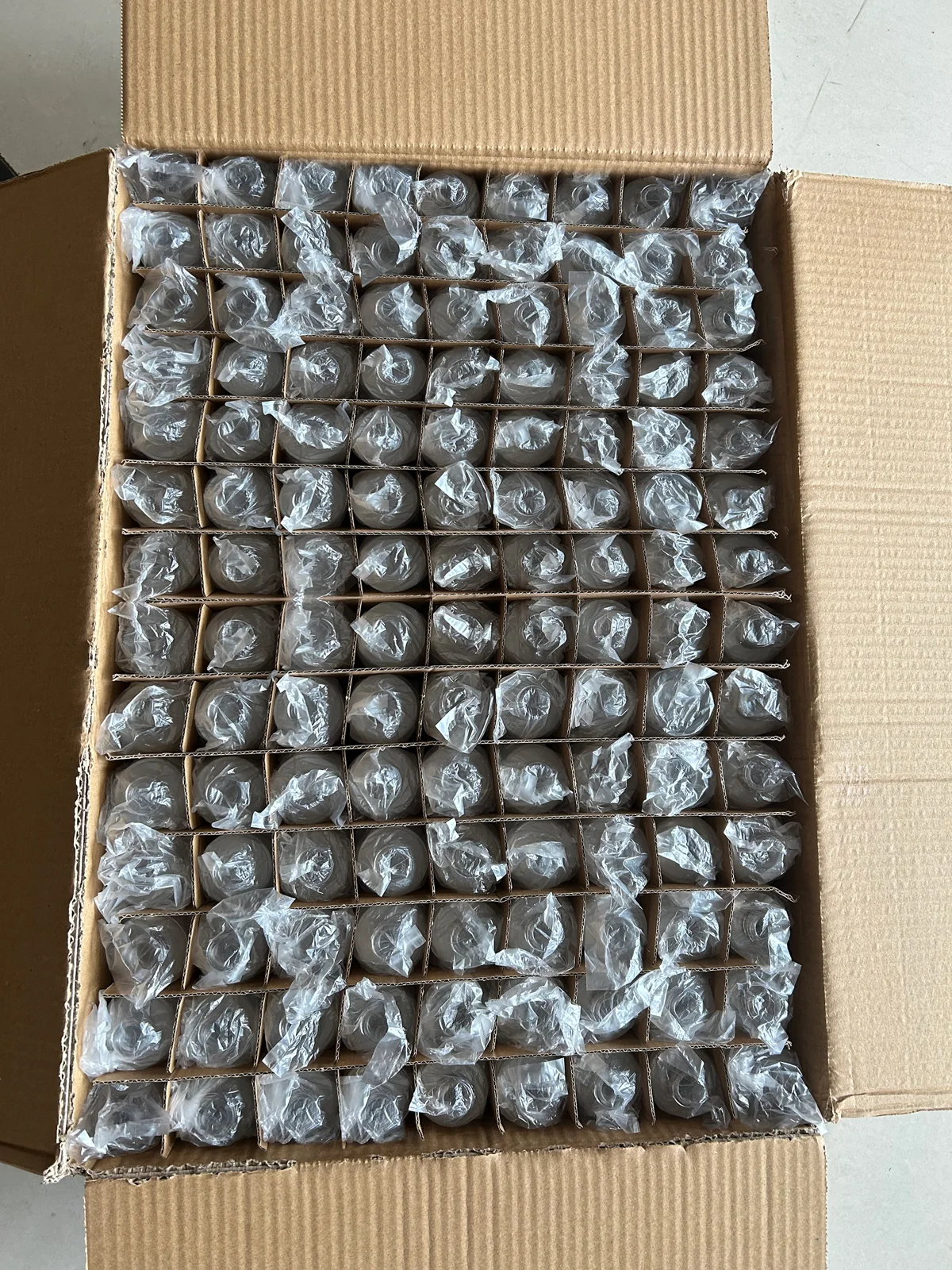
Photographed at Oulete
From the sample room to packed containers
See the facility and visible operations behind a packaging enquiry. For your selected assembly, ask which steps apply and request the corresponding sample and inspection records.