Cosmetic packaging · Made for your brand
HCP Packaging Alternatives for Lip Gloss Assemblies
Compare documented HCP and GEKA lip-gloss routes with Oulete's conditional sourcing proposal. Confirm the wand, wiper, formula pickup and quantities for the selected assembly before ordering.
Containers only — no compounding or filling.
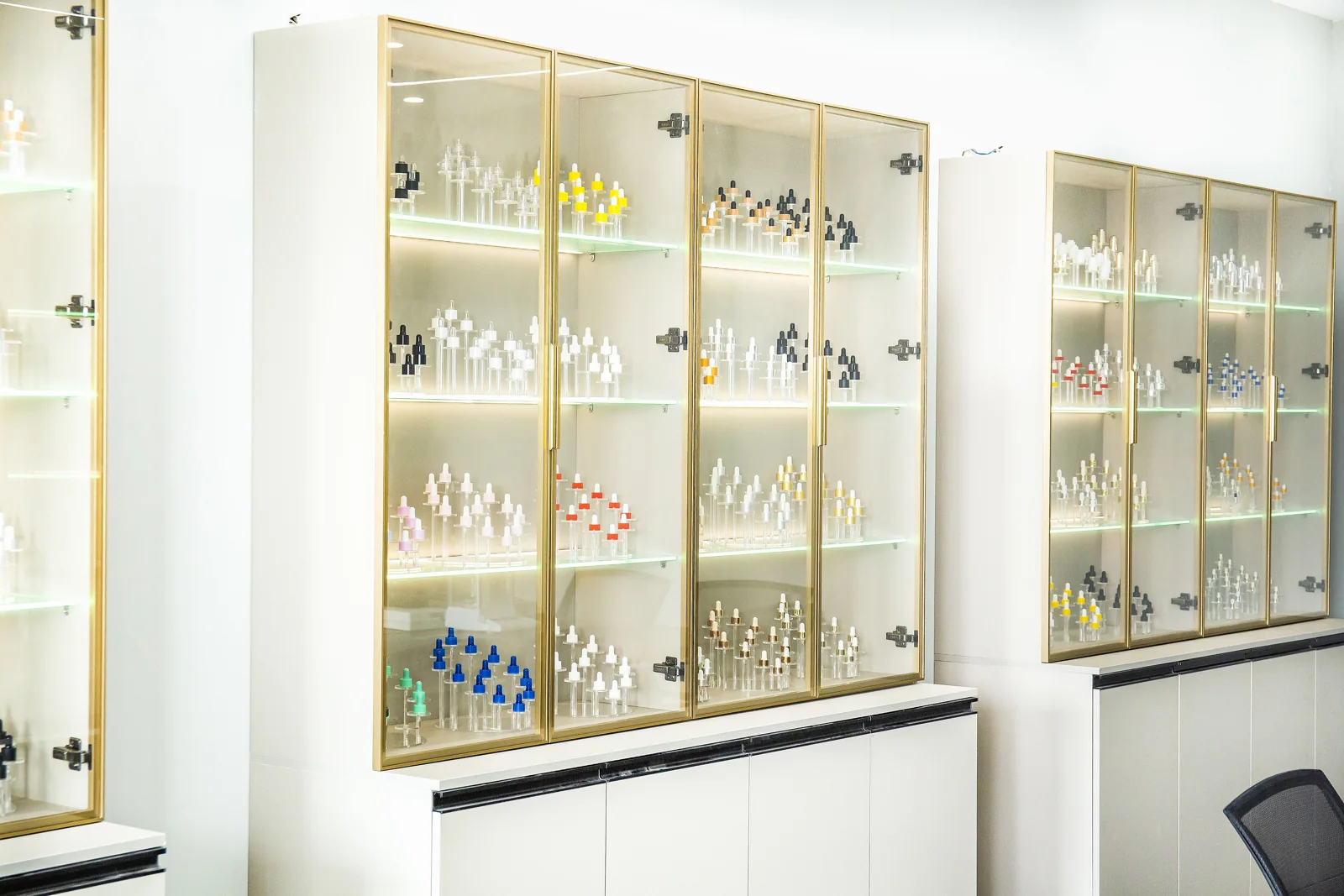
Cosmetic packaging samples displayed in the Oulete showroom
HCP Packaging alternatives for lip gloss packaging should be evaluated as complete applicator assemblies, with formula pickup, wiper retention and closure confirmed together.
A brand may want a different finish, another supply route or a second source while keeping the same application feel. That request involves the bottle, wiper, stem and applicator as well as the visible pack. At Oulete, we can review a lip-gloss packaging brief and proposed component availability. Our current public information does not establish a drop-in replacement for a named HCP lip-gloss or mascara assembly.
This comparison separates documented supplier options from the checks still needed for your formula. Product information was reviewed on 12 October 2026; availability, quantities and components need a current quotation.
Define the application you need to preserve
A wiper is the insert at the bottle opening that controls how much formula remains on the applicator during withdrawal. GEKA describes product loading, retention in the bottle and ease of assembly as separate wiper design considerations. A bottle that looks similar can therefore deliver a different application result when its wiper or wand changes. GEKA wiper technologies.
For lip gloss, describe the required pickup and coverage before choosing a silhouette. A reservoir-shaped flocked applicator, a small precise tip and a non-flocked spatula are different development choices. HCP's Essential Luxe page identifies Megalips Doesfoot and Megalips Reservoir options; GEKA documents flocked applicators and elastomer spatulas. These descriptions help select samples, but do not establish performance with your formula. HCP Essential Luxe, GEKA lip-gloss applicators.
Mascara technical example: HCP's related Essential pack shows the component detail behind a familiar cylindrical shape. Its listed bottle code is 503M, with a 14.5 mm neck, 129 mm height, 19.5 mm diameter and 19.7 mL overflow capacity. The specification also lists wiper, rod, bottle and cap material choices. HCP 14.5mm Essential Mascara.
Overflow capacity, or OFC, is the container's brimful capacity; it is not the approved saleable fill. Set the intended fill with the actual wand installed, allowing for displaced volume and the agreed headspace. HCP's published 19.7 mL OFC should not become a net-fill claim without a filled-sample review.
HCP Packaging alternatives for lip gloss packaging: supplier routes
Publicly documented applicator choices differ from a confirmed replacement assembly. The suppliers below appear alphabetically, with no overall ranking. The comparison concerns development routes and the evidence available on their official pages. It does not compare matched quotations, tested formulas or interchangeable parts.
| Supplier | Relevant documented route | What makes the route useful | What the buyer still needs to confirm |
|---|---|---|---|
| GEKA | Custom or non-exclusive ready-to-go lip packaging; flocked applicators and non-flocked elastomer spatulas | Several applicator constructions and dedicated wiper technologies can support an application-led sample review | Selected pack and component codes, drawings, availability, MOQ, price and results with the actual formula |
| HCP Packaging | Essential Luxe lip-gloss pack with jumbo flocked applicator choices; the related Essential mascara family documents multiple rods and wipers | A named stock family with publicly described component choices offers a defined starting point | Exact lip-gloss assembly, net fill, selected material combination, formula compatibility, decoration and current project terms |
| Oulete | Lip-gloss container, applicator and closure sourcing review; availability confirmed against the project brief | A packaging enquiry can bring model selection, component sourcing, colour and decoration into one supply proposal | A named available assembly and its component sources; no verified HCP interchangeability or equivalent mascara system is established here |
Sources: GEKA lip packaging, HCP Essential Luxe and Oulete lip-gloss packaging. HCP and GEKA publish more specific applicator technology information than Oulete's current category pages. That is an advantage when your priority is a documented application system rather than a container sourcing review.
GEKA describes de-blob wipers for reducing loading at the brush tip and lamella designs for differing diameters, including larger applicators on thinner stems. HCP describes bi-injected wipers that combine retention hardness with wiping softness. Ask which design applies to the proposed assembly rather than treating these technologies as interchangeable features. GEKA wipers, HCP manufacturing.
Qualify the wand, wiper and fill as one assembly
A complete sample approval includes the final applicator and wiper. Oulete's lip-gloss category specifically distinguishes complete assembly approval from a bottle-only sample. Keep the qualification record attached to the component revision you tested, so a later change to the tip, stem or wiper can be identified. Oulete assembly review.
Identify the parts before testing
Request the bottle, cap, stem, wiper, applicator and any seal identifiers, together with the neck and closure drawing. Ask the supplier to identify formula-contact materials and any sourced components. A nominal neck diameter alone does not describe the wiper seat, retention feature, closure engagement or seal contact.
Compare the proposed assembly against your approved reference sample. If a component is intended to carry over, verify its fit through the supplier's drawing review and assembled samples. Where a design or tool is exclusive, clarify the available sourcing rights. Similar appearance does not establish dimensional equivalence or permission to reproduce a component.
Evaluate pickup with the actual bulk formula
Compare samples using the same formula batch and agreed handling conditions. Record coverage, excess product on the stem or tip, visible strings and residue at the neck. If pickup is measured by weighing, document the preparation, withdrawal procedure and balance method so the measurements can be interpreted consistently.
Agree the acceptable application result with the brand's formulation team. A larger pickup is not automatically better: it may suit a generous gloss application while creating cleanup problems for a precise concealer. Treat supplier applicator claims as sample-selection guidance, then decide whether the filled pack meets your own application brief.
Separate wiping action from component retention
Observe wand withdrawal and reinsertion as well as the formula left on the applicator. Check whether the wiper stays seated and whether the applicator remains securely attached to its stem. Ask the supplier and filler to agree suitable measurement methods, acceptance limits and sample quantities; this page does not supply universal pull-force limits.
Record the tested formula condition and any storage conditioning with those observations. A successful dry assembly check does not establish wet application behaviour. If the wiper, stem or tip changes during development, identify the revised assembly and decide which checks need repeating before its approval replaces the previous version.
Run the intended filling and closing sequence
The filler should review the planned fill opening, dosing nozzle, container support, wiper insertion operation and closing equipment. Confirm the actual assembly sequence with the pack supplier instead of assuming every wand pack is filled and assembled in the same order. Check for residue where the wiper or seal must sit.
Use the intended fill level and final wand to review leakage, closing action and storage or transport behaviour under the agreed project protocol. Inspect the final decorated pack as well: cap alignment and artwork orientation can affect appearance approval even when the undecorated assembly is acceptable. Record appearance and functional approval separately in the sampling record.
Compare component lots before comparing unit prices
Oulete's plastic packaging MOQ baseline is 2,000 pieces, subject to the selected model and supply proposal. That baseline does not establish a 2,000-piece minimum for every sourced applicator, wiper, material or decorated colour. Confirm those quantities explicitly before dividing a launch order across shades. The MOQ and lead-time guide supports that discussion.
A lip-gloss range can share a bottle and cap while needing shade-specific artwork or formula approvals. Ask which components can be pooled across the order and which require separate production lots. Do not assume a shared mould means every colour, print or applicator option shares the same minimum quantity.
| Quote line to request | Decision it supports |
|---|---|
| Component codes, materials and sources | Identifies the actual assembly being priced and any sourced parts |
| Quantity per bottle colour, cap finish, artwork and applicator | Shows which launch variants require separate lots |
| Samples, tooling and filling trials | Separates development costs from the recurring pack price |
| Delivery terms and approval dependencies | Defines the milestone behind a quoted delivery date |
| Reorder specification and component-change notification | Keeps later production aligned with the approved assembly |
No matched HCP, GEKA and Oulete quotations were obtained. There is no evidence here that Oulete is cheaper, faster or available in smaller complete-system quantities. A comparison should include development and requalification costs as well as the pack price, particularly when a formula already has an approved applicator system.
Choose whether to retain, replace or develop
Retaining a qualified HCP assembly is a sensible option when its application result, supply terms and available finish meet the brief. A second source can still be investigated, but it needs its own qualification record. Buying a similar-looking bottle does not preserve the approval of the original wand system.
If the missing feature is a specific applicator construction, start with documented HCP or GEKA options and request the corresponding assembly details. If your requirement is a lip-gloss container and decoration sourcing review, Oulete can assess the brief conditionally. We first need to confirm the available model, components and responsibilities; we cannot promise a named HCP replacement from the information on this page.
For an Oulete packaging enquiry, send the formula handling information, target fill, application preference, quantity by variant, filling arrangement and finish reference. Use the sample-brief tool to organize those inputs. Request an identified assembled sample and component list before committing the production artwork or order.
Frequently asked questions
Can another bottle replace an HCP pack while keeping its original applicator?
Cross-supplier component compatibility requires drawing review and assembled-sample testing. The bottle neck, wiper seat, stem, closure and seal must work together. A matching nominal neck diameter or similar silhouette does not prove interchangeability.
Is Oulete a confirmed alternative for an HCP mascara system?
Oulete's current public information does not establish an equivalent, model-coded HCP mascara replacement. A proposed mascara project needs an availability and assembly review before Oulete can confirm its supply scope or provide samples.
Does Oulete's 2,000-piece MOQ cover a complete lip-gloss assembly?
The 2,000-piece plastic packaging baseline is subject to the selected assembly and quotation. Sourced applicators, wipers, colours and decoration may have separate lot requirements. Obtain the quantity allocation for the exact configuration.
Is the HCP Essential pack's 19.7 mL capacity the recommended fill?
The published 19.7 mL figure is overflow capacity, not an approved net fill. The intended saleable fill must be reviewed with the final wand, closure, headspace and filling process.
What should a contract filler approve before production?
A contract filler should approve the selected assembly against its filling, wiper insertion and closing process. Formula-contact materials, final fill, leakage checks and the agreed application result also need the responsible parties' approval. A decorated empty bottle is not enough.
Can Oulete formulate or fill the lip gloss?
Oulete supplies packaging containers rather than formula development or contract filling. The supply proposal should identify packaging components and sourcing responsibilities, while the brand and filler manage formulation and filling qualification.
Photographed at Oulete
From the sample room to packed containers
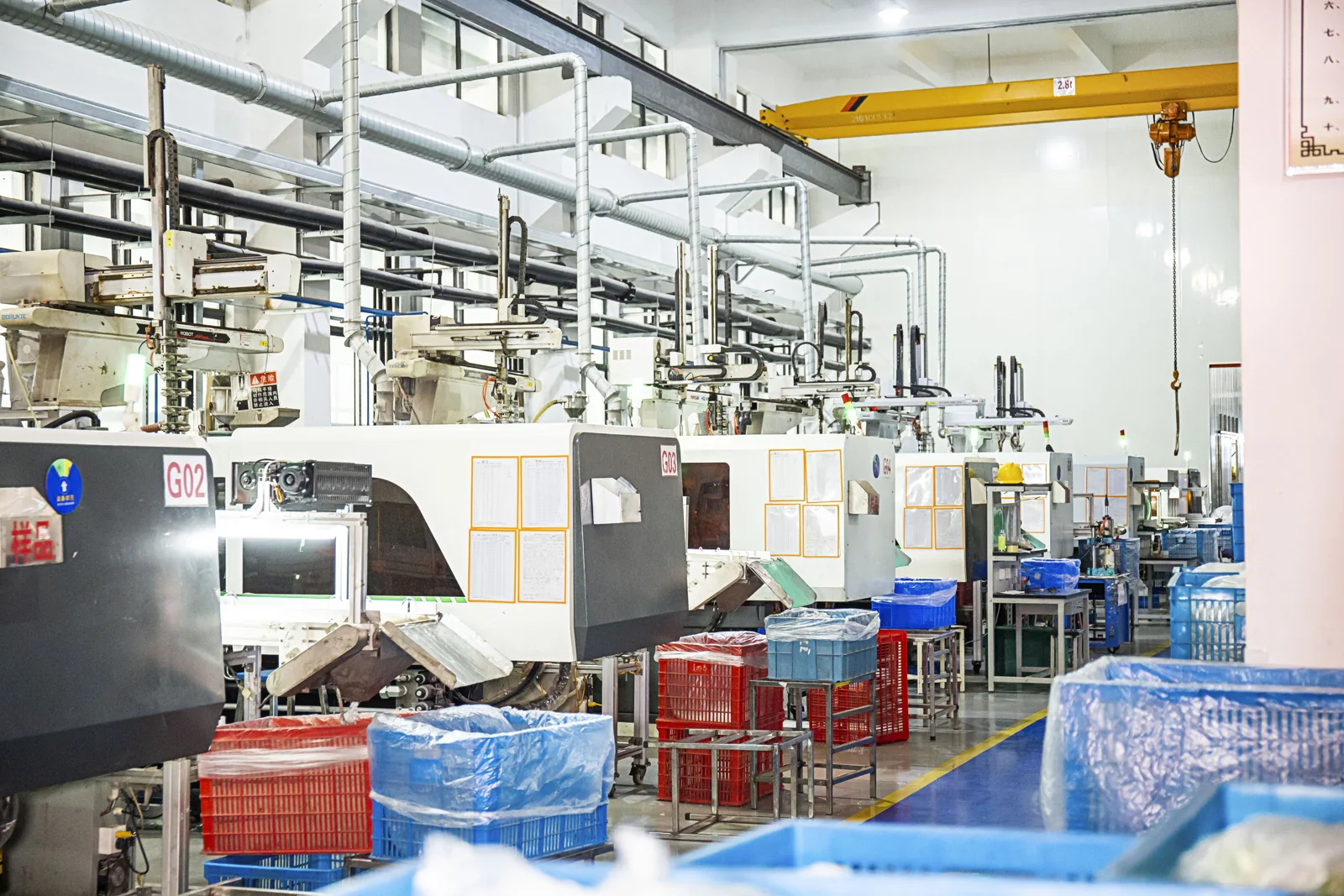
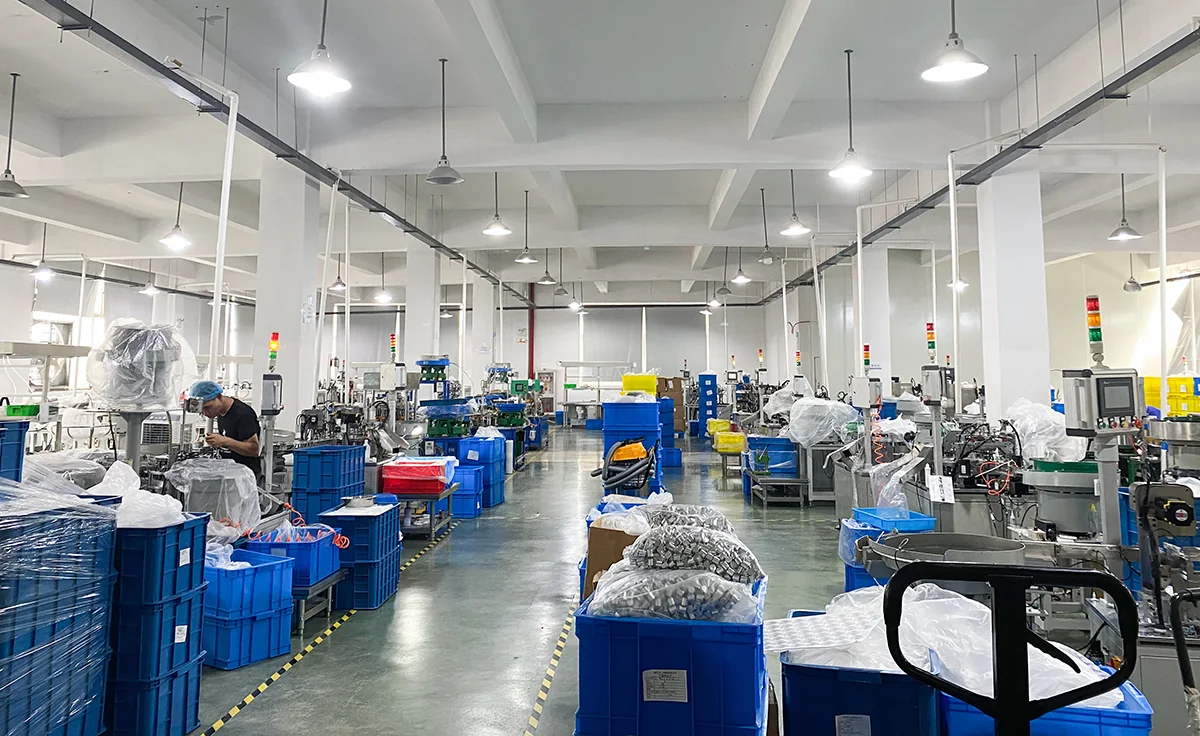
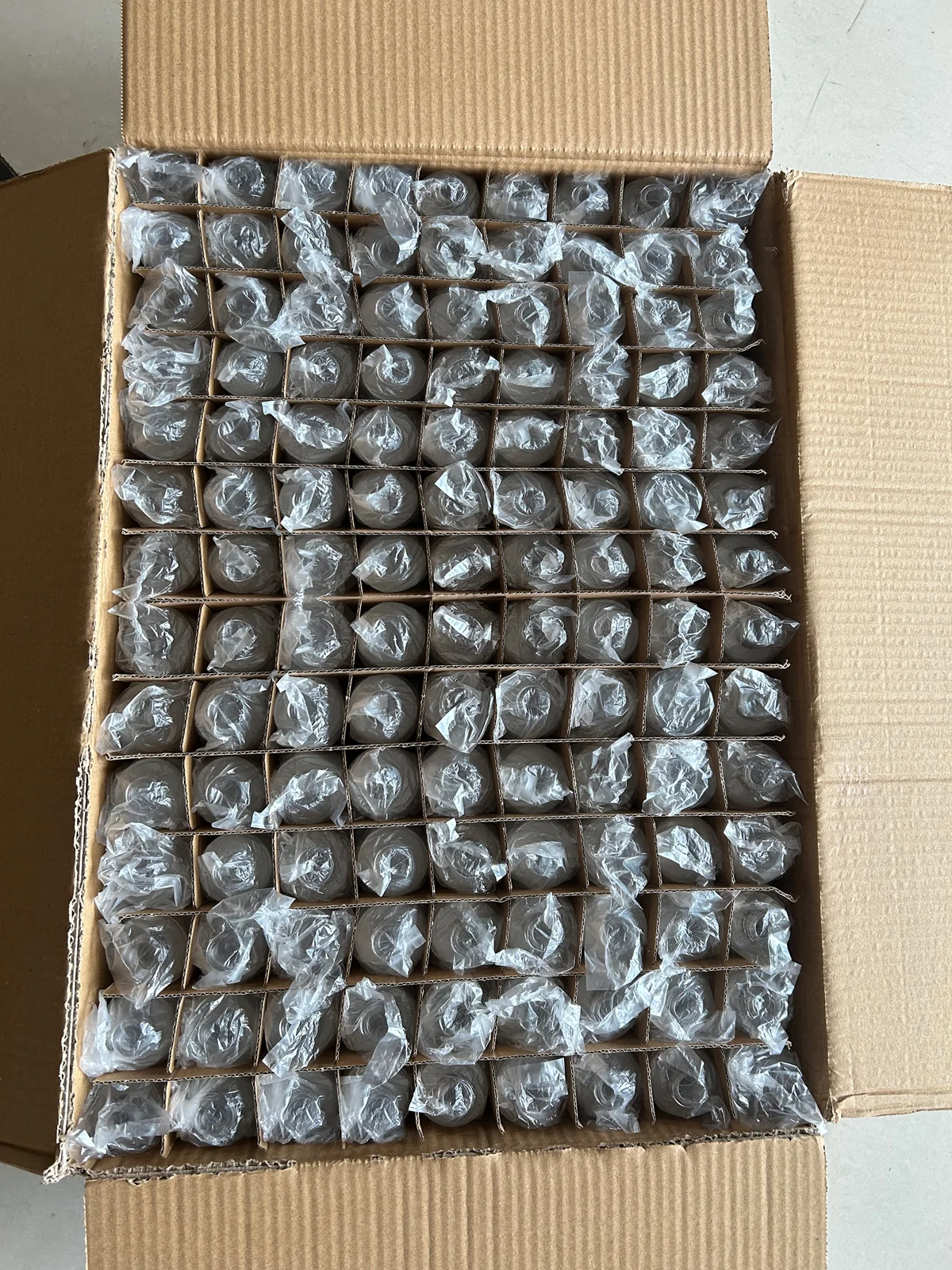
See the facility and visible operations behind a packaging enquiry. For your selected assembly, ask which steps apply and request the corresponding sample and inspection records.