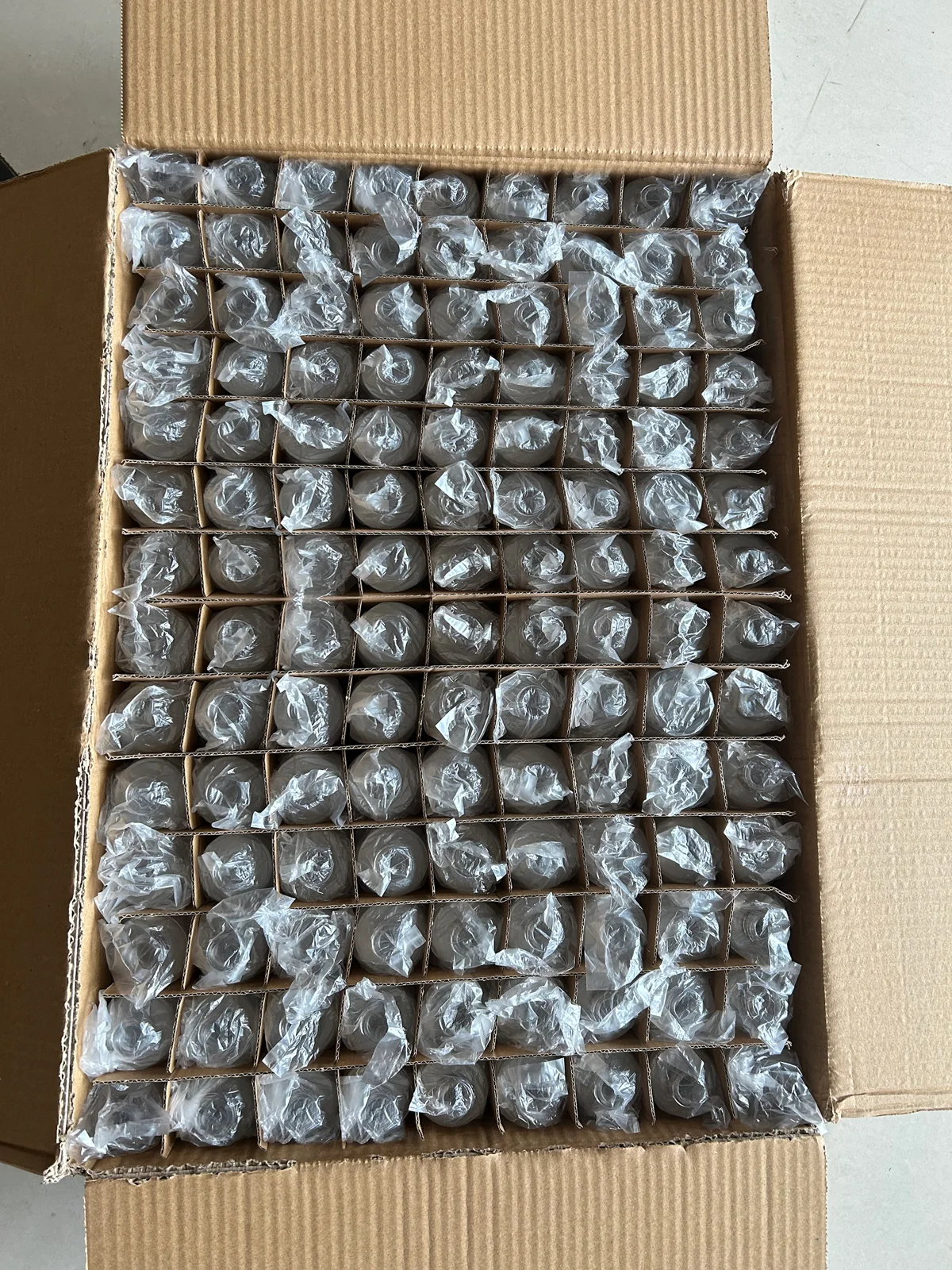
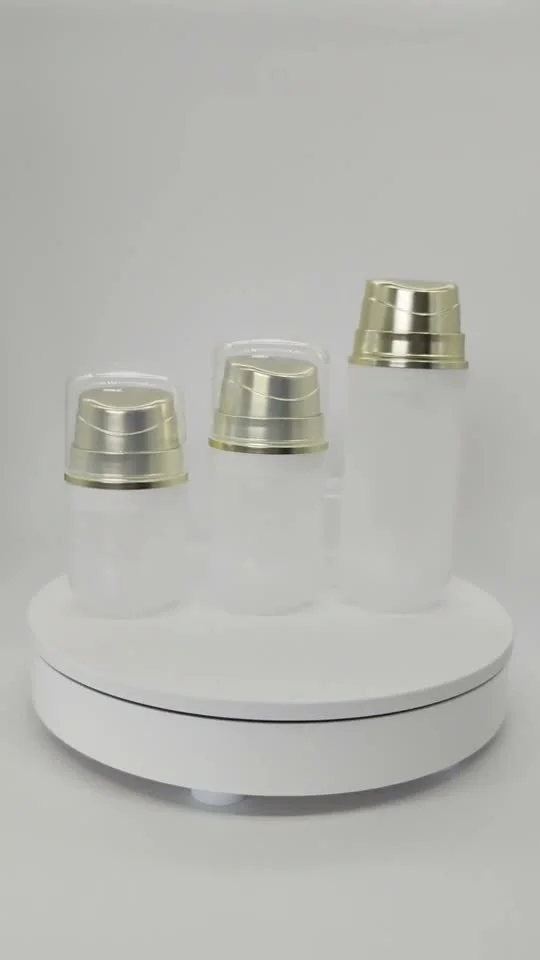
Bottle and pump reference
Use the image to discuss appearance; select the catalog model separately.

Material selection guide
PET and PETG can both create clear, polished cosmetic bottles. The right choice depends on the exact resin grade, bottle geometry, decoration, formula, target market, and end-of-life brief—not the material name alone.
Compare the tradeoffs, then send Oulete your fill volume, closure, decoration, and test requirements.
Oulete cosmetic packaging reference
The short answer
Choose PET first when
Compatibility with established PET bottle-recycling streams leads the requirement.
The complete package and local collection system still determine the final outcome.
Consider PETG or copolyester when
A high-gloss, clear, thick-wall appearance or a grade-specific target leads.
Verify the exact resin, package tests, and end-of-life claim.
Neither material is automatically better. Resin suppliers publish performance by grade, which is why the decision starts with the bottle specification. See the Eastman material guide and PET Renew guidance.
| Decision criterion | PET | PETG / copolyester |
|---|---|---|
| Visual direction | Clear bottles, including thick-wall formats | Clear, high-gloss parts; appearance varies by grade and geometry |
| Performance | Grade- and design-specific; personal-care PET grades are available for compatibility and impact requirements | Grade- and design-specific; copolyester grades publish different stiffness, impact, and thermal values |
| Recycling brief | Often the stronger starting point for a PET bottle-stream brief when the complete package is designed and collected appropriately | Conventional PETG is not equivalent to container-grade PET in that stream; verify exceptions by exact grade |
| Decoration | Print, hot stamp, spray, labels, and closures must be evaluated as part of the complete package | The same: decoration can change appearance, sorting, and recyclability outcomes |
| Best next step | Review a stock PET bottle, then test the intended formula and closure system | Confirm the exact resin and reason for specifying it, then test the complete package |
These are sourcing directions, not universal guarantees. Bottle size, color, labels, closures, metalized parts, and local infrastructure can change the recycling outcome. APR explains the package-level evaluation factors.
“Premium” is not a measurable bottle specification. Translate the visual goal into wall thickness, base weight, shoulder shape, gloss, tint, transparency, decoration coverage, and how the pack should feel in hand.
Copolyester grades used in personal care are available with clear, transparent, and high-gloss optical profiles. PET can also deliver clear cosmetic packaging. The finished result depends on resin, processing, mold quality, wall geometry, and decoration, so compare physical samples rather than choosing from a material acronym alone. Review grade-level data.
Avoid rules such as “PETG is always tougher” or “PET is always more compatible.” Resin suppliers publish performance by grade, using specific test methods and specimen conditions. Bottle behavior also changes with geometry, wall distribution, closure torque, decoration, transport, and temperature.
For formula compatibility, share the actual product category and test conditions. Eastman reports PET grades designed for personal care with compatibility across surfactants, oils, alcohols, fragrances, and preservatives, but that evidence belongs to those grades and tests—not every bottle sold as PET. See the resin guidance.
Before production, agree on formula contact, accelerated aging where appropriate, leakage, closure fit, drop performance, appearance, and decoration-adhesion tests.
PET usually provides the clearer starting point when a brand wants compatibility with established PET bottle-recycling systems. But base resin is only one part of the answer. APR evaluates resin blends, color, dimensions, labels, adhesives, closures, metalized components, and sorting behavior. Read APR’s protocol.
APR has also stated that conventional extrusion blow-molded PETG containers are not compatible with commonly used container-grade PET and can reduce recycled-PET quality. See the PET design resource.
Specialty copolyesters engineered and tested for PET-stream compatibility do exist. Eastman Cristal EN059 is one published example; its datasheet still notes that size, color, auxiliary components, and collection availability affect the final claim. Review the exception and qualifiers.
Put the target market and end-of-life claim in the brief, then verify the exact resin grade and finished package against local guidance.
A clear bottle may still use inks, hot stamping, spray color, electroplating, labels, or metalized components. Those choices can change visual consistency, adhesion requirements, sortation, and recyclability.
Oulete has in-house screen printing, hot stamping, spraying, and electroplating capabilities. That makes it possible to discuss bottle material and decoration together, but it does not remove the need for finished-package testing or market-specific recycling review.
Send these details before requesting samples or a quotation.
Countries or regions where the package will be sold.
Required nominal and overflow capacity.
Water-based, oil-rich, alcohol-containing, fragranced, or another relevant description.
PET, PETG/copolyester, or open to recommendation.
Shape, wall effect, tint, gloss, and target weight or feel.
Thread finish, pump, cap, or treatment component.
Print area, colors, hot stamp, spray, electroplating, or label.
Compatibility, leakage, drop, transport, closure fit, and decoration adhesion.
Recycled content, recyclability target, color restrictions, and required market guidance.
Launch quantity, forecast, and whether existing tooling is preferred.
Start with verified existing tooling, then identify where sampling, testing, decoration development, or a custom mold is needed.
Use the image to discuss appearance; select the catalog model separately.

Confirm the finish on a decorated physical sample.

Original Oulete imagery; agree the processes relevant to the order.
Compare the supplied TY catalog and confirm the complete assembly, material and order minimum in the quotation.
Request the current neck drawing and the proposed closure and seal. Approve the complete assembly; a nominal neck label does not establish compatibility.
Agree the drawing, sampling stages, ownership and any volume-based refund terms in the tooling quotation.
Containers and decoration only. Formula development and filling are not included.
Share your fill volume, target look, formula category, closure, decoration, market, and sustainability brief. We’ll review existing PET and PETG tooling first, then identify where sampling, testing, or a custom mold is needed.
Oulete supplies packaging containers only. Formula development and filling are not included.
Prefer email? amy@ouletepackage.com
Grade-specific copolyester optical and mechanical properties.
PET personal-care performance and formula-compatibility positioning.
Conventional PETG compatibility warning in the PET bottle stream.
Package-level PET recycling evaluation factors.
A specialty copolyester designed for PET-stream compatibility, with qualifiers.
Oulete Product and Manufacturing Reference
Verified catalog, manufacturing capabilities, MOQ, tooling terms, and container-only scope.
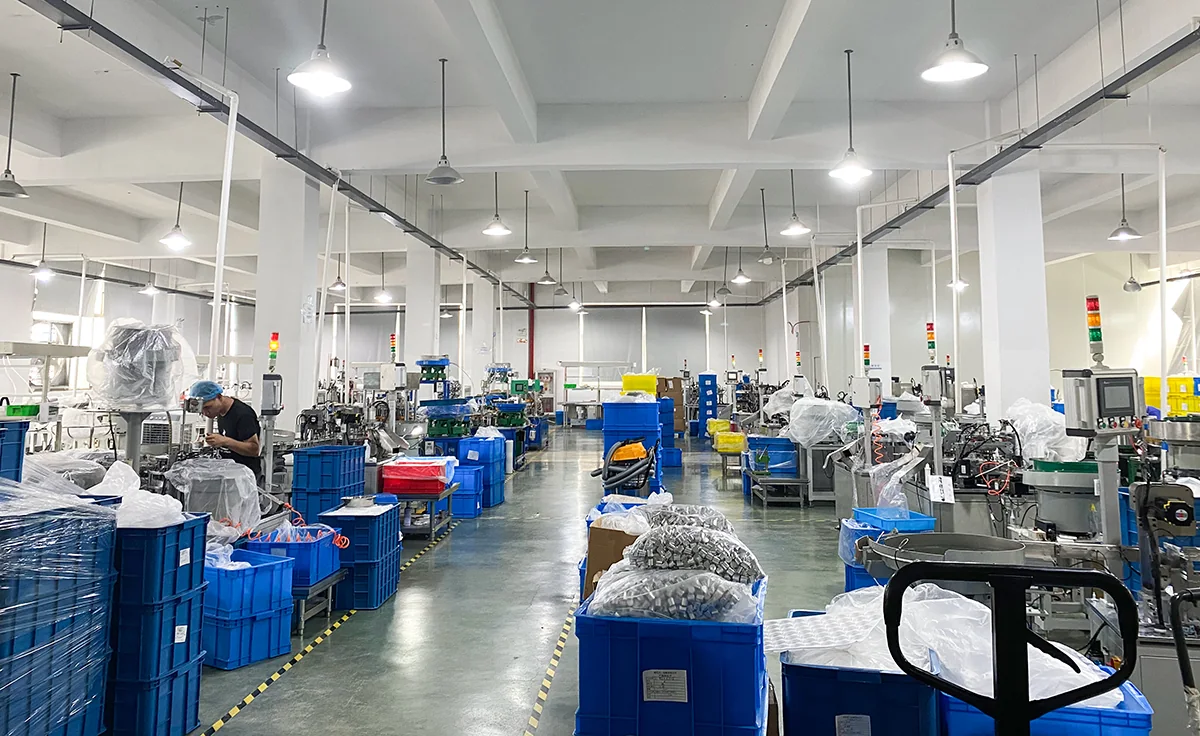
Photographed at Oulete
See the facility and visible operations behind a packaging enquiry. For your selected assembly, ask which steps apply and request the corresponding sample and inspection records.